
If Only I Had White Privilege When Looking For A Job
For many black people, finding a job is a challenge in and of itself. Here I imagine how it would feel like to look for a job with white privilege.
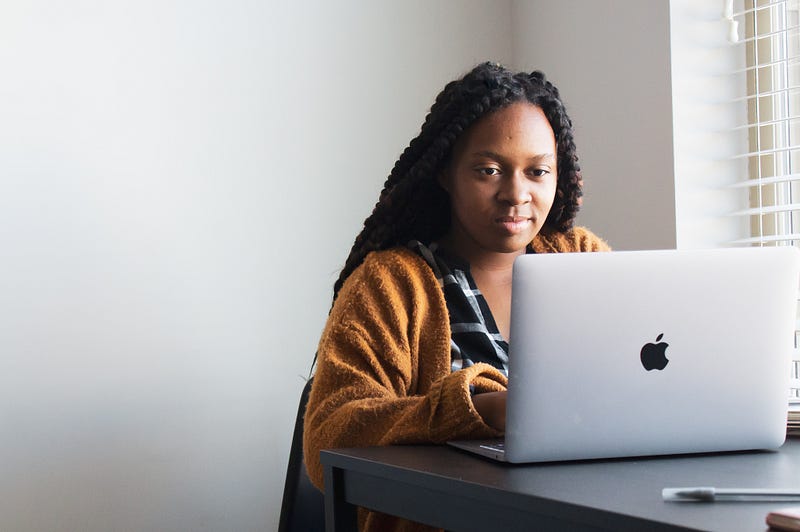
I wake up in the morning and start my job search. I set an objective of applying to at least 5 jobs today. I head to LinkedIn, happy that I can find a number of job adverts in one place. I don’t have to worry if the recruiter checks out my profile and sees my photo— in the majority of cases, I look exactly like the recruiters themselves, so if my qualifications match what the company is looking for, they won’t hesitate twice before calling me in for an interview.
Even if it is not a human being scanning applications, I know that the computer program or the algorithms scanning resumes will not discriminate against me. I'm not afraid of artificial intelligence machine bias — it is used to automatically shortlisting people that look like me. That’s such a relief, I don’t have to worry that one look at my LinkedIn profile would completely disqualify me from even being considered for the job.
I find a job advertisement for a senior-level role at a multinational company. It closely fits my skills and experience. Everything about the job seems perfect and I know that if they hire me, most of my colleagues will look like me.
Every day, I’ll be able to work alongside and interact with people that look like me, why should it be any other way? I don’t need to check the company website to find photos of people that resemble me, I know they’ll be there. I don’t even need to check the company’s diversity and inclusion (D&I) strategy, or track-record, or research if they have D&I targets or won renowned awards in this space. Why would I ever have to do that? I’ll feel like a fish in water if I get hired.
A few days later, I get the phone call that I was expecting. I have been shortlisted for the role. The HR team is keen on interviewing me within the next few days. The night before the interview, I read up more on the company. I check in on their latest press releases, I read up about their leadership, I check their photos and I study the company’s core values. I feel ready for the interview.
I turn in early that evening — keen to get a good night’s sleep. And I sleep like a baby. I don’t need to worry that maybe just one person on the interview panel, just one person might ruin my chances of getting the job because I don’t look like most people that the company has hired. I don’t need to worry that one unconscious bias might take away this opportunity. They will judge me on my qualifications and my experience — nothing else.
The interview goes well — actually everyone on the panel looks like me. Now that’s such a comfortable feeling. I can totally be myself.
Nothing that I say will immediately put me into a category or a stereotype of being an angry or aggressive person. Unless I mess up in a big way, I won’t be immediately judged and disqualified from the process.
The HR department thinks I am a good fit for the role. I was expecting this, I am not surprised. I proceed to the second and third set of interviews. Again, at every level, I am happy that I am being interviewed by people that look exactly like me. It renews my sense of confidence that people that look like me make it in this company. I know that opportunities for career advancement will not be denied to me because of my ethnicity — successfully climbing the corporate ladder seems clearly within reach. It makes me want the job even more.
It is my last and final interview. The HR department informs me that we will be discussing compensation and benefits at this session. They let me know the job is mine if I want it. All we need to do now is settle on what they will be paying me.
I go into the session with all the confidence that white privilege gives me. I know that there will be some negotiation but I’m sure I’ll get the salary I want more or less. No one will try to negotiate my compensation down to a bargain-basement price. I mean why would they? This is what I am worth — this is what white talent is worth, they had better not try to short-change me and they won’t.
I got the salary I was expecting and signed the contract, I begin work in a few days, I am content. The night before my first day, I am excited at the prospect of starting a new job. I feel a bit nervous, but I don’t need to worry about whether I’ll be accepted by other members of the team or the company’s employees.
Again, I have the undeniable privilege and comfort of knowing that they all look like me and it won’t be hard for me to fit in. It’s not a privilege that I take for granted. I acknowledge it fully.
I try to imagine what life would be without white privilege. How many opportunities would I be denied if I didn’t have it? Would I have even made it past the first steps in the process — would human, machine, or algorithm have set me and my resume aside?
I ponder this question at length and then this idea comes to mind: What if all companies did blind recruitment? What if HR never ever got to see the candidate they were hiring until the day that person started the job? I would be really keen on doing that experiment to see if that method would yield a truly diverse mix of employees — a group unimpeded by unconscious bias and discrimination. That, in my mind, would be true diversity.
Thanks for reading my perspective.
If you are interested in reading my other articles about white privilege, please click on the links below:
This Is What I Would Do If I Had White Privilege For A Day
White Privilege Up Close And Personal
Start Acknowledging Your White Privilege And Then We Can Talk


