
If It’s On the Internet, It’s Public Domain — Right?
Spoiler alert: NOPE.
I have no clue where this idea came from or how it managed to spread faster than a California wildfire, but a baffling number of people seem to think that anything they find online is theirs to keep. They will argue to the point of apoplexy that it is “in the public domain” simply by virtue of being posted on the Internet.
In a word: Bullshit.
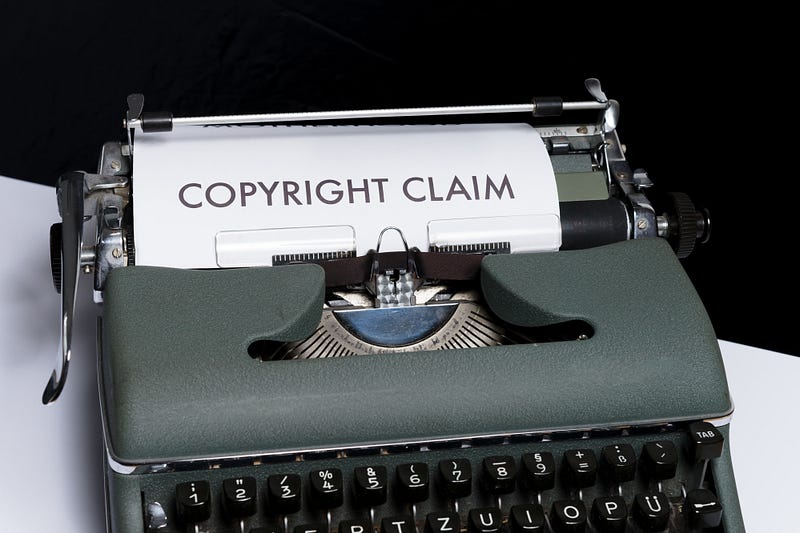
Copyright vs. Public Domain
According to the U.S. Copyright Office:
Whether or not a particular work is being made available under the authority of the copyright owner is a question of fact. But since any original work of authorship fixed in a tangible medium (including a computer file) is protected by federal copyright law upon creation, in the absence of clear information to the contrary, most works may be assumed to be protected by federal copyright law.
The safest bet? If you didn’t create it, and you don’t have explicit permission from the creator to use it, don’t use it.
Where is the public domain? The public domain is not a place. A work of authorship is in the “public domain” if it is no longer under copyright protection or if it failed to meet the requirements for copyright protection. Works in the public domain may be used freely without the permission of the former copyright owner. (From https://www.copyright.gov/help/faq-definitions.html)
Are works posted online considered to be in the public domain? No. And furthermore, I would not rely on any statement, posted on material you found and want to use, claiming that they were. Given the sheer amount of piracy on the Internet, it can be difficult to determine the original creator of the work, and a claim by an infringer that the work is in the “public domain” will not protect you from an allegation of copyright infringement.
So again, your safest bet? If you didn’t create it, don’t use it.
When it comes to images on Medium, Unsplash is a fairly safe bet — and Medium has an agreement with Unsplash that allows us, and enables us, to use those images freely. Even there, though…
Is that my image? Unsplash was quick to approve it, merely on my say-so. The answer is yes, that is my image — I took that photo right out of the passenger-side window of my husband’s car, as we drove home from Galveston. You can probably see some smudges, if you look closely.
But what if I’d lied?
And what about all those images showing people’s faces — even from Unsplash? You may want to read their Terms:
Photos on the Service come with a very, very broad copyright license under the Unsplash License. This is why we say that they are “Free to Use.” Note that the Unsplash License does not include the right to use:
* Trademarks, logos, or brands that appear in Photos
* People’s images if they are recognizable in the Photos
* Works of art or authorship that appear in Photos
If you download photos with any of these depicted in them, you may need the permission of the brand owner of the brand or work of authorship or individual depending on how you use the Photo. Please see our FAQs for more information and, if you still aren’t sure, you should probably talk to a lawyer who knows about these things.
Alarming, now, isn’t it?
Do note that I am not a lawyer, so please do not ask me for legal advice. I cannot give it.
Fair Use Doctrine
You’ve probably heard of the “fair use doctrine,” but may not fully understand it. While the “fair use doctrine” may be argued, it is a defense to a claim of copyright infringement — it does not, in itself, confer any rights.
How much of someone else’s work can I use without getting permission?
Under the fair use doctrine of the U.S. copyright statute, it is permissible to use limited portions of a work including quotes, for purposes such as commentary, criticism, news reporting, and scholarly reports. There are no legal rules permitting the use of a specific number of words, a certain number of musical notes, or percentage of a work. Whether a particular use qualifies as fair use depends on all the circumstances. See, Fair Use Index, and Circular 21, Reproductions of Copyrighted Works by Educators and Librarians. (From https://www.copyright.gov/help/faq/faq-fairuse.html)
You may have heard of “paraphrasing” or “article spinning” software that paraphrases copyrighted works and turns them into something that will escape detection by online plagiarism checking software. Both of these things create “derivative works.” They do not confer any rights in the original work, and copyright violation can still be claimed. In short, don’t try it.
A “derivative work” is a work based upon one or more preexisting works, such as a translation, musical arrangement, dramatization, fictionalization, motion picture version, sound recording, art reproduction, abridgment, condensation, or any other form in which a work may be recast, transformed, or adapted. A work consisting of editorial revisions, annotations, elaborations, or other modifications, which, as a whole, represent an original work of authorship, is a “derivative work”. (From https://www.copyright.gov/title17/92chap1.html#101)
How much do I have to change in order to claim copyright in someone else’s work?
Only the owner of copyright in a work has the right to prepare, or to authorize someone else to create, a new version of that work. Accordingly, you cannot claim copyright to another’s work, no matter how much you change it, unless you have the owner’s consent. See Circular 14, Copyright Registration for Derivative Works and Compilations. (From https://www.copyright.gov/help/faq/faq-fairuse.html)
Can’t Permission to Embed Be Assumed?
I would argue that if a thing is posted online, sharing or embedding it into your website — using tools designed by the platform for sharing and embedding — you’re probably safe from claims of copyright violation. In most cases, sharing and embedding tools allow the creator to retain control over the work; if they later delete or modify text or images, it will affect what you can display on your site. In other words, by changing a link or removing content, they can leave you with big holes in your own work. Or they can change the original and serve up entirely different content.
This is a changing and unsettled area of copyright law, and the current trend is to add protections for creators — not for those doing the embedding. Tread carefully.
Embedding
This is an embedded Instagram post (all I had to do, on Medium or on WordPress, was to paste the URL directly onto a line all by itself):
The embedded link is not something I, as copyright owner, would likely fight you over — not on a publicly posted site like Instagram. On the other hand, I probably could, legally. This means that if I don’t like how you’re using my words, images, name, and likeness, I could take action against you. Just because I don’t fight you on it does not mean that I have waived any of my legal rights to do so.
See this article from PlagiarismToday.com:
Maybe better to ask, first. Definitely more respectful.
Unauthorized posting
By contrast, if you simply copy the work and use it, either on its own or incorporated into your own work, you take it out of the creator’s direct control. For this example, I cropped a screenshot:
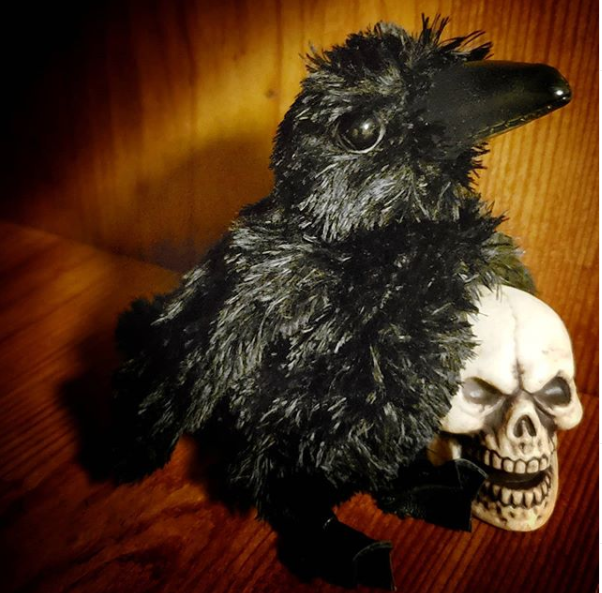
In addition to U.S. Copyright Law, consider the Terms of Service posted by the original site. This comes from Instagram, and gives some very clear examples of the ways you can naively violate copyright — ways many people seem to believe, erroneously, are perfectly acceptable online:
It’s possible to infringe someone else’s copyright, even if you don’t intend to do so. In most cases, you shouldn’t use someone else’s copyrighted work if you don’t have permission.
Keep in mind that your use of someone else’s content may infringe their copyright, even if you:
* Gave credit to the copyright owner
* Included a disclaimer that you don’t intend to infringe copyright
* Think that the use is a fair use
* Didn’t intend to profit from it
* Legally bought or downloaded the content (ex: a copy of a DVD or a song from the Internet)
* Modified the work or added your own original material to it
* Found the content available on the internet
* Recorded the content onto your own recording device (ex: from a movie, concert or sporting event)
* Saw that others have posted the same content as well
In this second example — even if you provide a proper photo credit to me — it would definitely be a copyright violation unless you obtained my permission in writing before you added it to your own work. “Crediting the author” is not sufficient to confer, on you, any rights in the work. Period.
I don’t know why the notion it is so prevalent, especially among YouTube “creators.” Again, failure of a copyright holder to act does not confer any rights whatsoever on an infringer.
Conclusion
Web hosting companies, social media platforms, blogging platforms like Medium, and publications on Medium all have the right to determine what they will or will not publish or display. Their failure to enforce their own Terms of Service does not confer a right to break the rules; it just means they do not always have the resources needed to crack down on every infraction. Just because you “got by with it”, it doesn’t mean you’ll continue to.
I will not associate with writers who do not respect others’ rights, or with publications that, on being notified (with evidence) of a copyright violation, simply shrug it off. Only the holder of a copyright can make a DMCA claim; however, there are clear-cut ethical issues that cannot be ignored.
As creators, we should all be concerned with one another’s rights. It’s fine, if you want to give them away for free or sell them for a penny. But understand that that’s your right, and do not turn a blind eye to the law — please respect others’ rights, and do not just turn a blind eye when someone steals and misappropriates a fellow creative professional’s content.
Holly Jahangiri is the author of Trockle; A Puppy, Not a Guppy; and A New Leaf for Lyle. She draws inspiration from her family, from her own childhood adventures (some of which only happened in her overactive imagination), and from readers both young and young at heart. She lives in Houston, Texas, with her husband, J.J., whose love and encouragement make writing books twice the fun.
If you are reading this on any site other than Medium or on jahangiri.us, the content may have been stolen.
Please consider subscribing to my newsletter: https://hollyjahangiri.substack.com/


