
If It’s Not Your Community, Kindly Hush! — Part 2
An unexpected but necessary deeper dive
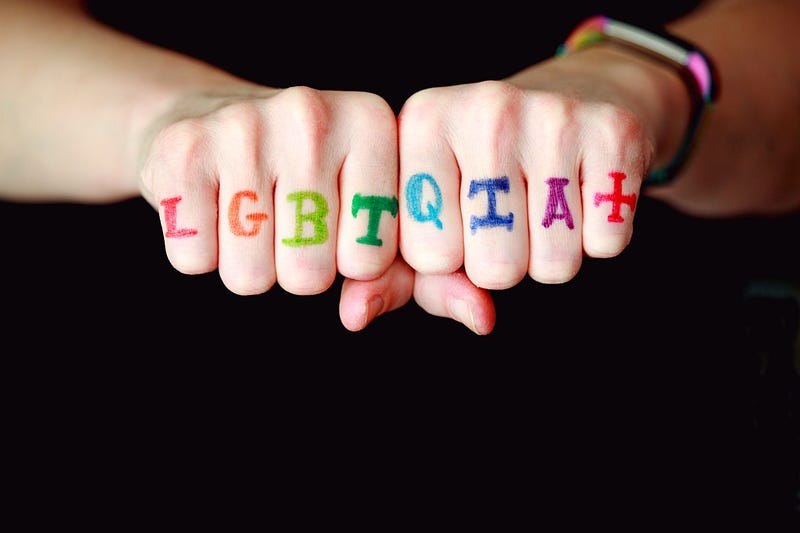
It’s truly sad how much hate there is in this world when it feels so much better to love. How much judgment there is when growth and education are so easily within reach. How much righteousness there is when acceptance takes so much less effort.
I wrote an article recently; If it’s Not Your Community, Kindly Hush. I found it interesting that I received a comment noting what was ‘wrong’ about my article without any offering of education as to why it was wrong (by the commenter’s standards). So here we are, delving a little deeper. Let’s play with the first layers of the psychology of everything I said in that article. Just a dip of a toe in the water, because the depths are too much right now and I’m still easing myself in further with my therapist! One step at a time, thank you.
Perhaps you’ve heard this said before — we cannot see in others that which we cannot see in ourselves, or rather, that which we have not experienced. In other somewhat related, but more importantly, simpler words, *we don’t know what we don’t know.
When I first came out, I acknowledged that though I thought I’d been a good ‘ally’, I wasn’t. Not at all. I say that because I didn’t know what it was like to be part of the LGBTQIA+ community. I supported my LGBTQIA+ friends but I didn’t understand their experiences. And I didn’t educate myself. Until I found myself on the other side, I truly could not appreciate that there was another side.
I could not understand the experience of any transgender person until I began questioning my own gender. Let me say it as clearly as possible:
A cisgender person cannot understand the experience of a transgender person.
It seems quite simple, but it is truly more complex. You see, I was always transgender, I was just unable to see that in myself and therefore, I was unable to see or have awareness of it in others. When I first began questioning, I thought I was alone. I know how untrue that is now; however, for a baby trans, toxic community members and gatekeepers can attach the experience of aloneness much longer than necessary. That can be deadly. Deadly! I’m not going into the statistics here; most transgender people are already more than aware.
These toxic community members, gatekeepers, and spewers of cis-normative narratives (both transgender and cisgender people) are no better or worse than your run-of-the-mill transphobes, homophobes, racist, bigots… nor are they any better or worse than the strongest ally or community members — they are simply reflecting their own prejudices and demons in the accusations and judgments of a story and experience. I do it too. We all do. We can’t not, because we quite literally are limited to our own experiences, which develop our beliefs, our values, our ethics, our standards, our expectations, our reactions.
If you are triggered by what I’ve written, that’s not about me. Just as when I am triggered by an article, I know it is not about the author. Comments are not a reflection of an article, and certainly not of the author, but rather, a direct reflection of the commenter. I see this strange cycle of anger and hatred on TikTok contrasted brilliantly with another cycle of love and uplifting. I know which one feels nicer.
So, based on this, how do we do better? The first step is to realize that your truth and your experience are not the same as anyone else’s, just as no one can have the same truth and experience as you. When we judge, accuse, and comment on someone else’s experience, claiming it to be wrong or incorrect, all we are saying is: what you say does not align with my experience. When we judge or accuse, we are simply showing a mirror of ourselves. It has nothing at all to do with the person we are judging or accusing.
In the acceptance that our experience does not define anyone but ourselves, we can finally begin to be curious, to accept that what others think and feel IS VALID. Ultimately, we can open ourselves to other experiences through listening and learning. Our experience and thus, our beliefs, values, etc., can only expand when we accept that we are not the holder of the experience of anyone but ourselves. This is what it means to be ‘accepting’ and ‘inclusive’. Those words begin with acknowledging that everyone has their own experience — it is not about claiming to love someone in spite of the things they do that you don’t agree with.
My experience is not yours. Your experience is not mine. See? Simple. Isn’t it?
So, when you find yourself having a reaction, ask yourself why you are having that reaction rather than why that person did something you ‘don’t agree with’. That was the whole point of part one. What I shared was what I learned from my reaction to a comment I didn’t agree with. And then I received comments that didn’t agree with me. Yes, I still had a reaction — hence this article, but the point is, I’m not blaming the comment writers. I am instead, looking within for the trigger, for what it is in myself that I still haven’t rectified that is causing me to react. Because the truth is, it absolutely does not matter what anyone in this entire world thinks about me other than myself.
I’m not going to apologize for being damn proud of how far I have come this year. I am not going to apologize for the language I choose to use, for it is the language that serves me best right now. But, I am always learning, and what serves me today may not serve me tomorrow. That’s called growth. I’m proud to be on that journey, and someone else’s judgment will not push me off it. Rather, it will only strengthen my resolve to find myself, as every nudge allows me to unpack another level of trauma.
So, thank you. Your judgment has made me do better — not in your eyes, but in my own. And that is all that matters.
*Markman, A 2021, ‘Do You Know What You Don’t Know?’ Harvard Business Review, 3rd May, viewed 19th August 2021, <https://hbr.org/2012/05/discover-what-you-need-to-know>.


