avatarRaymond M.E. Aguirre

Free AI web copilot to create summaries, insights and extended knowledge, download it at here

3944

Abstract

he time might be the thing I need to overcome my camera anxiety.</p><h1 id="1907">2. Apply a social media growth mindset in the beginning.</h1><figure id="46c7"><img src="https://cdn-images-1.readmedium.com/v2/resize:fit:800/0*NnuQi5N0jXTcxjbN"><figcaption>Photo by <a href="https://unsplash.com/@merakist?utm_source=medium&amp;utm_medium=referral">Merakist</a> on <a href="https://unsplash.com?utm_source=medium&amp;utm_medium=referral">Unsplash</a></figcaption></figure><p id="a322">YouTube is a search engine, not a social media platform.</p><p id="8ed4">I knew this from the beginning, so I spent a ton of time optimizing my videos for search. The result was that it dragged my ability to produce content. And even with the time I spent on keyword research, I didn't do a good job with my video SEO.</p><p id="8ab1">The thing is, search engine optimization (SEO) is about more than just slapping the right keywords into your content. There are many technical things to learn with SEO. Even though I have some SEO experience as a freelance writer, I still have knowledge gaps that'll take time to address.</p><p id="e91b">So, if I could do things all over again, I would just create, create, create.</p><p id="bb6c">That's the social media growth mindset.</p><p id="fa39">After spending some time on Twitter, I've learned an alternative way to online growth. Rather than optimizing for search algorithms, growing on social media is all about putting out one piece of content after another and collecting data points along the way. These data points come in the form of likes, shares, and comments. The more of these data points you have, the more validated your idea becomes.</p><p id="e006">My initial videos would suck, but I'd have a library of content to help me understand what types of content work. I could share these videos on my other social media platforms and solicit feedback that way.</p><h1 id="ea47">3. No wild spending.</h1><figure id="a918"><img src="https://cdn-images-1.readmedium.com/v2/resize:fit:800/0*EF5U8rIn0L2nX6x1"><figcaption>Photo by <a href="https://unsplash.com/@giorgiotrovato?utm_source=medium&amp;utm_medium=referral">Giorgio Trovato</a> on <a href="https://unsplash.com?utm_source=medium&amp;utm_medium=referral">Unsplash</a></figcaption></figure><p id="6685">Blowing thousands of dollars can teach you life lessons you will never forget.</p><p id="6009">But I have other reasons I won't go bananas about spending on YouTube again.</p><p id="4df5">When I paid for my YouTube automation consulting program in June, I was promised a monetized channel in 30 days.</p><p id="6e3f">And I did. I got what I paid for.</p><figure id="836b"><img src="https://cdn-images-1.readmedium.com/v2/resize:fit:800/1*8AjR_-eKoHPvSV03aKtiGA.png"><figcaption>Image Credit: This image is a screenshot from the author's inbox, and he claims full responsibility for its authenticity.</figcaption></figure><p id="e716">But anyone who's at least dabbled with YouTube knows how hard it is to meet the monetization guidelines of the YouTube Partner Program.</p><p id="8e92">That's why I'm curious about how I got a monetized channel just by paying someone else to do it. I've always wanted to ask my consultant, but I haven't done it. Maybe I'm afraid of what I might find out.</p><p id="6fef">I'm not saying monetizing a channel in 30 days is impossible. There are legitimate ways to do it. I just find my experience odd because I don't have that big of an audience.</p><p id="0bcc">And if you ask why I even bought into the idea in the first place, I don't have any good excuses. I was dumb. That's it. I thought I could buy my way to success.</p><p id="8256">If I were to invest in YouTube again, I'd do it with my time and sweat.</p><p id="44bf">In addition to the channel I paid for, I have another <a href="https://youtube.com/@raymondmeaguirre">one</a> that barely has any subscribers. I would pour my efforts into growing that

Options

instead from ground zero.</p><p id="9c0a">It will be a painful process, but it'll be worth it. Whatever results I get from my channel will be the fruits of my hard work.</p><p id="2d0a" type="7">There will be no growth hacking. And certainly no $7500 seed capital.</p><p id="7b09" type="7">Just pure, 100% effort.</p><h1 id="fd08">4. Repurpose content when possible.</h1><figure id="98ad"><img src="https://cdn-images-1.readmedium.com/v2/resize:fit:800/0*4KPs0F1sDkpz-keS"><figcaption>Photo by <a href="https://unsplash.com/@convertkit?utm_source=medium&amp;utm_medium=referral">ConvertKit</a> on <a href="https://unsplash.com?utm_source=medium&amp;utm_medium=referral">Unsplash</a></figcaption></figure><p id="2ba7">I am currently active on Twitter, Medium, and Substack.</p><p id="2e67">Adding a fourth platform to my plate can be overkill. But since I started as a content creator, I've become more comfortable repurposing content.</p><p id="086d">In fact, I've already drafted a plan to incorporate YouTube into my weekly content production without costing me too much time.</p><p id="6e37">Here's the plan:</p><blockquote id="12c7"><p>Write a long-form article every week.</p></blockquote><blockquote id="34dc"><p>Chop up the long-form article into tweets.</p></blockquote><blockquote id="72c3"><p>Use that article as my podcast script, which I then record as an episode on Substack.</p></blockquote><blockquote id="a5c4"><p>Days later, I'll put up the Substack podcast episode on YouTube with a graphic on the screen, just as I described earlier in this article.</p></blockquote><blockquote id="f481"><p>If time allows, I might chop up my video podcast into TikToks and YouTube Shorts.</p></blockquote><p id="179f">I'm not sure if I'll stick with that plan or if it'll work, but I'm determined to try it at least once.</p><p id="6c86">I'll report back with the results.</p><h1 id="9aef">5. Do not make commitments.</h1><figure id="8e43"><img src="https://cdn-images-1.readmedium.com/v2/resize:fit:800/0*zEzaHOU2DucmIhb1"><figcaption>Photo by <a href="https://unsplash.com/@weekendw0rrier?utm_source=medium&amp;utm_medium=referral">Ryan Franco</a> on <a href="https://unsplash.com?utm_source=medium&amp;utm_medium=referral">Unsplash</a></figcaption></figure><p id="da4f">One of the biggest reasons why I failed YouTube months ago was because I saw YouTube as THE platform for me.</p><p id="16df">I labeled myself a YouTuber. And I tried to be really good at it, even though there was already a tiny voice in my head saying that it was not the thing for me.</p><p id="3aae">As I would learn later in my journey as a creator, video is not my primary mode of creative expression.</p><p id="907c">I am a writer above anything else. And by labeling myself a writer, everything else becomes secondary. I could be a writer who makes videos, but not the other way around.</p><p id="6e10">That mindset shift might seem small, but had I made that realization months ago, YouTube wouldn't have felt so daunting.</p><p id="c37e">So if I were to hop on to YouTube now, my mantra would be simple:</p><p id="9948" type="7">No. Commitments.</p><p id="51ab">I would make videos for as long as I have the mental bandwidth for it, but I'll make sure that my content production system includes a fail-safe option. Should I decide not to make videos again, I could easily remove video creation from my schedule without screwing up my entire workflow.</p><h1 id="9493">Conclusion</h1><p id="6744">I've written consistently online for several months, and a part of me feels more mentally and emotionally prepared to expand onto a new project.</p><p id="e376">YouTube is the frontier I want to explore again. It's a project that's been on the back burner for some time.</p><p id="6784">I can't say whether I'll succeed if I try again, but it's worth a shot.</p><p id="323d">After all, no one wins the content creation game if they don't play.</p></article></body>

YouTube Lessons

If I Could Start Over on YouTube Again, Here’s How I Would Do It

These ideas could save you lots of time and money
Image Credit: This graphic was created by the author on Canva

Istarted my creator journey thinking I was meant to be a YouTuber.

The result was an epic fail, to the tune of several thousand dollars. You can read the full story here:

But YouTube continues to capture my imagination.

I'm not going to lie. Part of my fascination with YouTube is its potential financial benefits.

But that's not all. As a creator, curiosity is my drug of choice. I like to explore things that are foreign to me.

That is why, this coming year, I'm thinking about giving YouTube another shot.

This time though, I'm a little bit wiser. And I had shaken off the sting of my YouTube mistakes a few months ago.

Here are five things I would do if I were to hop back on YouTube again:

1. Work around friction points.
Photo by Aarón Blanco Tejedor on Unsplash

Two of my biggest difficulties with YouTube include the following:

  • Prepping myself for the camera
  • Editing videos

I've made a few vlogs.

And although my confidence to face the camera has improved with each video, deep inside, I still feel the same. I'm just not comfortable in front of a camera. I spend so much mental energy being self-conscious that it saps my ability to express myself the way I want.

Maybe that's why faceless channels have always appealed to me.

If I could start over on YouTube, I would have a video podcast. I'll record my voice, upload that audio file, and put a graphic on the screen for the rest of the video.

Video podcasting carries another benefit. And that is, I don't have to stress about video editing too much. It shouldn't take me more than an hour to put things together unless I'm interviewing someone.

I'm therefore hitting two friction points with one stone by making video podcasts.

That doesn't mean that I'm writing off the idea of facing the camera at some point. I could squeeze in some videos where I show myself, but only when I'm comfortable doing so.

Removing the pressure of being on screen all the time might be the thing I need to overcome my camera anxiety.

2. Apply a social media growth mindset in the beginning.
Photo by Merakist on Unsplash

YouTube is a search engine, not a social media platform.

I knew this from the beginning, so I spent a ton of time optimizing my videos for search. The result was that it dragged my ability to produce content. And even with the time I spent on keyword research, I didn't do a good job with my video SEO.

The thing is, search engine optimization (SEO) is about more than just slapping the right keywords into your content. There are many technical things to learn with SEO. Even though I have some SEO experience as a freelance writer, I still have knowledge gaps that'll take time to address.

So, if I could do things all over again, I would just create, create, create.

That's the social media growth mindset.

After spending some time on Twitter, I've learned an alternative way to online growth. Rather than optimizing for search algorithms, growing on social media is all about putting out one piece of content after another and collecting data points along the way. These data points come in the form of likes, shares, and comments. The more of these data points you have, the more validated your idea becomes.

My initial videos would suck, but I'd have a library of content to help me understand what types of content work. I could share these videos on my other social media platforms and solicit feedback that way.

3. No wild spending.
Photo by Giorgio Trovato on Unsplash

Blowing thousands of dollars can teach you life lessons you will never forget.

But I have other reasons I won't go bananas about spending on YouTube again.

When I paid for my YouTube automation consulting program in June, I was promised a monetized channel in 30 days.

And I did. I got what I paid for.
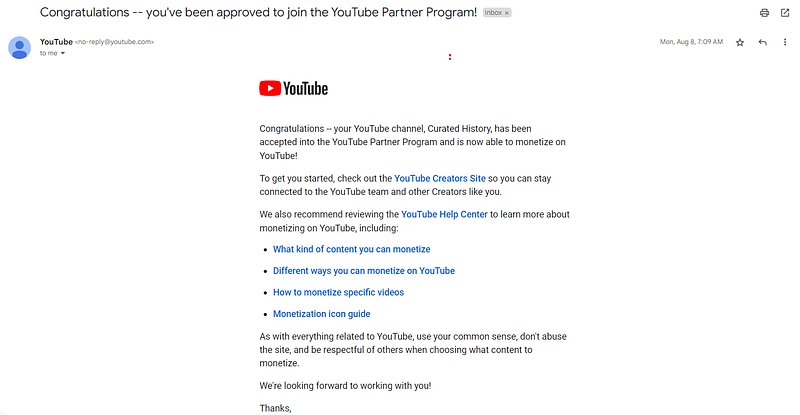
Image Credit: This image is a screenshot from the author's inbox, and he claims full responsibility for its authenticity.

But anyone who's at least dabbled with YouTube knows how hard it is to meet the monetization guidelines of the YouTube Partner Program.

That's why I'm curious about how I got a monetized channel just by paying someone else to do it. I've always wanted to ask my consultant, but I haven't done it. Maybe I'm afraid of what I might find out.

I'm not saying monetizing a channel in 30 days is impossible. There are legitimate ways to do it. I just find my experience odd because I don't have that big of an audience.

And if you ask why I even bought into the idea in the first place, I don't have any good excuses. I was dumb. That's it. I thought I could buy my way to success.

If I were to invest in YouTube again, I'd do it with my time and sweat.

In addition to the channel I paid for, I have another one that barely has any subscribers. I would pour my efforts into growing that instead from ground zero.

It will be a painful process, but it'll be worth it. Whatever results I get from my channel will be the fruits of my hard work.

There will be no growth hacking. And certainly no $7500 seed capital.

Just pure, 100% effort.

4. Repurpose content when possible.
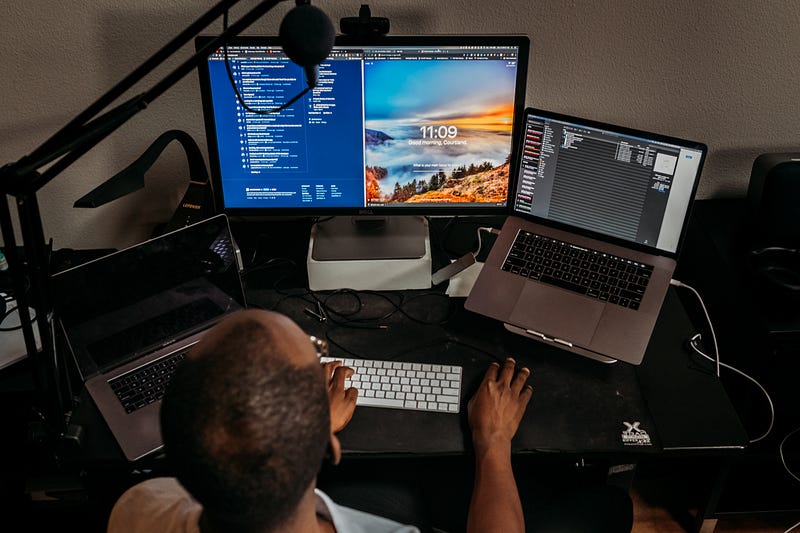
Photo by ConvertKit on Unsplash

I am currently active on Twitter, Medium, and Substack.

Adding a fourth platform to my plate can be overkill. But since I started as a content creator, I've become more comfortable repurposing content.

In fact, I've already drafted a plan to incorporate YouTube into my weekly content production without costing me too much time.

Here's the plan:

Write a long-form article every week.

Chop up the long-form article into tweets.

Use that article as my podcast script, which I then record as an episode on Substack.

Days later, I'll put up the Substack podcast episode on YouTube with a graphic on the screen, just as I described earlier in this article.

If time allows, I might chop up my video podcast into TikToks and YouTube Shorts.

I'm not sure if I'll stick with that plan or if it'll work, but I'm determined to try it at least once.

I'll report back with the results.

5. Do not make commitments.

Photo by Ryan Franco on Unsplash

One of the biggest reasons why I failed YouTube months ago was because I saw YouTube as THE platform for me.

I labeled myself a YouTuber. And I tried to be really good at it, even though there was already a tiny voice in my head saying that it was not the thing for me.

As I would learn later in my journey as a creator, video is not my primary mode of creative expression.

I am a writer above anything else. And by labeling myself a writer, everything else becomes secondary. I could be a writer who makes videos, but not the other way around.

That mindset shift might seem small, but had I made that realization months ago, YouTube wouldn't have felt so daunting.

So if I were to hop on to YouTube now, my mantra would be simple:

No. Commitments.

I would make videos for as long as I have the mental bandwidth for it, but I'll make sure that my content production system includes a fail-safe option. Should I decide not to make videos again, I could easily remove video creation from my schedule without screwing up my entire workflow.

Conclusion

I've written consistently online for several months, and a part of me feels more mentally and emotionally prepared to expand onto a new project.

YouTube is the frontier I want to explore again. It's a project that's been on the back burner for some time.

I can't say whether I'll succeed if I try again, but it's worth a shot.

After all, no one wins the content creation game if they don't play.

YouTube
Ideas
Social Media
Content Creation
Startup
Recommended from ReadMedium