avatarKaren Madej

Summary

The provided text is a reflective poem followed by a personal note from the author, Karen Madej, who draws a parallel between her own work and another author's, Ravyne Hawke's, exploration of the themes of religion, materialism, and the pursuit of a more authentic existence.

Abstract

The poem delves into the philosophical and ethical implications of the biblical story of Adam and Eve, questioning the nature of temptation, the loss of innocence, and the consequences of human desire. It contrasts the dual realms of material deprivation and spiritual aspiration, critiquing the modern world's prioritization of wealth and power over spiritual and environmental well-being. The author, Karen Madej, reveals that the poem was written five years prior for a creative writing course and expresses a strong resonance with Ravyne Hawke's work "Drowning In Godliness." Madej acknowledges Hawke for the inspiration and for reviewing her stories, suggesting a collegial relationship and shared vision for societal change. The text concludes with a brief introduction to Madej's professional background as an English language coach and writer, and her commitment to challenging the status quo dominated by "hetero-patriarchs."

Opinions

  • The poem suggests that the pursuit of material wealth and power has led to a society that is spiritually impoverished and environmentally damaged.
  • There is a critique of organized religion for its potential to become a business that perpetuates desire and inequality.
  • The author implies that the true essence of Eden can be regained by forgoing possessions, releasing fakery, and embracing spirituality and kindness.
  • The text expresses a desire for a societal shift towards valuing people and nature over material possessions and wealth.
  • Karen Madej identifies with Ravyne Hawke's views on the corrupting influence of the pursuit of godliness, indicating a shared perspective on the need for change.
  • Madej positions herself as an advocate for change, challenging the established order that she believes has damaged the world.

If Eve Hadn’t Picked the Apple

We would still be in Eden.
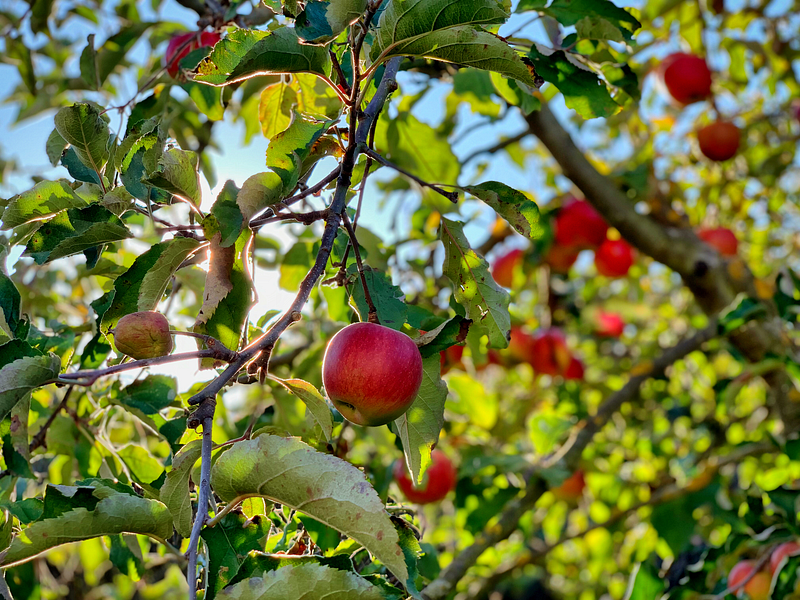
Photo by Timotheus Fröbel on Unsplash

This snake wants us to eat the apple, Adam.

Does he say why, Eve?

He says it will taste like nothing on earth.

Is that a good reason to betray our father?

What harm can it do? It’s only fruit.

Dragging limbs from a cavern.

Deep deep in the earth, she

Levitates between worlds.

One of dim mist and cold air.

Of bumping and stubbing.

Hard of sight and drear of light.

The other of God and the Devil

Of heat and pyres. Golden glows

Overthrow incendiary iron,

Shimmers of souls vie diabolical

Torture. Where is the hero?

Fearful wretches.

To live well and good

To ascend. To inflict cruelty

While aspiring to spiritual

health. Nay, material wealth.

Marketing worshippers in their

Designers, dripping with idols

And symbols. Clutching at things

Better than people.

What of the steeples and platters

Collecting the tithes and flatterers.

What of religion as business, this

Is the Devil’s work.

Creating desire and covetousness.

The rich and the poor and the billions

Between, always striving for baubles.

Banks and governments hand in hand

With corporate whores. The slaves to

Minimum wages, a timeless tale of want

And need never being met.

One per cent have profit, gold, power.

Billions in misery, despair, desire.

Greedy liars stealing a kingdom.

Forego possessions and masters.

Repent, release fakery and find

Spirit and kindness. Free nature, beasts

Yourself and others to discover

Eden.

I wrote this poem for my creative writing course about five years ago. When I read Ravyne Hawke’s Drowning In Godliness I was very strongly reminded of it.

Thank you, dear readers, for reading, and Ravyne, for the prompt and for reviewing my five stories.

Karen Madej is an English language coach and writer. She’d very much like to change the way the world works because it is broken after centuries of being plundered by hetero-patriarchs.

Poetry
Life Lessons
Life
Religion
Spirituality
Recommended from ReadMedium