
Self-Improvement | Personal Growth | People
If Da Vinci Was Alive, He’d Give You These 4 Tips On Life
How to live like the greatest genius
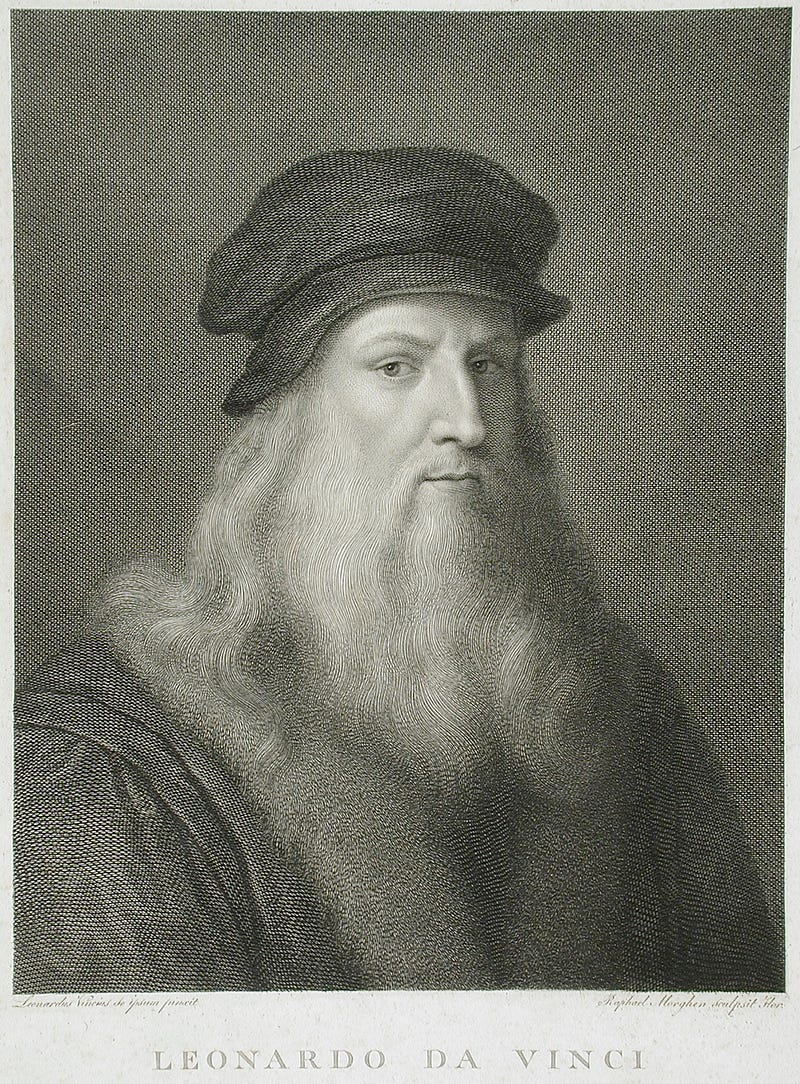
Leonardo da Vinci was not only a painter of the Mona Lisa or sculptor but a genius.
He was an anatomist who dissected human faces, delineating the muscles that move the lips to paint the mysterious smile of the Mona Lisa. He was an engineer who was fascinated with the idea of flight and thus gave us the concept for a helicopter. He was an inventor who designed war machines.
He was a scientist who produced the first known description of coronary artery disease. He was a philosopher who drew his concepts. He was an entertainer who made riddles and scared his friends with a lizard. He is the hero of Bill Gates and Steve Jobs.
I am currently reading his biography by Walter Isaacson. What distinguishes his biography from others is that Isaacson has made Leonardo more like a normal person who willed his way to his genius.
In the very first chapter, Isaacson made it clear that Leonardo was not a genius of Albert Einstein or Isaac Netwon’s kind but his genius was “wrought by his own will and ambition.”
Richard Feynman who used to say can attest to his genius:
“I was an ordinary person who studied hard. There are no miracle people. It happens they get interested in this thing and they learn all this stuff, but they’re just people.”
So, here are 4 lessons from the life of Leonardo da Vinci that are crucial for our lives:
1. Be Passionately Curious
If curiosity was a person, it would be Leonardo da Vinci.
Leonardo always kept notebooks. They include his fascinatingly quirky and chronically curious mind.
He wanted to know why the sky is blue, how is it possible to fly, what causes fatigue, what happens when the aortic valves close, the placenta of a calf, the thigh muscles of a horse and my favourites the tongue of a woodpecker and jaw of a crocodile.
His curiosity was exceptional. He gained knowledge for its own sake. He would dig into such deep rabbit holes, he would forget where he even began.
Isaacson described his curiosities as “pure, personal and delightfully obsessive.”
Scientifically curiosity has tons of different benefits. A paper from the 2018 journal Neuroscience & Biobehavioral Reviews found evidence that maintaining curiosity in old age is protective against cognitive and physical decline. Curiosity is the answer to gaining long-term happiness. It is the self-care, few self-help gurus talk about.
In the words of Leonardo himself: “Learning never exhausts the minds.”
2. Learn Multidimensionally
Since Leonardo was the Man-Who-Wanted-to-Know-Everything, he was familiar with dozens of subjects.
Adam Gopnik wrote in The New Yorker about him:
“This constant search for basic, rhyming, organic form meant that when he looked at a heart blossoming into its network of veins, he saw and sketched alongside it, a seed germinating into shoots; studying the curls on a beautiful woman’s head he thought in terms of the swirling motion of a turbulent flow of water….He even doodled churches that resembled the forms of shells and flowers.”
According to Walter Isaacson, what makes his works truly exceptional is that he would interlace different subjects and then produce his works. His famous Vitruvian Man is one example: It is a beautiful harmony of anatomy, mathematics, art and spirituality.
Yes, it was common in his time to be a polymath but no one can ever possibly be curious about one niche only, we all have various interests. Some get us money, some bring us satisfaction in life. Both are necessary. Money doesn't buy happiness and happiness only doesn't put food on the table.
In fact, we have been learning the jack of all trades phrase wrong. It is: “A jack of all trades is a master of none, but oftentimes better than a master of one.”
“He saw beauty in both art and engineering and his ability to combine them was what made him a genius.” — Steve Jobs
3. Execute Your Thoughts into Actions
Leonardo and other great minds of our world have one thing in common; they always give shape to their thoughts. They give their ideas a form.
The world’s most famous smile of Mona Lisa was once only a thought in Leonardo’s mind. He brought his thoughts into life.
And we all have ideas but we are either too afraid or too lazy to execute what we have in our minds.
“I have been impressed with the urgency of doing. Knowing is not enough; we must apply. Being willing is not enough; we must do.” -Leonardo da Vinci
4. Always Keep a Journal
Leonardo da Vinci’s notebooks are called “the most astonishing testament to the powers of human observation and imagination ever set down on paper.”
He had various uses for his leather notebooks: He used them as a brain dump. Just sitting in a garden, when he observed the difference in flight of a crow and dove, he wrote it down before he might forget.
He would write a to-do list which was more like a to-learn list. We all do that. But he also used his notebooks as a journal for thoughts, for writing down how he feels.
Leonardo was not educated in a formal school so people would disparage him, make him feel like an outsider. In his anger for them, he wrote in his notebook: “I am fully conscious that, not being a literary man, certain presumptuous persons will think that they may reasonably blame me; alleging that I am not a man of letters. Foolish folks! do they not know that I might retort as Marius did to the Roman Patricians”
Finally, the main purpose of his notebooks was to note down his studies. The main subjects of his notebooks are painting, architecture, the elements of mechanics, and human anatomy.
In our time of technology, it is far easier to create efficient notebooks. We have different apps to help us navigate our planning, brain dumping, journaling and more. There are tons of options; Notion, Obsidian, Roam, Google apps. It just comes down to how well we use them.
Journaling helps us with staying on track and remaining conscious and grounded. It is our memory box. It helps us abandon negativity and gain optimism.
“Pages are more patient than man.” — Anne Frank
Wrapping it Up
- Be passionately curious. Acquire knowledge for its own sake.
- Dare to learn multidimensionally
- Change your I can-do to I must-do.
- Keep a journal
Leonardo da Vinci Quotes You Should Live By:
“As a well-spent day brings happy sleep, so a life well spent brings happy death.”
“Simplicity is the ultimate sophistication”
“Wisdom is the daughter of experience.”
If you want to know more about one of the greatest minds, read my other article:
If you are enjoying reading on Medium, get excess to unlimited reading. Click here.


