avatarRonald C. Flores-Gunkle
# Summary

The text reflects on the personal struggle and acceptance of living with an imperfect command of multiple languages, likening it to a natural part of one's identity.

# Abstract

The poem "Idiolect" delves into the complexities of bilingualism and the frustration that comes with not fully mastering multiple languages. The author metaphorically describes their own linguistic limitations as a boat (yola) tethered and tossed by the wind, symbolizing the struggle to navigate between languages. Despite the imperfections in their command of language, the author acknowledges that these tongues are an integral part of their being, like a dangling participle in a bilingual sea. The poem concludes with a reconciliation of sorts, as the author embraces all their languages as inherently theirs, despite the occasional stumbles and uncertainties in usage.

# Opinions

- The author expresses a sense of inadequacy in their language skills, feeling like less than two people, rather than the proverbial wisdom of being worth two.
- There's a poetic frustration with the intricacies of language, such as the management of the past subjunctive and the pronunciation of silent letters.
- The author humorously notes the confusion over correct verb usage, highlighting the complexity and changeability of language rules.
- The text conveys a resigned acceptance of linguistic imperfection, comparing it to the unchangeable past and the natural process of aging, as with the loss of hair and fading memories.
- Ultimately, the author comes to terms with their multilingual identity, recognizing that their languages, however imperfectly spoken, are fundamentally a part of who they are.

Idiolect

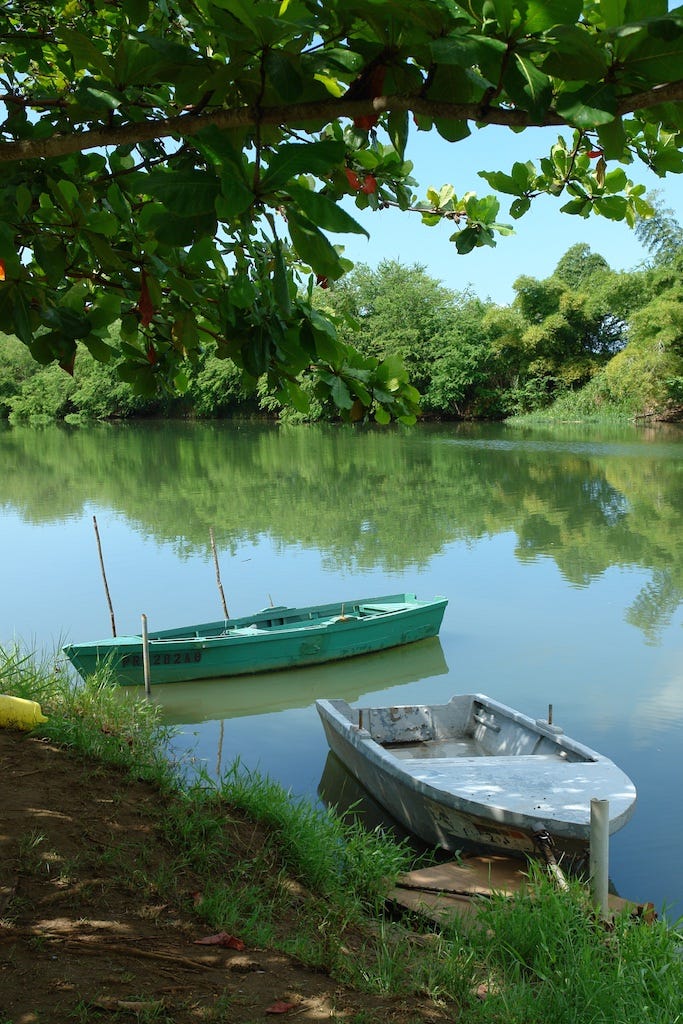
Yolas, Dorado, Puerto Rico, ©2016 Ronald C. Flores-Gunkle,

“It isn’t my goddamned language,” I said, after tripping over dipthongs during dinner.

If he who speaks two languages is worth two men, then I must be, by some accounts, a 1.7 on the Richter scale, with a portion of my tongue semantically lopped off before it learned to sail.

It stays like a tethered yola, teased into the wind, a comma in a storm.

That could explain my management of the past subjunctive, or my seismic strain to hear a silent h.

The best advice may be to let sleeping tongues lie, or lay, or whichever verb is right today.

I know I speak two tongues imperfectly, or three if you count the glottal stops of youth.

No. I take that back: Pushing two is fair, but like the remnants of my hair, my memory has erased the conjugations of that long gone past.

“It’s not my goddamned language,” I say.

But, I guess, it is.

Forged, founded, and forever melded into me, a dangling participle in a bilingual sea.

Language
Bilingual
Semantics
Poets Unlimited
Wordplay
Recommended from ReadMedium