
Ideas Are Technology
If you do not expect the unexpected, you will not find it; for it is hard to be sought out and difficult. — Heraclitus, fragment 18.
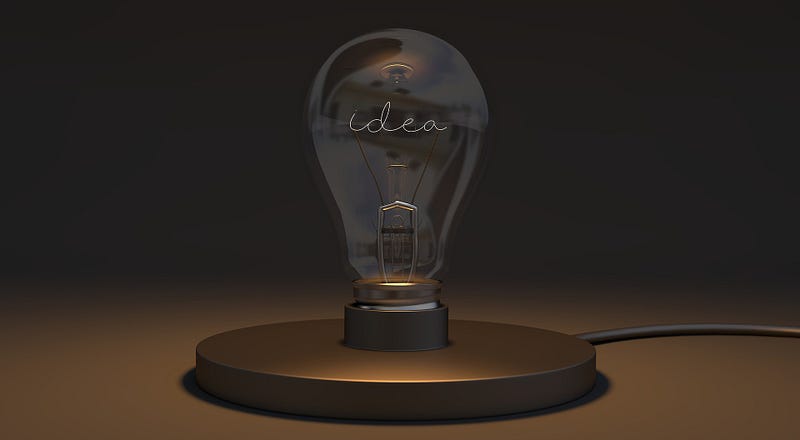
If you have read my previous articles, you probably already know that I consider a good practice to start defining the principal terms that we are using in an informative text as this article.
So, what do we mean when we say that “ideas are technology”?
There can be plenty ways of defining technology, but there are certain features that seem to be essential to what we call technology. These properties can be derived from observing all sorts of technological objects. And it would seem that these properties can be reduced to two:
- Used for fulfilling certain task.
2. Intentionally designed.
In other words, technological objects could be defined as those objects that have been intentionally designed in order to fulfill certain task. Thus, technology could be understood as the enterprise which provides us with such objects. However, in the regular usage of the word technology it is also custom to understand it in the sense of technological object just described. And in this article the word technology is going to be understood in this last sense.
That said, how are we to understand the word ideas? What are ideas? To attempt to answer this last question might sound either pompous or a waste of time; however, for matters of clarity, we will specify the way in which this term is being understood here.
Based on the most customarily usage, ideas are the mental objects we devise in our minds. They can either represent something that exits in the so-called reality or not. That is, we can devise ideas that can represent something that not yet exist in reality. It is thanks to this possibility that inventions and innovations happen. And, as you can probably foresee where I am heading to with this, it is within the realm of innovations and inventions that it can be seen with more clarity the way in which ideas are connected to technological objects, or I should better say how the former are subordinated to the latter.
So, having defined the central terms of the article, let us face once again the question, in which sense are ideas technology? Or, in other words, how are ideas technological objects?
To answer the question, let us clarify the issue through an example. Let us say that someone is trying to innovate within the automotive industry and, as a consequence, attempts to produce a new design of autos. Such individual will, first of all, need to devise the idea or concept of such new kind of autos. It is through this concept that, in a second stage, the manufacturating process will operate in order to bring about this idea into the concrete world. That is, the idea or concept will serve as a directional guide for its corresponding concretazing process, and, in doing so, the concept will reveal itself as an intentionally designed object in order to fulfill a task. Which task? The one corresponding to serve as a directional guide for a concretization process. Thus, taking into account the previous definition given in respect to technological objects, ideas or concepts are shown to be technological objects too.
Now, why would it be important to recognize this fact?
To put into view the idea that concepts are technological objects could provide new fields of investigation as well as new ways of application for concepts. At this point, you might have realized that I seem to use, in a interchagable way, the terms ideas and concepts; and, yes, in this article I have been doing so. However, taking into account what neuroscience and philosophy of the mind say about the matter, concepts could be considered as ideas that have been conveniently devised. As you know, sometimes we all entertain ideas that in the beginning are quite fuzzy and not so clear, but, eventually, if we work on them, they turn out to become solid concepts. And it is just when this latter happens that we arrive at what can be considered an idea in its strictest sense.
So next time you devise a new and interesting concept, feel yourself as a technological innovator!


