
I’d Rather Suggest You Read Baldwin
Counter Arts Book Club — March — ‘Harlem Shuffle’ (Colson Whitehead)
*Disclaimer* — any use of ‘the N-word’ is quoted directly from the novel and are therefore the words of Colson Whitehead (and as such are reproduced fully and faithfully, as he uses them). I am not using the word myself, nor would I ever.
“Ray Carney was only slightly bent when it came to being crooked…
To his customers and neighbours on 125th street, Carney is an upstanding salesman of reasonably priced furniture, making a decent life for himself and his family. He and his wife Elizabeth are expecting their second child, and if her parents on Striver’s Row don’t approve of him or their cramped apartment across from the subway tracks it’s still home.
Few people know he descends from a line of uptown hoods and crooks, and that his facade of normalcy has more than a few cracks in it. Cracks that are getting bigger all the time.”
So reads the publisher’s ‘blurb’ for ‘Harlem Shuffle’, introducing us to Ray Carney, the man who is ostensibly the central character of the novel — and he is, in so far as he’s at the centre of everything that happens.
However, I would hardly describe Carney as the linchpin or keystone of the novel, as I think the story would work perfectly well without him. He does tie things (events and characters) together, in a way which is convenient for the message Whitehead wants to send, but he’s not essential.
Similarly, the central action of the novel would seem to be the heist at the Hotel Theresa, which Carney’s cousin Freddie drags him into by offering his services as a fence — and indeed we are told this is true in all the pre-release material and reviews we can find in print.
Is it though?
Certainly, through becoming involved in the heist Carney becomes enmeshed with certain other characters he might otherwise never have met. Yet, remove both Carney and the heist from the equation and the book could still be made to work. The character of Carney is pure artifice, a device through which to bring the elements of the story together under one roof. The roof of Carney’s Furniture.
It would be easy to turn this novel into a screenplay for a one-man show — performed on a stage surrounded by chairs, sofas and second-hand televisions. ‘Carney’ would monologue about the people who came into the store, the things they got up to, describing the whole novel’s dramas …and yet, aside from very small actions involving being a fence for stolen goods, he really doesn’t do much at all.
‘Harlem Shuffle’ is a good yarn, but mainly serves as a vehicle for a retelling of factual, historical events starring actual people and the relaying of a handful of pieces of information which Whitehead wants us, his readers, to learn.
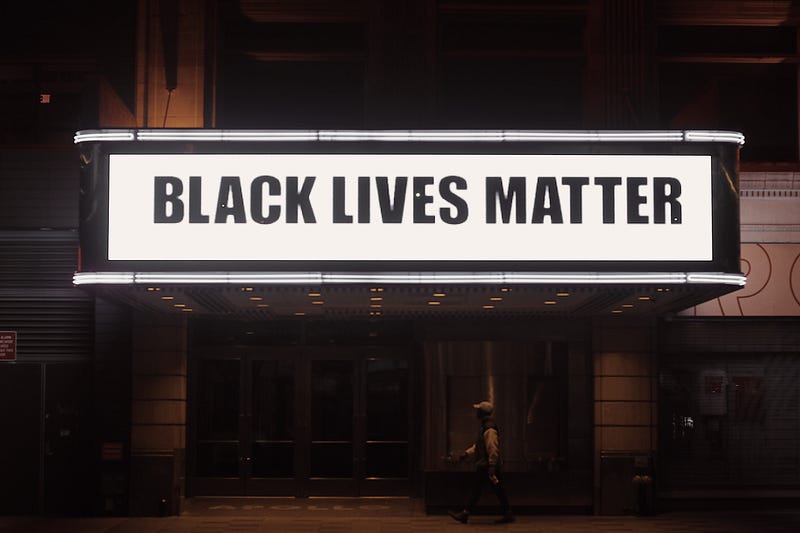
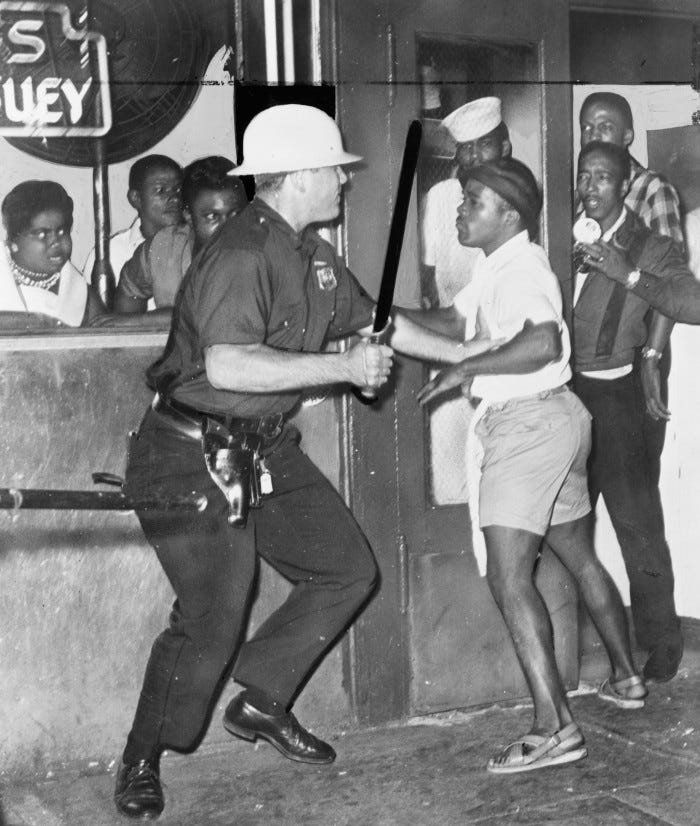
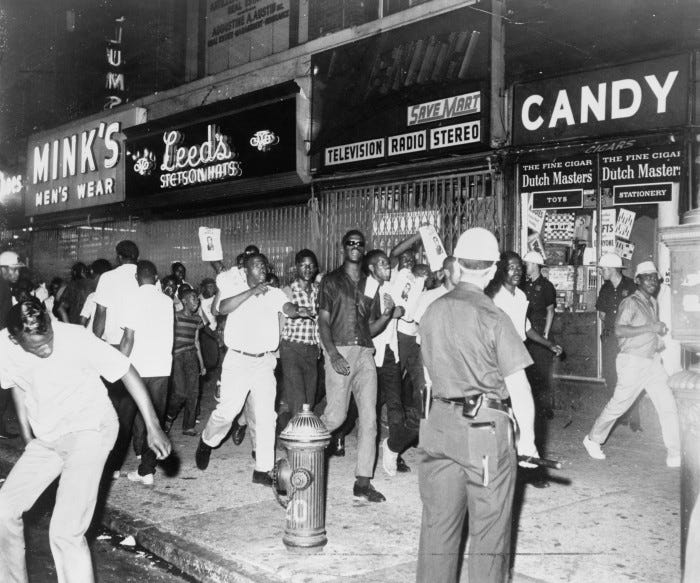
The reality of Harlem, New York, in the 1960s, was that it was a seething hotbed of racial tension. In 1964 race riots erupted, after the killing by a white police officer of a 15-year-old black boy called James Powell.
Sadly, it would seem that some things never change.
Colson Whitehead uses this murder and the subsequent riots to full effect in this novel:
“Cases like James Powell’s were the speciality of Calvin Pierce, Civil Rights Crusader; you rang him up once you got off the phone with the undertaker. The boy had been killed five days prior, in Yorkville, East Side in the Seventies. A white building superintendent named Patrick Lynch was hosing down the pavement and asked some students to move so they wouldn’t get wet; Robert F. Wagner Middle School was holding summer classes down the street. When the kids refused to budge Lynch said, “Dirty niggers, I’ll wash you clean”, and sprayed them with the hose. In retaliation, the kids threw garbage cans and bottles at him, and a couple of curse words, which attracted more of the summer students to join in the taunting. Lieutenant Thomas R. Gilligan, thirty-seven, was off duty and out of uniform, checking out TVs in an electronics store. He went to investigate the commotion and stopped James Powell, a ninth grader who had joined the mob of angry students. Powell was unarmed, according to witnesses. Gilligan maintained that the boy flashed a knife. He shot him three times. Two days later, Harlem erupted.” (p232 ‘Harlem Shuffle’, Colson Whitehead, 2021)
Slavery having been officially abolished on December 18th, 1865, we learn throughout the novel of ways in which both lives and attitudes have changed — or to a large extent stayed the same — in the intervening hundred years.
The heist at the Hotel accidentally coincides with Juneteenth — described by the character ‘Pepper’ as “some country shit”:
“According to the Tribunes account, the Brown family, late from Houston, Texas, held a Juneteenth party every year. The Skyline Ballroom soiree the night of the robbery was their twentieth celebration. Honoring the day that the final enslaved men and women received word of emancipation was a tradition worth bringing North, they thought. They band leader played with Duke Ellington, it was jumping. They had hoped to make the party an annual affair; no more.” - p.59 ‘Harlem Shuffle’ (Colson Whitehead 2021)
Conversely, we are told this a few pages earlier about the thoughts of mobster ‘Miami Joe’, the brains behind that same heist:
“The job struck him the first time he laid eyes on the hotel. Where others saw sophistication and affirmation, Miami Joe recognised opportunity, for monetary gain and to bring Black Harlem down a notch. These up-North niggers had an attitude about Southern newcomers, he’d noticed, a pervasive condescension that made him boil.” - p.45–46 ‘Harlem Shuffle’ (Colson Whitehead, 2021)
Racism is depicted in varying flavours in this novel. Not simply the White prejudice against Black we expect, but also a caste system within the Black community itself which seems to play into the systems of inequality put in place by white supremacy (and also touches upon Asian people, Jews and First Nations tribes in places).
There is a huge rift of wealth and status between Carney and his in-laws, for example. His wife, Elizabeth, had grown up in a fancy home on Strivers Row — which Ray contrasts with his home on 127th, place he imagined would be something more like ‘Crooked Way’, were it to be graced with an actual name.
His own father, Mike, seems to have been a fairly infamous small-time crook — the furniture store having been bought, we learn, using thousands of dollars worth of ill-gotten gains which Ray had discovered hidden in the spare tyre of his father’s van.
In contrast is Elizabeth’s father, Leland Jones, an accountant held in high regard by Harlem’s Black elite. However, as Whitehead points out:
“Plenty of crooks were strivers, and plenty strivers bent the law.” (p.67)
Of Leland Jones in particular it is said:
“He’d get you off the hook. He bragged about his collection of loopholes and dodges, the fat envelope bribes passed over in the drawing room of the Dumas Club.” (p.67)
We also hear a great deal more about the Jones family lineage and about the membership of the Dumas Club.
For example, a preacher named Jones had been one of the elders of Seneca village when it was destroyed in 1857 to make way for an outer section of Central Park.
“The colored citizens of Seneca were property owners, they voted, they had a voice. Not enough of one. The city of New York seized the land, razed the village, and that was that.”
— p. 70 ‘Harlem Shuffle’ (Colson Whitehead, 2021)
The Jones’ look down on Carney, because of his family background; because of his work (to them he was a tradesman, despite owning his own store); and because of the shade of his skin.
Whites thought themselves to be naturally superior because their skin lacked colour — but to people like Leland and Alma Jones (and the vast majority of the Dumas Club’s members), they felt able to claim superiority over the common Harlem Negro with their varying shades of invariably darker skin.
“Pierce was a blacker variety of berry than the average Dumas member.” p.107 ‘Harlem Shuffle’ (Colson Whitehead, 2021)
Carney’s in-laws are light-skinned:
“Race conscious and proud, up to a point — light enough to pass for white, but a little too eager to remind you that they could pass for white. Carney spooned Gerber baby food into May’s mouth, saw his hand against her cheek. She was dark, like him. He wondered if Alma still recoiled when she saw her granddaughter’s skin, felt dismayed that she hadn’t turned out light like Elizabeth. He saw her flinch in the hospital room after the delivery. All that hard work and then look at what her daughter marries. Did she stare at her daughter’s belly and wonder who’s blood would win out this time?”
Most of the time they’re on pins around each other, walking on eggshells trying to at least be civil — for Elizabeth’s sake, at least. Yet there is so much resentment within each of them. When Carney tries to stand up against interference, his mother-in-law loses her temper:
“Talk to me like that — who do you think you are nigger? I’ve seen street niggers like you my whole life, hands in your pockets! She slouched in imitation and her voice went low and colored. “I’m-a just out here trying to make a dollar.” You think I don’t know what game you’re running? With your whole jive?” —
“…she’ll come around, Alma and Leland must have told each other. Wake up to the poverty of her choices. He was the rat that crept out of the gutter and squeezed under the door.” — p.97
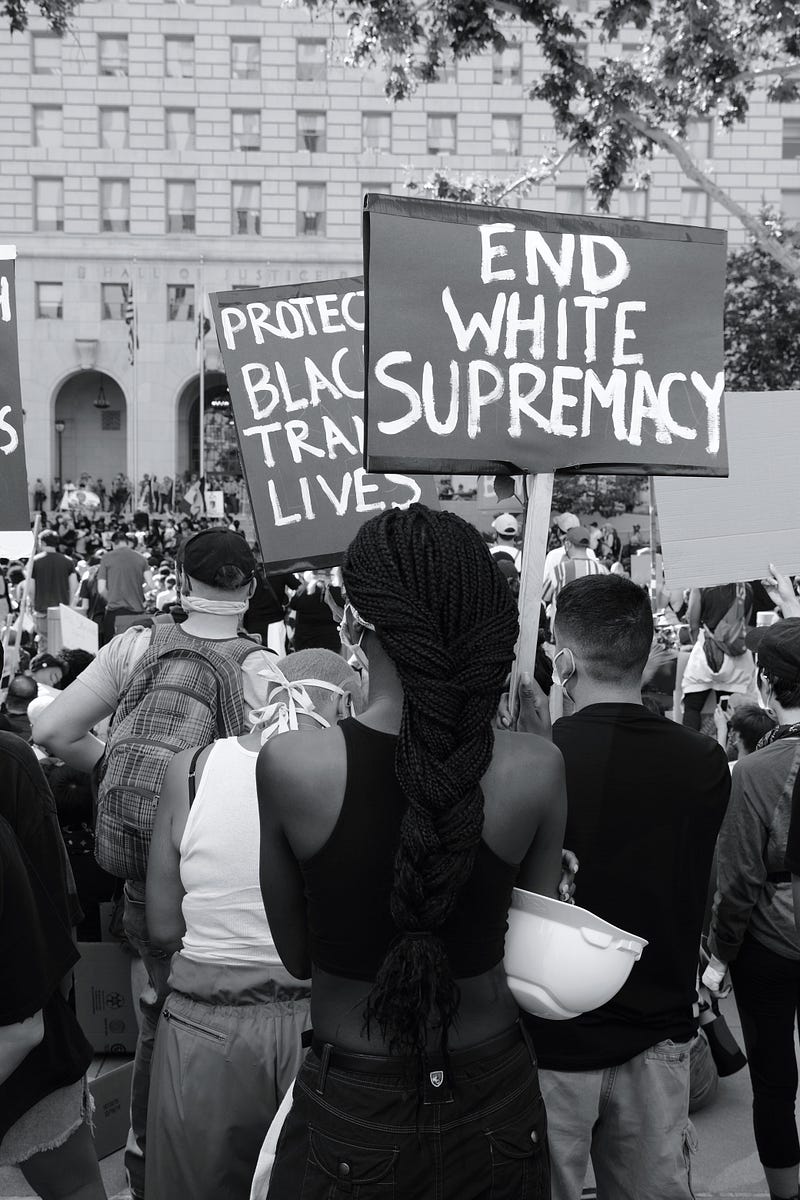
Whitehead doesn’t avoid the bigger picture of white supremacy either. I’ve already touched upon his desire to show how racism extends beyond this and opinion still varied greatly depending upon which area of the States one was in. To be more specific, in the 1960s (and perhaps to this day nearly sixty years later) the Southern states were still a far more dangerous place to be were your skin not of a pasty pallor.
Elizabeth Carney, despite her privileged upbringing as part of the Harlem elite, cares deeply about this issue:
“She had been at Black Star Travel for two months. He liked the earnestness in her voice when she talked about work, the urgency of her mission. Black Star arranged tourist and business trips for Black travellers, booking them into Black-owned and desegregated hotels in America and abroad, mostly the Caribbean, Cuba and Puerto Rico. The company provided entertainment options; tips on banks, tailors and friendly restaurants; pamphlets on which theatres in New Orleans or some other destination provided coloured seating and which ones wouldn’t let you in the door. America was big and blighted in gamey spots by racial intolerance and violence. Visiting relatives in Georgia? Here are the safe routes around the sundown towns and cracker free with territories where you might not make it out alive, the towns and counties to be avoided if you valued your life. Best to stay at the Hanson Motor Lodge, fifty miles away, and hit the road by five pm to make it back in one piece. It wasn’t medicine or law, like her parents had envisioned, but it was service, practical and meaningful. “I want them to be safe”, Elizabeth said.” — page 72 ‘Harlem Shuffle’ (Colson Whitehead 2021)
As a second example, we have Carney’s cousin Freddie, his friend Linus and their sojourn in the south one summer.
Linus is a white, hippy, dropout, junkie. He has long hair and wears denim jackets with denim jeans — his new uniform and replacement for the expensive suits he would have been wearing had he stayed at college and then gone to work in a position his family considered suitable.
He still received regular maintenance cheques from his family, on the condition he continued to show up, clean and presentable on a regular basis. Linus belongs to a hugely wealthy family, the Van Wycks — those same Van Wycks as Robert A. Van Wyck, the first mayor of unified New York, and who the Van Wyck Expressway (which connects JFK Airport to Queens) was named for. They are hugely wealthy and hugely powerful, yet Linus prefers to live in squalor with his friend Freddie in Harlem, because his family refuses to accept him as he is.
Nevertheless, Linus is White and Linus is wealthy. Freddie on the other hand had the same upbringing as his cousin Ray Carney, on the poor streets of Harlem. Most importantly here, Freddie is Black. So when they are talking about the way Miami Joe made Florida sound “like a righteous sort of place” and Linus decides he will drive them there, we should understand from the start that the two will be about to have radically different experiences of the same places.
“a burgundy 1955 Chevy Two-Ten sinking through the treacherous fathoms of the Jim Crow South . Stay off their sonar, don’t make sound.” (p.235)
They get a flat tire in St. Augustine, “the oldest city in America”, and booked into a motorlodge where the manager’s wife “burst out of the office waving a bent curtain rod and told him to get his nigger ass out of there” after Freddie got into the pool — which was drained dry by the next day, as though he had contaminated the water.
“Freddie dimly recalled some race problem from the news last summer. It turned out St. Augustine was smack dab in the middle of the rights movement. “If I had known,” Freddie said, “I would have told Linus to keep on driving — driving on the fucking rims. These teenage kids — fourteen, fifteen years old — had a sit-in at the Woolworth’s, and the judge gave them six months in a reform school. Some dudes got beat up for protesting a mother-fucking Klan rally — and the deputies arrest them for getting beat up! One night we were drinking beers in this one spot and the KKK marched up the street, all brazen. I’m from New York, I’ve never seen that shit before. Niggers really live like that down there? KKK walking around, no big deal?” - page 254 ‘Harlem Shuffle’ (Colson Whithead, 2021)
Lastly, we look to Rusty, who works for Carney in his furniture store. Rusty moved from the South up into Harlem as a young man. So from him we also get a comparison. He is not a criminal, not even “slightly” like Carney, but has love for sheriffs or police. He knows there are dangers living in Harlem, that the police are still likely to be prejudiced against and hassle a Black man, while also recognising how much better off he was now. We read that:
“When the Klan burned down his father’s grocery store — the store drew a mixed clientele and thus white business from Myrtle’s on Main Street — the sheriff said they might want to think twice about reopening. The sheriff spat tobacco juice into the ashes and looked bored. Probably his hand that splashed the gasoline.” - page 93, ‘Harlem Shuffle’ (Colson Whitehead, 2021)
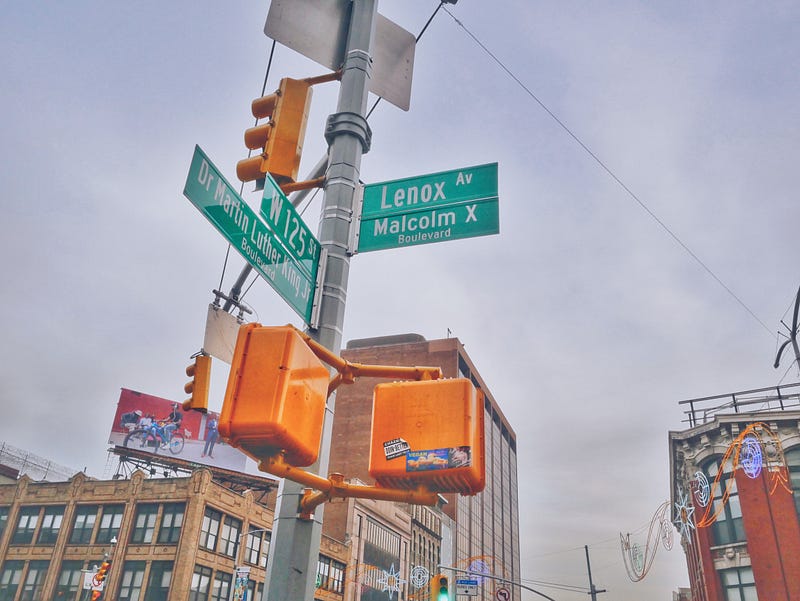
This novel has much more substance than I expected. Not simply a Harlem based crime drama, Whitehead delves into the complexity of the racial issues dogging American society to this day. How apt, given the events of the last couple of years — the spate of police killings of young black men, George Floyd perhaps being the most high profile example, but unfortunately very far from being the only one.
All that being said, this book wasn’t exactly a ‘can’t put down’, page-turner of a novel as far as I’m concerned. In fact, I kept forgetting to pick it up again… It’s a good, solid, well-written novel, as one would expect from Colson Whitehead, who won the Pulitzer Prize for Fiction not once but twice in the last decade — for ‘The Underground Railroad’ (2017) and ‘The Nickel Boys’ (2020). It’s just that, for me at least, it wasn’t his best/as good/particularly gripping — take your pick, any and all of these apply.
To me, widely read and as objective as possible, there is a type of ‘American Novel’ that quite honestly leaves me cold. An example — ‘The Catcher In The Rye’ (Salinger, 1951). That’s not to say that I haven’t enjoyed and recognised the quality of some American writers and their work (plenty actually), just that perhaps there’s a style of writing which doesn’t appeal to me that I recognise as particularly ‘American’.
Unfortunately, ‘Harlem Shuffle’ read from the start as though it was a perfect fit for my (admittedly rather shabbily defined) mental file entitled ‘American books I don’t like the style of..’
As announced in my title, others will no doubt disagree with my feelings about Colson Whitehead’s ‘Harlem Shuffle’, but I would much rather read anything by James Baldwin — either fiction (‘Go Tell It On The Mountain’, 1952; ‘Another Country’, 1962) or non-fiction (such as ‘Notes of a Native Son’, 1955). Or Ralph Ellison’s ‘Invisible Man’ (1952) which is an outstanding novel.
That’s not to say that ‘Harlem Shuffle’ doesn’t hold a lot of useful and essential information — if you want to learn about and begin to comprehend Black American History. It certainly does, but perhaps that’s also the root of the issue I’m having with it, as this novel does rather read like a history lesson with some snippets of a story written around it.
Consequently, it suffers the same problems as any book written (or game designed) to be ‘educational’ — it falls a bit flat, seems a bit dry, and doesn’t come close to coming alive in my imagination. Novels that do that continue to live there, with characters becoming familiar as real people, I become invested in their stories, their lives, their futures. I inhabit the story with them. None of this happened with ‘Harlem Shuffle’.
If you want to follow the Counter Arts Book Club, click on this link, or check in on my piece below for a round-up of reviews added month by month. It will remain pinned to the top of my personal page for the remainder of the year. Remember, reads mean more earnings to be donated to the Australian Indigenous Literacy Foundation. Please give your reading time generously.