
Iconic European Churches: Standing the Test of Time & Changes in Worship
The old churches and cathedrals of Hungary, Austria, Slovakia, and Germany were stunning
Over the fifteen days we spent on our River Cruise, many churches were seen. Several of the included excursions took us to these massive architectural marvels that still stand and are used today for religious services and community activities. Many are iconic cultural symbols as well.
Budapest
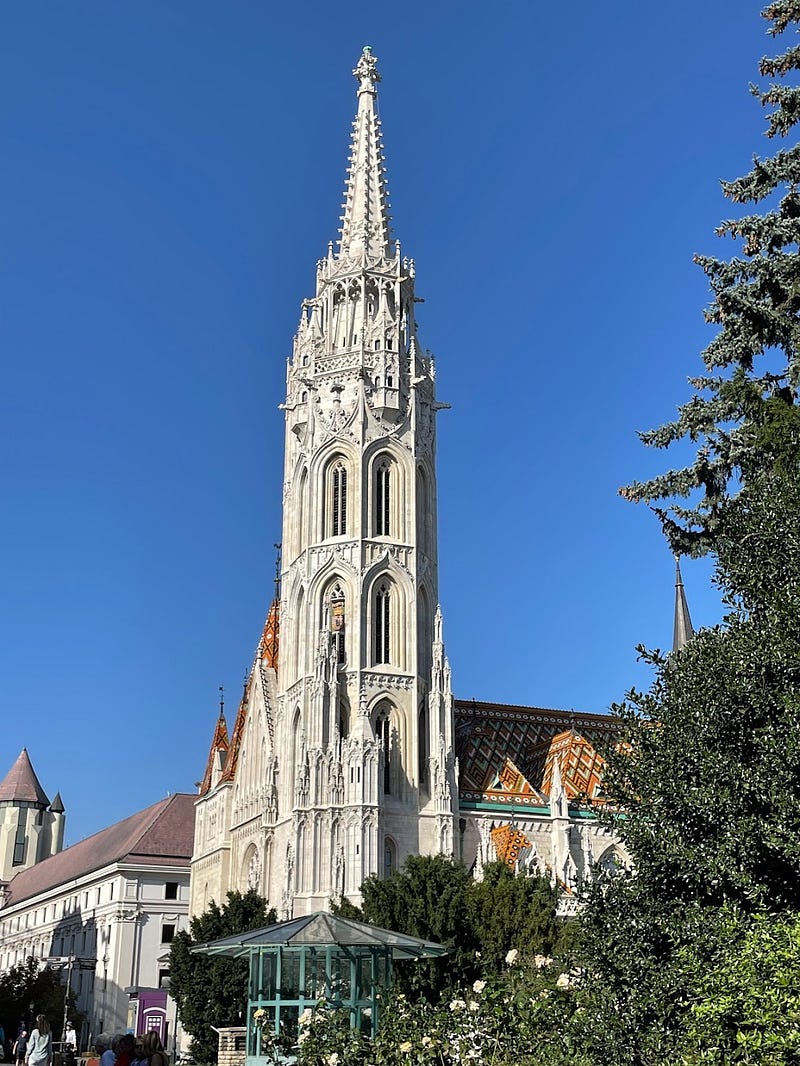
Two churches stood out to us in Budapest. Mathias Church stands on Buda Castle Hill. It’s been an active site of worship since 1015 A.D. With its neo-gothic features and high steeple, it can be seen from across the river in modern Pest.
The church’s official name is Church of Our Lady and the locals refer to it as Matyas Templon. As you can imagine, being so old, the church has seen many iterations. In 1015 A.D. it was called Church of Mary and was founded by St. Stephen, the first King of Hungary.
In 1526, the Turks decided to not destroy the Church of Our Lady (at that time a Catholic Church), but rather turn it into a Mosque, leaving the structure but changing the interior to fit their religion.
In 1686 Christian missionaries regained Buda from the Turks but much was destroyed during the occupation of the Ottoman Empire. A new church was erected in a Baroque style on the site.
Late in the 19th century, a Neo-Gothic-style church was restored, surrounded by all the other beautiful buildings on Buda Castle Hill (source).
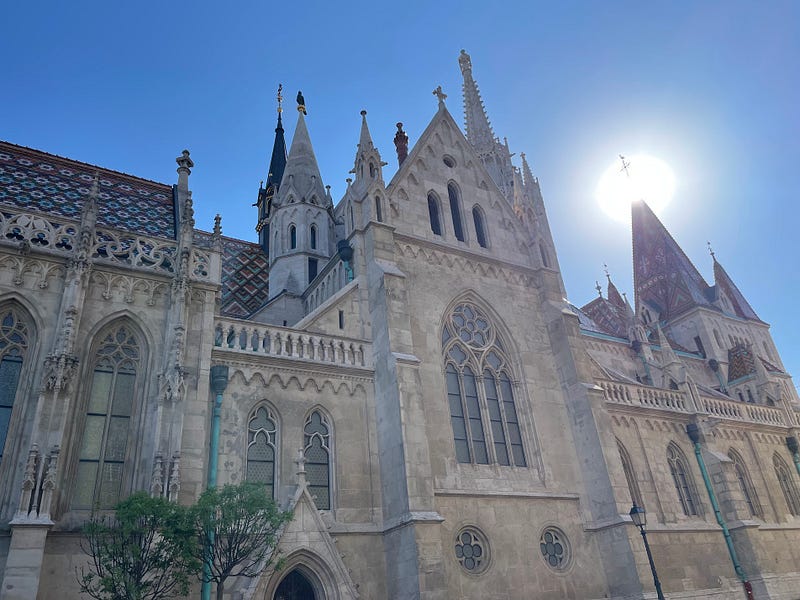
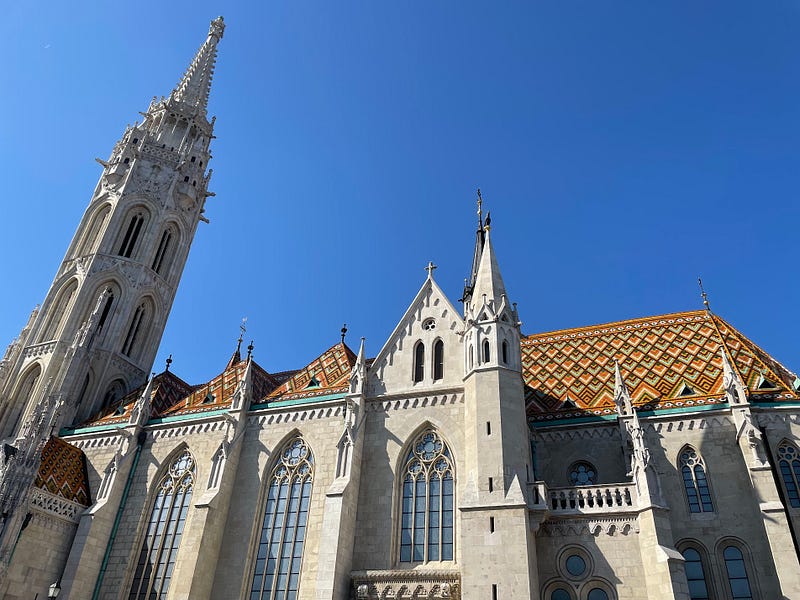
The tiled roof of Mathias Church is spectacular, too!
It is a gorgeous building.
The other church in Budapest that stood out to us was on the Pest side of the Danube River. Although Pest is known as the more modern side of Budapest, this church is also very old. It is the Inner City Parish Church.
Budapest’s Inner City Parish Church (Budapest-Belvárosi Nagyboldogasszony), officially the Church of the Blessed Virgin Mary, is the main parish church of Budapest. It is often referred to as the City Parish Church or Downtown Parish Church. — Wikipedia.
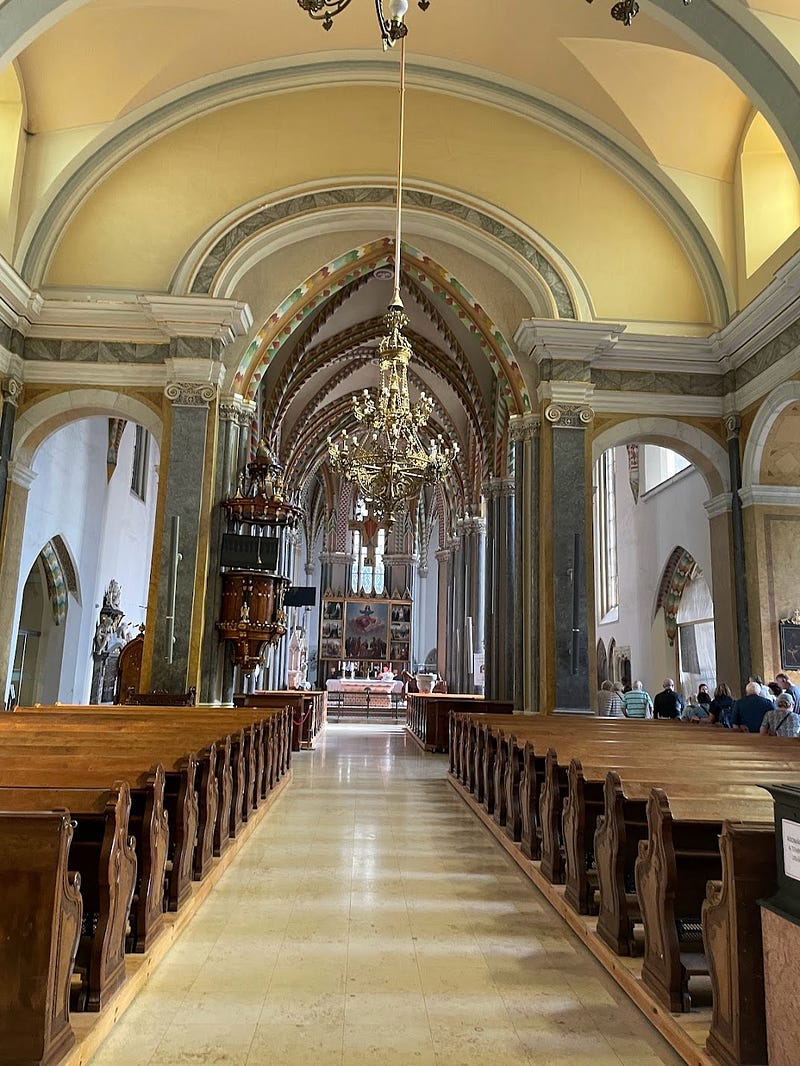
We went inside this church on our walking tour of Budapest with a guide who shared the history of the city with us. Like Mathias Church, it dates back centuries, this time to 1049 A.D., and was possessed by several ethnicities and religions as they rose and fell from power.
Like Mathias, this church was also used as a Mosque by the Turks before being returned to Christians for their worship (source).
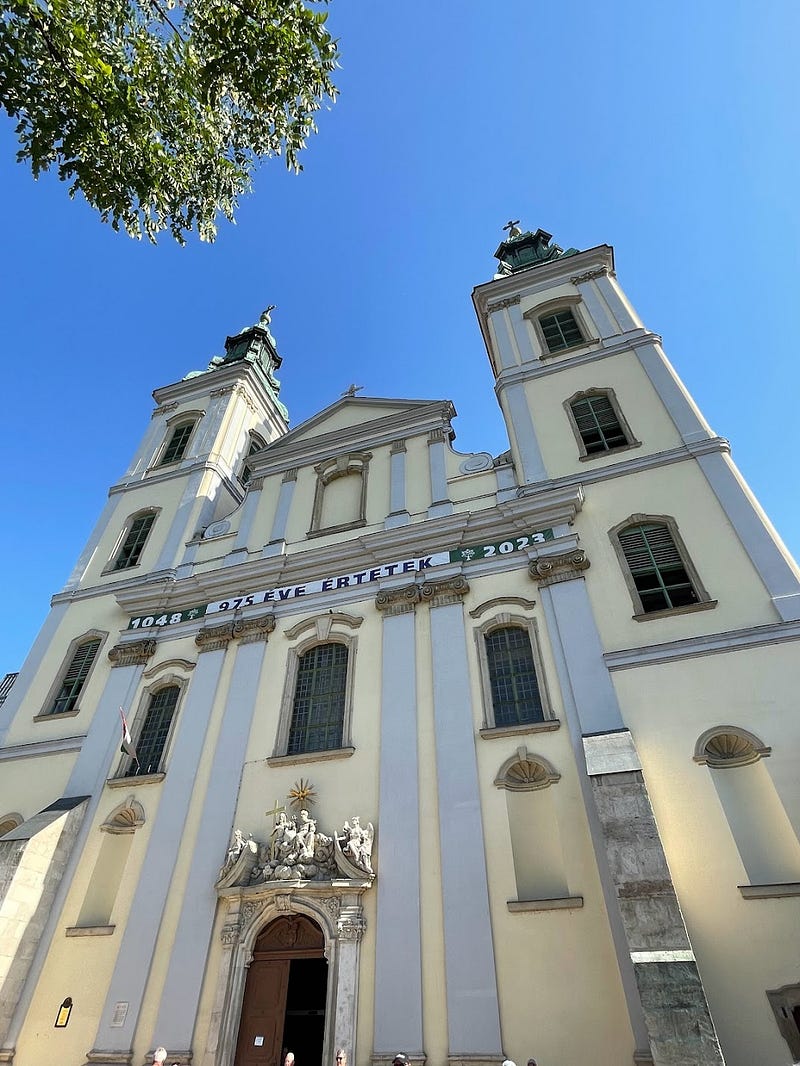
Our tour was a quick walk through the perimeter of the church and a brief period of sitting in the pews to look at the altar and the artwork. Franz Liszt, the famous Hungarian composer, premiered two of his compositions at this church and there is a plaque to commemorate his ties to the church ( source).
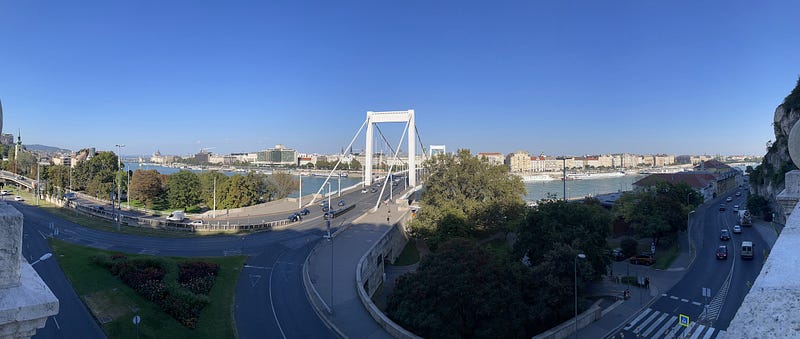
The church sits near the Pest entrance of the Elisabeth Bridge. Can you spot it in the photo below?
Moving on to Vienna
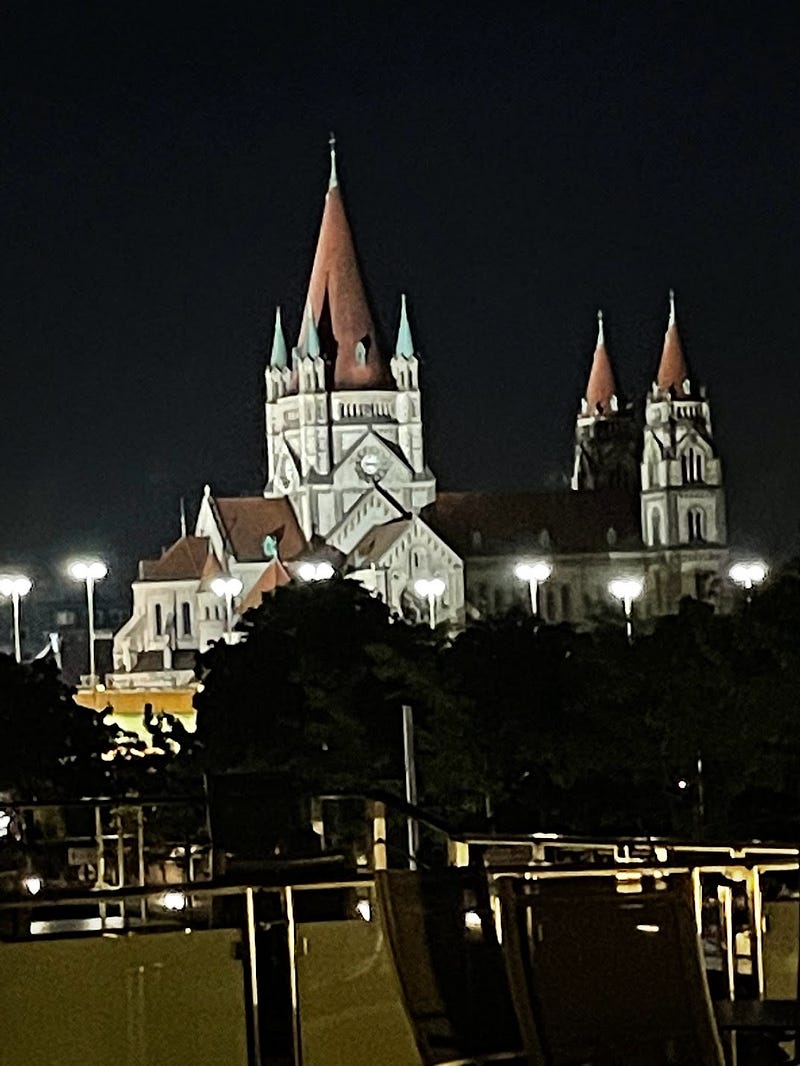
An interesting church was seen as we entered Vienna on our included tour via Bus. The church is informally known as the Mexico Church, but its formal name is St. Francis of Assisi Church or Jubilee Church.
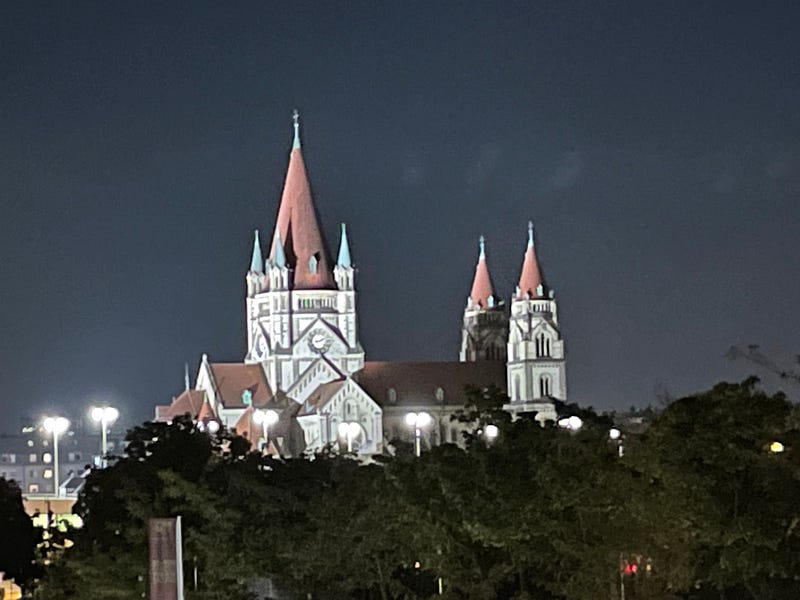
The Mexikoplatz (Mexico Square in Vienna) or Mexico Church got this name in 1956 to recognize the support Mexico gave Austria in 1938. Mexico was the only country in the world that protested the annexation of Austria by the Nazi Regime. This is according to our tour guide as well as the ViennaInsider website.
It’s very pretty both during the day and all lit up at night, where we could see it from the top deck of our cruise ship.
St. Stephen’s Cathedral, Vienna
Some might say that a visit to Vienna is not complete without paying homage to St. Stephen’s Cathedral. It was a gorgeous, blue-skied, 80-degree day when we were in Vienna and the crowds around St. Stephen’s reflected that.
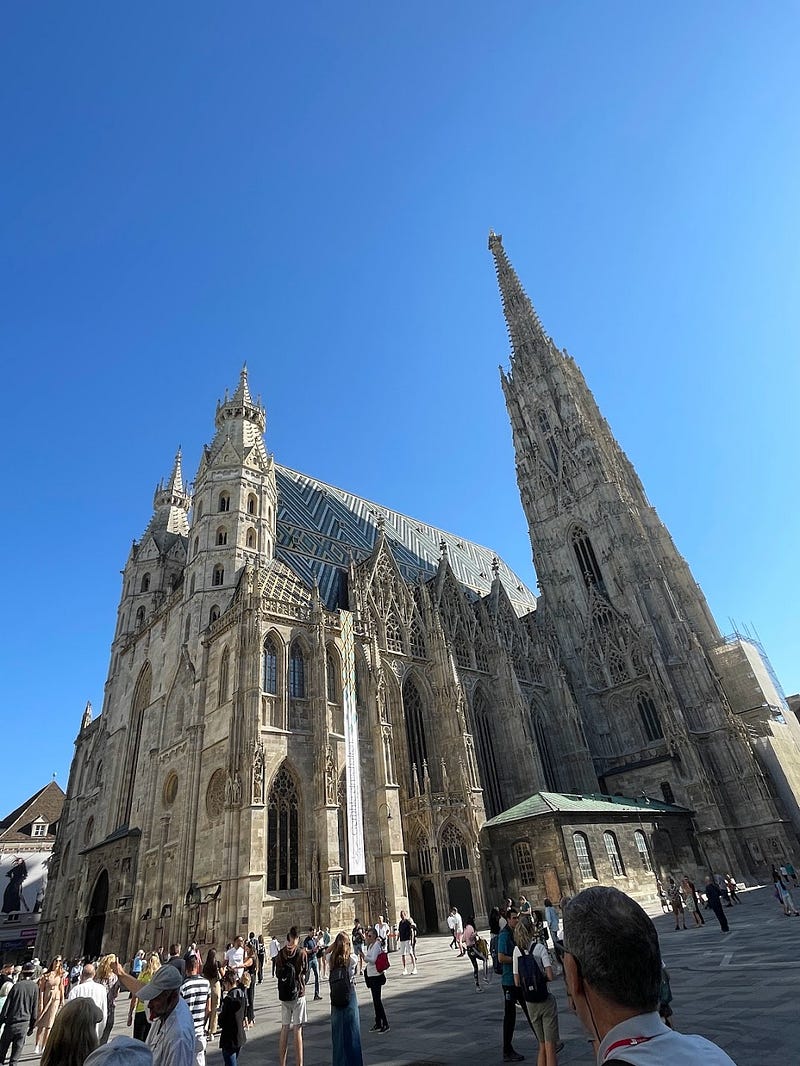
Like the other churches that I’ve featured in this article, St. Stephens begins centuries ago — unsurprisingly the same century and decade as the churches in Budapest — 1147 A.D., although many reference the beginning of St. Stephens as 1137 A.D. The building was Romanesque in style and outside the city walls (source).
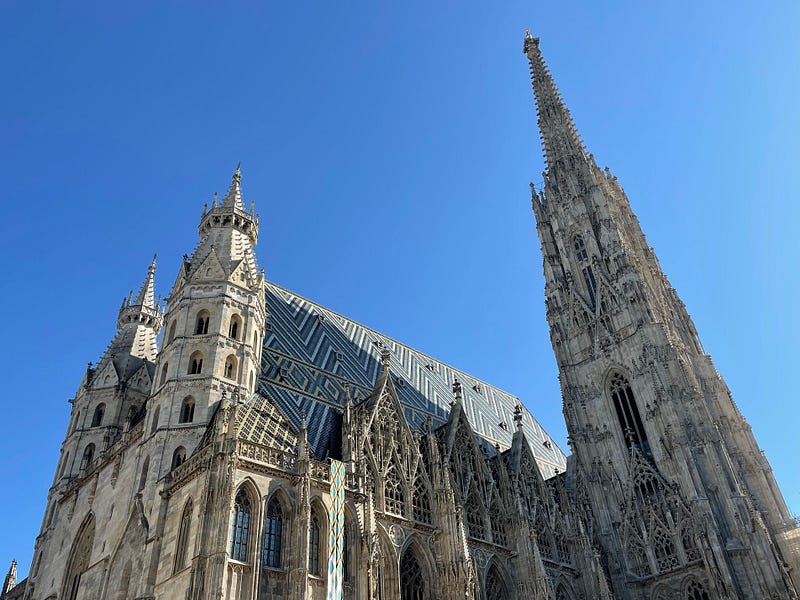
The centuries go by and St. Stephen’s church continues to be built, Vienna becomes more prominent and eventually becomes a cathedral, with the bishop being seated there. This appears to be centuries after the church building was started (source) in 1469 A.D. (source), and of course, has everything to do with the church politics and hierarchy of the day.
We did not go into St. Stephens.
Many of our tour guides tried to cram one thousand years of history into our 1.5-hour tours. It became readily apparent that it could not be done well enough to be readily understood. We appreciated the sights and the construction of the churches and cathedrals but after a while, they all blended together.
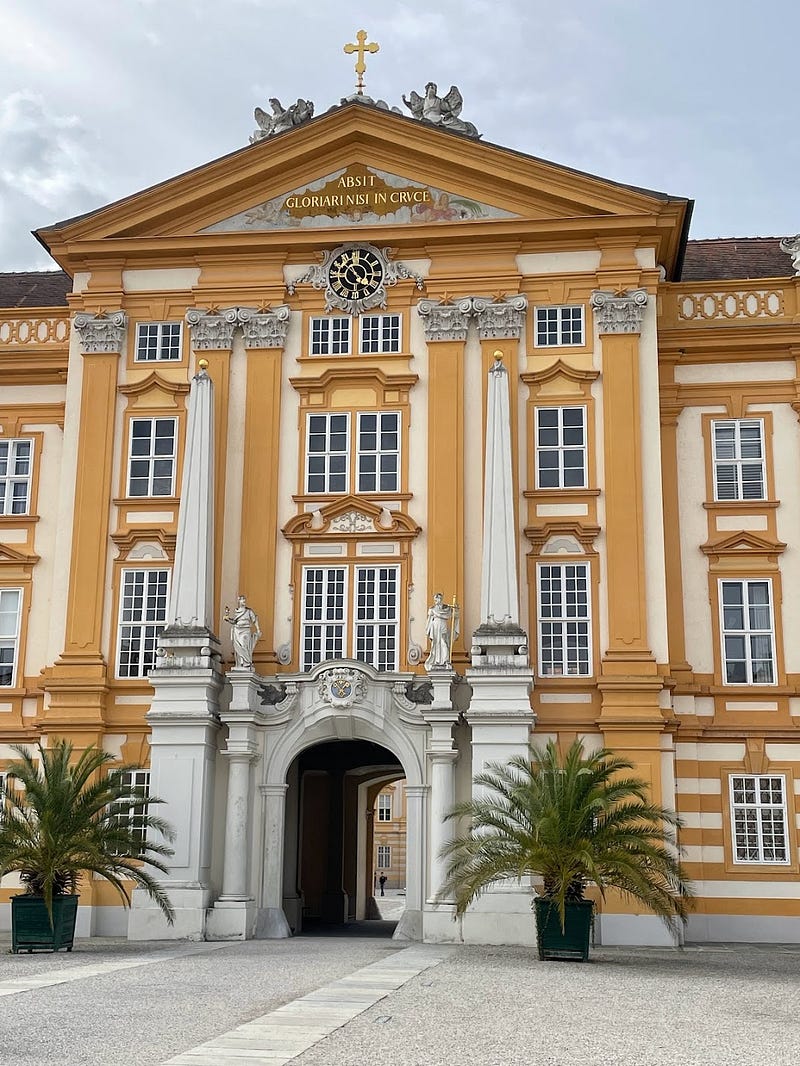
The Melk Abbey was a stop on our way out of Austria. It deserves a mention because its grounds are beautiful and it still functions as a monastery and school. Although, the size of the buildings and grounds could accommodate many more than they do, currently.
Onto Churches Found Along the Rhine
Once we traveled along the Rhine River into Germany, there were churches everywhere.
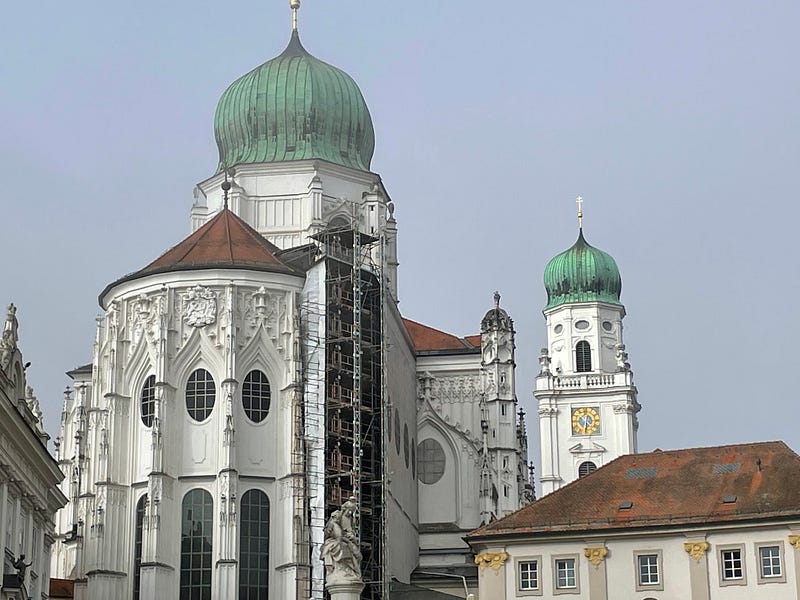
This church in Passau has an extremely long history, possibly dating back to 450 A.D., and a cathedral for this diocese since 739 A.D.. The church we saw only dated to the late 1600s after it was rebuilt following a city-wide fire (source). Still, it is very beautiful — especially against a cobalt blue sky.
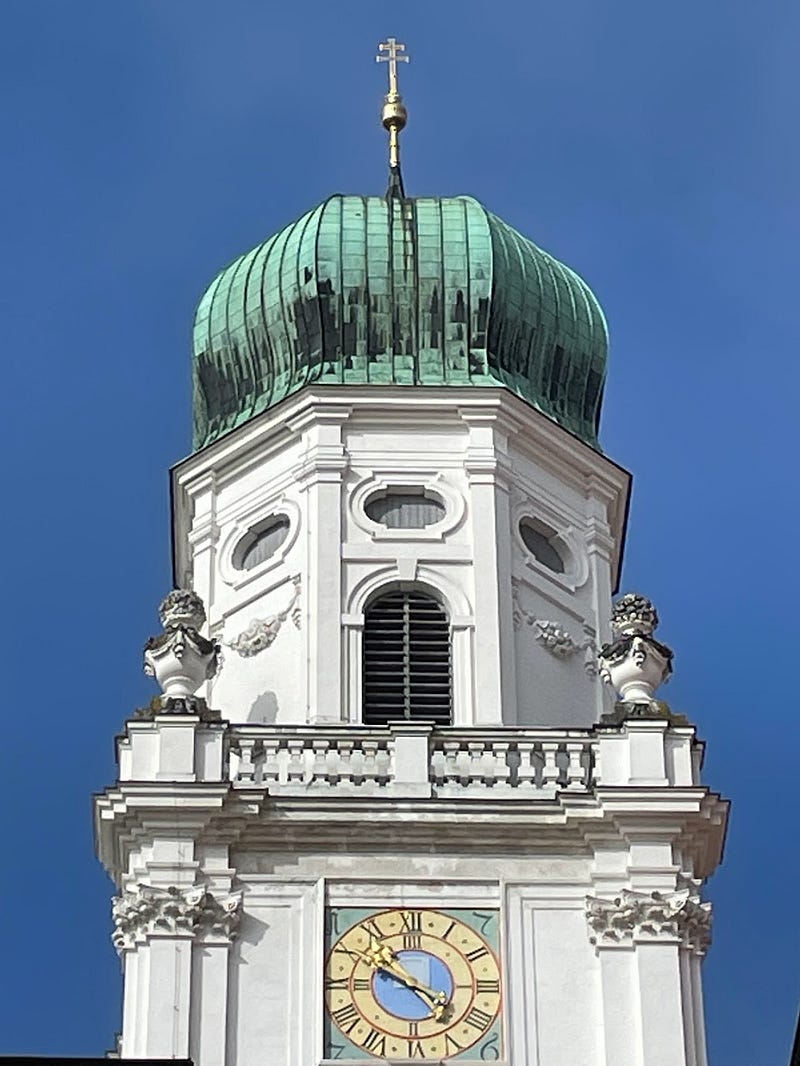
The onion-capped steeple was a prominent and popular feature in this area of Europe. We saw structures with onion-capped roofs over and over again.
Onion domes, as they are referred to because of their shape, came from Russian Orthodox influences. They are said to represent burning candles and often come in groups of three to represent the Holy Trinity or five to represent Jesus and the four evangelists (source).
In any case, they are pretty to look at and seen frequently across Bavaria.
In Wurzburg Germany, an onion-domed chapel could be seen from the river as we docked in town. Later in the day, a small group of us were able to enter the “Little Chapel” as it’s known to see the sanctuary and unfortunate disrepair.
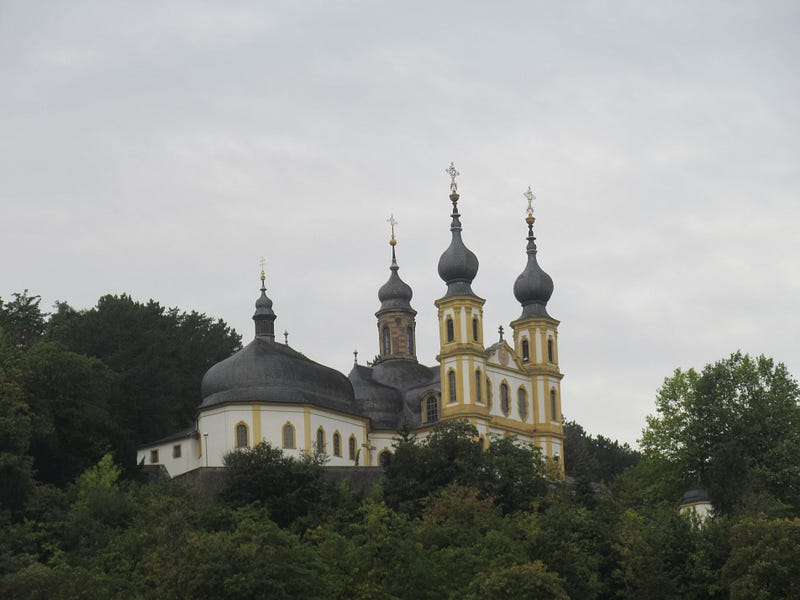
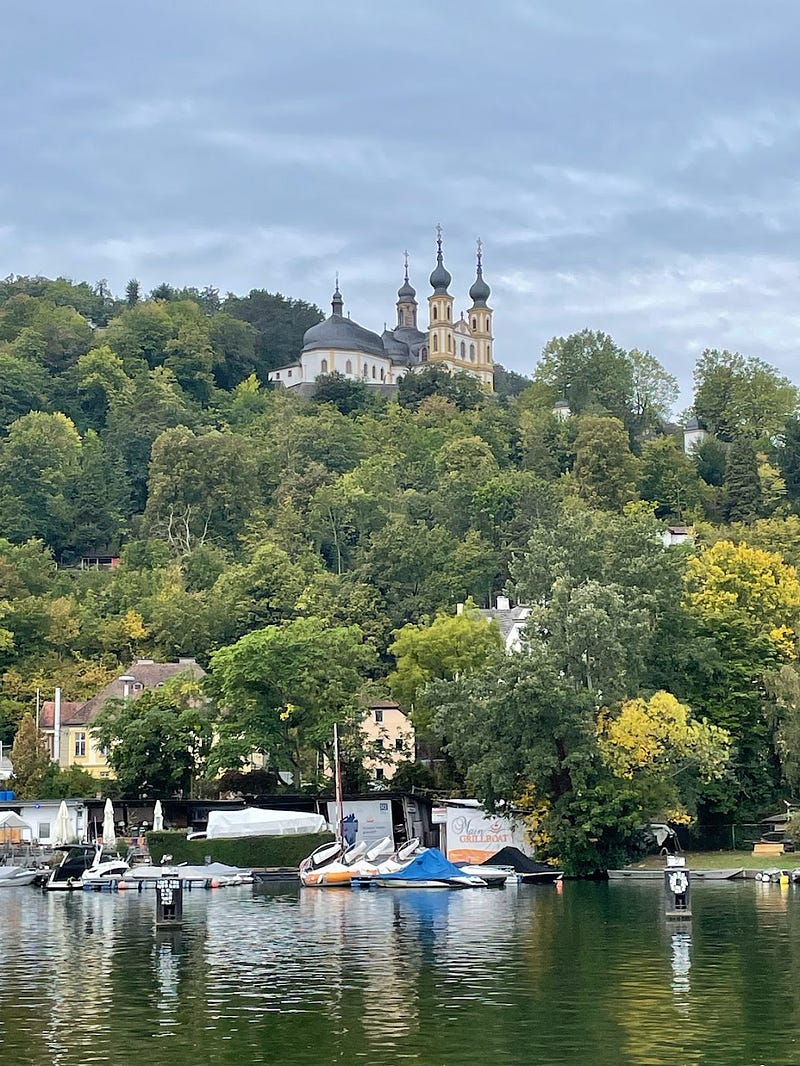
The Käppele or Little Chapel has a history of being a pilgrimage church. It was built in the 18th century in the Rococo style. The grounds have 14 stations of the cross, including life-sized statues, serving those who wish to make the walk to the chapel (source).
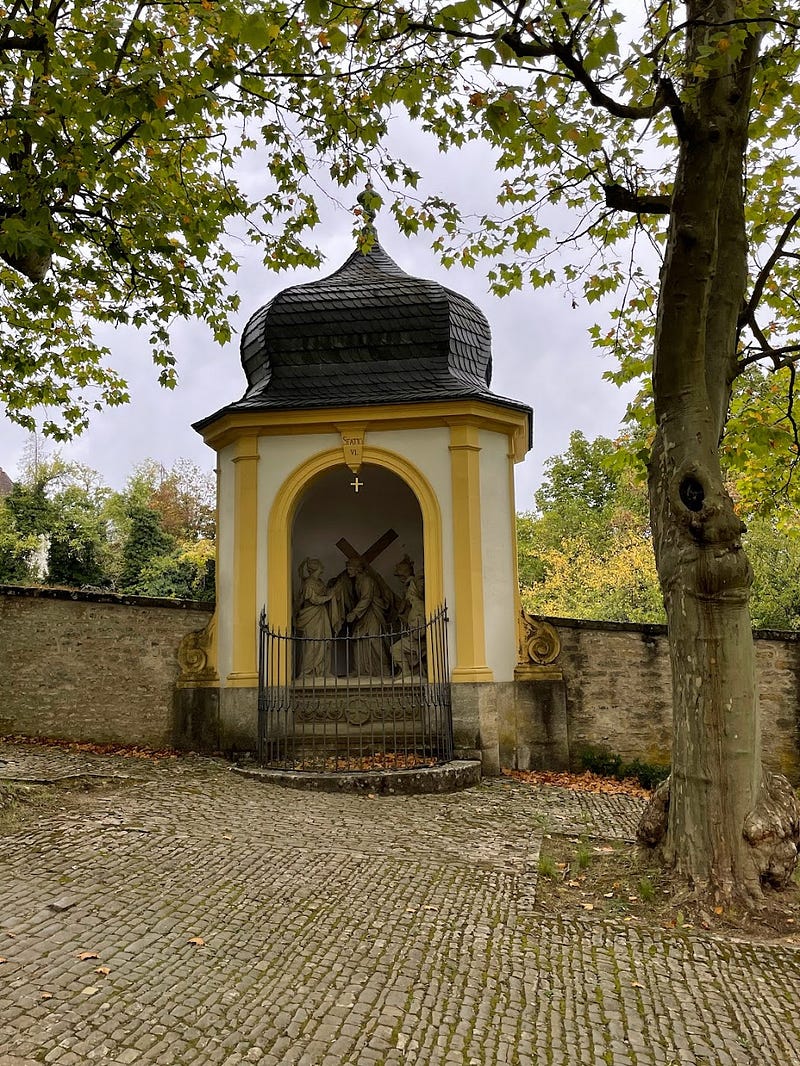
Wurzburg has many beautiful and interesting churches. I’ll revisit this city in a future article, there are too many churches to delve into here.
In Nuremberg, we visited on a holiday — German reunification day — many things were closed but we were still able to see an interesting edifice of a church that was built in the 14th century, the Frauenkirche.
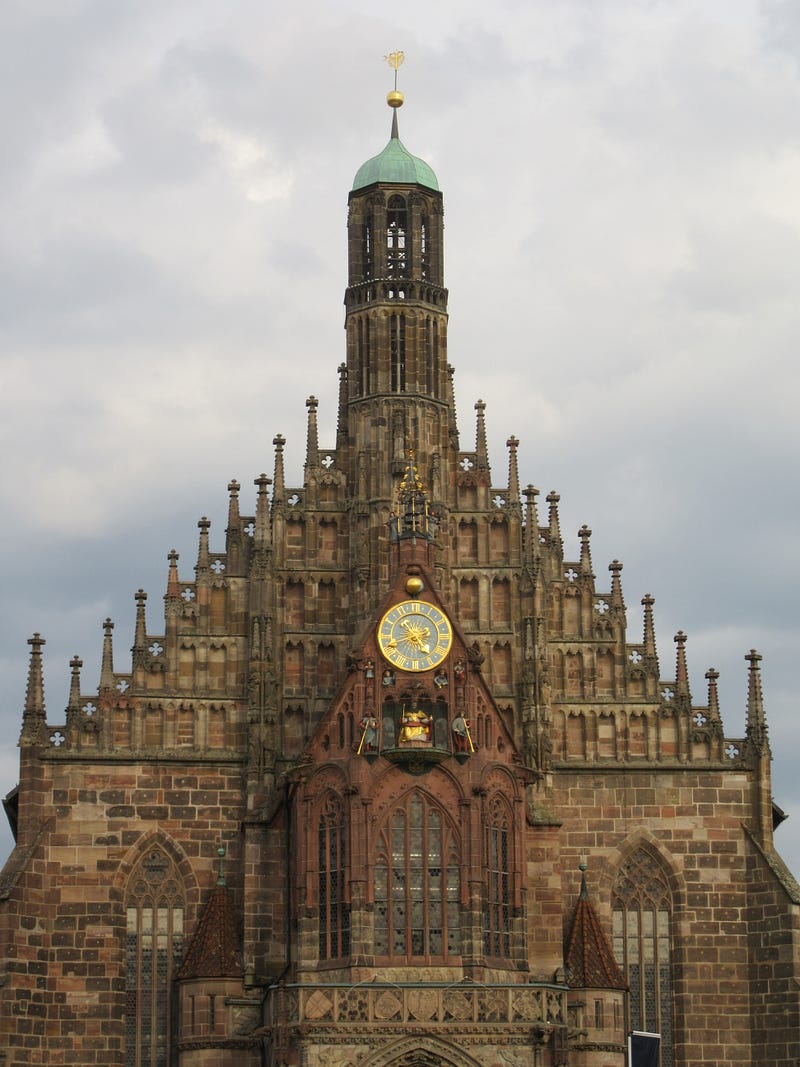
It sits in a square where the public market is held and is quite imposing.
Churches fascinate me. I grew up Lutheran but hold any religious belief people have with respect. The architecture of the religious buildings in Germany, Austria, and Hungary was astounding. Actually, we found it overwhelming at times.
I’m glad I can step back, now that our trip is over, and revisit these places through my photos. There are places I’d visit again and make a point to go inside.