
I Will Not Make Any More Boring Art
Homage to the Godfather of Conceptual Art
“My job is to treat the viewer as an intelligent person. If you serve it to them on a silver platter they haven’t really learned anything. But of course it’s got to be a seductive thing. You’ve got to engage them first. One word following another, like a writer.” (source)
Those are the words of American artist John Baldessari from a 2019 interview with the San Francisco Museum of Modern Art. He has been called the Godfather of Conceptual Art, a Master of Appropriation, and a Surrealist for the Digital Age.
John would scoff at those labels.
Conceptual Art focuses on the idea rather than the execution of the work. It also centralizes the dematerialization of art — an idea cannot be owned, only transmitted. To make his point, in 1970, John cremated all the paintings he had made between 1953 and 1966. Talk about the dematerialization of art. He kept the ashes in an urn shaped like a book.
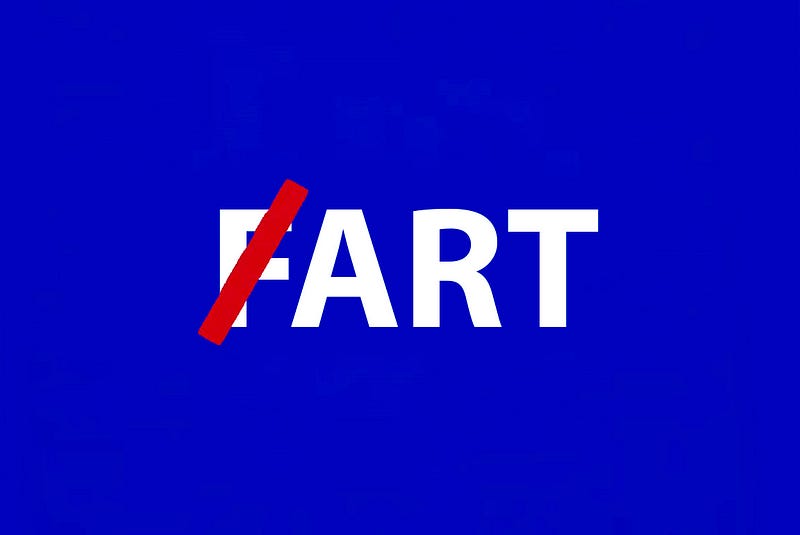
John began painting text and images on canvas in the 1960s, which are now considered early examples of Conceptual Art. He explores both written and visual language by challenging the way humans communicate.
By mixing those two elements of communication together John creates something new. They may not mean much separately but by putting them together, they do. “As soon as you put two things together you get a story” John claims. (source)
Let’s see. Did I succeed? Consider this:
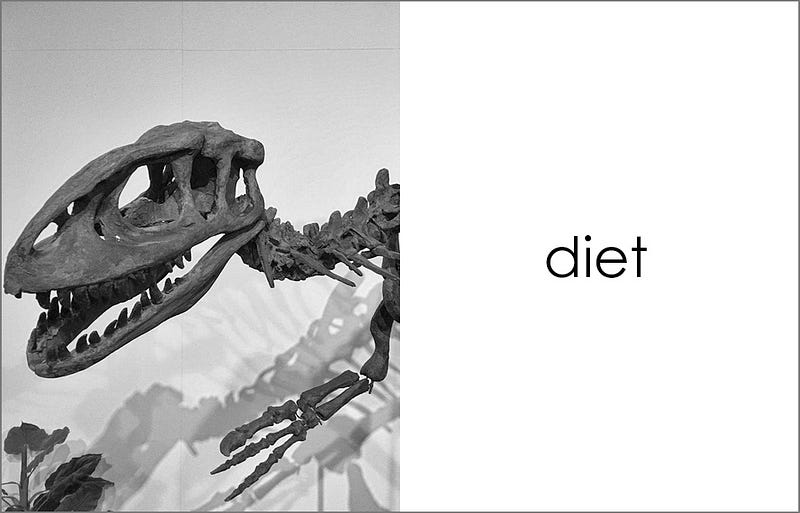
Words are used to communicate. Images are used to communicate. John could not comprehend why those two ideas had to be separated. He brought them together.
Basically, John invented the meme.
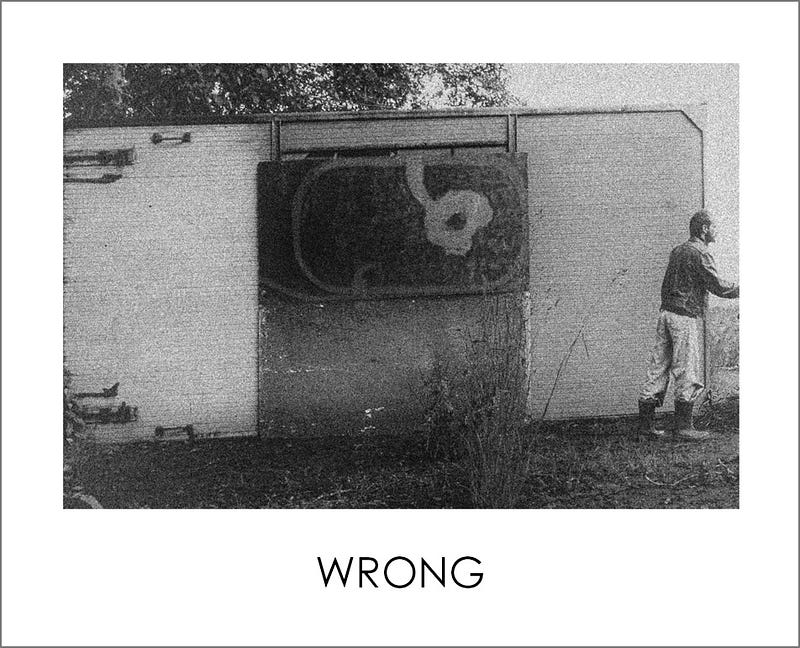
In the Sixties, while living in his hometown of National City, California John painted text on canvas and he called it “Art.” He also made photos with intentional bad composition and he called them “Wrong.”
I was inspired to attempt an image based on John’s idea, so I created this:
In 1971 John made an important announcement: “I Will Not Make Any More Boring Art.”
I think that was a turning point for John. The work he produced from that moment forward certainly could not be classified as “boring.”
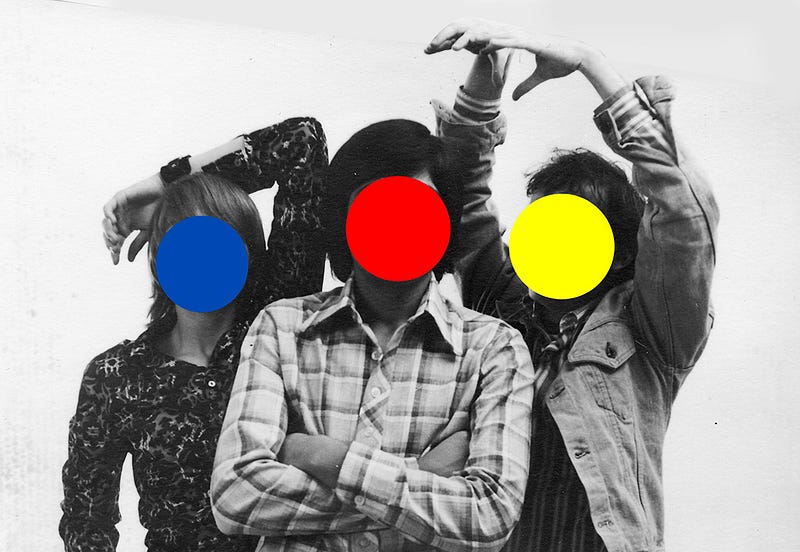
In 1985 John took some colorful price stickers he was using for a graphic project and he put them over the faces of people in photographs from newspapers, film stills, or advertisements he had been collecting. Photo-ops of dignitaries, politicians, people at various civic occasions, that type of thing.
“All these people influenced my life and I have no control, so I’m just going to blot out their faces. Now they’re just like me. Nobody cares who I am, and I don’t care who they are. They didn’t have any influence anymore.” (source)
He felt that by obscuring the faces he had levelled the playing field. The people had lost all power over him. He saw them for what they were. They became replaceable.
Obscuring parts of an image removes context which is essential to the construct of language and meaning. What the dots conceal becomes a flash point of interest. Don’t look at that! actually makes you… look at that.
I was drawn to my limited collection of vintage family photos and decided to inject them with the Baldassari-Dot serum to see how that treatment would change the flavor and meaning of the images.
When you take away the thing that’s most predominant in an image it forces you to look at everything else, almost as a new object, to make sense of what you’re now seeing.
Consider these efforts:
Salud!
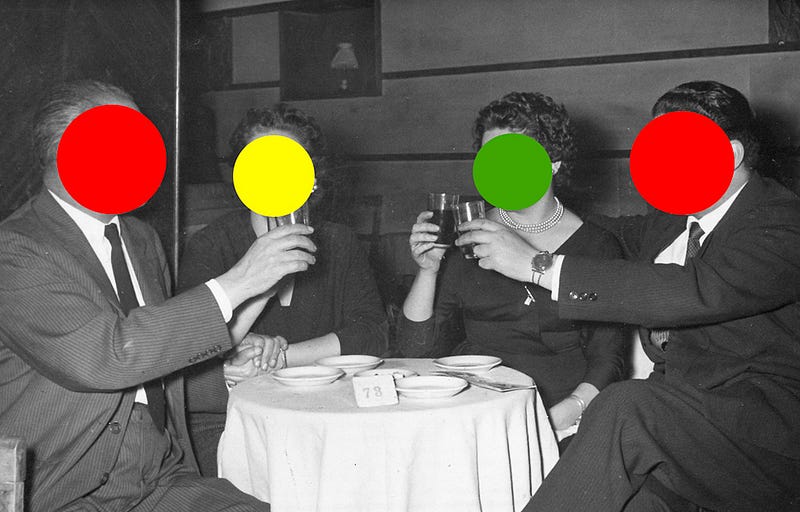
This image of my parents and some friends became a symphony of hands as soon as the faces were obscured. I had never noticed that the couple on the left were holding hands. The number on the table suggests that this was a significant event.
Front and Back
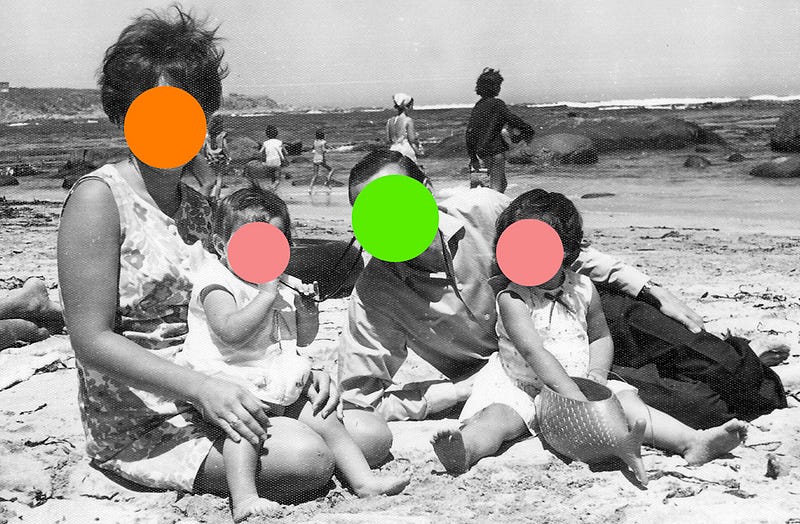
The dots in this image made me notice that there is a clear delineation between the people looking toward the water and people facing away from the water. Coincidence?
Crossed, Uncrossed
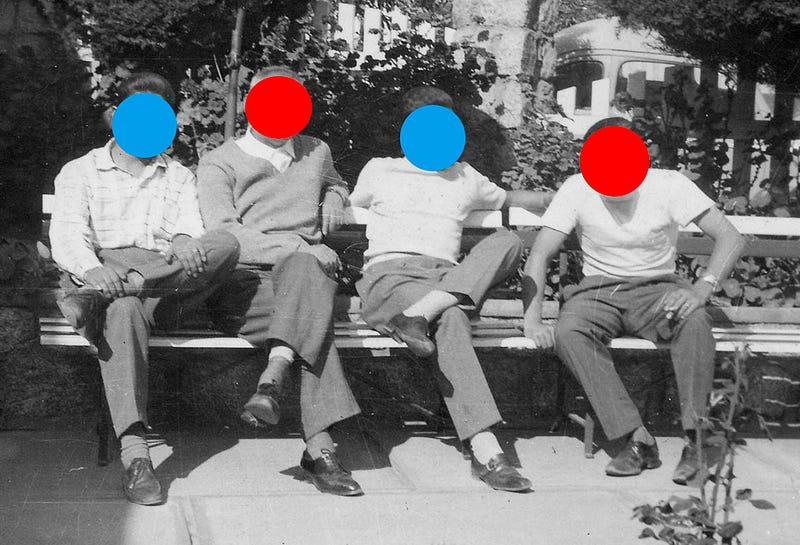
Without faces, this image became a symphony of legs. There is both a feeling of congruity and discordance in those limbs.
My intent here is nothing more than an experiment. What happens when we apply an existent idea to create new art? As already stated, an idea cannot be owned, only transmitted. So, with deep respect and gratitude: Thank you John. You took me places I had not been.
I admire John’s playfulness. He didn’t take Art seriously…seriously. He walked a tightrope of being abundantly simple and intensely complex. He personalized Nobel Prize laureate André Gide’s words: “Please don’t understand me too quickly.” (source)
John Anthony Baldessari died on January 2, 2020 at the age of 88.
He was a giant.
