
PHILOSOPHY | RELIGION | SCIENCE | SPIRITUALITY
I Was Too Quick to Hate Religion
Human beings will always need a “language of the spirit.”
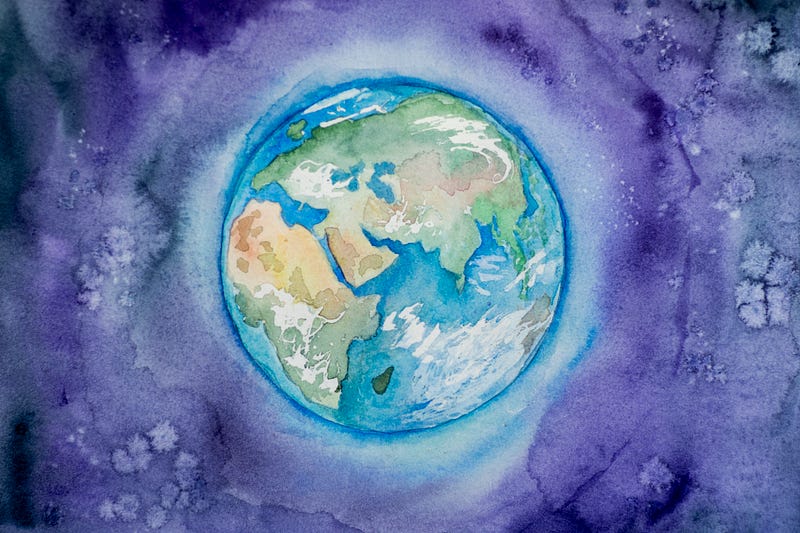
Science investigates; religion interprets. Science gives man knowledge, which is power; religion gives man wisdom, which is control. Science deals mainly with facts; religion deals mainly with values. The two are not rivals.
— Martin Luther King Jr.
A few years ago, I would have disagreed with Martin Luther King Jr. on this topic. I was strongly opposed to any and all forms of religion, and I thought that I’d be a member of the Richard Dawkins school of Atheism until the end of my days.
I scoffed at the notion that something as seemingly irrational as religion could be reconciled with science, and I assumed those who believed this to be the case were naive at best, shills at worst.
I forgive myself, however, for taking such a hardline stance on religion, which crystallized sometime in high school and early college.
The images of religious fanaticism were still fresh on my mind — jihadists beheading innocent people on camera, Westboro Baptist Church members protesting the funerals of dead soldiers or LGBTQ+ people.
And those are just recent examples.
Historically, terrible things have been done in the name of religion for centuries — the Inquisition, the suppression of free-thinkers such as Giordano Bruno, etc.
I thought that if only humanity could divorce itself from religion, we’d finally soar off into our Star Trek-destined future.
Religion, it seemed to me, was a deadweight dragging us down to the bottom of the sea, whereas science provided the bolt-cutters capable of liberating us from the ignorance of our past.
And then the 2016 election happened, forcing me to question everything I thought I knew.
I supported Senator Bernie Sanders over Hillary Clinton, and again over Biden in 2020.
He lost both times, and both times, the very same tribally-minded, toxic in-group/out-group mentality that I thought I had cured myself of had, in fact, tainted my social media conduct.
And it didn’t matter that other candidate’s supporters did it too. It only mattered these tendencies to manifest in me, which is supposed to be the only place I can exercise some form of control.
The truth then hit me like a sledgehammer.
Human beings don’t need an official “religion” to behave religiously. We behave in much the same way when it comes to politics, social issues, or what have you.
Religion, after all, is just another domain of human life where the battle between good and evil plays out in perpetuity, and how people choose to use religious belief is far more important than the specifics of the beliefs themselves.
From my newfound perspective, I had a hard time telling the difference between the religions I had railed against and seemingly “secular” political ideologies — on all sides of the aisle — that were duking it out to secure control over cultural narratives.
Narratives that people want to use — undoubtedly — in the same way as they do religious beliefs: to control, coerce, guilt, and shame others into seeing the world they do, or else.
As uncomfortable as it was, I was forced to confront the truth that we can’t escape this problem.
Even if old religions fade, new ones will arise, bringing with them all the same toxic tendencies that have always been there, as part and parcel of human nature itself.
And then there was my own personal struggle with spirituality.
I had railed against it, shunned it even, during my college years because I was terribly afraid of embracing anything that seemed irrational.
Yet it was after college — when I was forced to confront reality for the first time in earnest — that I found myself feeling empty and in need of something.
Almost unconsciously, I latched on to the only thing that provided me comfort — the Star Wars sequel trilogy, ironically a narrative tale heavy on themes and motifs that evoke religious symbolism to layer its story with meaning.
Even within the Star Wars fandom, I found myself repeating the same toxic behaviors I was trying to get away from by leaving politics behind — engaging in tribalism, assuming things about the content of people’s character on the basis of how they interpret a fictional story, etc.
It’s now hard for me to deny, however, that I was letting myself loose into the fictional world of Star Wars because it was providing something of a religious experience for me.
Of all the sequel trilogy films, the most enjoyable theater experience was The Force Awakens, because I saw it with a group of close friends that all shared the excitement over finally getting to see Star Wars film in a theater, to hear John William’s amazing music accompany an opening crawl that began a new adventure in the galaxy far, far away.
In my zeal to make Star Wars more a part of my life after The Force Awakens — which was really my attempt to fill the hole that religion had left behind — I took to Reddit to speculate about the story.
One thing led to another, and a fellow speculator told me to read the works of Joseph Campbell, who was somewhat of a mentor to George Lucas and whose works had deeply inspired some of the thematic work behind the saga.
I remember starting with the book version of the Power of Myth, which was originally an interview that Joseph Campbell had with Bill Moyers.
Hopefully, someone reading this is rolling their eyes.
Here was a guy that had railed against religion, and yet was about to become completely enmeshed in a book called “The Power of Myth,” myth being, of course, almost a synonym for religion.
In any regard, I remember getting to a certain point in the book, which quoted, at length, the letter from Chief Seattle to the United States President, which was a response to a request to purchase Native American land.
As I read, I couldn’t stop the dam from bursting — tears started flowing, and they didn’t stop. In that moment, I was keenly aware that I was “out of tune” with something in myself, and that I needed to make some effort to get back in touch with it.
There wasn’t any rational reason I should have started crying at that moment, or maybe it was rational, depending on how you think about “feelings” and how they operate.
But I do remember that passage getting me to think about how violently I had gutted religion from my life in high school, and whether I had really made the right call in doing that.
Something about the Native American spirit towards the lands they inhabited tugged on my own spirituality, reminding me that there are things I care about far more than seeming “material” progress, which science has undoubtedly accelerated in recent centuries.
As many great thinkers have pointed out, material progress is meaningless if there isn’t corresponding spiritual progress that comes with it.
This is the great predicament humanity now finds itself in: we have made all the progress in the world on the material front, and yet, emotionally and spiritually, we still live as our ancestors did centuries — even millennia — ago.
What the rest of The Power of Myth helped me discover was that I was wrong to try and deny the religious impulse in myself, which is as much a part of being human as anything else — be it hunger, libido, the need for companionship, or what have you.
Still though, one of the truly interesting things about Joseph Campbell — as well as Alan Watts and many of the other thinkers I’ve explored since — is that they are no ordinary “religious” people in the sense that we think of the word.
Much like the protagonist in Ang Lee’s 2012 film Life of Pi, Campbell didn’t play any favorites when it came to religion.
In fact, he actively cherry-picked his favorite bits and encouraged others to do the same.
He saw the value in all the world’s religions. His life’s work became dedicated to elucidating the shared truths that united them underneath the external language “garments” that they donned.
Put another way, the idea that he had to pick one truth and exclaim it to the exclusion of all the rest was absurd to him, and he likewise didn’t have anything bad to say about science.
He even openly admitted that science has fundamentally altered our image of the cosmos and that the new myths that are needed need to take that into account.
Campbell walked a middle ground between science and religion in a way that few people ever do, and he did it in a compelling way — by speaking truth to the power and beauty of each, and by believing that people could reconcile these two seemingly opposing forces within themselves.
His perspective on religion continues to fascinate me. He saw each religion as a collection of poetically rendered insights, rather than literal statements regarding metaphysical truths.
This isn’t precisely the way a fundamentalist wants to view religion, and it isn’t precisely the way an atheist wants to, either.
Both want to take an extreme attitude.
The fundamentalist wants only their faith to reign supreme. The atheist (some of them, anyway) wants to assume that every religion is as absurd as the others and to completely deny that they have any truth to them at all, thereby escaping the need to grapple with them.
Campbell’s view that religions are just collections of poetry that act as metaphorical pointers toward spiritual truths helped break me free from the dogma of my own side.
I began to once again see the value in exploring religion, even if only to cherry-pick — a la Life of Pi — my way toward a chimeric construction of my own, unique “language of the spirit.”
And Campbell helped me do this in a way that didn’t turn me 180-degrees in the opposite direction. I didn’t become bitter with science or atheism simply because it didn’t spiritually “work” for me in all the ways that I hoped it would.
In fact, I still believe science is our best tool for discovering new truths that we can collectively agree upon. It’s almost magical how great science has worked out for us.
Atheism and science played a huge role in inoculating me against dogmatic thinking and the people who espouse such thinking, and for that, I am forever grateful.
Yet there was still this feeling I was grappling with that there’s a part of us that isn’t content to simply sit still and “wait” for answers. Call it awe or mystery, but human beings have a deep yearning to be connected with something that is far bigger than themselves — and perhaps impossible to explain through purely rational means alone.
Because the truth of the matter is this: we don’t know why we are here, as individuals living in a society or as a species inhabiting this planet. And this “not knowing” has been the source of a tremendous amount of anxiety — and a great deal of moral mischief — since the days of our first ancestors.
All belief systems, be they religious or otherwise, create moral mischief when they try to give absolutist answers regarding things that can’t be known, such as the “why” of human existence. It’s absolutist thinking that I do my best to avoid as much as possible in my own life, even though this raises interesting questions regarding what it takes to have values and principles that we not only hold, but stick up for.
So there is something to be said that religion has always been an answer to human anxiety.
The mistake I made, however, was in thinking that life could be as simple as ditching the religious impulse altogether for fear of its apparent irrationality.
When we sever ourselves from the religious impulse, we may still feel awe in the face of a tremendous cosmos, to be sure. How could we not? It’s big and we are seemingly “small,” so what gives?
But what we lose is the desire to relate to that feeling of awe, to find a way to live that sublimates our ritualistic tendencies, that helps us feel joy and peace in a life that can quite easily feel like chaos in the absence of an overarching belief system.
Life is a powerful feeling.
It’s essentially one long, drawn-out sensory experience that punches you in the face with the full gradient of human emotion — pain, pleasure, joy, fear, anger, heartbreak, envy, jealousy, sadness, despair, hope, and all the rest.
Try to flee that experience as we may, it will always catch up with us.
Sooner or later, to quote Cowboy Bebop, we’re going to have to “Carry that weight.”
Religion has helped human beings process this experience — even if not always in the most healthy of ways.
But these days, I’m trying to do a better job acknowledging that a few bad apples cannot possibly be indicative of the whole bunch.
If it were true that religion is like some mind virus that turns everyone who comes into contact with it into an evil, fundamentalist monster, then we would all be doomed to living in a dystopia. No progress could have ever been made.
The truth, however, is that human beings have done the best they can, despite their differences of belief.
And so, in very much a Joseph Campbell sort of way, I’ve come full-circle back to the starting point.
I now see the need to develop a “language of the spirit,” and I believe that all of the world’s religions are fair game when it comes to doing that.
It may no longer be possible for me to ever feel like I can subscribe to only one faith, but maybe that’s the change that really needed to happen — the decentralization of belief away from authorities and gatekeepers toward the average person and their individual quest for spiritual fulfillment.
Today, we each get to be interpreters of religious poetry. We don’t have to go to someone else for answers, and perhaps it’s better for the world that we do less and less of that as time goes on.
Nonetheless, I hope my life is a quest rich with discoveries and rewards, even if the treasures I happen upon are of the non-material, spiritual sort that doesn’t add digits to my bank account, but help me more appreciate the time I’ve been given to live.
That is what all these words the writer conjures are for — discovering and elucidating their very own language of the spirit.


