
HAZARDS OF THE JOB
I Was In A Sniper’s Crosshairs
Caught up in the middle of a riot
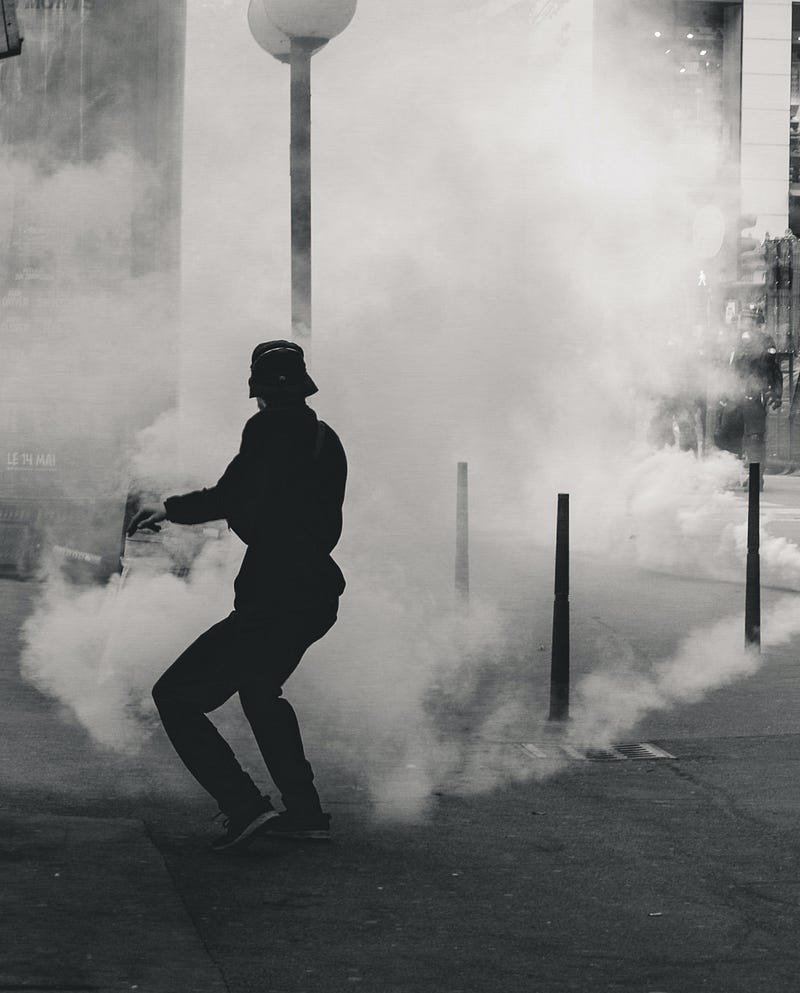
We kept running in an effort to try to stay in front of the rioters and avoid any contact. We didn’t want to become collateral casualties. What I didn’t realize, as we were running up the street, was that on a nearby rooftop, a military spotter was pointing us out to one of the army sharpshooters. He didn’t realize we were journalists.
It was the G7/G20 protests in Toronto. Leaders from the key strategic nations in the world were gathered to discuss world trade and finance.
The meetings are always a target for protesters, including ANTIFA and anarchists. There was a hardcore group called the Black Brigade, dressed all in black, including black balaclavas over their faces. They threatened to disrupt the conference.
Police and security had set up a fenced-in perimeter around the hotels and meeting sites. Security was tighter than I had ever seen in my thirty years working in Toronto newsrooms. The world leaders and their entourages would be safe.
Tensions had been building for days between activists and police, with a few minor skirmishes breaking out. Saturday would be the “Day of Action” when various organizations would band together for a massive protest. Organizers emphasized that this would be a peaceful demonstration and everyone would be welcome. But some of the disrupters had other plans.
I was a senior news producer at a 24-hour local TV News station and was assigned field producing duty. That meant I would be in the center of the protest with a camera operator and a special correspondent we had brought in for our coverage. He didn’t have any formal TV News training but he had been interviewed hundreds of times as a precocious child activist and later as the founder of an international child poverty organization.
It was my job to make sure he was in position when he needed to go LIVE, round up guests, direct the camera about what video to shoot, and maintain clear communications with the newsroom.
Everything was going smoothly, too smoothly, as we walked in the midst of the massive crowd of protesters, moving through the downtown streets. Protesters were chanting, “Whose streets? Our streets” as they issued a challenge to the police. It was a steamy midsummer day in Toronto with temperatures in the mid-thirties and a light rain falling. Nobody was allowed to have an umbrella because we were told they could be used as a weapon.
We got as far as Queen Street and Spadina Avenue, a busy intersection in the heart of the entertainment district. Suddenly the protest came to a stop. We looked around to see what was causing the holdup.
…tensions continued to build, like a powder keg just waiting for a spark to ignite it.
The protesters’ chants became one loud cacophony of sound. There were now dozens if not hundreds of anarchists, all dressed in black wandering through the crowd, an ominous sign as the tensions continued to build, like a powder keg just waiting for a spark to ignite it.
Suddenly there was a commotion in the intersection, it looked like a fight had broken out, but all I could see were the tops of people’s heads. There was a palpable change in the atmosphere. I signaled for my team to move through the bunched-up crowd toward the epicenter. There was a lot of pushing and shoving and it was obvious that things were getting out of hand.
There were police officers everywhere, their cars blocking off intersections. Members of the riot squad were on horseback trying to control the crowd and others were on foot, moving as a line while banging their riot shields with their batons.
Undercover officers and members of the Canadian military armed with high-powered rifles sat positioned on rooftops watching it all unfold.
The Black Block started running back up the street where we had just come from. There was the sound of breaking glass and a loud war cry which triggered a stampede as the large crowd joined the anarchists running east.
Troublemakers latched on to the anarchists' tactics by smashing store windows and creating even more tension in an already volatile situation. They seemed to be feeding off the energy from one another.
We kept running in an effort to try to stay in front of the rioters and avoid any contact. We didn’t want to become collateral casualties. What I didn’t realize, was that on a nearby rooftop, a military spotter was pointing us out to one of the army sharpshooters. As the gunman trained his sights on us, I turned to look over my shoulder.
When he saw my face, he immediately recognized me.
As we ran up Queen Street, past city hall, we realized that the news media had now become targets. Some of the anarchists were screaming at us and the other news crews, accusing us of working for the police to help identify them. Of course that was their own paranoia.
We were just trying to do our jobs. But as the bricks started landing closer to us, we were not about to start arguing and instead we started running as fast as we could.
We were surrounded by the angry mob in the middle of the riot. As we turned onto Bay Street, the heart of Canada’s financial district, I spotted one of the country’s top journalists and her cameraman running in the same direction. She is a well known Canadian television network international correspondent and I had seen her reports from war zones around the world.
Everyone knows she is fearless. But as I now looked at her face, it registered sheer terror.
We glanced at each other and kept running, trying to dodge flying bottles and bricks. It was then that I realized, “if she’s worried about what’s happening, then we are in serious trouble.”
In the Financial District the violence was escalating. A group of protesters were taking their anger out on a police car stopped at the intersection of Bay Street and King Street. Protesters were rocking the car, smashing it with clubs and sticks, even hammers, and trying to flip it over.
One young man, dressed all in black, was jumping on the roof and then the hood of the car. We couldn’t tell if there was anybody still inside it. But suddenly there was a flash and everyone backed away as the police car burst into flames. As thick black smoke billowed from the burning car, there was another small explosion. We had to get out of there fast.
Our cameraman kept a safe distance from the action but kept sending live video back to the station. When we got what we needed we took off running again, sometimes running in circles around familiar downtown blocks which were now barricaded, restricting where we could go.
Everywhere we turned, there was another group of angry protesters. Most of them ignored us, but a few had a hate-on for the media. We could never be sure who to avoid so we just kept moving.
For the rest of the afternoon and early evening we played a game of cat and mouse with the protesters. We would move into the crowds that seemed relatively calm. But like moths to a flame, others would home in on our camera shots and our microphone. As things heated up around us, we would take off and start running again.
For the next few hours we were constantly on the move, searching for people willing to talk as we tried to tell the story that was unfolding that day.
We eventually made our way back to the starting point of the protest, where our news vehicles were parked. As the sun was setting, the exhaustion hit us and we were ready to drop. The tensions of the day drained out of us. We were wet from the rain and from the sweat as we ran in the muggy heat. But we survived the riot, virtually unscathed, and we managed to do our jobs.
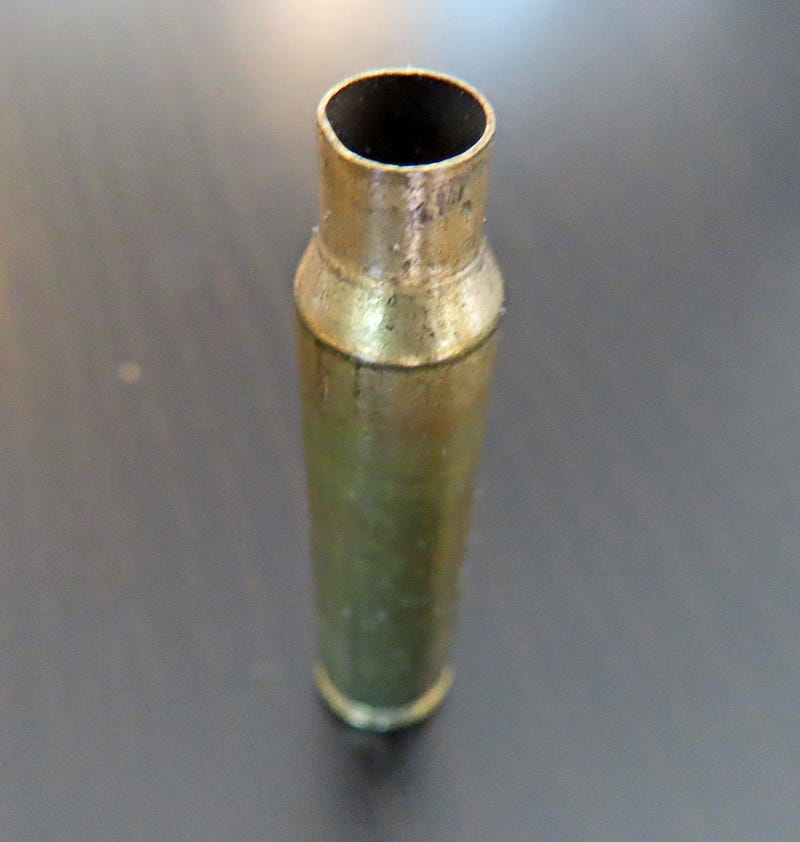
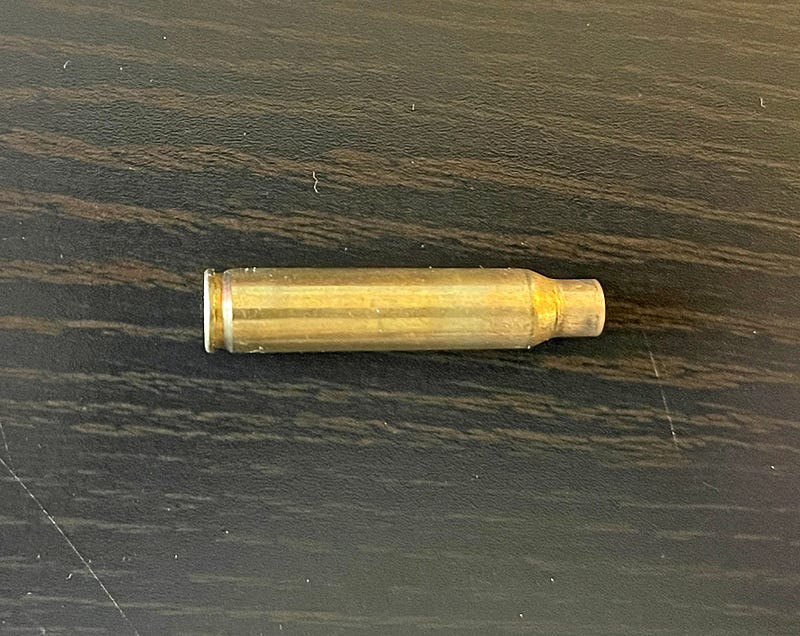
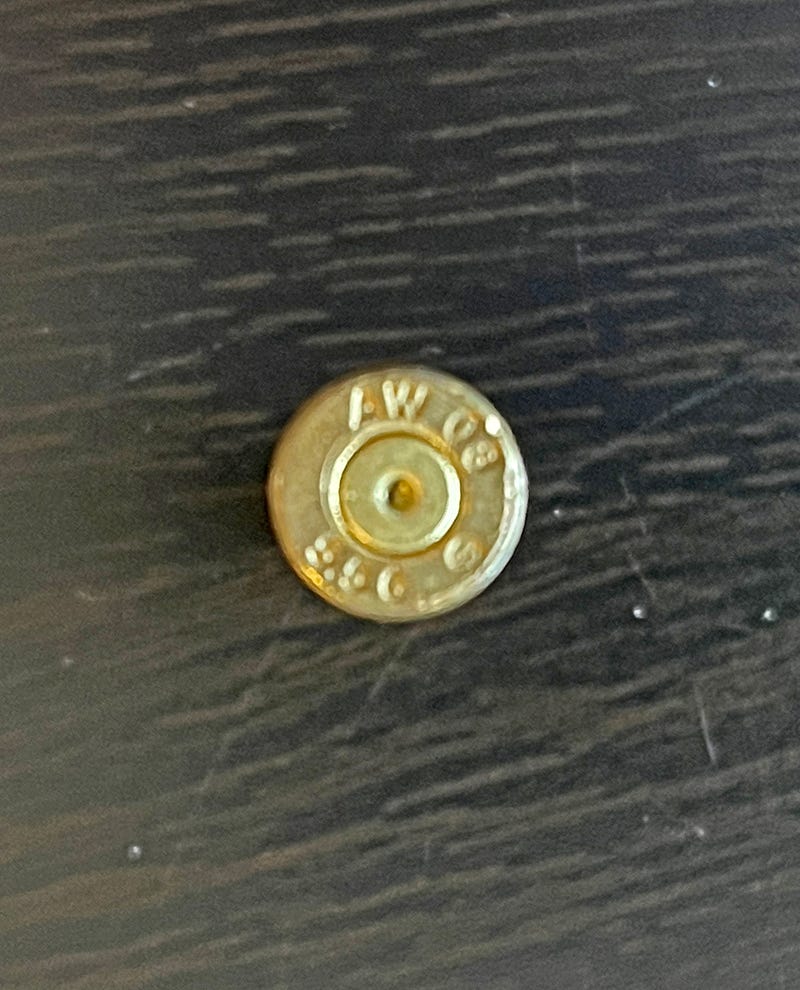
A few days later when I was back in the safety of the newsroom, and my desk, the events from Saturday were still top of mind. A friend of mine who was a camera operator, walked up behind me and without saying anything he set a bullet casing down in front of me. I looked at it and back at him with a puzzled look.
Jeff said, “That bullet had your name on it.”
He told me he was on duty for the military on the weekend. I knew Jeff was in the army reserves but at that point, I didn’t really know what he did.
He was a sharpshooter.
He told me when his spotter pointed me out, he trained his scope on me and when I turned around, he recognized me. Jeff said he gave his spotter the thumbs up and said, “he’s fine,” but he told me he also popped that bullet out of his weapon.
Jeff explained, “It’s a military tradition to hand over the bullet to someone you know, who was in the line of fire.” He told me that I am lucky that he was the one who spotted me.
I was horrified.
There are a lot of videos online about that day but this one features many of the reporters I have known and worked with for many years. We all found ourselves the target of some of the violence that day.
Read about another hazard of my job in the media, the fear I felt when a stalker called…


