
I Was Immediately Asked When Are You Returning Back To The US — This Is What I Replied
Emigration is not just a change in geography, rather it’s a change in mindset
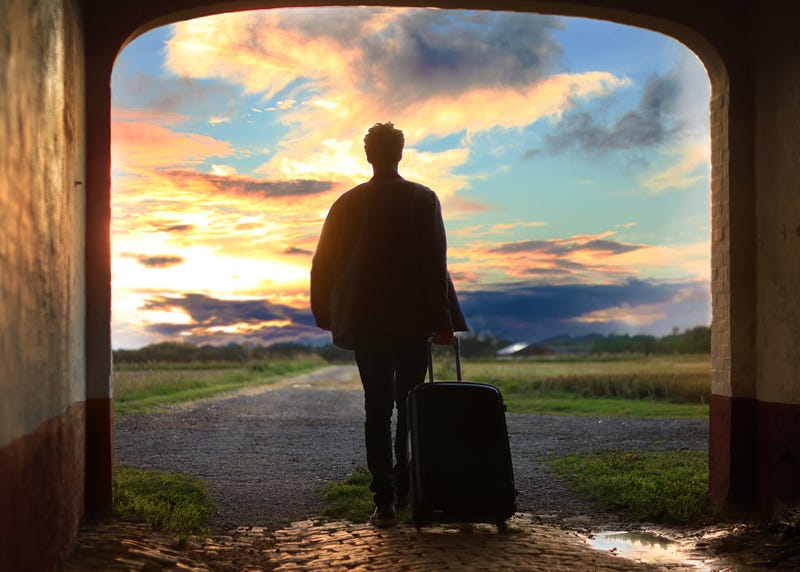
The decision had been made and it was time to share it with friends, neighbors, and colleagues.
“We are relocating to Mexico and leaving the US.”
“What — ”, I was immediately asked, “Why?”
It felt like a movie production set where everyone got the memo of their script — except me. My friends and colleagues all asked, without skipping a beat, “How long will you leave for?”
The assumption was, “you ARE returning to the United States, right?”
“No,” I replied. “It’s for good. We don’t plan on returning.”
The shock on their faces said it all. “Oh my gosh, how could you not! You must!?”
I saw both fear and pity in their eyes. They didn’t say it directly, but they essentially believed it was a huge mistake and pitied me for the loss I was sure to experience. (It’s important to note —we examined the job offer in Mexico while there was also one on the table within the US)
I sensed many wondered as they all asked me a series of questions that seemed to beg the question…
Why would anyone with a stable life in THE United States of America choose to leave and NOT return? Or why would you even consider leaving the US in the first place?
Restarting life in a new place has the potential to be transformational and invigorating. Your mindset and attitude are what unlock the potential for growth. It is a choice to welcome the challenge or not.
I was a college math instructor. Conversations with students and colleagues in preparation for the subsequent semester necessitated that I make the formal announcement of my departure from the university. Prior to making the announcement, I wanted to take a pulse of how this next generation thought about emigration.
I did a brief survey in all of my college classes. I asked my students (totaling about 100 freshman and sophomore students) the following question:
Imagine for one minute that upon graduating from college you are presented with a great opportunity to work overseas. Imagine you are not married and have no children. Would you take the opportunity to live and work outside of the United States?
There were maybe a total of 5 students who raised their hands and would take such an opportunity. Five. JUST 5%!!?
“Why?”
I was stunned. I wondered, “Why would so few consider taking such a great opportunity?”
Many shared, “I don’t want to be far away from my family,” when I questioned their decision.
Even when I rephrased the question and reminded them that leaving didn’t have to be permanent — it didn’t seem to exercise any greater power in convincing them to take the opportunity.
These students instantly became aware of their need to be comforted by the familiar — as well as the instinctual need to belong and remain near loved ones and their roots.

In these last few years, the extreme lack of compassion and almost disdain shown to immigrants in the United States and worldwide deeply troubled me — and still does.
I wish others would attempt to understand the power that lies in transforming who we are, and how we think and behave when we are immersed in cultures different from our own.
I arrived in the US as an immigrant student — twenty-seven years later I decide to emigrate again…but consequentially have made my youngest son who is 17 years old, an immigrant too.
He expressed great concern — he had many questions.
Within just a few months of living in Mexico — he then said, “I can’t believe you were right, Mom. I would never have imagined that I could be happier here than where we were.”
My son adores Mexico because of the amazing friendships he has made and what he has learned about this culture.

My loyalty or patriotism as a citizen does not fluctuate based on where I live. My love for my roots and culture does not dwindle the longer I am away from that geographical location.
However, growing a sensitive heart and open mindset that seeks to respect, understand and value that which is different from what I know or even prefer, remains a constant.
These are gifts from my journey as an immigrant which I will always treasure.
I shared the following with my students during that closing semester.
The opportunity to leave your comfort zone can be an exceptionally challenging one that need not be shunned nor criticized — rather it should be one that you take the time to ponder its hidden value.
Living and interacting with other cultures can be the bridge of communality that brings groups together when there is a lack of communication. At worst, respect and kindness are fostered.
A sensitive heart and open mindset are gifts from my journey as an immigrant I will always treasure.
📚Thank you for reading. How about you — would you consider leaving your home country if presented with a job opportunity far away? What have you learned when you have had to interact with immigrants in your area? Share these or any thoughts that arise — I would love to hear from you.✍🏽


