
I Was Asked What It’s Like to Be Disabled. Here’s What I Said.
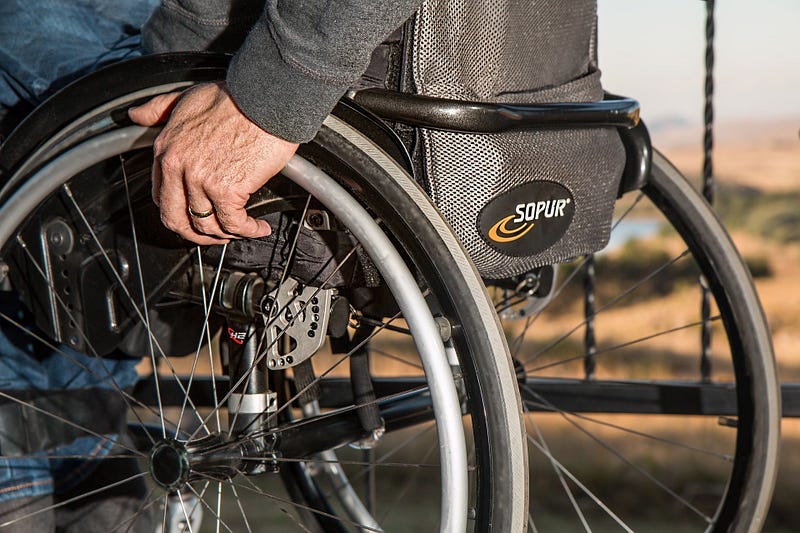
It’s one of the most common questions people have when they meet me, though they almost never ask for fear of being insensitive.
But, due to a natural curiosity, they so desperately want to ask.
Others don’t ask because they don’t want to know. To them, I’m a cautionary tale of what could happen to them in a single horrible moment. Ignorance may be bliss, but it doesn’t protect anyone from being in the wrong place at the wrong time.
Last week’s posts, “Sixteen Years and Rolling…” and “A Parent’s Nightmare…” prompted a few friends to reach out to me, some of whom I haven’t seen since before the accident, some of whom hadn’t yet heard about it. Many people offered sympathy for what had happened.
Some had questions about the accident and my life post-injury. Often, these were preceded with phrases like, “Hey man, I don’t want to be rude, but…” and “Is it alright if I ask…”
I can’t speak for everyone, as not everyone is comfortable talking about their experience with their disability. However, I’m happy to answer questions, as long as they’re posed respectfully. Or if they make me laugh.
What follows is an amalgamation of questions I’ve been asked about my life in a wheelchair and my answers to them.
“What’s it like?”
A fair question. An obvious question.
But one that’s difficult to answer.
I’ve been a quadriplegic for so long, my able-bodied life seems like a separate lifetime. I have twenty-two years of memories in which I had full use of my body and could reach the Cheetos on the top shelf at the grocery store. When I dream, I’m able-bodied a good 90% of the time. And yet, when I wake up, I function on autopilot: transfer into chair, roll to bathroom, cath myself, roll to kitchen, GET COFFEE, etc.

It’s become so normal and mundane for me, I don’t usually notice it, even when I’m away from home.
Not unless something is out of reach or there are stairs involved.
Though I have found creative ways to navigate a world built for the tall and upright.
That bag of Cheetos? I can get it on my own. I just might need the aid of a plunger or Swiffer Sweeper from three aisles over to knock it into my cart/lap.
I suppose being disabled is like anything inasmuch as, you do it long enough, you just get used to it. What’s more, most people I interact with on a regular basis are used to it as well. Yes, there’s an initial adjustment period. But that passes quickly for most people.
A surefire sign that someone has grown comfortable with my being in a chair is when they start to make contextual wheelchair jokes based on where we find ourselves.
Someone beating me to the punchline of a really great wheelchair joke has become one of the great joys of my post-injury life.
“Can you feel anything?”
I can. As I’ve written about in previous posts, I have full sensation throughout my body. Luckily, my spinal cord was damaged, but it wasn’t severed during my accident. And yeah, things were a little fuzzy for a while, like a mild to moderate pins and needles sensation.
In fact, if you want to experience what it was like, find a nice, hard corner on something, and give your funny bone a good whack. Yeah, it’s going to suck for that first ten seconds or so, but once the feeling begins to return, that’s when you will feel what my sensation levels were like as I recovered. Only for you, it’ll be like 45 seconds. For me, it was close to two years.
“Can you move anything?”
The short answer is, everything works to some degree — just not enough for me to get up and walk around. I can wiggle my toes, move my legs a little, and I have limited core strength. I can walk in a swimming pool if I’m in deep enough water and can hang onto the edge, as I have zero balance.
I do have lingering nerve damage in my chest, arms, and hands, however. My left hand has a lot of function, whereas my right hand is generally useless. My right tricep and peck muscles are substantially compromised. Consequently, I look a little lopsided with my shirt off. My right arm is smaller than my left, but my right shoulder is the larger of the two due to all the compensating it does for the muscles on that side that don’t work as well.
“Does it hurt?”
Generally, no. I’m extremely fortunate that I don’t live with chronic pain as many people with disabilities do.
One of the worst possible aspects of a neurological disability is nerve pain.
Have you ever had a toothache? Something in which the pain was constant, no matter what you did? And even if you find a way to dull the ache, the slightest thing, such as existing, can set it off again?
The reason a toothache hurts so much is, often, you have an exposed nerve.
Nerve pain is like having all of your nerves exposed at once.
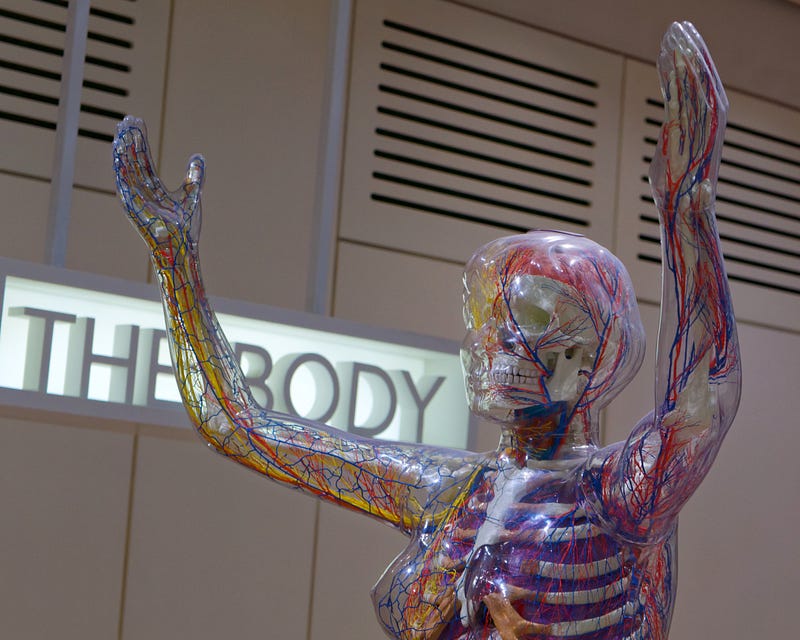
However, it’s not a sharp pain or a dull ache like a toothache.
It burns like fire and freezes like ice — sometimes at the same time.
I only ever experienced this sporadically, and only within the first six months after my accident.
And only in my right foot for some strange reason.
I remember trying to sleep in the hospital one night, which is fucking impossible due to all the noise and the fact that someone wakes you up every two hours to take your vitals, roll you on your other side, and stick various unpleasant things in various orifices.
One night while I was in the rehab hospital, a nurse came in for a routine check of my vital signs and midnight probing. When she was done, I asked her to please pull the blanket over my right foot, as it was freezing.
She told me the blanket was already covering my foot.
Well…that’s shitty. There wasn’t anything I could do about it. The doctors were already giving me Gabapentin, a drug used to alleviate nerve pain, and normal painkillers, such as Aspirin, Norco, or even Morphine, don’t ease nerve pain.
Luckily, this didn’t become permanent.
Nowadays, I get the similar mundane ache and pains as anyone, though as you may imagine, they tend to be concentrated in my upper body. By the end of the day, my neck, shoulders, elbows and wrists sometimes ache depending on how far I had to push my chair. There’s a reason humans have legs; the upper body, and specifically the shoulders, were not designed to be our primary means of propulsion.
How bad can it really be?
If you want to find out, rent a wheelchair and just try getting around the San Francisco Bay Area for a few hours. I’m betting you don’t make it half an hour before you feel like your arms are going to fall off.
I say that as someone who attended graduate school in Oakland for three years.
Also, I spend a lot of time hunched over my computer writing/working, which also makes my neck and upper back ache after prolonged usage.
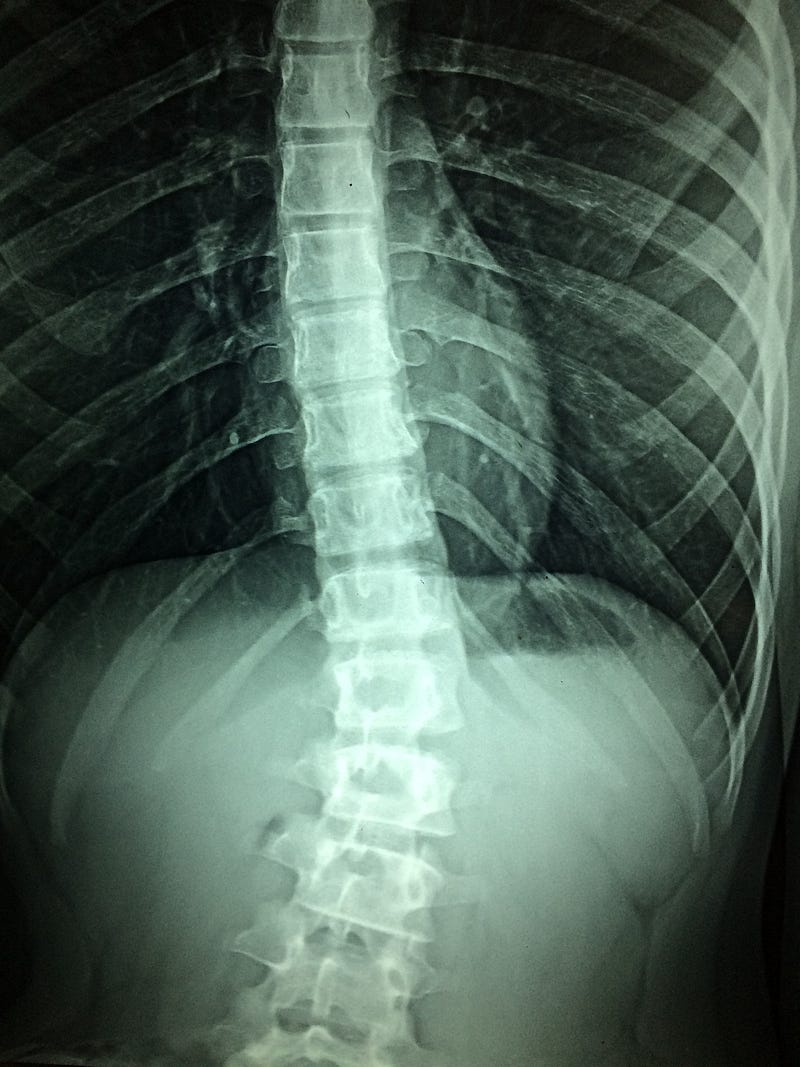
“Wait, you’re a quadriplegic? Doesn’t that mean you can’t move your arms?”
When people hear the term “quadriplegic,” mostly they think of Christopher Reeve. Not that I blame anyone for this. He was very public with his treatment and recovery after his spinal cord injury.
Mr. Reeve used his celebrity to shine a much needed light on the kinds of struggles those of us with cervical-level spinal injuries face — something most people were content to pretend didn’t exist.
An unintended side-effect of this, however, was that many people began to associate quadriplegia with Reeve’s specific presentation of it. They think of a person who can’t move their arms or use their hands. They think of the permanent tracheotomy and respirator. They think of the massive electric wheelchair.
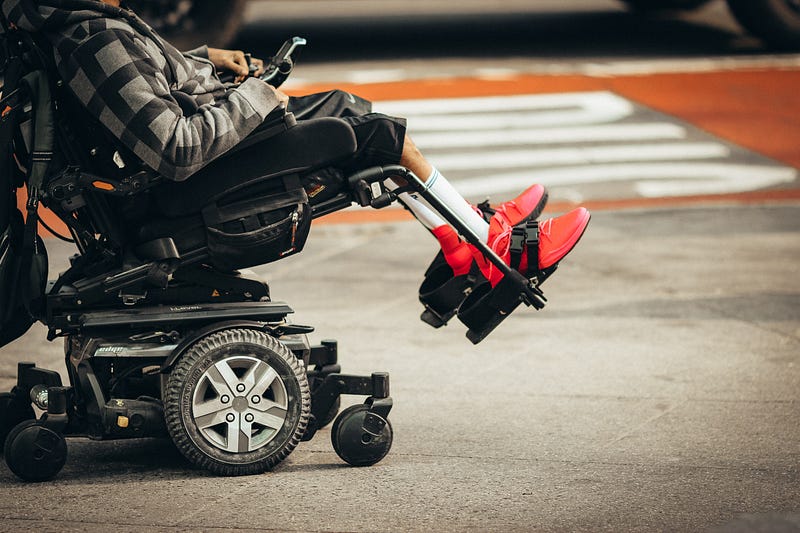
In reality, that only represents a fraction of quadriplegics.
Most of us with cervical-level spinal cord injuries can move our arms to some degree. Christopher Reeve was a C-1/C-2 level fracture. That’s as high up as you can break your neck without damaging your brainstem (yes, you can break your brainstem…it isn’t pretty). Therefore, he had the highest level of impairment.
The lower your fracture/the damage is to your spinal cord, the more unimpaired function you’ll have.
Even so, people with higher level fractures can still live independently. I’m rolling proof of this.
“Are you angry about what happened?”
Not really.
Don’t get me wrong; I went through a long period of emotional adjustment in which I was angry, sad, depressed, and frustrated. It was difficult moving back into the house in which I’d grown up. It was a house filled with remnants of a past life: the football cleats I’d never wear again, the shot put and discus I’d never throw again, the guitar I’d struggle to play, and eventually break the top E-string trying.
There were even times I wished I hadn’t survived the accident.
Those moments were fleeting, however.
As odd as it might sound, having physical and occupation rehab to do took my mind off how shitty a situation I’d found myself in. I had a series of tasks and goals to focus on instead. Completing routine, everyday activities with my newfound limitations became a series of puzzles to solve. And when I figured them out, it was incredibly rewarding.
Moreover, I had incredible support from family and friends who did their best to keep my spirits up, and who never let me give up, even during the times in which I wanted to.
If anything, I have a deeper appreciation for the things I can do, because I had to fight to be able to do them. And I’ll never take something like putting on pants by myself for granted ever again.
What’s more, at the time of my accident, I had failed out of college and was working 60 hours a week in an office supply warehouse. While I enjoyed working there, and though I worked with some fantastic people, it wasn’t what I wanted to do forever. However, if I hadn’t broken my neck, there’s a strong chance that I’d still be there.
My accident was the forceful life-correction I needed to go back to school and find what I wanted to do, what I was passionate about.

It also gave me the chance to tell my parents I’d failed out of school the semester before my accident without them flying off the handle.
A 1.2 GPA and being served my walking papers (ironic, I know) pales in comparison to needing to learn how to move again. Just sayin’.
“Would you change your situation if you could?”
I needed some clarification here as to what my “situation” was.
“You know, if you could take a pill or something and wake up fully functional tomorrow…would you?”
Fuck yes I would!
Just because I’ve made the best of the current situation doesn’t mean I wouldn’t return to an able-bodied life in a heartbeat. I have such a long list of activities I’ve missed doing that, if given the opportunity, I wouldn’t sleep for days because I’d be so busy making up for lost time.
That, and I’d be afraid it could all go away again.
This is by no means a comprehensive list of questions people have about what a perpetually seated life is like. I’d be happy to answer more questions should I get them.
In fact, let’s do this. If you (yes, you) have a question about my disability or what it’s like in my experience to live with a spinal cord injury, drop a question (or questions) in the comment section. If I get enough questions, it could turn into a whole second post. And I’d enjoy that.
If you liked this story and/or my writing, sign up for my email list to stay up to date on new stories, upcoming features, and other cool news. I promise not to overfill your inbox like that time I went to Build-A-Bear and it ended badly…