
I Was Addicted to Makeup, and It Destroyed My Self-Esteem
How I reclaimed my face and began to recognize myself in the mirror again.
Thinking back…
It almost felt too late to do anything about it at the point when I realized how much it was consuming me.
I should have known better. At the height of it, I was at the top of my class at a magnet school studying advanced biology and chemistry. I later got a full scholarship to a great university studying human behavior and the societies we create. If anyone should have known better, it was me.
You may see some of your own thoughts or experiences reflected here as well.
I’ve wondered what I could have done without this unhealthy obsession. If I had given that time back to school or friendships. If I had reclaimed the space in my mind that had been allocated to all of my inadequacies for anything more productive and less deprecating. Perhaps I would have been farther along by now in hobbies that I’ve always been interested in picking up, or gotten further into the subjects that I’d loved as an oblivious little girl.
I’ll never know.
But reflecting back now, it’s easy to see and articulate the extremely unhealthy behaviors that I developed as a teen and someone in their early 20’s. I know that I’m not alone.
An estimated 44% of American women do not like to leave their homes without makeup on.
We’re happy with ourselves until we’re told that we shouldn’t be. It’s insidious and self-propagating.
For me, this obsession with how I looked started with makeup, and took over my life for more than a decade.
In the beginning
I started playing with makeup as early as I started playing dress-up. I remember the transition from plastic lipstick, to my mom's old makeup that she didn’t use anymore. It was a tool for fun and play, until it wasn’t.
I had moved to a new school in 7th grade (the height of middle school…bleh) and everyone else had gotten the memo that girls were supposed to wear makeup, straighten their hair, and wear clothes from specific brands to have friends and get boys to like them.
I quickly picked up these lessons and internalized their messages: What other people thought of me was more important than what I thought of myself. People were always watching and judging me based on my appearance, so I should be keeping a close eye on it as well.
I adopted a schedule of spending at least an hour every day on my hair and makeup before school. This started when I was just 14.
I spent almost all of my free time reading articles on how to properly slather these new chemicals onto my face in the correct way, and I started carrying a purse everywhere I went so that I had easy access to my mirror and makeup throughout the day for touchups. God forbid my face be too greasy.
This isn’t my life now, and I’m sad to say that it ever was.
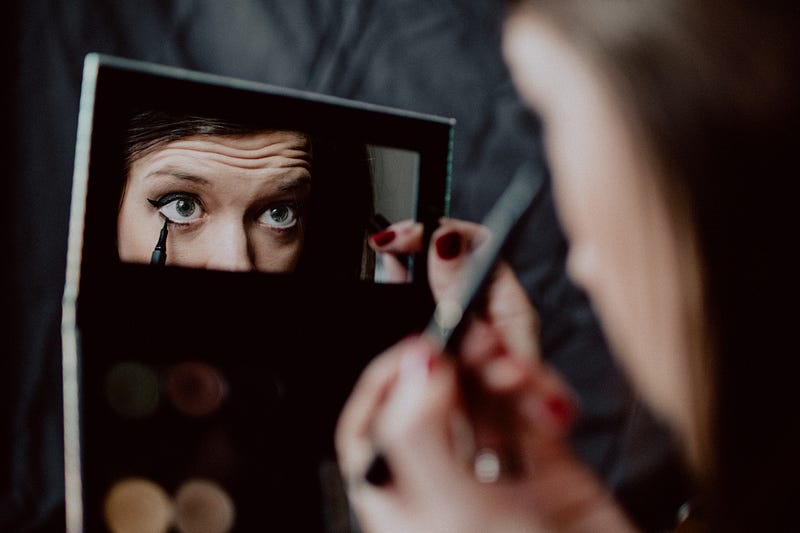
On the one hand, wearing makeup can be a great way to express, paint, and try out new things to change how you look. It can also come with some unintended long-term consequences.
For me, it reinforced the assumption that I didn’t like what I looked like. It’s taken years to start to undo even a small portion of the damage done.
A journey into my sick mind — what it felt like to be in the middle of it
Internally
It started out as an addiction to the makeup, but it quickly morphed into an addiction to the person that the makeup portrayed me as.
I loved seeing people stare at my well-carved cheekbones and my full deep lips. I loved hearing them comment on how perfect my eyebrows were.
I was proud of how often I’d been envied for my skills and asked to do other people’s makeup for the most special occasions in their lives (weddings, proms, homecomings etc.).
I had put in the work, and I was good at what I did…I knew that.
That being the case, a part of me was also always low-key offended when someone would say “wow you’re great at your makeup”. Let’s be honest, we want to be told we’re pretty, not good at pretending to be pretty.
I also resented how little anyone seemed to care about what was in my head rather than what was on my face. I felt stuck.
In high school, I was getting up at around 5:30 am every morning so that I could get on my full face of makeup and straighten my hair into burnt oblivion. This took up 1 and a half hours every morning before a rigorous day of advanced classes, followed by a night filled with homework and studying. Just to come home and wash it all off to start over again the next day.
I refused to show my bare face to the world for fear of “letting someone down” based on how I looked without it. I thought they’d know how deeply I’d lied to them, how fake I was, how extremely average an object of their affection had been. I thought I’d lose love and respect.
I skipped pool parties, sleepovers, and completely avoided sports I always imagined I’d join (like swimming) because it would mean that I would have to wash it all off in front of other people who would obviously be judging me.
This bled into other areas of self-hatred not uncommon for young girls. I remember I was 15 when I first asked my mom to start putting fruit in my Christmas stocking and Easter basket. I no longer had fun things that I actually wanted to play with or use on my Christmas list. It was now filled with the best expensive makeup, clothing I couldn’t afford, and workout equipment to “fix me”. I binged and purged regularly, went on crazy crash diets, and took dangerous diet pills.
Of course none of that even ever worked to give me the results that I was craving anyways.
The obsession started with makeup, but grew; As toxic messages often do.
Internally, I knew it was a problem. Senior year, I even did a presentation to our Philosophy class on the hidden harmful effects of makeup addiction and the warped view of the self. At the end of the presentation, I was shaking as I shared a picture of myself bare-faced relaxing at home. I got a few chuckles, but nothing as bad as I had conjured up in my head.
I was ready to fight the fight internally, but there were outward influences to deal with as well. There still are.
Outside influences
It seemed like a waste. I knew that. Spending all of that time every day worrying about applying and reapplying.
But I remember the consequences of NOT wearing it so well.
After winning States, a girl on my cheer team hovered over me in our shared bathroom while I washed everything off my face. She took a picture because she wanted to “show the school what I looked like without it”. I was devastated, but I was also tired, and it had to come off.
She commented on how different I looked, further cementing what I already thought to be true; I wasn’t recognizable as the pretty facade I’d passed for. To be fair, I’m pretty sure she had no idea how awful she even made me feel in those moments.
It wasn’t just me though…
An event that really stuck out to me was when another girl who always wore a full face of makeup came to school without any bit of it on one day. Just her bare face. How marvelously brave. Or she didn’t have time that morning, I’ll never know.
At the time, I thought she was barely recognizable. (That’s what my mind told me then, although I wonder how I would feel now). I remember her getting teased about looking sick and tired. Hearing about how different she looked without it. Everyone was talking about it. In fact, I knew about it before I even saw her in my next classes because of how much people were talking about it.
By the time I saw her in our next class together, she had called someone from home to bring her makeup bag. In the middle of chemistry class, she spent the entire class period re-applying it.
It actually makes me sick to think about that now. How much she felt shamed (by others and I’m sure by herself) that she missed out on a class to conform to slathering makeup onto her face. It was more bearable to need to teach herself advanced chemistry later, than to deal with what she’d been feeling without it on.
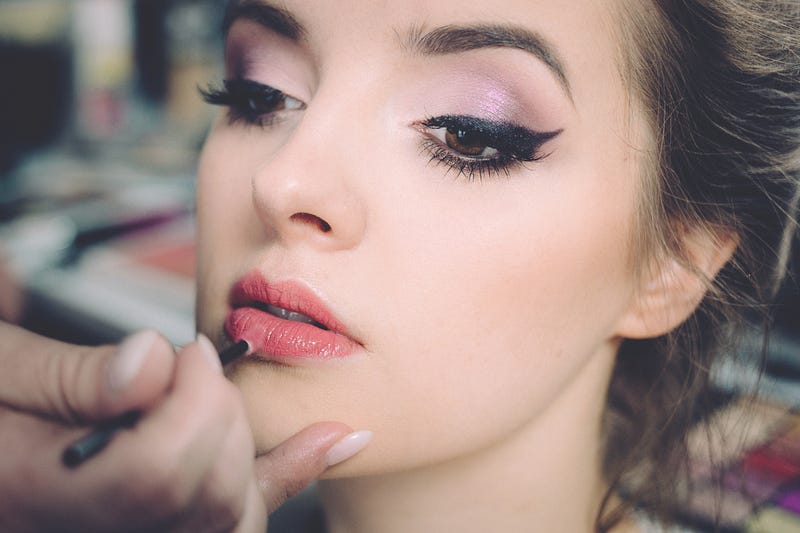
What about the “natural” look though?
This is probably one of the most dangerous messages we give. It’s so well hidden, but the impacts can be huge on developing minds and those dealing with the formation of how they view themselves in the world.
Every time you see a “natural” makeup look…what do you think the messaging is there?
That this is what a natural woman should look like.
Fill in those eyebrows, hide the purple discoloration under your eyes, make your lashes longer and fuller, accentuate your cheeks just a bit, choose a nice neutral liner to fill your lips in, and use some barely noticeable hue to make the shadows around your eyes look right and bright.
But make it look NATURAL. Nobody likes a cake-face.
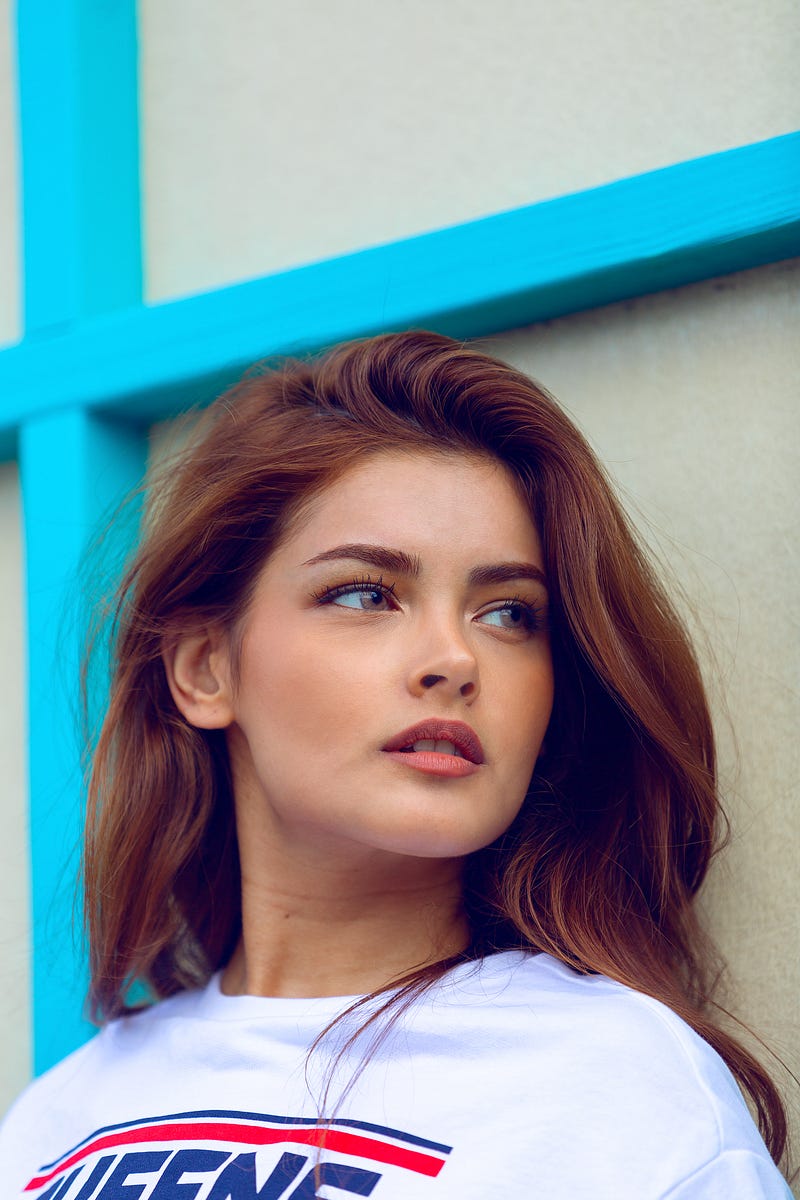
What I’ve learned
This is my experience, and it might be extreme. But I can’t help but wonder how common some of these thoughts and experiences are among others using makeup to hide.
How many women believe that they aren’t worthy of being seen because they have a normal human face? That the key to human interaction is to augment what you look like? That you don’t deserve it unless you do.
It isn’t healthy.
Allowing young girls to start viewing themselves as anything other than what they actually look like for long periods of time sets completely unrealistic standards not only for themselves, but for others around them.
Limit your mirror time like you do your children’s screen time.
They can grow to hate what they see in the mirror when they wash the makeup off. A stranger they’re meant to cover up and hide in order to gain the right of existing outside of their home. This creates a cycle that they feel compelled to keep up.
For many women, this cycle never ends. Some will even push it onto others as an expectation.
I had grown to only ever see myself in the mirror with makeup on, and I no longer recognized or liked myself in the mirror without it. I grew to hate this version of myself. This is what I would cover up to become acceptable.
I’ve got the easiest natural makeup look for you…don’t wear the makeup. After realizing how sick I was, this is the drastic step that I took to try and correct some of the damage I’d done to myself.
It was absolutely terrifying.
What about now?
After living a life more concerned with how others perceived me, I’ve started living a life that serves me. It’s fairly unconventional at this point, and shows no signs of getting any more normal in the near future. I’ve grown to distrust the messages I’ve been given as our default, and I’m having a great time designing my own life moving forward.
I try to be all of me no matter where I am. I’m not apologetic about it, and I stand up for myself when the situation requires it.
I can never get that time back that I lost, but I can try my best to make sure I don’t lose any more of it.
Do I still wear makeup? — yes. Rarely, and only if I actually want to.
If I feel like I should wear it but don’t want to, I don’t.
It happens so infrequently now, that I can count on one hand how many times my coworkers have ever seen me fully done up in the past 3 years. These people know who I actually am and don’t have unrealistic expectations of me. A far cry from high school.
When they do, they’re blown away. But they don’t expect it. I don’t expect it.
Exactly how I like it.
When I take it off, I’m now relieved to see my face looking back at me in the mirror. Hello again to myself.
Now… I smile at her rather than hating her.
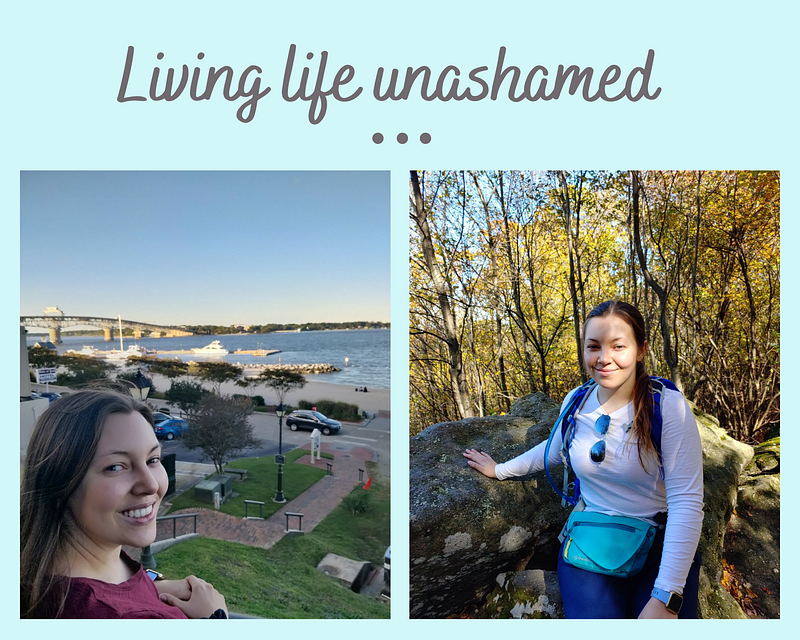
I remind myself to be gentle with myself, and tell myself daily:
Your body is not for looking at, it’s for doing things.
Things have changed since I’ve started on this route and it’s already been a few years. I’ve had push-back…most commonly from other women and loved ones. Some data suggests that I’ve even lowered my chances for getting a promotion.
That’s a story for another day.
To be honest, I’ve gotten used to presenting myself as fully “me” as possible in every situation that I find myself in. I wouldn’t change that for the world.
Thanks for reading, and I hope you found something helpful on your journey to creating your dream life.
I’m a self-taught UX Designer & passionate innovator working from my RV and traveling full-time.
I love writing about the experiences that I’ve had and helping people to live a better and more fulfilling life.
Feel free to get in touch and follow me here and over on LinkedIn.
That’s the end, but if you want some more info on the subject, here’s a few good places to start:
Some good resources if you want to learn more about this fairly common experience:
“Objectification theory is a framework for understanding the experience of being female in a culture that sexually objectifies the female body. The theory proposes that girls and women, more so than boys and men, are socialized to internalize an observer’s perspective as their primary view of their physical selves.
This perspective is referred to as self-objectification, which leads many girls and women to habitually monitor their bodies’ outward appearance. This, in turn, leads to increased feelings of shame, anxiety, and disgust toward the self, reduces opportunities for peak motivational states, and diminishes awareness of internal bodily states.
Accumulations of these experiences help account for a variety of mental health risks that disproportionately affect women: depression, eating disorders, and sexual dysfunction. The theory also helps illuminate why changes in these mental health risks occur alongside life-course changes in the female body, emerging at puberty and diminishing after menopause.”


