
I Wanted to Play Football for the Coach, But Now I Hate Football
Once avid fan disdains its inherent violence, potential for brain damage
Feb. 10, 2024 Update: With the Super Bowl tomorrow, I thought it might be time to give this piece some more attention.
When I was a teenager, I idolized Joe Namath, whose poster on my bedroom wall depicted the quarterback about to throw one of his majestic bombs that led his New York Jets upset the Baltimore Colts in Super Bowl III in January 1969.
The Jets’ training camp used to be located at Hofstra University, where in my freshman year I once caught a glimpse of Namath practicing in his waning professional days.
A tall but slightly built wide receiver, I briefly played football in high school, but was injured in practice when a ball skimmed my hand, separating two fingers with an inch-long gash.
The mind can play tricks on you. I had no idea about the hole in my hand until I moved into in the set position and saw the blood oozing across my knuckles. It wasn’t until I turned around my hand and saw the damage inflicted did it hurt. Once healed the next spring, I concentrated on playing tennis, and I would win half of my matches as the third-best singles player.
It’s practically un-American to show indifference towards football or get caught up in the hoopla surrounding the Super Bowl, Taylor Swift or not.
The late comedian Joan Rivers used to tell a joke: “You call it the Super Bowl? I call it the Toilet Bowl.” I tend to agree.
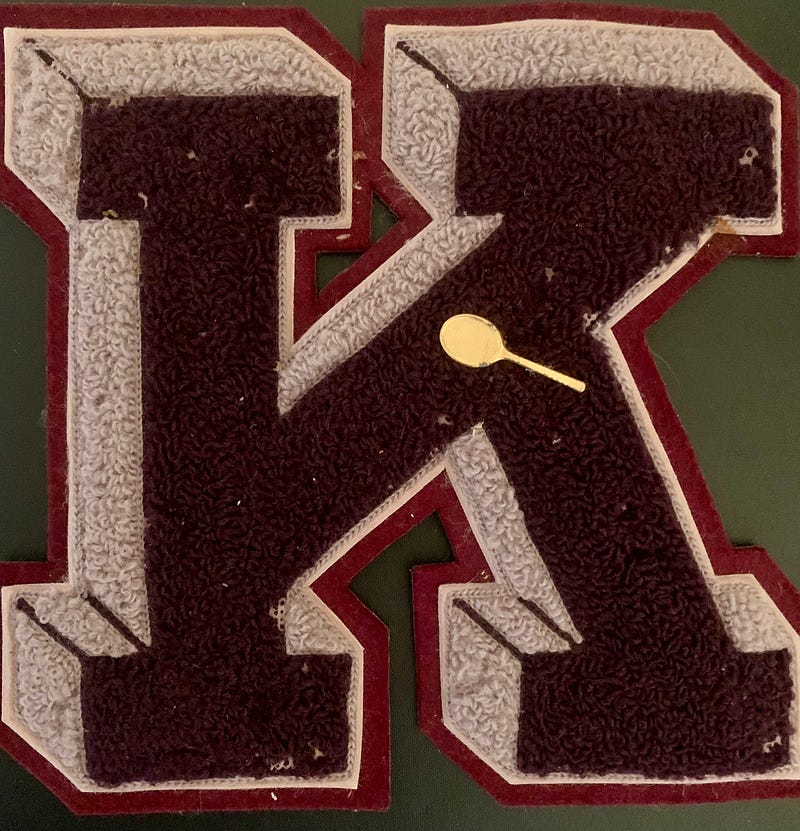
I didn’t play enough high school football to earn a “letter” for the Kingsmen—another piece of patriarchal BS, the federal law Title IX supposedly assured women the same athletic opportunity as men—but I did for my tennis team participation.
Eight years later in grad school at Penn State as a 25-year-old, I almost went to the tryout for walk-on players, figuring I still had eligibility since I never played as an undergrad. My ulterior motive was writing off a “new journalism” piece similar to George Plimpton’s Paper Tiger, but I chickened out.
The closest I came to hitting the Nittany Lions’ gridiron was finding a football branded with the logo “PENN STATE” on the side of the practice field, which adjoined the student parking lot. My car was parked one spot away from where grad students were supposed to be so multiple tickets were under the windshield wiper. When I saw the ball, I made sure no one was watching, and figured this was my $150 Penn State souvenir.
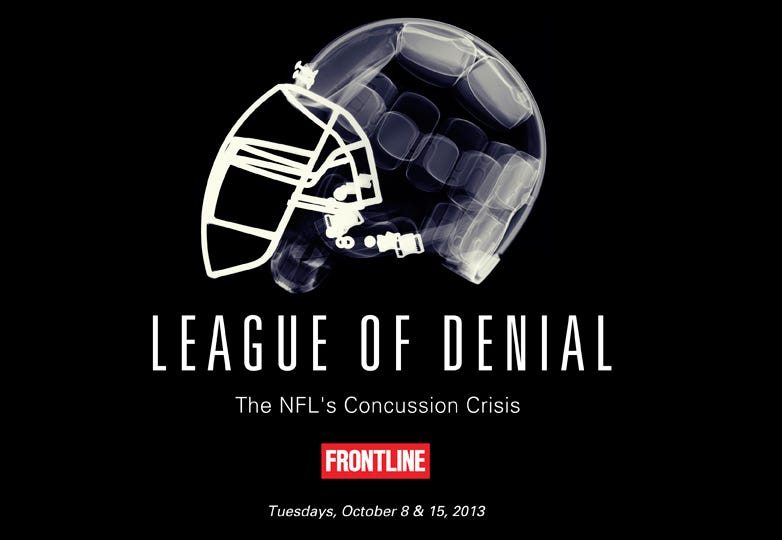
I had no idea until I watched ‘League of Denial’ with my students that football was as dangerous, or that the sport apparently is only about money.
Working on an article about the university’s fundraising machine, I interviewed its once revered long-time football Joe Paterno, who participated in the university’s coverup but passed away before being implicated in the prosecution against convicted assistant football coach Jerry Sandusky, who remains in prison for molesting kids over several decades.
Sandusky is serving a prison sentence of 30-to-60 years related to the sexual abuse of 10 boys. I used that tragic episode for a graduate course in crisis communications, in which nearly all of my students were international—as a textbook case in what organizations absolutely should not do—taught at the New York Institute of Technology in 2013 until 2019.
The late comedian Joan Rivers used to tell a joke: “You call it the Super Bowl? I call it the Toilet Bowl.” I tend to agree.
But it wasn’t until 2016 when I taught a Sports Reporting class at St. Joseph’s College, that I realized I absolutely despise football at any level.
The catalyst for this revelation was screening for my students League of Denial, the documentary that was the basis of the Will Smith-starring 2015 fictional movie Concussion. Both films show the great lengths the National Football League went to coverup and discredit doctors who proved that permanent brain damage awaited scores of NFL players.
The main points in the League of Denial were first revealed in a 2013 book written by two ESPN journalists, after which the NFL settled a lawsuit with former players for more than $765 million without admitting guilt. Giving me another reason to despise mainstream media, gutless ESPN bowed to pressure not to air the documentary. Thankfully, it was broadcast by PBS and you can now find League of Denial and you can also find it on YouTube.
I had no idea until I watched League of Denial with my students that football was as dangerous, or that the sport apparently is only about money. If it wasn’t, why then wouldn’t the players’ union and agents not demand better reforms for healthcare, further rule changes regarding physical contact, or more protective helmets? Not taking such measures and ignoring facts is akin to culture-war stupidity to think that climate change is not real as temperatures globally continue to rise.
Meanwhile, it’s practically un-American to show indifference towards football or get caught up in the hoopla surrounding the Super Bowl, Taylor Swift or not. By the way, my brother has written about high school football for daily newspapers for 40 years. He will not talk to me about League of Denial.
Baseball is the only sport to which I pay attention to these days, having long ago lost interest in professional football and basketball. With the exception of a New York Yankee run from 1996 until 2009, there hasn’t been a dominating New York major sport team for a long stretch.
For only one season as a 13-year-old, I kept a season-long notebook of every New York Rangers game, listening to them on radio, logging in every goal and assist. The next season I must have discovered the Rolling Stones because I no longer paid attention to the Rangers and ice hockey, which I’ve never played. I can hardly skate.
Over the next few decades, I continued to follow closely the Jets and basketball’s Knicks. I played that sport competitively well into my 40s in the New York Urban Professionals Basketball League. In 2000, I switched my allegiance from the Yankees to the Mets after seeing on live television Roger Clemens mean to not only hit — but squarely in the head — Mike Piazza in mid-2000 when they faced each other during a regular season game between the Mets and Yankees. I remember the announcer stating they previously faced each other five times and Piazza hit three HRs. Next pitch POW!
At the time, I was a Yankee fan. Then a few months later during the teams’ improbable World Series, Clemens the psychopath flung a broken bat at Piazza after a foul ball. It was obvious the pitcher was deranged on steroids, probably ensuring he will never get into the Baseball Hall of Fame.
When I was married, I remembered my future ex-wife deciding that our son will not play football, a sport in which he never showed much interest. I made the decision then not to turn her pronouncement into another fight — both married and divorced couples know what I’m talking about — to go along with the laundry list during a 19-year relationship of which 13 years we were legally connected. In hindsight, I must say she was right on this one.
After the divorce was finalized, I helped coach my teenaged son’s baseball and basketball teams. Five years later, he was all set to play baseball and basketball at a small college in Massachusetts. Four days before classes began, he informed me he was instead going to the University of Mississippi. He wanted the big school experience.
A week later, he called to let me know proudly that he made the Ole Miss rugby team.
I exclaimed, “Are your teammates the guys who didn’t make the [Division 1] football team?” He admitted, well yes, a few, but he only started seeing substantial playing time on the rugby team until his junior year. Weighing in under 150 lbs., he soon sent a game video in which he ran for 70 yards, breaking tackles as he avoided much bulkier defenders.
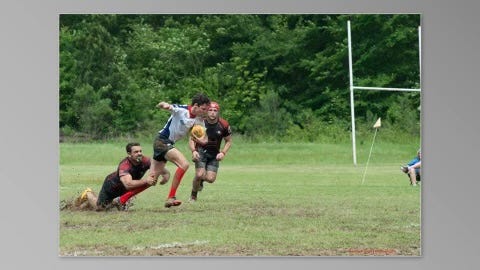
He miraculously didn’t get seriously injured playing rugby on the collegiate level, but he regularly does these days playing baseball. Now 29, he plays on and manages on an amateur team that has won consecutive championships in a league that sometimes also includes former minor-league and college players.
I wasn’t planning on writing on Medium about sports, but with the ultimate football event upon us, it’s as good time as any. This piece’s title is a reference to a lyric from one of Lou Reed’s greatest love ballads, “Coney Island Baby.”
To give you an idea of my thought patterns, I decided to bang out this article after reading the 2016 novel The Perfume Burned His Eyes by Michael Imperioli, best known for playing Christopher in The Sopranos. I only recently learned about the book through a Lou Reed fan Facebook group.
Published three years after Reed’s passing in 2013, the book’s 16-year-old teenager protagonist Matthew is befriended by his neighbor Lou and his transgender girlfriend Rachel. Set in 1976, the book is a fantasy of what Imperioli thought the mercurial Reed could have been like in those days. After all, the musician briefly sported an iron cross dyed into a blonde hairdo.
Like Imperioli, I fell under Lou’s spell and finally interviewed my idol in 2003. That was after 25 years of trying to do so. I also thought about Lou’s preamble to the must-hear Velvet Underground Live 1969 album that was released in 1973. “We saw your [Dallas] Cowboys today against the Eagles. It was 42 to 7 by the half. You should give other people to have the ball a little, in football at least.”
In “Coney Island Baby,” the title song of one of his best solo albums that still holds up—released in 1976—Lou explains, “They said I was a little too lightweight to play linebacker so I was playin’ right end.” At the end of the nearly six-minute song with beautiful guitar licks, Reed issues a heartfelt dedication: “I’d like to send this one out to Lou and Rachel, and all the kids at P.S. 192. Man, I’d swear I’d give up the whole thing for you.”
Alas, the couple in real life — as in fiction — wasn’t meant to last. In Imperioli’s novel, Lou removed the rings from his fingers, a sly nod to Reed’s opus “Street Hassle.” Sha-la-la, indeed.
Revised postscript: What also bothers me most about the NFL is the outright racism that prevented Colin Kapernick practicing his livelihood because he took a knee during the National Anthem in support of Black Lives Matter. So many teams needed a capable quarterback and you can’t tell me there wasn’t collusion among the white owners, and it’s disgraceful that the Players’ Union and their agents let the teams get away with it. This is another reason why I will never again watch a football game.