
I Want To Ride My Bike Again
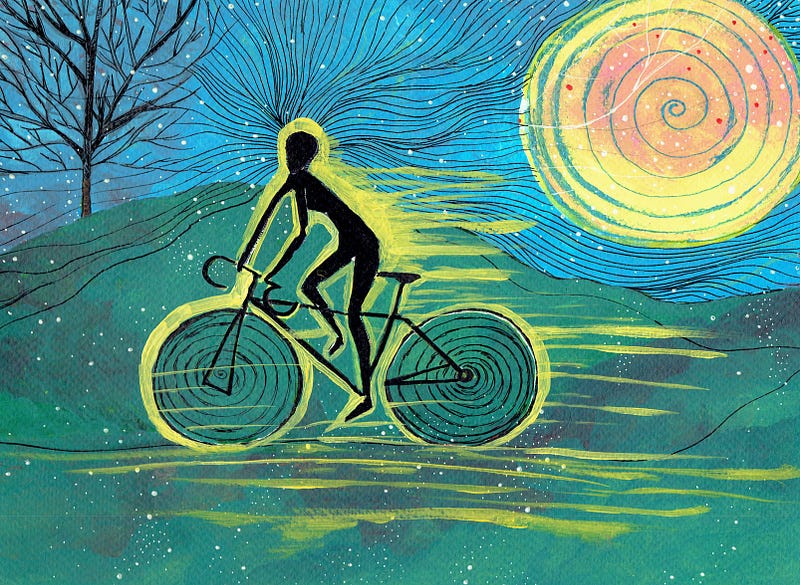
Riding is the closest I’ve ever come to flying. That’s worth working towards.
My longest bike ride was in June 2012. I’d gone riding with a new cycling friend and we’d planned to ride about 20 miles that morning. Instead, we got lost. By the time I arrived back home, I’d ridden 37 miles. I was exhausted, but exuberant. If I could ride 37 miles then I could ride 50.
Fifty miles was halfway to my goal of riding a century — 100 miles on the bike. I’d aspired to ride a century when I started cycling regularly in 2010. Back then, I could barely ride for four miles without stopping to rest every few minutes.
I couldn’t have known that my ride that day, nearly 12 years ago, would be one of the last rides on my road bike. 2012 was the year my 11-year-old daughter, Ana, was diagnosed with cancer.
A few weeks after that very long ride, I went out cycling with a small group of female riders that I was, frankly, astonished to be a part of. I remember telling the group how worried I was about my daughter, how she’d been complaining of stomach pain ever since she got home from a weeklong trip with her grandmother.
It was August and Ana had been losing weight all summer. I had a sick feeling in my gut that morning. I cut my ride short when the rest of the group decided to keep going, breaking off from the pack and heading home. Sometimes we can feel the bad thing coming. That was the day that changed everything for my family. It’s also the day I stopped riding my bike.
I started riding my bike the same year I joined Weight Watchers (since renamed WW). I had about 35 pounds to lose and at 5'1" and 38-years-old, I felt frumpy, weak, and completely out of shape.
My girls were five and eight. They consumed most of my waking hours, but they were getting a bit more independent. I suddenly had more time to focus on me. A few weeks after I joined WW, I began walking on the rural streets around my home. That got old quickly. Walking the same 2-mile radius 5 days a week was boring.
That year, Ana had learned how to ride a bike. Each day after school, she cruised around the driveway and in front of our house practicing her new skill. I remember thinking, “Why does she get to have all the fun?”
I got a powder blue hybrid bike for my 39th birthday. I began riding each day on a lovely road that followed a creek for five miles until it came to a sleepy town called Rosendale.
I lost thirty pounds that spring and summer. My success with weight loss and with getting increasingly stronger on my bike are two of the biggest achievements of my life.
By the end of the summer, I’d exceeded my goal of riding 5 miles a day. By September, I was riding 10–12 miles a day. I had to stop riding in October because I couldn’t tolerate being on my bike when the temperature dropped below sixty degrees, so I joined a gym.
By about February of the following year, I’d exceeded my weight loss goals and lost a total of 50 pounds. I took an indoor spinning class three days a week to prepare myself for my first outdoor ride in April.
I thought I would ride forever, stay thin forever, and be one of those wiry older riders with rock hard calves. I thought I would be one of the riders I admired — the women who could regularly ride 60 miles on a Sunday morning and barely break a sweat.
I set a goal for myself of riding a century by my forty-second birthday. I bought a road bike a year or two after I started riding and worked with a riding coach to strengthen my core and learn how to ride in a group. I was in the best shape of my life.
I was already gaining some of the weight back when I did that 37-mile ride with my friend in 2012. I’d quit WW because I was constantly starving. After doing the math, I realized I was only consuming about 1100 calories a day.
The road bike was designed to take on a lot of the work I’d been doing on my clunky hybrid bike. It was half the weight of the old bike and had twice the gears. This also contributed to my new weight gain since my rides didn’t burn as many calories. Even so, I wasn’t worried. I believed riding would be part of my life forever.
The truth is that I rode with something akin to desperation. I’ve never been a particularly active person and I didn’t know how to regulate my workouts or my diet to a moderate level. I was afraid if I slowed down, I would stop completely. So I pushed myself to a level that was not sustainable in the long run.
I tackled being healthy and fit with a kind of the relentless frenzy, afraid that if I stopped my grueling workout and diet regimens, I would go back to being sedentary.
By 2012, on the morning of my longest ride ever, I had achieved some level of moderation to my diet and exercise routine. I was comfortable on my road bike and starting to see myself as a rider worthy of joining some of the local cycling groups.
I looked good. I felt great. I rode that summer until the morning that I took my daughter to the hospital after an anxious 20-mile ride and learned that she had a malignant tumor on her liver.
I stopped riding when Ana got sick. I also stopped dieting and almost immediately started gaining weight. I didn’t get back on my bike for two years. During the course of Ana’s illness, which lasted just under five years, I made a few attempts at getting back in shape and back on my bike.
These attempts were thwarted by near-constant bad news about Ana’s cancer progression which almost always came with more hospital stays, more treatment, and more emotional trauma.
I gave up the idea of ever riding again, but I didn’t give up my road bike. I kept it, all these years, indoors and out of the elements. I didn’t truly entertain the idea of riding again while Ana was alive. She needed me and all my energy.
I was depressed, anxious, and perpetually terrified at the progression of Ana’s illness. I was losing her, and I knew it. My weight crept up. My activity level dropped to nothing. I lost Ana on March 22nd, 2017.
Now, nearly seven years later, I weigh about what I weighed when I started WW 14 years ago.
I haven’t given up riding yet. My road bike is set up in an indoor trainer in my bedroom. I started training again this past November and, while I’m not as consistent as I’d like to be, I’ve been managing to ride for about 40–45 minutes a few times a week.
I typically start training with the best of intentions, then give up after about two or three weeks, so this amount of consistency is…promising. The same is true for my diet. I keep starting new diets, trying to get back to the same focused mindset I had the year I lost all that weight, then failing.
But last year I joined WW again and lost 30 pounds in 2023. I had a lot more to lose than the year I started cycling. Even so, this feels like a win.
I might never ride my bike outdoors with any consistency again, but I’m not ready to sell the road bike. I’m okay with having smaller goals than I once did. First Ana’s illness, then my grief, was sabotaging me. It was easier to be sedentary than to push myself to feel discomfort. I’m ready to try getting out there again. The reward of feeling good — and getting stronger — is something I’m looking forward to.
I’d been using all of my energy to bear the deep aching pain of losing Ana. I still miss her so much — every day, every minute, every moment. But it will be seven years since she died and I’m feeling emotionally stronger.
When I first started riding, I didn’t realize how exhausted a person’s soul could feel. Though I was tired from the day-to-day chaos of parenting, I had the mental fortitude and enthusiasm to ride each day. I had both my girls, after all. They were strong and healthy.
The kind of fatigue I experienced after Ana died was something new to me. It was a crisis of the spirit. It was bigger and heavier than any kind of emotional pain I’d ever experienced. I’m used to it now. I’ve adjusted, to a certain extent, and I know that I’ll never fully recover. I’m learning to carry my grief in a way that doesn’t destroy me and the other good things that remain in my life — including riding.
There are moments when it feels like I’ll never ride my bike again, but I haven’t yet given up. Although I have changed significantly from the person I was 14 years ago, my desire to ride my bike hasn’t changed at all. Riding is my strength. It brings me solace. It’s the closest I’ve ever come to flying. That’s worth working towards.