avatarShawn Forno

Free AI web copilot to create summaries, insights and extended knowledge, download it at here

3619

Abstract

se individual action — while important — doesn’t work when it comes to solving climate change-sized problems.</p><p id="0adc">Especially when our economies are designed to create this kind of pollution every single year.</p><h1 id="6b0b">The cost of doing business</h1><p id="508e">The modern world runs on container ships.</p><p id="a812">In 2022, more than 50,000 container ships transported over <a href="https://www.worldshipping.org/news/world-shipping-council-releases-containers-lost-at-sea-report-2023-update">250 million containers</a> — accounting for 80-90% of global trade. And to keep up with this ludicrous demand, the average container ship has <a href="https://www.itf-oecd.org/sites/default/files/docs/15cspa_mega-ships.pdf">nearly doubled in size</a> since 1996.</p><p id="eae6">For context, in 2006, the largest container ships in the world — so-called “Panamax” class ships because they could barely fit through the Panama Canal — could carry up to 9,600 twenty-foot containers or TEUs.</p><p id="0a36">Today, the world’s largest container ship — <a href="https://www.marineinsight.com/know-more/top-10-worlds-largest-container-ships-in-2019/#Largest_Container_Ships_In_2024">the MSC Irina </a>— has a capacity of 24,346 TEUs, is more than four football fields long, and displaces more water than two U.S. aircraft carriers.</p> <figure id="52df"> <div> <div> <img class="ratio" src="http://placehold.it/16x9"> <iframe class="" src="https://cdn.embedly.com/widgets/media.html?src=https%3A%2F%2Fwww.youtube.com%2Fembed%2FL4xeUCqs9I4%3Ffeature%3Doembed&amp;display_name=YouTube&amp;url=https%3A%2F%2Fwww.youtube.com%2Fwatch%3Fv%3DL4xeUCqs9I4&amp;image=https%3A%2F%2Fi.ytimg.com%2Fvi%2FL4xeUCqs9I4%2Fhqdefault.jpg&amp;key=a19fcc184b9711e1b4764040d3dc5c07&amp;type=text%2Fhtml&amp;schema=youtube" allowfullscreen="" frameborder="0" height="480" width="854"> </div> </div> </figure></iframe></div></div></figure><p id="7021">As container ships have ballooned to transport hundreds of millions of containers, the risks of things going overboard have gone up, too.</p><p id="2723">And thousands of containers end up in the ocean every year.</p><h1 id="4005">Economies of scale don’t scale evenly</h1><p id="5371">A fifteen-year survey (2008–2022) from worldshipping.org found that on average, container ships lose <a href="https://www.worldshipping.org/news/world-shipping-council-releases-containers-lost-at-sea-report-2023-update">1,566 containers at sea every year.</a></p><p id="a83c">And to remind you, the plastic spill that’s been wreaking havoc on Northern Spain was caused by just <b><i>one</i></b> lost shipping container.</p><p id="7ed8">If you run the numbers, the amount of lost containers might seem small. We “only” lose 0.0001% of the 250 million containers shipped every year.</p><p id="dd3d">But it’s not.</p><p id="01d1"><b>Because economies of scale don’t matter when the thing you’re scaling up is plastic and toxic waste.</b></p><p id="51e6">Losing just a tiny fraction of 250 million containers means dumping <b><i>thousands of tons</i> </b>of hazardous material into the ocean, including stuff like:</p><ul><li><a href="https://apnews.com/general-news-fd52c620c09544be986298a3a96f6039">6,000 pounds of sulfuric acid</a> (2018)</li><li><a href="https://splash247.com/fire-erupts-on-boxship-carrying-25-tons-of-nitric-acid-off-sri-lanka/">25 tons of nitric acid</a> (2021)</li><li>…and <a href="https://www.npr.org/2011/03/29/134923863/moby-duck-when-28-800-bath-toys-are-lost-at-sea">

Options

28,000 rubbery duckies</a> (1992) — which sounds cute, but was an ecological nightmare.</li></ul><p id="e5df">No amount of plucky volunteers are going to be able to clean that stuff up over the weekend.</p><p id="b07a">Every container in the ocean represents an escalating series of potential disasters that we are not equipped to handle. And <a href="https://therevelator.org/container-ship-accidents/"><b>the problem is only getting worse</b></a><b> as supply chains get more complex to service our insatiable consumer habits.</b></p><h1 id="e135">The problem with personal responsibility</h1><p id="cb60">At the end of our <a href="https://youtube.com/shorts/WYofT0tvK_U?si=3ouAKuwdALl4tS9F">3-hour cleanup session</a>, we consolidated the plastic and trash we’d collected. And the results were …enlightening.</p><p id="6162">We left the beach better than we found it — we removed a lot of trash — but we only found a handful of the plastic pellets that have been plaguing the shore. Literally.</p><p id="fbca">See that little bulge in the bottom of the trash bag there? That’s all the plastic pellets <i>everyone</i> collected. A few hundred pieces at most.</p><figure id="d23b"><img src="https://cdn-images-1.readmedium.com/v2/resize:fit:800/1*QHlMF6pf9P0FMOiPcIklKg.jpeg"><figcaption>This is all of the plastic pellets that 20 people found in three hours. (Photo by the author)</figcaption></figure><p id="a828">For whatever reason, the tide and current didn’t bring many pellets to the section of beach we were cleaning.</p><p id="3a36">But it will tomorrow. And the week after that. And the year after that.</p><p id="0b49">And there won’t be any volunteers to clean it up when it does. But what’s really sad is that it wouldn’t matter if there were people there waiting to clean it up.</p><p id="7fc6">Because according to <a href="https://ecostandard.org/who-we-are/">non-profits</a> funded by the EU, the plastic spill in Spain is “relatively small by global standards” compared with the 167,000 metric tons of plastic pellets entering the EU’s seas and land every year.</p><p id="06ad"><b>And they’re right.</b></p><p id="5b73">25 tons of plastic is nothing compared to what happens every single day in the <a href="https://www.nationalgeographic.com/environment/article/plastic-pollution">world’s oceans</a>.</p><p id="c366">When I see numbers like that, it breaks my heart because I know that there’s almost nothing you or I can do to help the environment recover from the daily destruction that we are all collectively doing to our air, land, and oceans.</p><p id="3064">But I know now that the solution isn’t volunteering to clean up your local beach.</p><p id="cb29">We can’t expect individuals to fix global-scale problems caused by massive corporations and an out-of-control economy with a sprawling “just-in-time” global supply chain that sends goods and raw materials <a href="https://youtu.be/8d5d_HXGeMA?si=NI3PwDcDaAmp8T8b">ping-ponging all over the globe</a> to shave a few pennies off production costs.</p><p id="2482"><b>Because that’s never going to work.</b></p><p id="9dc1">And the consequences of our inaction are coming to a beach near you sooner than you think.</p><p id="a384"><i>Shawn Forno is a very left-handed travel writer with 20 years of travel writing experience for clients like Lonely Planet, Tortuga Backpacks, and Matt D’Avela. <a href="https://dayswespend.substack.com/publish/home">Sign up for his newsletter</a> or check out his YouTube channel, <a href="https://www.youtube.com/c/DaysWeSpend">Days We Spend</a>, for videos about living in Spain.</i></p></article></body>

I Volunteered to Clean Up the Beach and It Was a Complete Waste of Time

The harsh reality of the plastic spill in Northern Spain
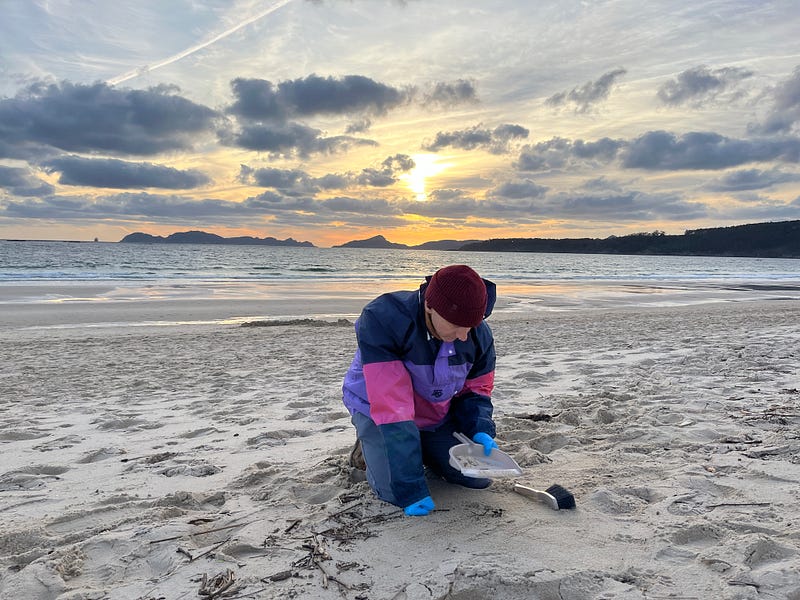
Cleaning up the plastic spill in Northern Spain with a broom and dustpan. Jan 20, 2024 (photo by the author)

If you don’t live in Europe, you might not have heard about the Maersk container ship that recently lost six twenty-foot containers off the coast of Portugal.

It’s been a disaster here in Spain because one of those lost containers was stuffed with 1,000 25kg bags of PET pellets — the little bits of plastic we use to make basically everything.

For the past month, millions of these tiny plastic balls have been washing up on the coast of Galicia, Asturias, and Cantabria; entering the marine food chain, disrupting essential fishing industries, and trashing hundreds of miles of coastline.

And there’s not much anyone can do about it.

Because trying to remove millions of tiny plastic pellets from the beach is practically impossible when they are exactly the same size, shape, and color as a grain of sand.
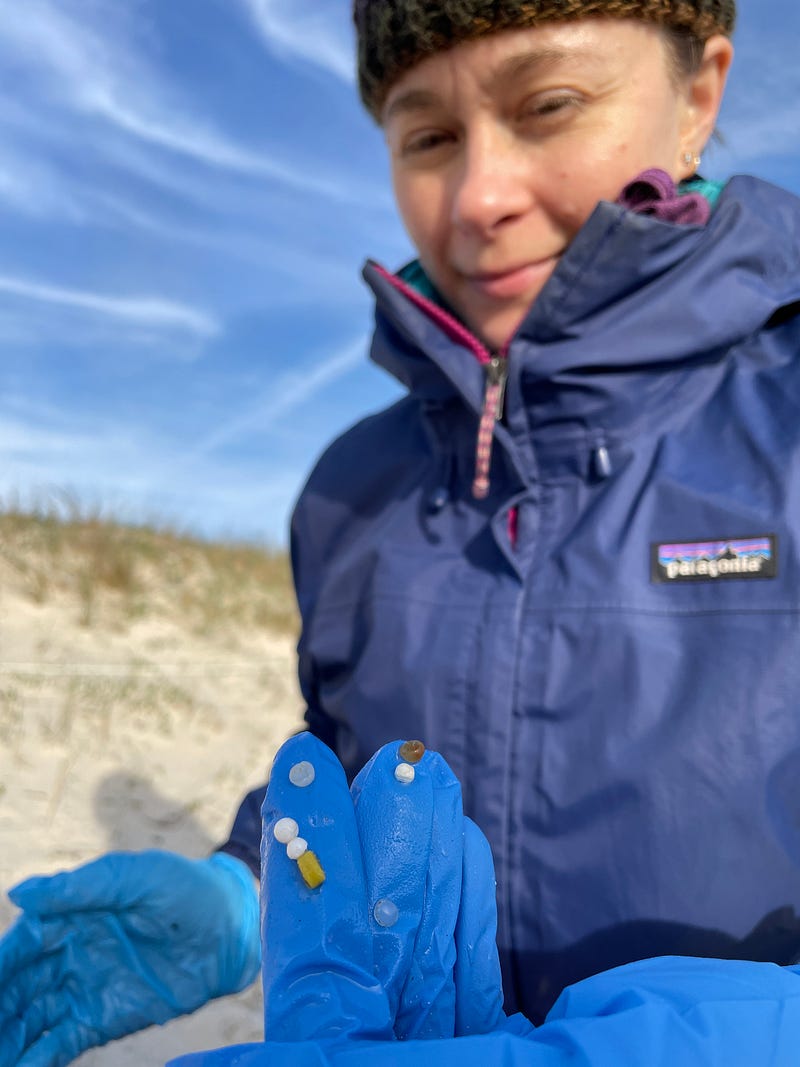
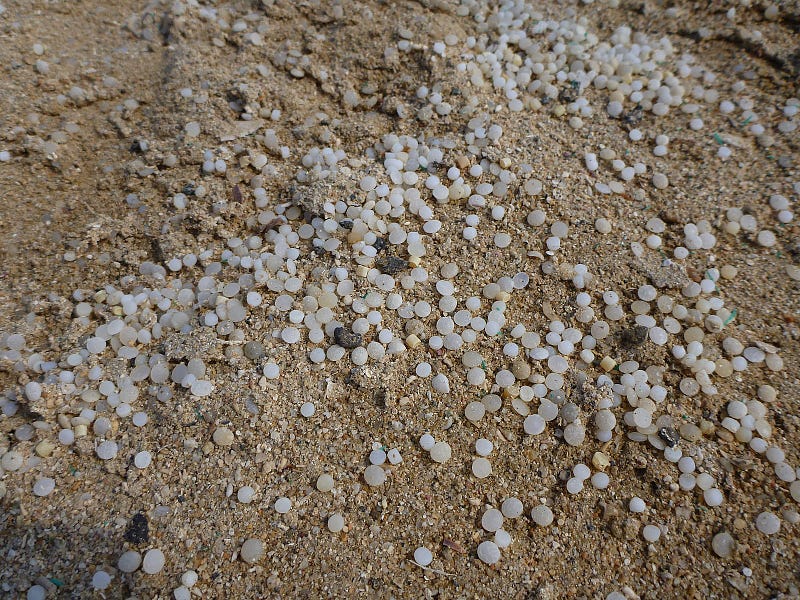
Those little blobs are plastic pellets. They look exactly like sand (photo by the author)
Source: Wikimedia (These plastic pellets are from a different container spill in 2012)

I should know.

I spent last Saturday crawling around on my hands and knees on a beach with a dustpan and a broom combing the sand for plastic pellets.

And it was a complete waste of time.

You can’t stop climate disasters

Don’t get me wrong.

I’m glad that the twenty or so volunteers who showed up removed some plastic trash from the beach. Cleaning the beach is always a good idea, and it was a rewarding way to spend an afternoon.

I’m glad I went.
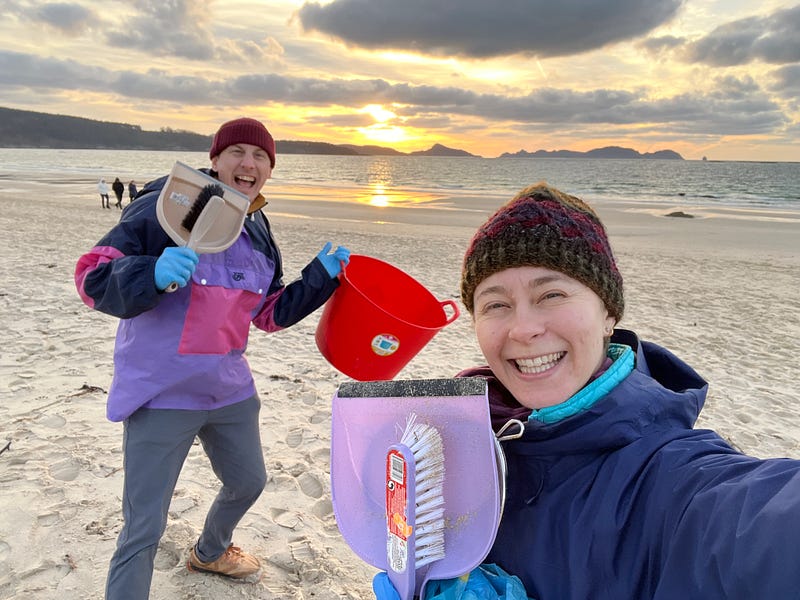
Me and my wife trying to have fun while picking up trash on an Atlantic beach in January (photo by author)

I’m also thankful to the hundreds of other volunteers across Spain who have joined the clean-up effort over the past few weeks. It’s a good thing that people in Spain — and the local Galician government — care enough to try and fix the problem.

But spending a few hours on the beach also showed me that all the volunteers in the world aren’t going to fix this plastic spill.

Or the next one.

Or the one after that.

Because individual action — while important — doesn’t work when it comes to solving climate change-sized problems.

Especially when our economies are designed to create this kind of pollution every single year.

The cost of doing business

The modern world runs on container ships.

In 2022, more than 50,000 container ships transported over 250 million containers — accounting for 80-90% of global trade. And to keep up with this ludicrous demand, the average container ship has nearly doubled in size since 1996.

For context, in 2006, the largest container ships in the world — so-called “Panamax” class ships because they could barely fit through the Panama Canal — could carry up to 9,600 twenty-foot containers or TEUs.

Today, the world’s largest container ship — the MSC Irina — has a capacity of 24,346 TEUs, is more than four football fields long, and displaces more water than two U.S. aircraft carriers.

As container ships have ballooned to transport hundreds of millions of containers, the risks of things going overboard have gone up, too.

And thousands of containers end up in the ocean every year.

Economies of scale don’t scale evenly

A fifteen-year survey (2008–2022) from worldshipping.org found that on average, container ships lose 1,566 containers at sea every year.

And to remind you, the plastic spill that’s been wreaking havoc on Northern Spain was caused by just one lost shipping container.

If you run the numbers, the amount of lost containers might seem small. We “only” lose 0.0001% of the 250 million containers shipped every year.

But it’s not.

Because economies of scale don’t matter when the thing you’re scaling up is plastic and toxic waste.

Losing just a tiny fraction of 250 million containers means dumping thousands of tons of hazardous material into the ocean, including stuff like:

No amount of plucky volunteers are going to be able to clean that stuff up over the weekend.

Every container in the ocean represents an escalating series of potential disasters that we are not equipped to handle. And the problem is only getting worse as supply chains get more complex to service our insatiable consumer habits.

The problem with personal responsibility

At the end of our 3-hour cleanup session, we consolidated the plastic and trash we’d collected. And the results were …enlightening.

We left the beach better than we found it — we removed a lot of trash — but we only found a handful of the plastic pellets that have been plaguing the shore. Literally.

See that little bulge in the bottom of the trash bag there? That’s all the plastic pellets everyone collected. A few hundred pieces at most.
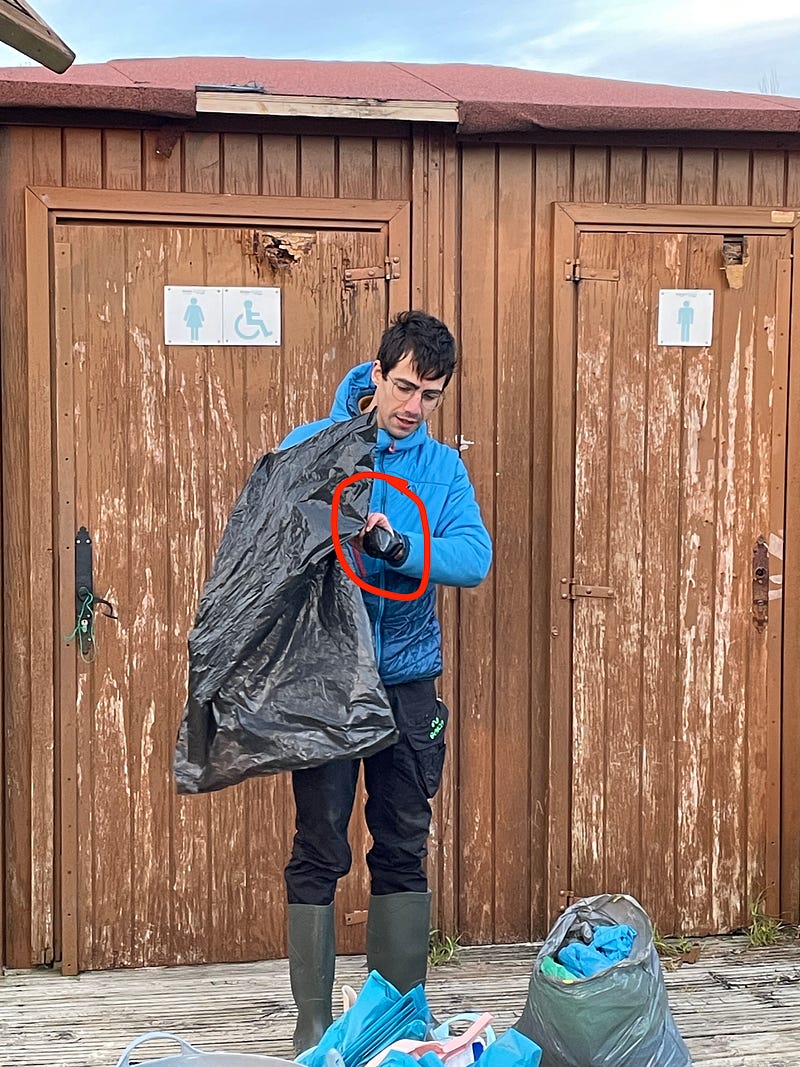
This is all of the plastic pellets that 20 people found in three hours. (Photo by the author)

For whatever reason, the tide and current didn’t bring many pellets to the section of beach we were cleaning.

But it will tomorrow. And the week after that. And the year after that.

And there won’t be any volunteers to clean it up when it does. But what’s really sad is that it wouldn’t matter if there were people there waiting to clean it up.

Because according to non-profits funded by the EU, the plastic spill in Spain is “relatively small by global standards” compared with the 167,000 metric tons of plastic pellets entering the EU’s seas and land every year.

And they’re right.

25 tons of plastic is nothing compared to what happens every single day in the world’s oceans.

When I see numbers like that, it breaks my heart because I know that there’s almost nothing you or I can do to help the environment recover from the daily destruction that we are all collectively doing to our air, land, and oceans.

But I know now that the solution isn’t volunteering to clean up your local beach.

We can’t expect individuals to fix global-scale problems caused by massive corporations and an out-of-control economy with a sprawling “just-in-time” global supply chain that sends goods and raw materials ping-ponging all over the globe to shave a few pennies off production costs.

Because that’s never going to work.

And the consequences of our inaction are coming to a beach near you sooner than you think.

Shawn Forno is a very left-handed travel writer with 20 years of travel writing experience for clients like Lonely Planet, Tortuga Backpacks, and Matt D’Avela. Sign up for his newsletter or check out his YouTube channel, Days We Spend, for videos about living in Spain.

Climate
Activism
Environment
Plastic
Pollution
Recommended from ReadMedium