
I Visited the Expensive Catacombs Today
Was it worth it?
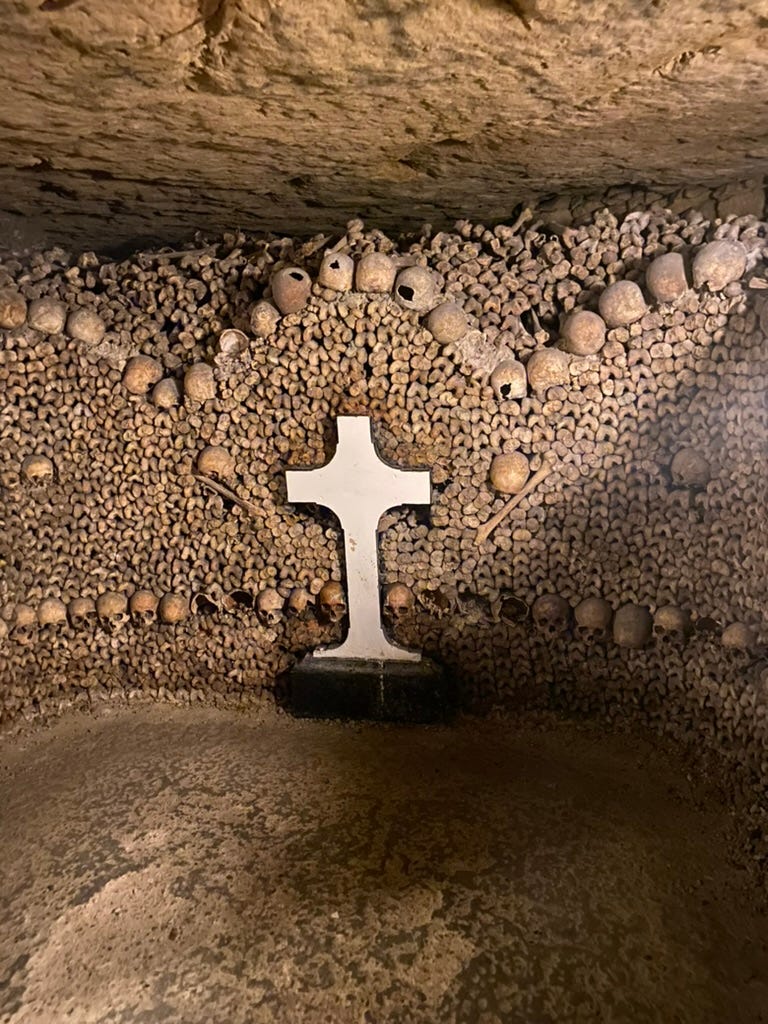
For €29 (AU$48.50), I would have expected a live guide, not a low quality audio. Some of the descriptions were cut off mid-sentence just when I wanted to hear more. They weren’t continued on the next number either. Frustrating!
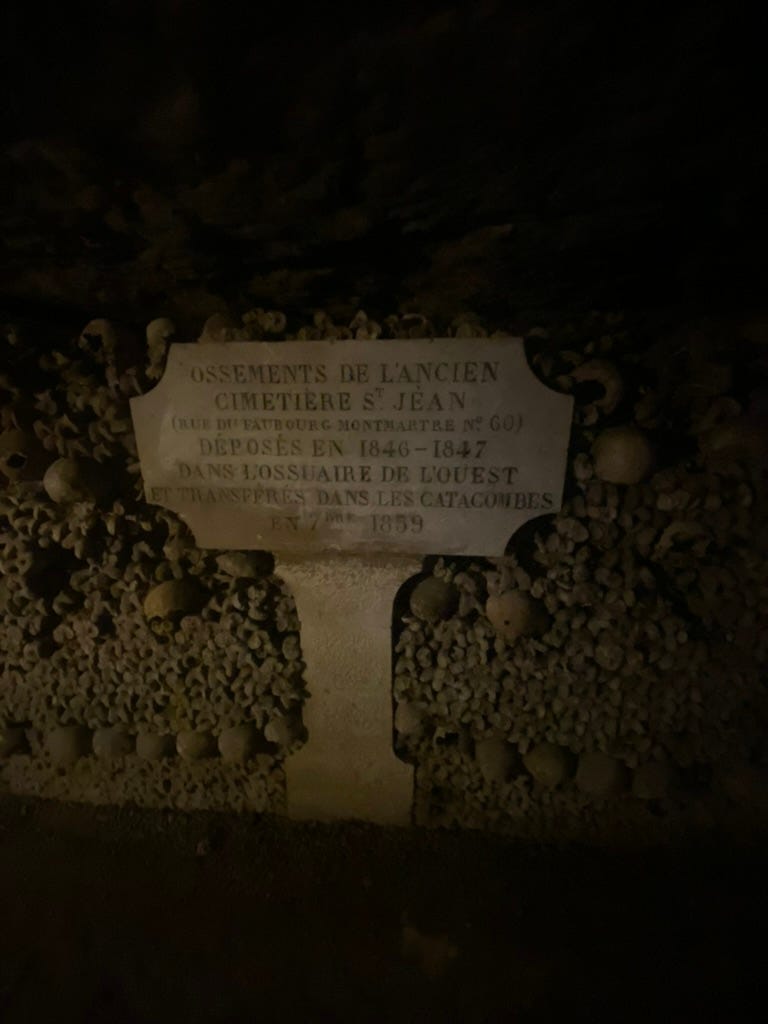
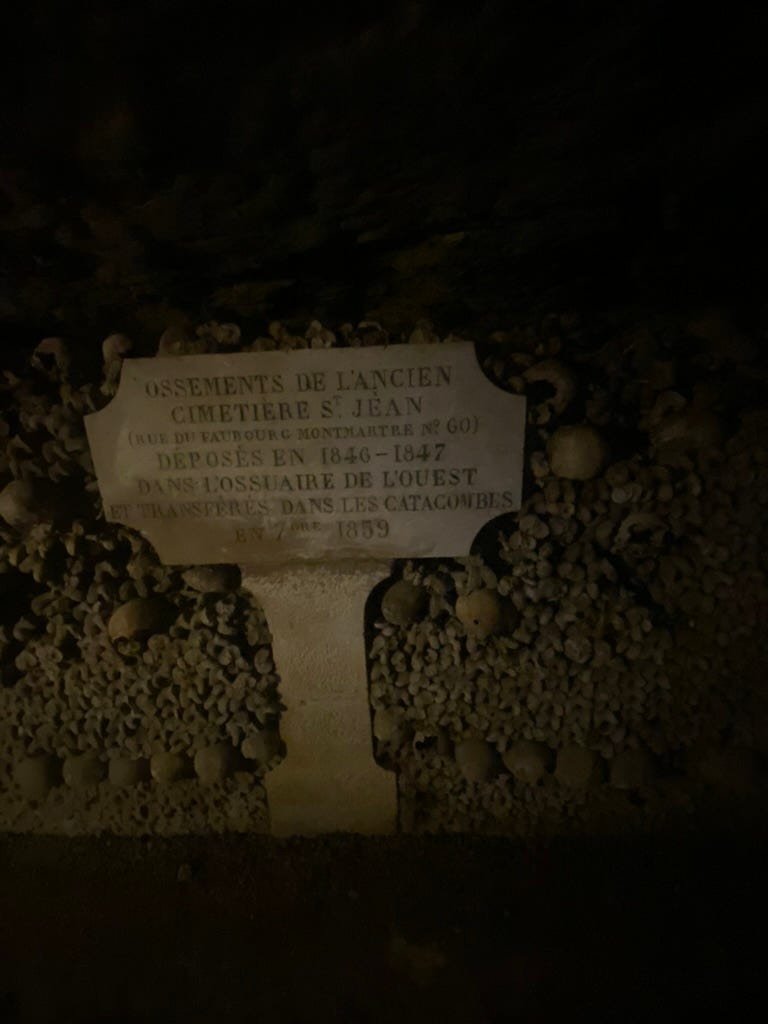
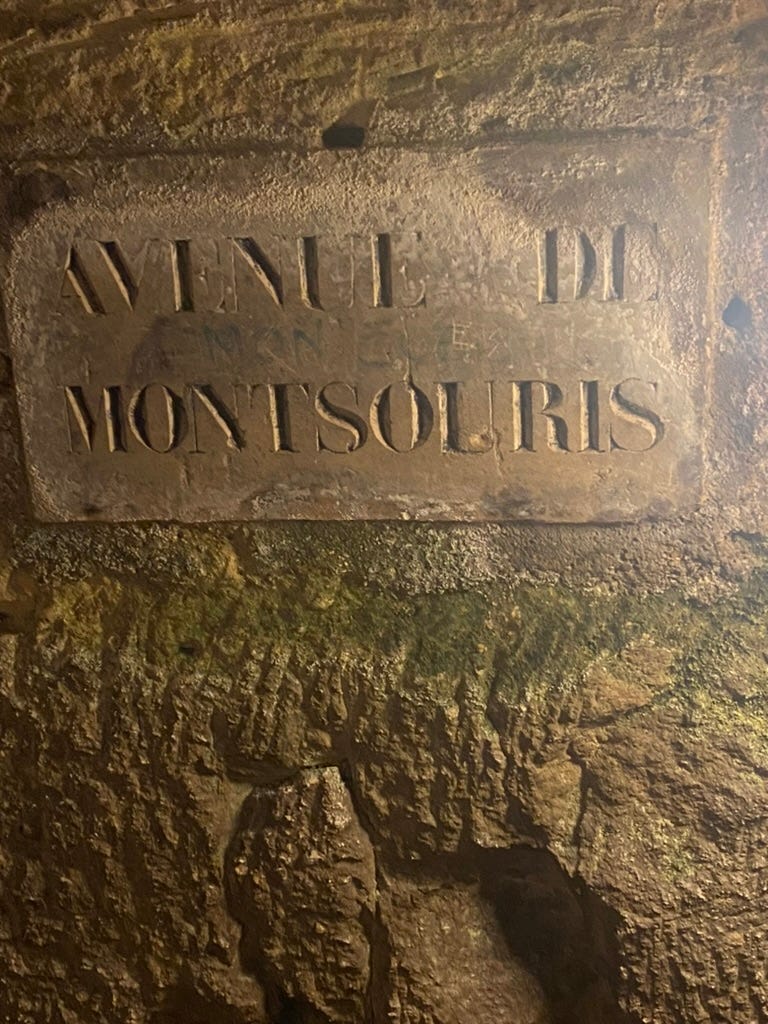
The part of the history that I didn’t know was that the limestone layer under Paris was quarried for the building stone called Paris stone. Many of the older buildings use this beautiful stone. Quarrying went on unchecked until 1774, when a whole street was swallowed by the Earth — the street is now called Boulevard Saint Michel, in the very centre of Paris.
After this tragedy, the king was forced to react. The first studies end up being catastrophic: the underground quarries are huge, completely unstable and nothing has been planned to contain this imminent danger. A specialized service was created in 1776 to try to solve the problem.
The quarries service led by Guillaumot received four tasks: to inspect the underground voids, repair and consolidate them, proceed to the mapping of the ground and inform the king of their results. Meanwhile, the collapses continued to frighten Parisians.
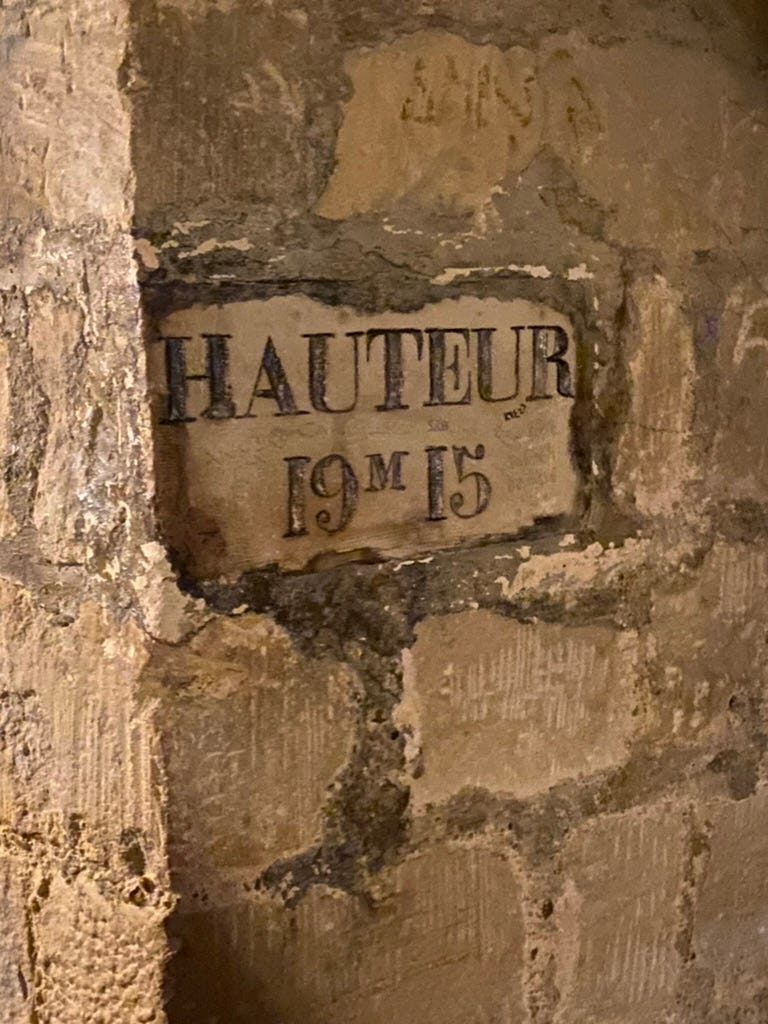
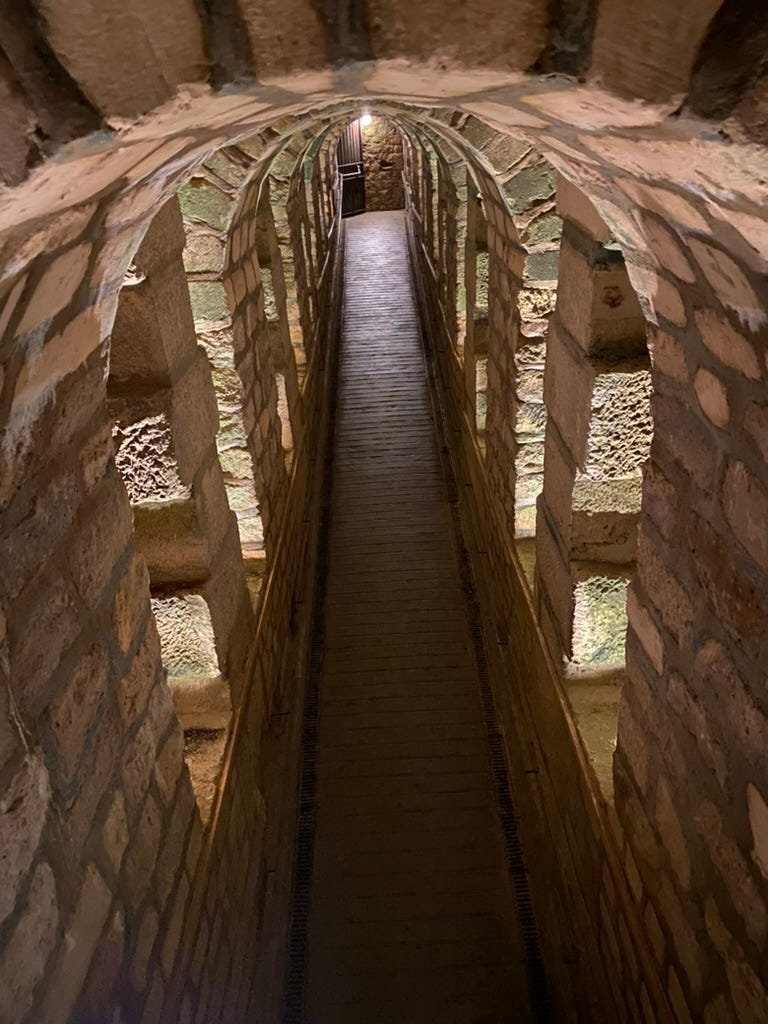
Not much was known about geology in the 18th century but Guillaumot and his teams of engineers, surveyors, and stone workers had to try to reinforce the quarries to stop further collapses. Several methods were used, which are visible today. Columns and Pillars and Domes.
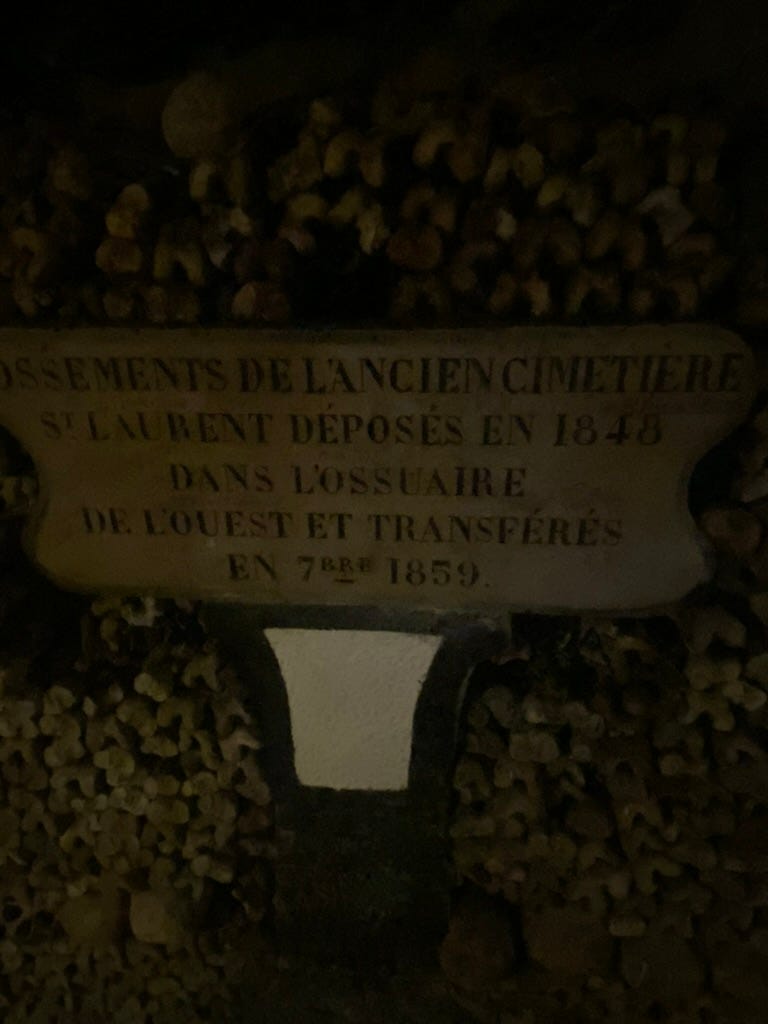
Another problem that initially had nothing to do with the quarries collapsing was the overflowing cemeteries all over Paris. Some were so full they were literally seeping into neighbouring properties. Each church had a burial crypt. When it became full, they used other parts of the church building finally resorting to using the land surrounding the Church.
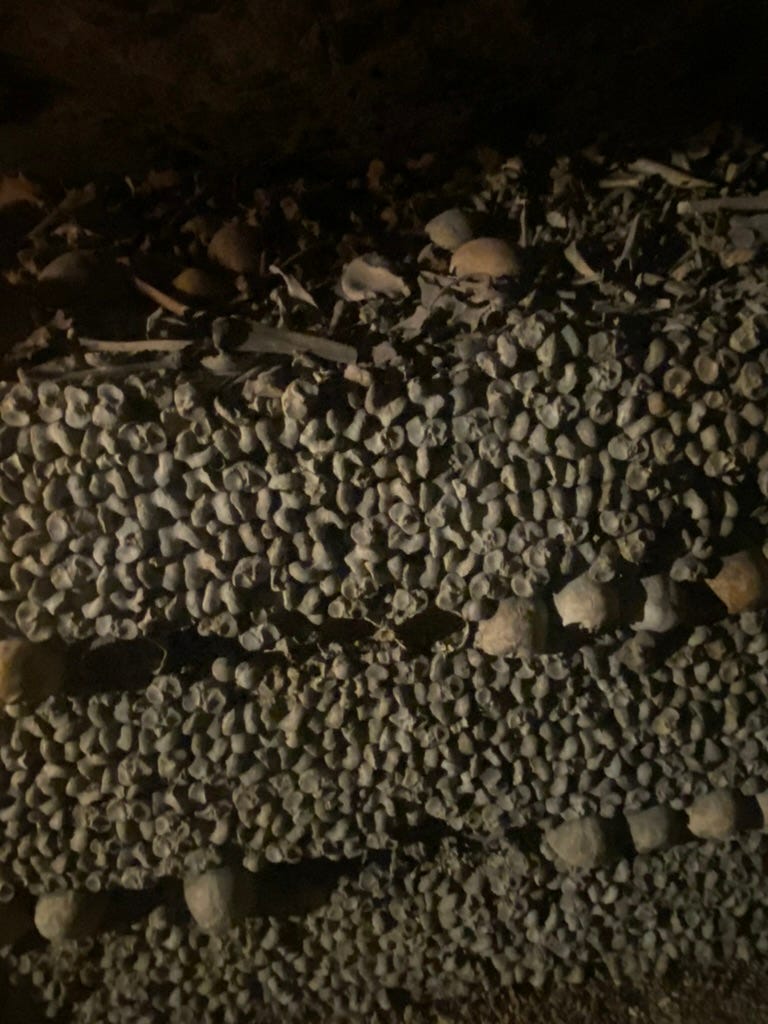
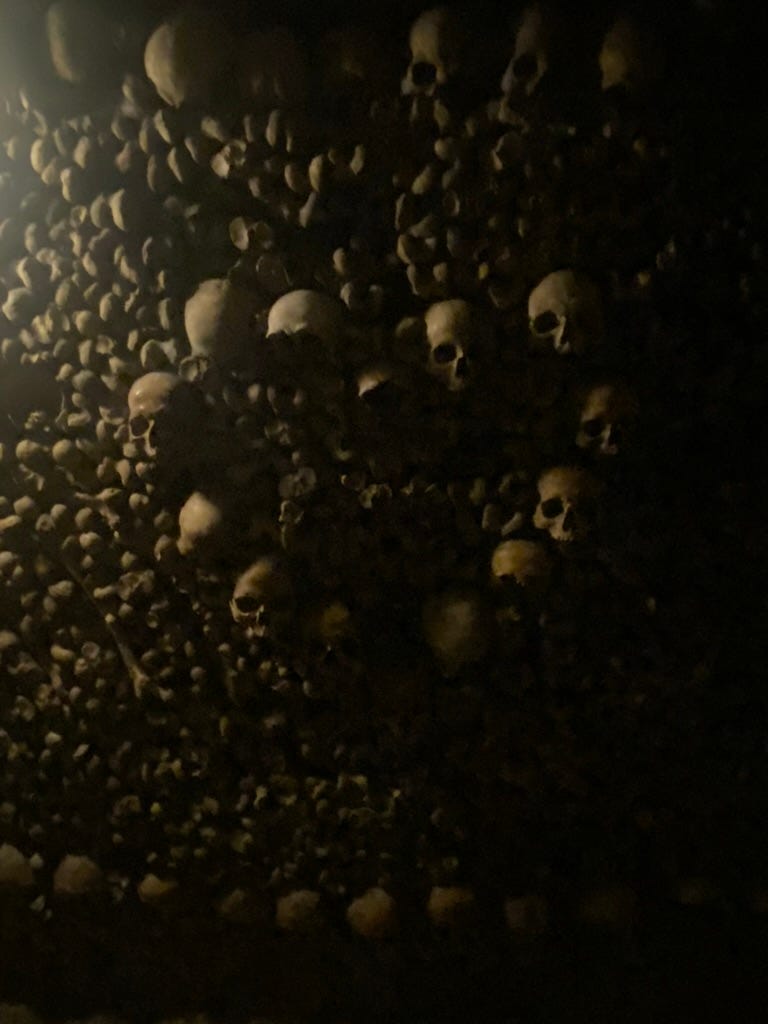
Hericart de Thury had the idea to fill some of the gaping holes with the exhumed bones from the cemeteries. He and his team of artisans placed the bones reverently into position and then blessed them.
It was painstaking work that took about 150 years. In the late 1800s, royalty and noblemen came to look at the underground displays. I believe a concert was held. It was a full orchestra of 45 nonprofessional musicians. Not sure where they all fit! It’s quite tight down here. If you are any taller than I am (175 cm) you’ll have to walk with a hunched back. I didn’t find it scary or eerie like the Chapel of Bones in Evora, Portugal.
But my favourite part was reading all the quotes on wall plaques.
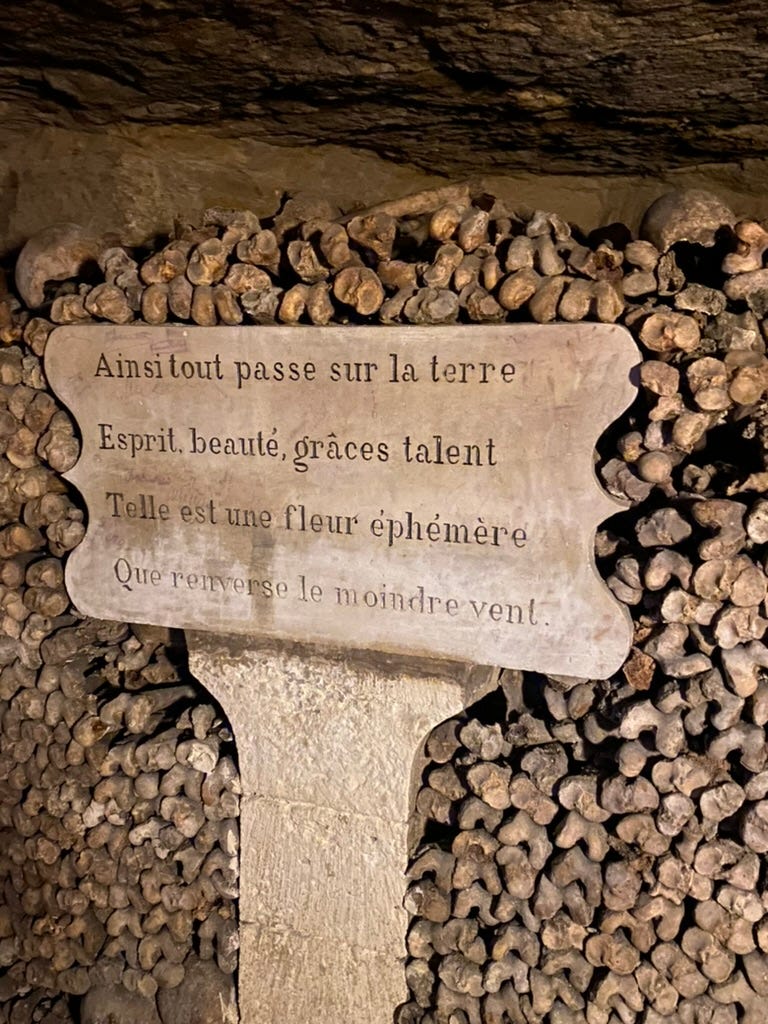
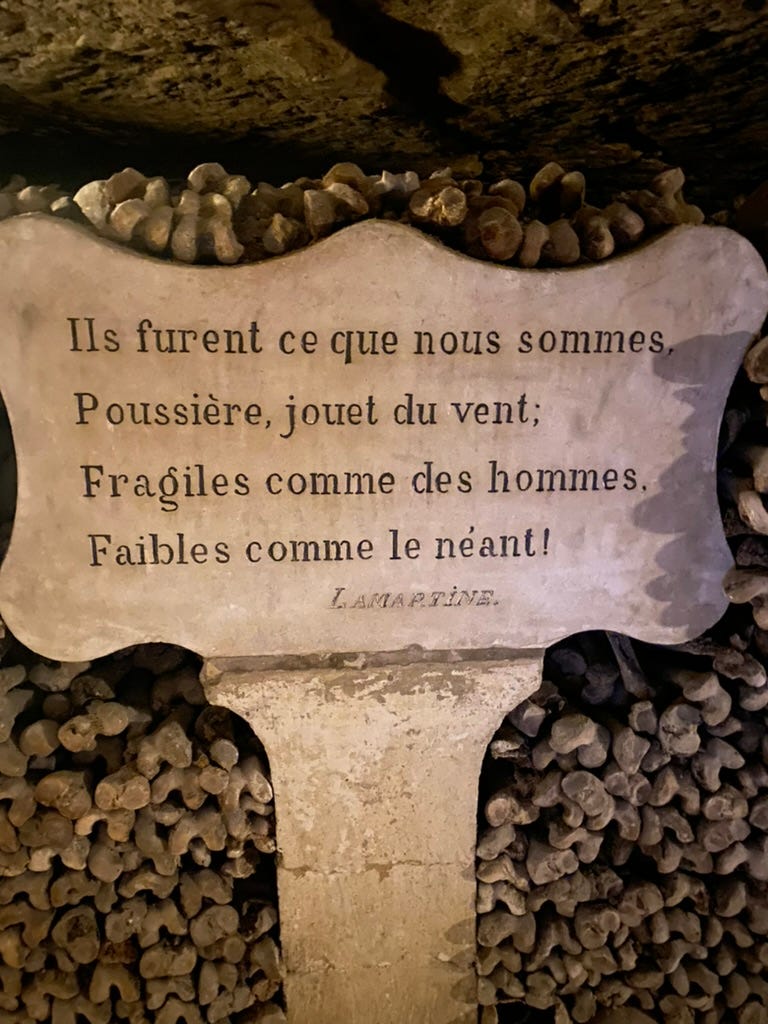
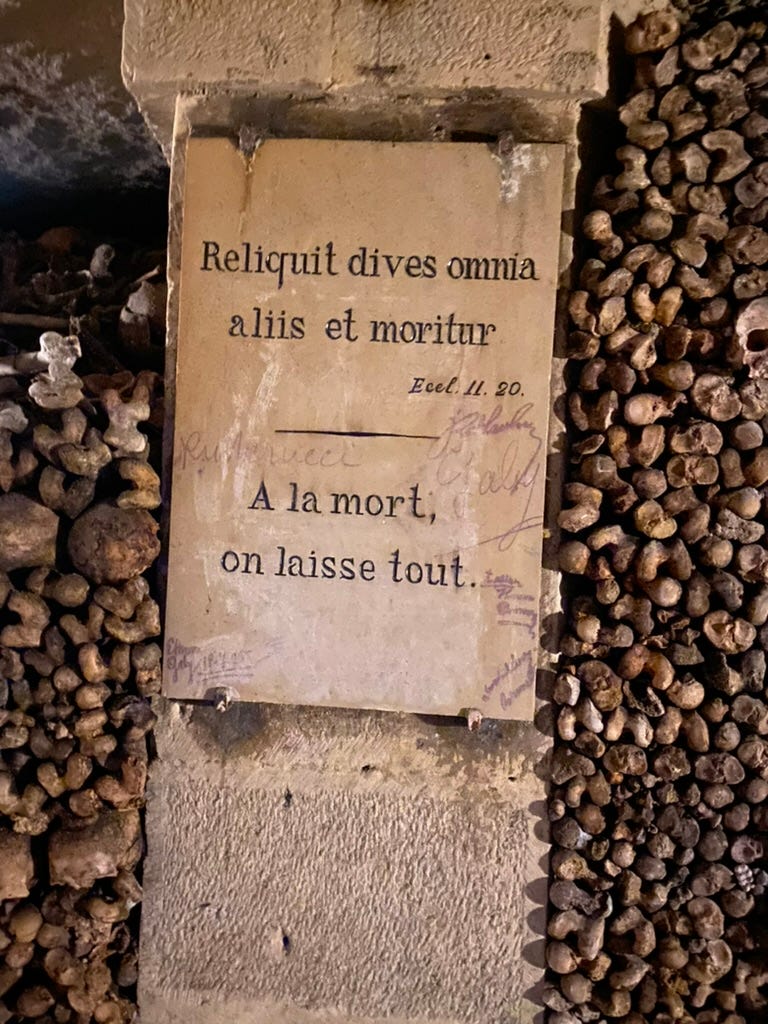
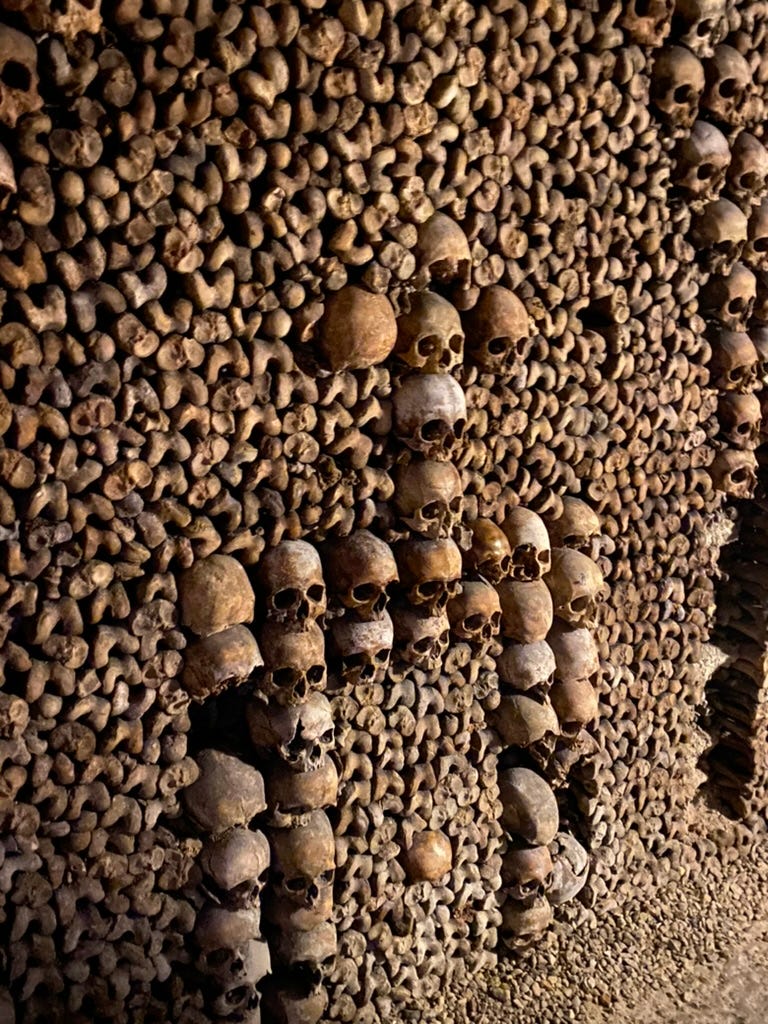
I liked the fact how everyone ended up here regardless of their importance in life: Robespierre, Colbert, Molière, Pascal and hundreds of other celebrities, including Hericart de Thury and Guillaumot themselves, great architects of the catacombs are all the same in death.
I was lucky enough to see the whole map of the entire Catacombes de Paris and I can tell you the part I visited was a tiny fraction of the whole Parisian catacombes. Over 6,000,000 bodies are stored here.
Here’s how I had seen the whole map of the catacombs.