
I Used to Hate Selling — One Tiny Inversion Made It Fun and Effective
An ethical win-win way to boost sales, trust, and contentment

“Target your prospects’ deepest fears and desires.”
“Pressure them with countdown timers, limited spots, and fake discounts.”
“Charge as much as you possibly can.”
Feeling exploitive and predatory, selling and sales “tactics” would repel me.
Born marketers couldn’t relate. Well-meaning mentors tried to cast it in a positive light. Sympathizers told me to bear it as a “necessary evil.”
Glued to my moral high horse, I kept my newsletter sales-free.
But the FOMO sea of #grateful Stripe screenshots online? And the painful knowledge that I could hit or even cross those numbers?
They’d make me squirm with resentment.
Whenever this hit critical mass, I’d retaliate with a spam campaign — needy emails infested with hyperlinks.
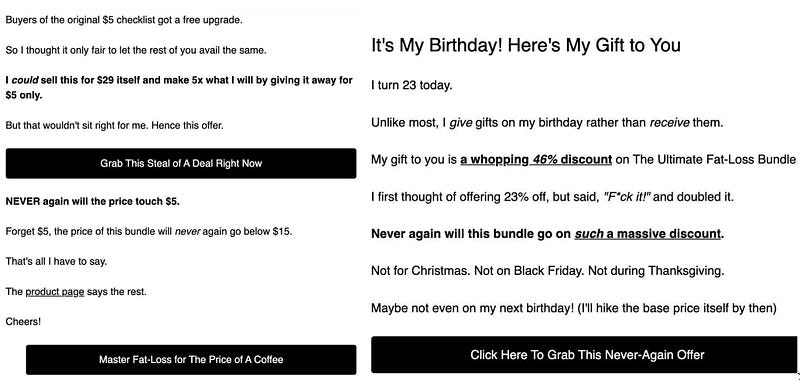
The result?
Paltry sales. Plenty of unsubscribes. Shaken trust. Worsened fear and dislike of sales — then, a no-selling season of resentment-building…
Until it hit critical mass again.
This miserable loop made me all but give up on selling. But then, I stumbled across Justin C Scott and his spiritual approach to online business.
Craving 1-on-1 access to Justin, I joined his Academy and unburdened my sales woes. Of all his advice, one sentence seared itself into my mind:
“Serve your audience — even when you’re trying to sell.”
A stark inversion in a world that swore by, “Sell to your audience — even when trying to serve.”
Epiphanic relief flooded my heart. Even if the sales were minimal, I could sell without guilt, inner strife, or losing trust!
Turns out, I severely underestimated this inversion’s power.
The Surprising Outcome I Legit Wasn’t Prepared For
Paid journal design. Printing and shipping 20+ test copies. 2+ months of “Feedback + Redesign” iterations. ISBN charges. Publisher delays.
I’d poured heart, soul, and money into The 2-Minute Bullet Journal — my first-ever physical product. I couldn’t afford to erode trust for meager sales and paltry royalties.
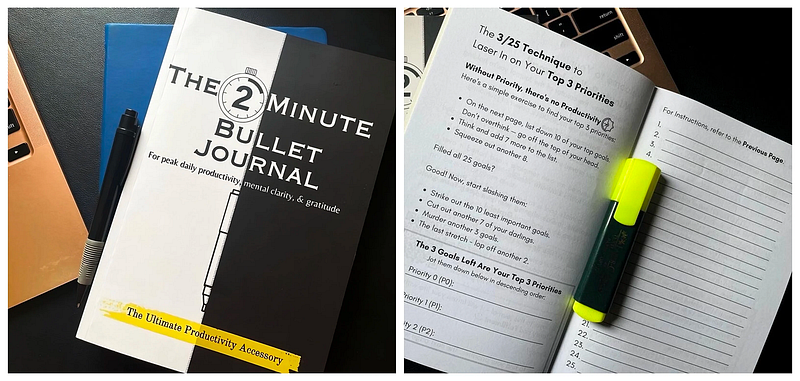
Justin’s inversion seemed perfect.
Some sales at best and 0 sales at worst. No loss of trust. Space and time to “hard-launch” if needed. Plus, I didn’t “need” the sales — my articles paid my bills.
So, “F*ck the sales!” I made the inversion my North Star.
With none of the usual finger-paralysis, I blitzed through the first sales email — conviction and enthusiasm had kicked out the sweaty anxiety of old.
By the time I hit “Send”, sales were an afterthought — the email itself was a win. Shutting my laptop, I whistled off to dinner.
The Post-Dinner Finding that Vaporized the Night’s Sleep
Despite only ~5% of my audience being Indian, desi sales trickled in. But it was crickets in the US, UK, and other countries.
Confusion turned to concern when I got this reply:

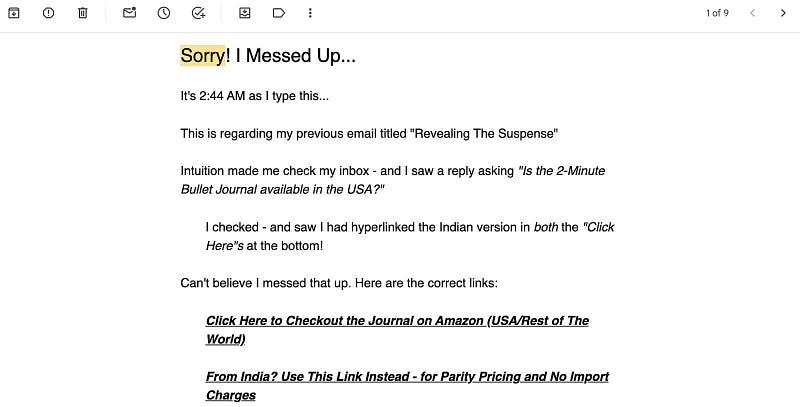
My heart contracted when I re-checked the hyperlinks and buttons.
I’d linked all the CTAs and buttons with the Indian version’s links! Cursing myself, I cobbled together a “Sorry!” email with the correct links.
Despite my goof-up, I got barely any unsubscribes — buyers even replied with gratitude and excitement.
It all seemed so foreign and unreal.
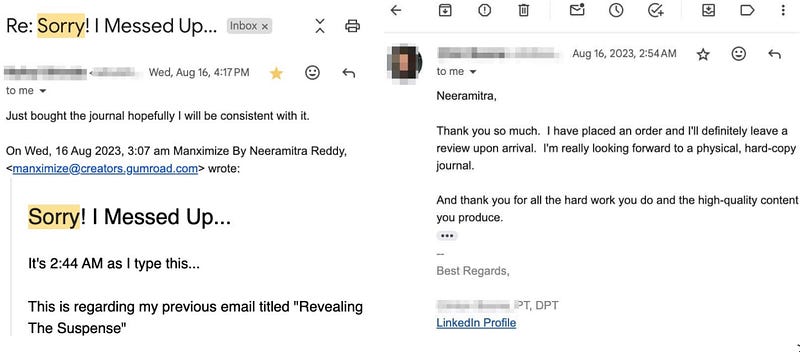
With redoubled faith, I surfed through the next 3 emails — as residual sales from each previous email jingled in.
(Yes, I triple-checked the hyperlinks and buttons each time).
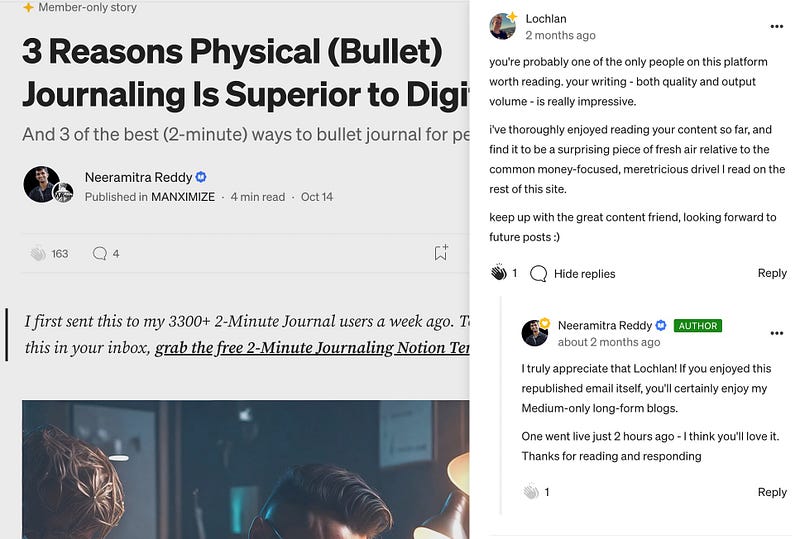
Since they were value-packed and “non-salesy”, I republished them here. Imagine my surprise when I got this gushing reply:
As the days and weeks rolled by, sales kept trickling in.
As of writing this, we’re sitting at 166 total sales — all from 5–6 total inversion-style emails and relevant soft mentions.
I can’t wait to see what’s in store when I upgrade the journal, hike the price, and “hard-launch” it.
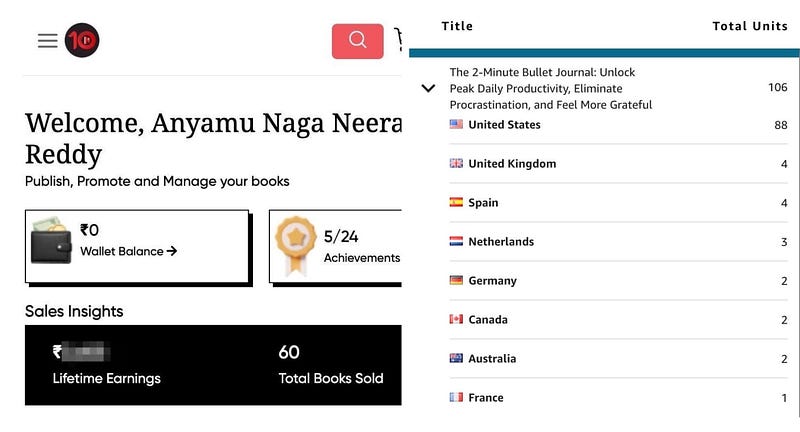
The sales and marketing I had dreaded for so long became stress-free and, dare I say, enjoyable.
All thanks to 1 tiny inversion.
Of course, this “tiny” inversion had multiple facets that fanned out into many nuanced changes — all of which we’ll cover next.
The 3 Crucial Facets of This Tiny Inversion
For each facet, I’ll share my changes, lessons from Justin (& others), and actionable ideas for you.
#0 — The Non-Negotiable Prerequisite
Conviction in your product/service.
My journal’s 1st version was a joke I put together in Canva over a weekend. Shout out to Jari Roomer for telling me to “rework this trash” — in the gentlest way possible.
Every iteration of “Feedback + Redesign” since then boosted my conviction.
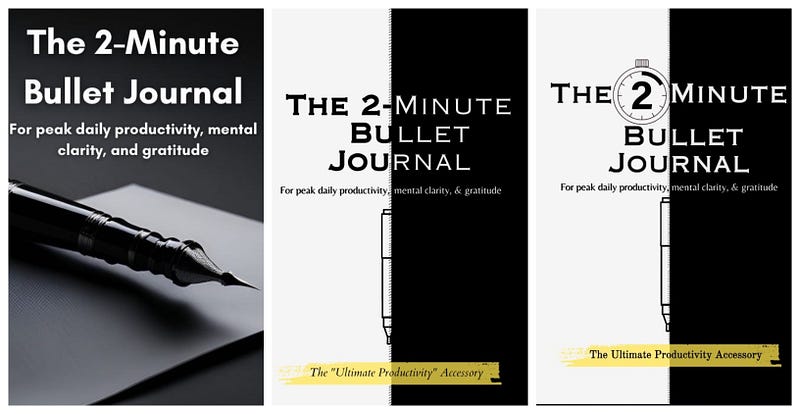
The conviction wasn’t from the “aesthetics ” alone, though.
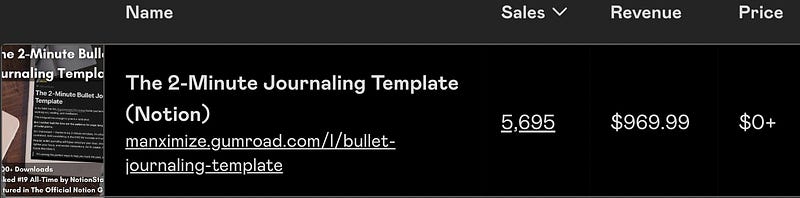
Amassing 5000+ downloads and $900+ in “donations”, its free Notion version validated it aplenty.
Build so much conviction that selling feels like a form of serving.
Validate with a trip-wire product. Offer free calls/copies/access for feedback. Fill gaps in competitor offers. Ask yourself, “Would I buy my own product/service?”
Then, answer honestly.
#1 — Have A Strong Service-First Intent
With conviction comes an “I deserve sales!” sense of entitlement. To negate this, develop a firm resolve to serve.
- Appeal to a higher power — Justin prays to God before sales campaigns and calls. A silent affirmation with shut eyes does the trick for me.
- When you don’t “need” sales to pay the bills, serving comes easy. Reduce expenses. Save. Diversify offers. Side hustle. Build multiple income streams.
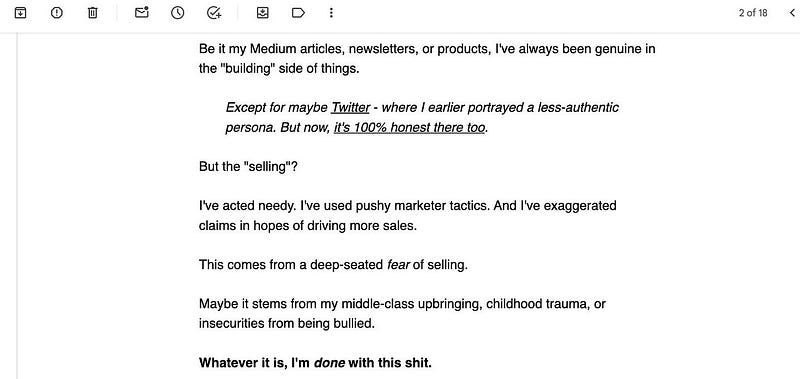
- Another (risky) way is to be straight-out honest with your audience — I sent out an announcement promising not to “hard-sell.”
- If nothing, trust the process — when you genuinely seek to serve, sales and wealth will follow. It’s not “woo woo” spirituality — it’s simple karmic causality.
#2 — Know & Befriend FRED:
As Jim Edwards explains in Copywriting Secrets, FRED is your ideal customer — short for Fears + Results + Expectations + Desires.
Unlike most, Jim doesn’t tell you to prey on FRED’s fears and desires — he asks you to acknowledge and address them instead.
“Mirror the reader to himself, then show him how your product solves his needs.”
— Raymond Rubican
In my journal’s case, I, myself, was FRED!
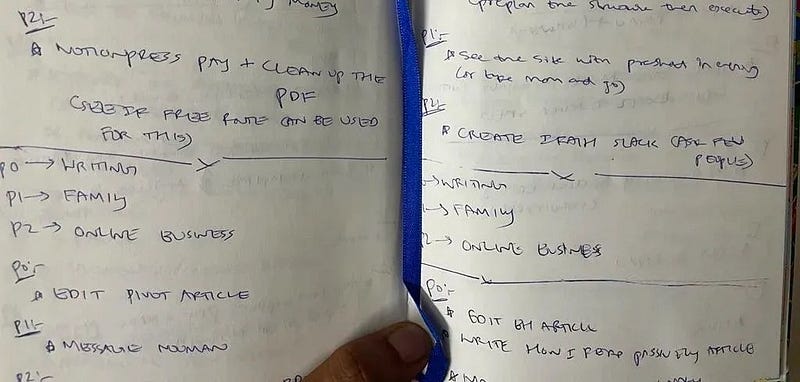
Busy and impatient, I was tired of complex journaling templates. So, I designed my own — and hand-copied it for a year before creating the bullet journal!
If your FRED is different, chalk him/her out — and write down his/her PQRR (Problems, Questions, Roadblocks, Results).
- What are FRED’s burning problems?
- What questions and doubts plague FRED?
- What (expected) hurdles and challenges intimidate FRED? What unexpected ones might he/she face?
- What results will your product/service grant FRED? How will it handle FRED’s issues, doubts, hurdles, and fears?
Then, address all your emails, CTAs, and landing page copy to FRED.
#3 — Enclose Selling with Serving, Not the Other Way Round
If that sounds confusing, this visual should clarify things.
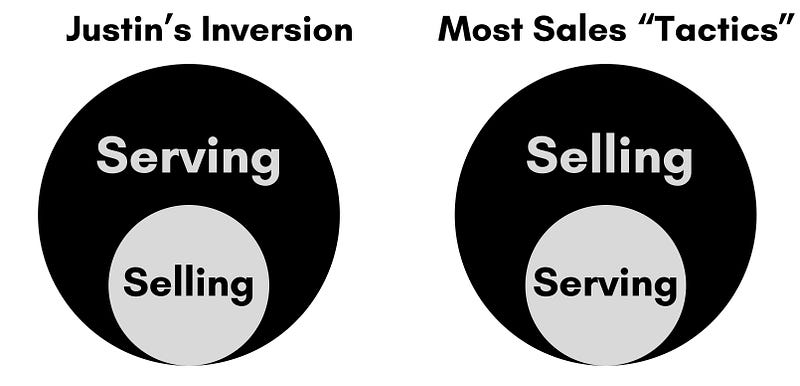
The idea is to sell from a place of service — and not selling under the guise of serving. 3 examples from my bullet journal emails:
- I didn’t sell my journal as a productivity panacea. Instead, I shared bullet journaling’s power, practical tips, and then my journal as a viable choice.
- Explaining the pros of physical journaling over digital, I offered my journal as one of the solutions — admitting that a regular notebook would work as well.
- I emphasized the journal as an option and not a “necessity.” I also shared alternatives — a whiteboard, the free Notion template, or a regular pocket/notebook.
More journal references. Giving center stage to the journal. Painting it as the “only” solution. Positioning it above its alternatives. Using only flattering photos.
Yes, such temptations were (and will be) there.
But the strong intention kept them at bay. Plus, people are smart — they can detect your (true) intentions.
Case Study — How I Revived a “Dead” Product Using This Inversion
My fat-loss checklist was the sole victim of the hyperlink-sprayed spam emails of old.
Despite a paltry $5 price tag and huge discounts on it, it’d struggle to sell.
But it’s since grossed $1200+ in sales — from just 1–2 campaigns and periodic soft mentions.
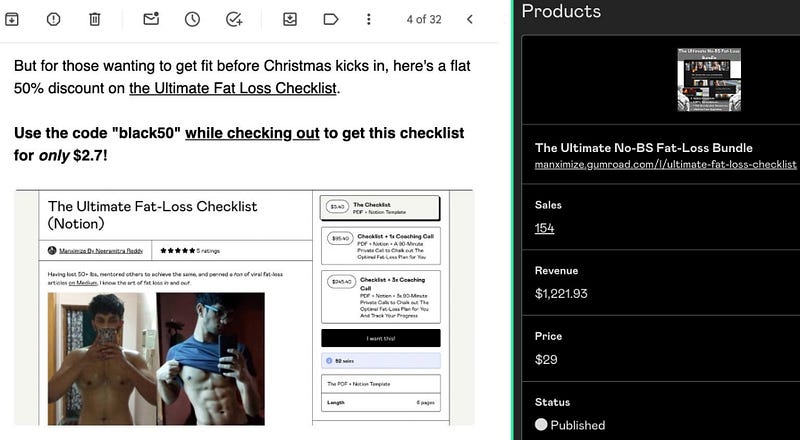
It took a Total Rehaul — of its name, design, intention, scope, and product copy. At the core was Justin’s inversion in all its 4 facets:
- #0 — Boosting Product Conviction: A single checklist felt threadbare — so I made it a bundle with 6 more checklists, 2 spreadsheets, and 9 deep-dive resources. I improved navigation and optics. Enough conviction arose to offer a 30-day refund guarantee. I got feedback from fat-loss experts like Alexa V.S. Then, I added 3 more checklists and renovated the existing ones.
- #1 — A Strong Service-First Intention: I relegated my digital products from an “Income source” to “Fun side money.” Adopted the “Undersell + Overdeliver” philosophy. Revamped my free fat-loss lead magnet until it put the old paid checklist to shame — this pressurized me to radically upgrade the bundle.
- #2 — Hyper-Defining my FRED: Earlier, my FRED was “Anyone looking for a simple fat-loss overview”. But with the rehaul, it’s “Those looking for a 360° all-in-one guide to sustainably lose fat without any of the overcomplicated B.S.”
- #3 — Selling from Within the Overarching Intent of Serving. No hard mentions unless there’s an upgrade or discount. Only soft plugs. CTAs went from “Buy Before It’s Too Late!” to “Learn more about the bundle here.” Made my free fat-loss simplifier front-facing — so only those who need a complete solution could explore the bundle.
With this Total Rehaul, the bundle’s now a no-competition unicorn…
No other fat-loss digital product is this 360° thorough, this simple, AND this affordable!
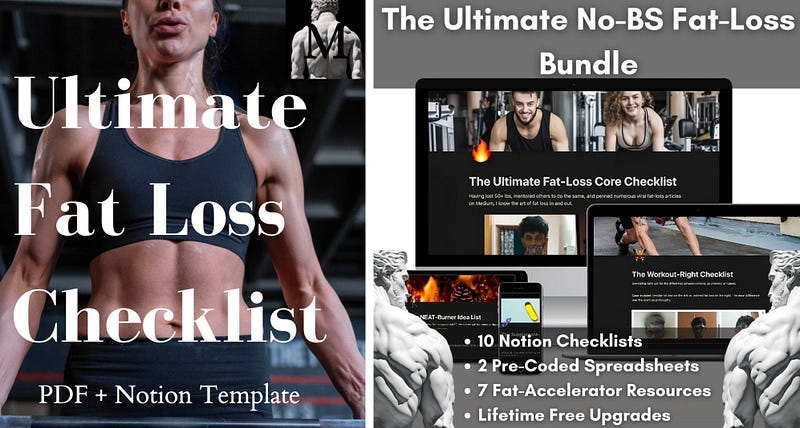
Yesterday, I finished its largest upgrade yet — a feedback-fueled $100+ hike in value for a $10 price hike.
I’ll soon send 3 “sales” emails — that’ll educate my readers on fat loss more than most “value” posts.
It still feels a bit odd to say — but I’m looking forward to it :)
This Inversion Isn’t About Optimizing for Sales…
It’s about optimizing for trust, contentment, and sales — in that order.
It’s long-term trust over daily Stripe notifications. Service before sales. Contentment over conversion.
Yes, an aggressive sales-optimized approach will sell more. To quote Zulie Rane in “If You Believe Aggressive Marketing Doesn’t Work, You’re Wrong”:
“Sending eight emails instead of four emails can nearly double purchases. Adding a deadline — even if it’s arbitrary! — usually works to boost sales just before the close of the sales period.”
But if such an approach doesn’t appeal to you? And you’re torn between “no-sell” and “ultra-hard-sell” like I was? And that inner strife is repelling your prospects?
Serve your audience — even when trying to sell.
You’ll sell and feel better. You’ll build long-term trust, the likes of which aggressive sellers won’t. You’ll rack up a ton of good karma.
A win-win-win.
If you found this article valuable and insightful, you might also enjoy these two reads:


