
I Tried to Use The Placebo Effect to Change My Life — It Didn’t Work
It’s you trying to trick yourself into a marketing scheme
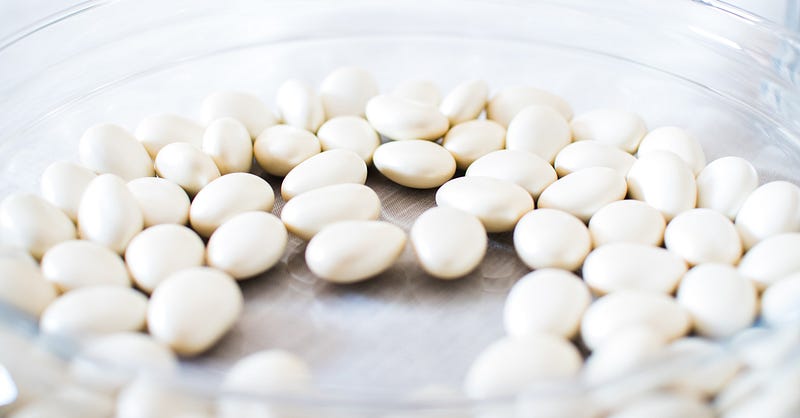
About a year and a half ago, nothing was working in my life. It was my darkest moment, when I felt like a constant failure, I couldn’t do anything right, and I reached out for as much support from people around me as possible — and only some had the bandwidth to help. It was clear that if I wanted to make it through that dark moment in my life, I needed to rely a lot on myself and my own ability to not only cope, but thrive.
At the beginning of 2019, I read an article in the Harvard Men’s Health Watch that touted the using the placebo effect as a healing tool for the brain and extending it to day to day life. In a May 2017 article titled “The power of the placebo effect,” the Harvard piece first defines the placebo effect, convincing your body a fake treatment is a real thing and cites an age-old claim in science that “a placebo is just as effective as traditional treatments.”
“The placebo effect is more than positive thinking — believing a treatment or procedure will work. It’s about creating a stronger connection between the brain and body and how they work together,” says Professor Ted Kaptchuk of Harvard-affiliated Beth Israel Deaconess Medical Center.
Kaptchuk clarified that placebos don’t heal us — but they make us feel better. In no world does a placebo lower our cholesterol or shrink a tumor, but they help us with pain management, stress-related insomnia, and cancer treatment side effects. The article in the Harvard Men’s Health Watch was initially an attempt to stop us from seeing the placebo effect as a failure. Usually used in clinical trials to test the effectiveness of treatments, a placebo is a control that a drug has to perform statistically significantly better than to be deemed effective.
Recently, though, experts have found that reacting to a placebo isn’t a sign that the placebo doesn’t work, but that “another, non-pharmacological mechanism may be present.” The placebo effect still isn’t very well understood, but it involves a surge in feel-good neurotransmitters like endorphins and dopamine to generate better moods, self-awareness, and emotional reactions, all having a good therapeutic benefit.
“The placebo effect is a way for your brain to tell the body what it needs to feel better,” says Kaptchuk.
Kaptchuk argued that the ritual was as important as the treatment. Going to the doctor, for example, meant being in an office and being surrounded by a medical professional with a white coat, receiving all different kinds of pills, and undergoing all sorts of procedures. We perceive that the treatment works for our symptoms because we are getting attention and care.
Often, however, placebos work because we don’t know we’re getting one. If we believe a sugar pill is going to take our pain away, it seems counterintuitive to actually know that it’s a sugar pill. However, Kaptchuk and his group have actually found that people, even when they knew they were taking a placebo, found it to be 50% as helpful and effective as taking the real drug to reduce pain after a migraine. Kaptchuk speculated on why this was:
“People associate the ritual of taking medicine as a positive healing effect,” says Kaptchuk. “Even if they know it’s not medicine, the action itself can stimulate the brain into thinking the body is being healed.”
In our day-to-day lives, Kaptchuk advised undergoing self-help rituals that we associate with healthy living to engage the placebo effect in our real lives. We have to exercise, eat well, meditate, do yoga, and have quality social time. Essentially, he urged us to give ourselves more attention and emotional support to make us feel more comfortable in the world.
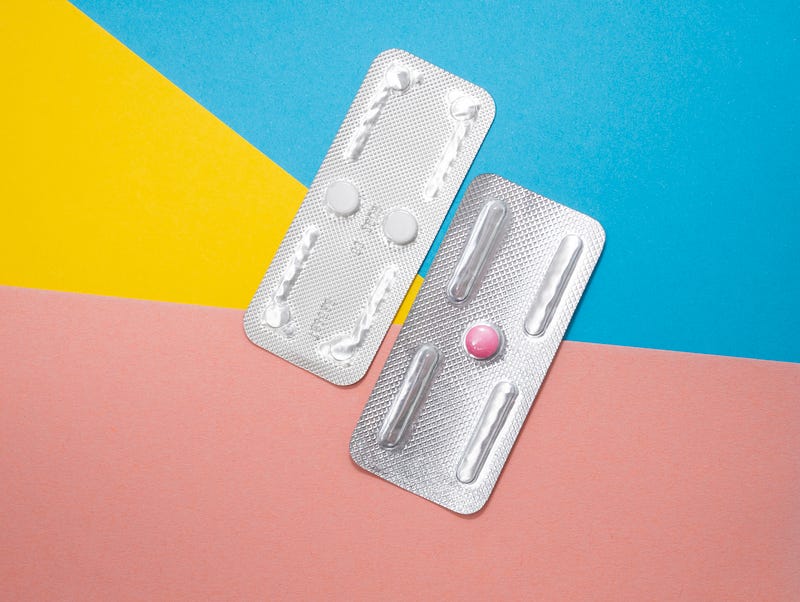
I know that in this world, quick fixes don’t solve everything. But that never stopped me from trying to engage with the placebo effect in all my daily activities in an attempt to change my life and just get by easier every day.
When I was tired, I would tell myself “I have a lot of energy and drive.” When I was unmotivated, I would tell myself “I have a lot of motivation.” When I was depressed, I would tell myself “I’m a very naturally optimistic person.”
I tried these mantras and manners of healthy self-talk to motivate myself to actually do things that would improve my mood, productivity, or sense of self-worth. Sometimes it would work, and sometimes it would be way too forced, and after trying to use the placebo effect for too long during the day, my mind would be tired from having to force myself.
And that’s what it was at the core — force. Sure, using the placebo effect to get myself through and trick myself through a day where I got three hours of sleep might have been effective, but it was only effective for a short amount of time before, life, biology, and my natural needs caught up to me.
In trying to force the placebo effect, I neglected my ability to be human, the part of me that was tired, unmotivated, and depressed. I definitely knew better, which is why I’m disappointed on days that I don’t feel good but still have to power through life, I still rely on the placebo effect. But life is not something you can just force and power through. There’s no quick fix or hack as I’ve always wanted for myself.
I had a lot more maturity than this mindset, but I just had a black and white view where you had to always feel happy, motivated, energetic, and optimistic. Again, I’m an adult, and I knew better, but perhaps I didn’t accept it in my heart yet that I needed to exist in the gray area where I sometimes had to push through, sometimes had to rest, sometimes had to work, and sometimes had to take care of myself.
I wasn’t allowing myself to live like I was supposed to, and my life didn’t necessarily change — it got worse. Like any 21 to 22-year-old, I wanted to test myself and my limits, even if I never acknowledged it. And so I questioned whether I could get through an entire day of classes and work on two hours of sleep for no reason whatsoever. I hope it’s not a spoiler, but I couldn’t.
Sure, that positive self-talk did get me to actually do things that helped me move forward better, like exercise, pray, and go to my friends for support. I also understand that hindsight is 20/20 and that at the moment, I wasn’t looking to save the world or actually change my life — I was just trying to survive.
I’m against band-aid solutions to big, structural problems, but at the time, the band-aid in using the placebo effect was the best I had. The mantras in my head of “I’m really good at this” may have been an unsustainable way to power through my days, but it still worked to an extent and kept me sane enough to move onto the next moment and the next day.
So for anyone else trying to placebo your way through life, know that the effect is like the drug itself — it might help, but there actually isn’t any substance behind it. It’s you trying to trick yourself into a marketing scheme, just like I was. For me, that was the best I could do to move forward. I have no regrets because I needed some strategy to survive and stop myself from going insane, but I hope you’re not in a similar situation.
I could have listened to my needs better and actually started to sleep more, eat better, learn to say no when my boss needed a favor, disengaged with people that made me feel like shit about myself, all things I’m still working on. I wish I didn’t try to force myself through everything as I did in that period of my life — and I’m glad I’m not anymore.


