
I Traced My Roots and Built a Bridge to the Past in Goa
And was shocked to find new ties to the present
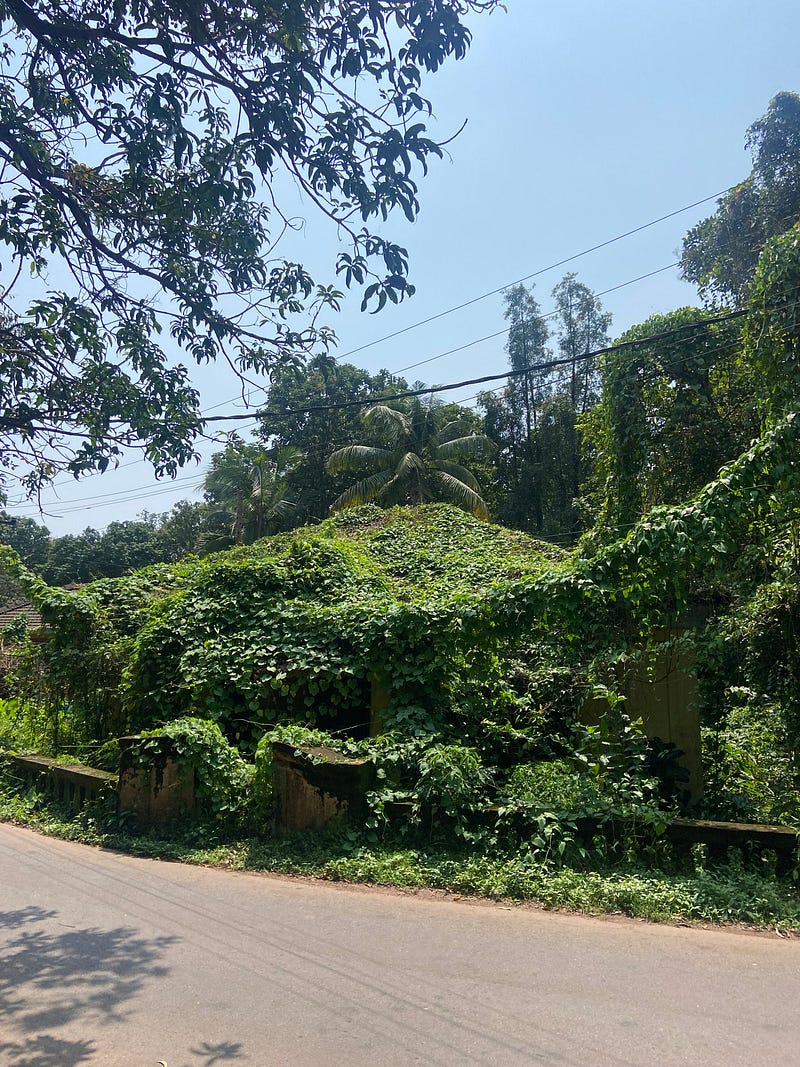
The moss-covered wall, with weeds sprouting from cracks in its surface, is barely visible from the road. It conceals a decaying house, smothered by a thick canopy of green foliage and vines. A lone palm tree stands defiantly in the background.
“My grandfather lived in this house,” I tell my driver.
“Your grandfather? In this house?”
I nod and watch as the cogs turn in his mind. Suddenly, it all makes sense. Three hours earlier, he had picked me up from the idyllic Agonda Beach in South Goa, famous for its three-kilometre stretch of pristine white sands and colourful beach shacks. Instead of heading to a popular tourist spot, like the state capital, Panaji, or one of Goa’s many beaches, our destination was the obscure village of Salvador do Mundo, literally “Saviour of the World”, named after the 1565 church of the same name.
“So, you are a Goan!” he exclaims with an excited chuckle and a smile that I will encounter many times during my eight-day stay in Goa. One that says: “You are one of us.”
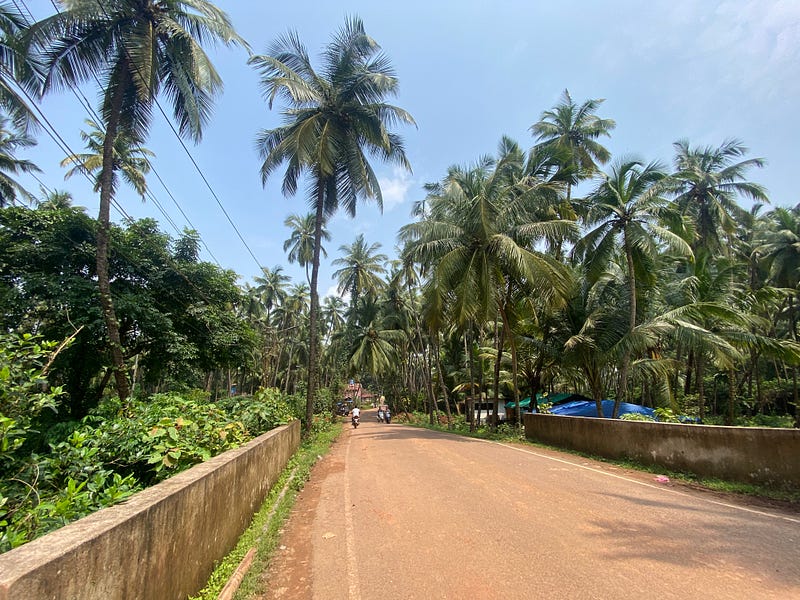
Although I was born to a Goan father — who himself was born in Kenya to Goan parents and moved to the UK at seven — this is my first visit to my ancestral homeland. Growing up, my ‘exotic’ background was always an interesting icebreaker, but I never understood what it meant to be Goan beyond the delights of my grandmother’s cooking.
Tracing footsteps
The story of my confused identity begins with my nomadic grandparents. Though ethnically Goan, they lived most of their lives in Kenya and the UK. My grandfather, Mervyn Maciel, worked in Kenya’s Northern Frontier District, where he met my late grandmother, Elsie Colaço, and had five children. When his role was Africanised post-Kenyan independence in 1966, the family moved to London.
But it all began in Goa. In this land of golden sunsets, lush green jungles and cascading waterfalls — where I now stand for the first time trying to follow in their footsteps. As I peer into my grandfather’s old home, now derelict and abandoned after being illegally repossessed, I can only imagine how different his childhood would have been from mine. No electricity, no running water but for a communal well in the front garden, no respite from the post-monsoon humidity that covers me in a thick layer of sweat. The back garden, where cashews and mangos once grew in abundance, is overgrown with weeds and flooded from the recent monsoon rains. Now I understand why my grandfather’s tales of his homeland are tinged with bitter nostalgia. To him, Goa is a paradise lost to the trappings of commercialization that have eroded a once simple way of life — a loss symbolized by the state of this former family home.
In many ways, Goa is a victim of its own success. The hippie culture that rose to prominence in the late 1960s has given way to an abundance of luxury hotels, casinos and resorts that have bolstered the local economy — but at a price.
“We are completely reliant on tourism,” says my driver, when I ask how the locals feel about the commercialization of Goa in recent decades. “When the casinos and big hotels arrived, nobody wanted them here. But it’s too late now, they bring in the money that we need to survive. This became very clear during the Covid-19 pandemic.”
Not all of Goa has been spoiled by tourism. Our journey continues with a short ferry ride to Chorão Island, where my grandmother Elsie was born. Chorão Island, just 8 kilometres east of Panaji, offers a tranquil off-beat alternative to the hustle and bustle found elsewhere in Goa. The Salim Ali Bird Sanctuary, which houses a variety of migratory birds such as the Western Reef Heron and Pied Avocet, as well as marsh crocodiles and mudskippers, is a must-see for birdwatchers and wildlife enthusiasts.
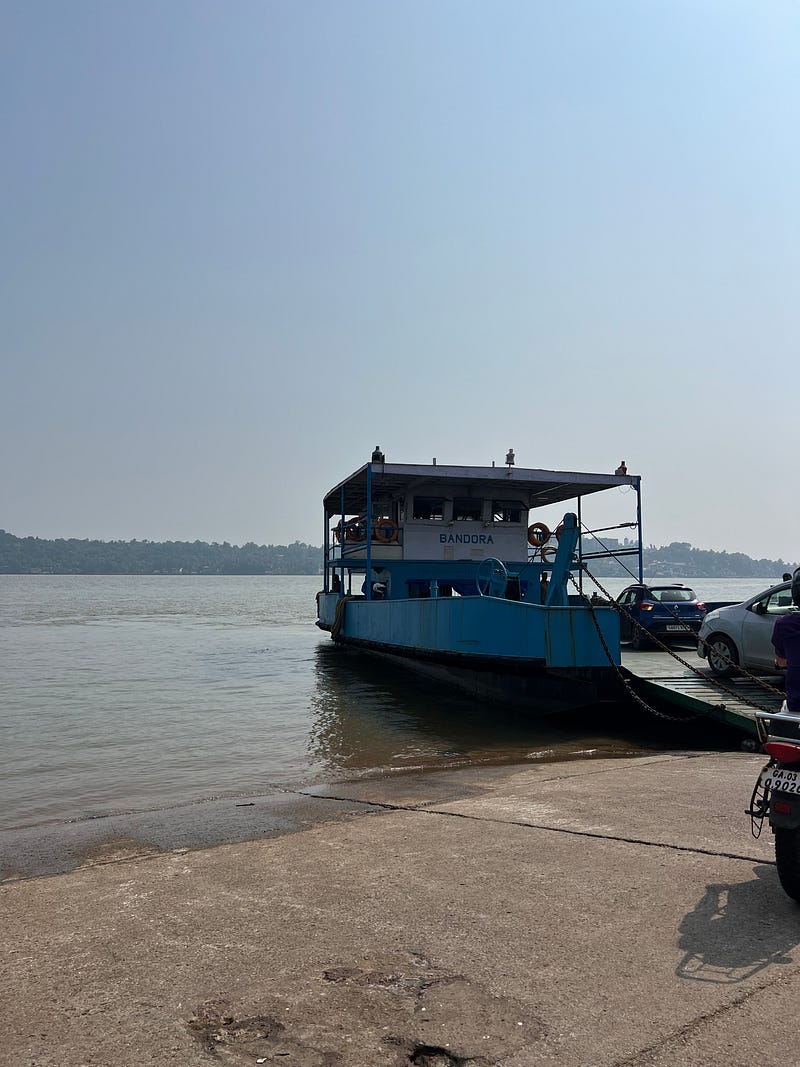
As we cross the Mandovi River on a small ferry that holds no more than six vehicles and costs just 15 pence (Rs. 15), I stare out at the shoreline lined with thick mangrove forests and reflect on how close the two villages are — just six kilometres apart — and the serendipitous chain of events that brought my grandparents together not here, but in Kenya.
On the island, we drive ten minutes inland to the village of Caraim, where my only reference to my grandmother’s birthplace is the nearby chapel of Nossa Senhora De Saude (Our Lady of Good Health), an 18th-century relic of the Portuguese era built in the familiar baroque style found throughout Goa.
An unexpected encounter
Serendipity would strike again in Caraim. We are joined by Lillian Da Cunha, a family friend who is also tracing her family roots on the island. Her father, Gaspar Viegas, grew up in the house across the street from my grandfather, and they remained lifelong friends. By a strange coincidence, her grandmother was also born a stone’s throw from the chapel. Even more curiously, the family living there today — Lilian’s second cousins — share a surname with both of my grandmother’s parents.
We arrive at the family home, which, like my grandfather’s, has seen better days. The yellow exterior — Portuguese-style bungalows are often brightly coloured — is faded by years of tropical weather and neglect, while the roof is patched with tarpaulin to protect from the monsoon rains.
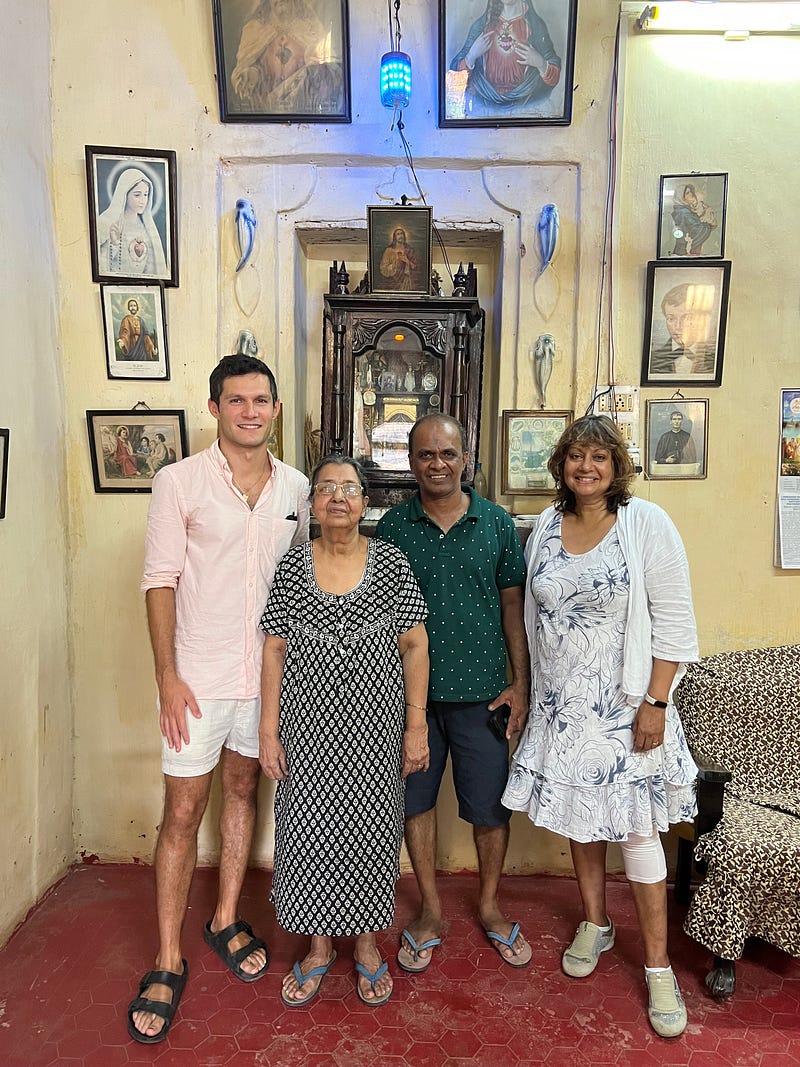
We are invited inside by the lady of the house, Noreen, and my mind races with possibilities. After serving us a cold glass of lemonade, she quizzes Lilian on her family background until they establish their connection and revel in the giddy laughter of two long-lost relatives meeting for the first time. “So, who are you?” she asks, turning towards me. I explain my family ties to Goa with the help of a selection of photos on my smartphone. Her eyes widen in recognition. “Elsie?” she says, looking at a photo of my grandmother, before switching to Konkani with her son. I can’t follow the conversation, but I recognise the names of distant relatives. It can’t be, can it?
Moments later, we are leafing through pristine leather-bound photo albums as she lists off more family members. I struggle to keep up with the names of her late husband, sons, siblings, cousins, uncles and aunts as I try to map an imaginary family tree in my mind. Finally, it’s time for the big reveal.
“Your great-grandfather was my husband’s uncle,” she says, beaming back at me.
“Does that mean Elsie was his cousin?” I respond, stunned by the implications.
“Exactly,” she says with that smile again.
I look over at Lilian and we laugh at the absurdity of it all. The unlikeliest of family reunions.
Eventually, it is time to say our goodbyes and we head to a different ferry port on the other side of the island to continue our journey.
The taste of home
We head to Fontainhas, the oldest Latin quarter of Panaji. With Portuguese villas painted in bright reds, yellows, blues and greens and cosy balconies lining the narrow lanes, the neighbourhood has a distinctly Mediterranean feel to it. Unlike at my previous stops, I am surrounded by other tourists searching for the perfect Instagram shot and exploring the neighbourhood’s thriving art scene and abundance of traditional Goan eateries.
I stop for a snack at Hospedaria Venite, a quaint little restaurant that opened in 1954 during Portuguese rule, for a snack. Food is one of the best ways to get to know a new place, but it has added significance for me in Goa. My grandmother was an exceptional cook who could turn even the most basic ingredients into a delicious meal. In 1983, she published a Goan recipe book to share those delights with the rest of the world.
Seated on a balcony overlooking the street below, I order a Chouriço Pão — a plain white bun filled with a tangy spiced sausage. It is a staple food typifying the fusion of Portuguese and Indian cuisine that makes Goa unique. It has been over a decade since I last tasted it and I can hardly wait to tuck in. The first bite bursts with flavour, a mixture of sweet and spicy with smoky undertones as the rich juicy pork melts away in my mouth. I devour it so quickly and I’m tempted to order another.
Instead, I opt for Bebinca, a sweet dessert made with flour, coconut milk, sugar, butter, and eggs. Its multi-layered form is unfamiliar to me at first, but the creamy and jelly-like texture immediately awakens memories of more forgotten sugary treats.
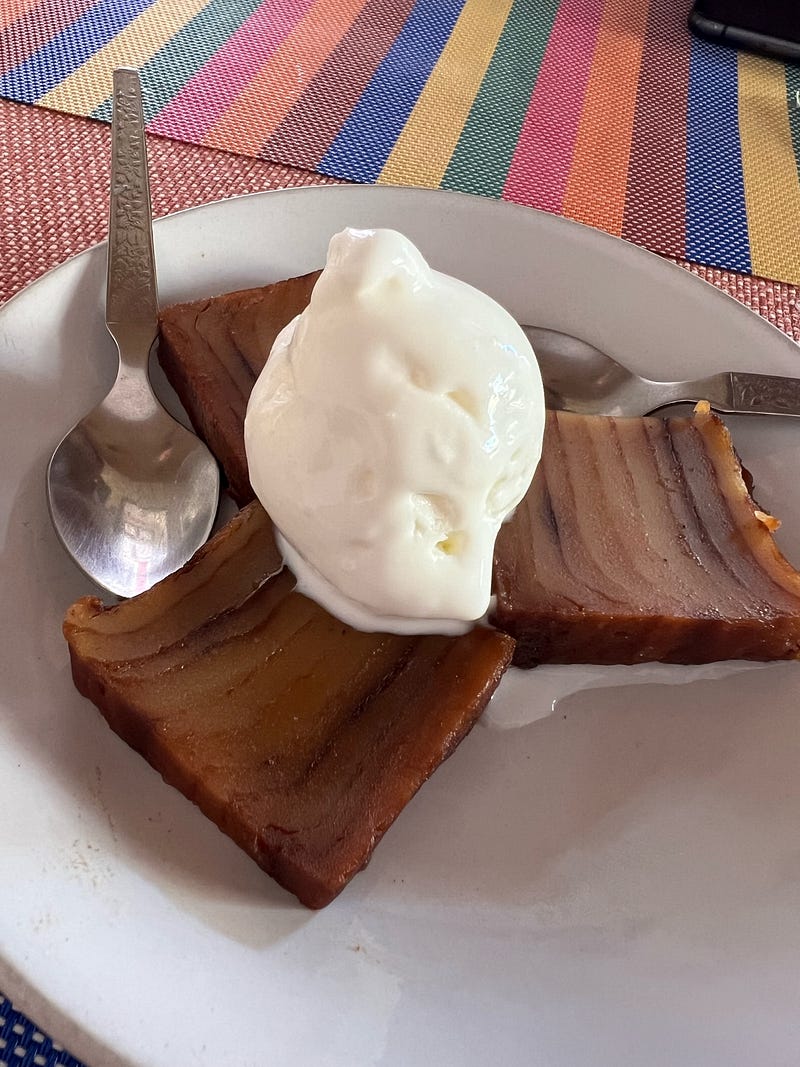
Suddenly, I am a young boy again surrounded by my siblings and cousins; Granny is in the kitchen preparing another feast, and Papa is making us all laugh with his stories. It feels good to be home.


