
I Took Ashwagandha For 60 Days. Here’s What Happened.
Can ‘The King Of Ayurvedic Herbs’ Make You More Productive and Less Stressed?
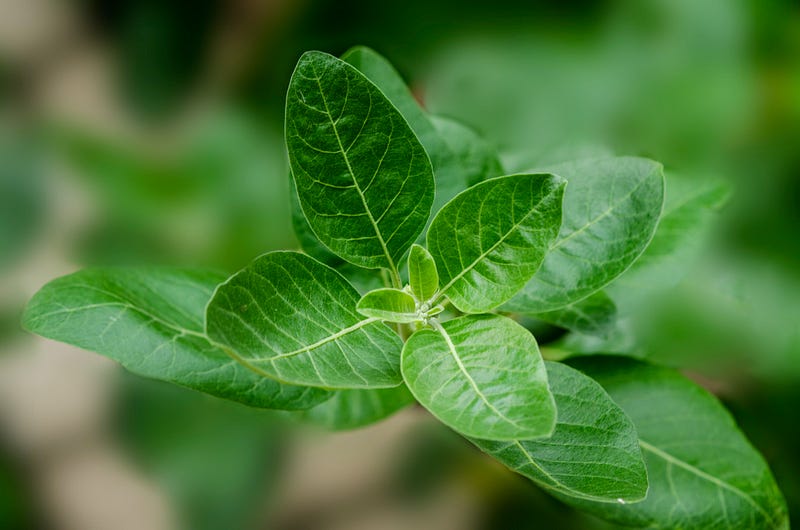
Ayurvedic medicine is an ancient Indian practice of using natural remedies to improve health. It’s been used for centuries to increase vitality, decrease stress and even treat illness.
Ashwagandha is a natural evergreen shrub that grows in Asia and Africa. It’s been called the kind of Ayurvedic medicine because of the multiple health benefits that research has uncovered over the last few years.
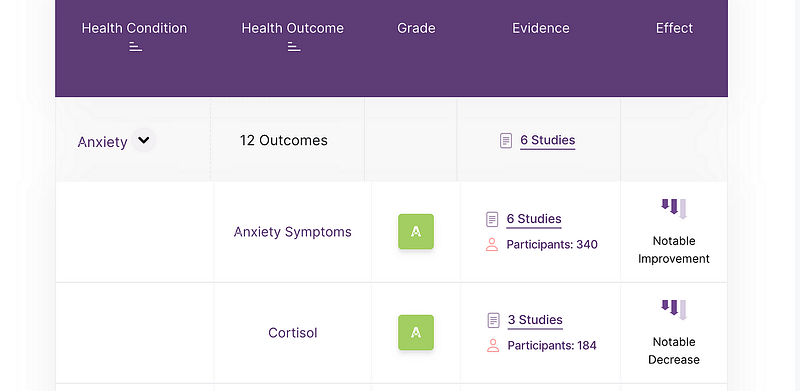
Ashwagandha is an adaptogen, which can be described as a compound that helps the body adapt to and deal with stress. It’s thought that several benefits associated with Ashwagandha are related to its ability to reduce cortisol (the stress hormone).
One look on Examine shows us that Ashwagandha has been proven effective in a wide array of areas from improving Anxiety, to increasing muscle gain and improving cognitive performance:
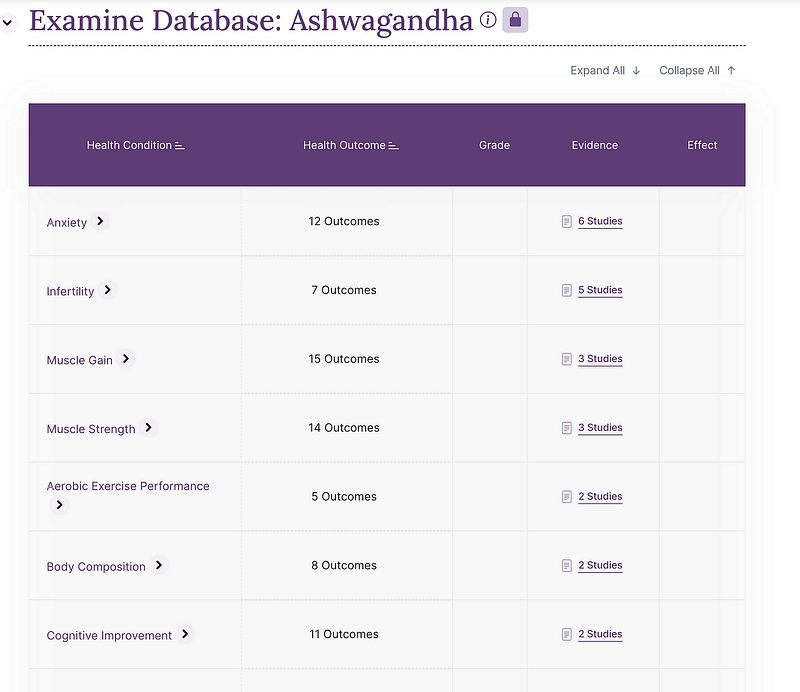
Naturally, being a self-improvement aficionado, I had to give Ashwagandha a try myself to see if I could reap the benefits. For the last 60 days, I’ve been taking 300mg of Ashwagandha twice a day. The results have been interesting, to say the least.
Stress Relief
Perhaps the biggest use case for Ashwagandha is to reduce stress. Studies support this notion. At least 9 studies have shown a notable improvement in anxiety and stress from the use of Ashwagandha.
The very first time I popped my first dose of Ashwagandha, I found myself feeling somewhat more relaxed within just an hour or so. Not sedated, but for sure chilled out.
I liken it to the feeling after finishing a meditation session, everything just feels a little lighter and more ‘flowy’.
This has been beneficial for me, especially as an entrepreneur managing two businesses at the same time. Often overwhelm and stress can creep into my day-to-day life.
Ashwagandha seems to help me deal with and adapt to these daily stressors. In that sense, it seems to do exactly what it says on the tin. It helps me adapt to stress.
Overall, this is a good feeling as I can still be productive.
That being said, I probably wouldn’t recommend taking Ashwagandha right before you need to complete a ‘high energy’ activity such as an intense workout. I doubt it would ruin your workout, but it may just take the edge motivation you have to smash your session.
I like to go beast mode whenever possible when working out, so I’ve been saving my Ashwagandha for post-workout.
I’ve also heard experts like Andrew Huberman say that it’s not optimal to take Ashwagandha in the mornings due to the cortisol-reducing effect that it has.
Cortisol is a natural hormone that is beneficial early in the day as it kicks us into gear and also plays a part in our natural circadian rhythm — cortisol should be higher in the morning and day while we’re active and much lower in the evening and throughout the night as we rest and recover.
So I’ve been taking my doses once in the afternoon and once in the evening.
Emotional Control
I’ve heard several people talk about how Ashwagandha made them feel ‘emotionally numb’ experiencing almost a sense of apathy and not giving a f*ck about anything.
Personally, I didn’t experience this, I simply felt a lot less emotionally reactive and better able to deal with ‘fires’ as they came up throughout the day. I haven’t struggled at all with motivation.

In this sense, Ashwagandha has been helpful in my ability to control my emotions. I’m not necessarily a highly emotional person anyway and am usually pretty good at staying centred which I put down to various habits such as daily meditation and weight training, that being said I’m human and am certainly not immune to anxiety and even bursts of anger when things go wrong in business.
I’ve found that Ashwagandha helped me to rein in these emotions. To think more rationally and logically about issues that come up in my business day to day.
That being said if you’re naturally more chilled out and zen-like but maybe struggle with motivation, Ashwagandha may be completely unnecessary and even counterproductive by making you too chilled out and potentially apathetic about things.
Focus & Productivity
Studies have shown slight increases in ‘executive function’ related to performing various cognitive tasks when taking Ashwagandha.
There has been an interesting effect on my focus and productivity since taking Ashwagandha. I’m usually very switched on and eager to get things done as quickly as possible, this can be a superpower at times, but also my kryptonite when I need to take my time and focus in a little more.

I’ve found Ashwagandha to be helpful when doing ‘deep work’, such as writing, thinking about new concepts for my content or even just maintaining my attention on a book instead of getting lost in trails of thought or distracted as I read.
So yes, Ashwagandha has had a positive effect on my focus & productivity for sure, but I think this will vary from person to person. If you’re somebody who has no problem zoning in for long periods but maybe finds it hard to get going in the first place then Ashwagandha may not be for you.
I’ve found myself having less ‘urgency’ to do things. That might not sound positive at first, but it’s been a blessing in disguise because my urgency levels are probably too high anyway when it comes to working.
When I’m excited about something, I tend to rush through things instead of relaxing into deep work that I should slow down with and take sustained, focused time to do at a high level. Ashwagandha helped me do that more naturally.
I’d say that Ashwagandha has enabled me to get into flow states more easily and for longer periods.
It makes me less busy, yet more productive. If you read my content, you know that’s something I strive for.
Physical Performance
Research has shown Ashwagandha to have a notable improvement in power output in physical or athletic pursuits.
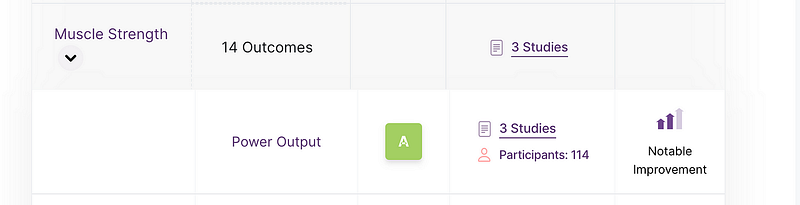
As somebody who hits the weight room a few times per week, this is something that I was excited to experience.
I’ve felt stronger in the gym on Ashwagandha. This has equated more to strength, especially in lower rep ranges. For example, I just wrapped up a push session this morning.
Even though I was pushing heavy weights at lower rep ranges, the weights didn’t feel that heavy, I felt I could grip slightly stronger and push with more force.
That being said, I’m currently going through a ‘lean bulking’ phase in my fitness journey, which means I’m eating at a calorie surplus and taking other supplements like Creatine as well as plenty of protein. So it could very well be that the strength increase is more down to this. Who knows.
I’ve been training for years, so I think it’s unlikely that Ashwagandha caused this effect overnight. But then I thought back to when I briefly took Ashwagandha a few months back for around 30 days (I bought a bunch of supplements at once and it was in my stack, so I can’t be 100% sure again that Ashwagandha was responsible for this) but I do distinctly remember the same feeling of strength and power in the gym. Subtle, yet noticeable.
Remember this could all be a placebo effect, or due to the other things I’m doing to optimize my performance in the gym.

Final Thoughts
There are a lot of scientific studies on Ashwagandha and the body of research continues to grow — seemingly backing up the ancient use of the plant.
One look at Examine (an awesome website that compiles all of the studies and scientific research on supplements) shows a plethora of benefits, and I can attest to experiencing many of these in my use of Ashwagandha too.
That being said, a lot of these are related to the reduction of cortisol and stress. As somebody who is ‘always on’, this can be hugely beneficial, however, if you’re somebody who struggles to find that ‘get up and go’ then I could see Ashwagandha being unhelpful or counter-productive.
One strong use case could be when you know you have a stressful few weeks coming up such as big work projects, lots of travel, etc.
That being said, I’ve heard many commentators such as Andrew Huberman talk about the fact that Adaptogens in general can stop being effective over time, as our bodies adapt to the new normal that the supplement provides our body.
Importantly, Examine also states that while Ashwagandha has been shown as generally safe to take in the short term (1–2 months), it has not been tested very much over longer periods and is unknown whether or not it should be taken for more than a couple of months at a time.
For these reasons, I plan to cycle Ashwagandha perhaps doing a couple of months on and one month off. I’ve experienced benefits from the supplement and to be honest, zero downsides yet.
So for me, it deserves its reputation as the ‘King of Ayurveda’. That being said, I’m not a doctor so always do your research and consult with a medical professional if needed.
If you’re interested to hear me talk about my experience with Ashwagandha in more detail, I recorded a video on YouTube discussing this. Watch it below:
Thanks for checking out my article.
I’m a UK-based entrepreneur, investor and self-improvement aficionado writing content weekly on getting 1% better in life and business.
Subscribe below to get my articles on Medium via email so you don’t miss any new articles 👇


