
I Thought the Grapevine Was Dead
A poem on renewal and regeneration — and patience
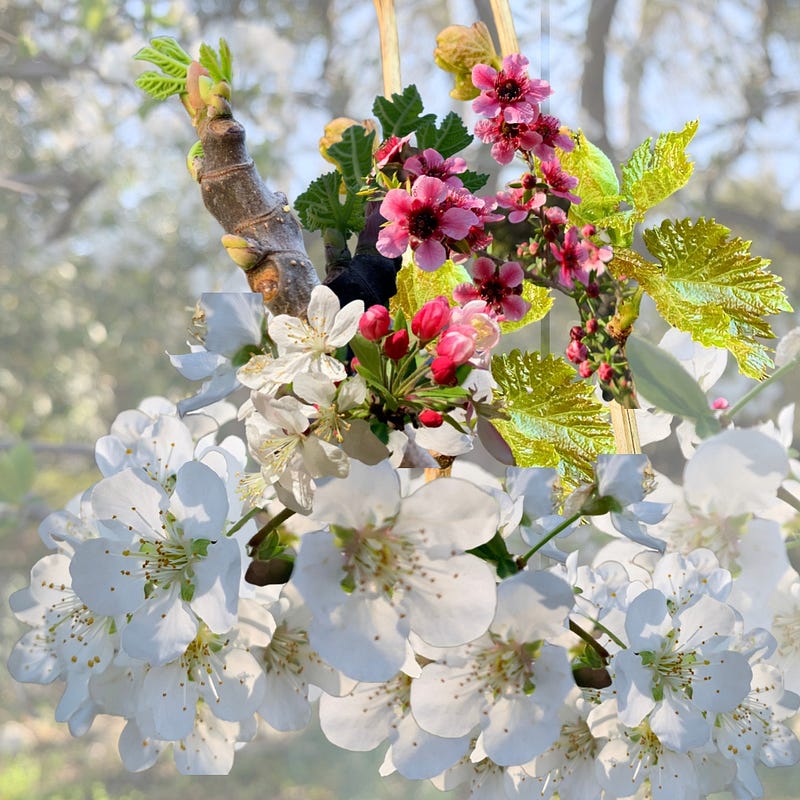
I thought the grapevine was dead, but then two bundles of leaves emerged — and on the fig tree, too.
When we bought the tree two years ago, the November before the world shut down, the man who sold it to us said: You’ll have figs by Christmas.
I don’t think he was lying, but we have not yet borne fruit.
Still the little tree grows, and as does the vine — and perhaps, someday, we’ll have mounds of figs and bundles of grapes — We’ll make jam or wine or both, and more — and we’ll taste joyously.
For now, we’ll applaud when the small bundles of leaves emerge.
From an agricultural standpoint, I can afford to be patient with my grapes and my figs because I am not planting for sustenance but for simply gardening joys. It is also not my core job; it is a hobby.
However, my actual core job has been seriously testing my resolve these past few months. (As I’ve written about previously; it’s not the students — it’s never the students [They are the joy!]; however, the politics of the academia are incessantly soul-sucking.) I’ve been reading a lot about burnout and professional demoralization.
In the book, Can’t Even, Anne Helen Peterson writes about her own experience in 2018 in which she struggled to focus or complete simple tasks like getting ready for bed, and during that time nothing helped — not exercise, not sleep, not even massages:
I felt numb, impervious, just totally…flat.
Her description struck me deeply. I have also been feeling burnt out, demoralized, numb. This is strange for me. I rarely — if ever — have felt “flat” in my life. I think that the past two months, compounded by the crises (both global and personal) of the past two years, finally hit me on what feels like a molecular level.
I usually wake up with a bustle of energy; lately, I’ve been waking up feeling nearly immobilized. Last Friday morning, the first of a long four-day weekend, I forced myself into the garden to water since my poor plants have been utterly neglected for weeks.
I’ve never grown a grapevine before. My father did in my childhood home in Chicago, and my family in Greece, of course, who are actual farmers who grow them on a professional level. I planted it a year ago with a secret hope to emulate my family’s success — and within months, that little plant took off. It grew six feet immediately, burst forth with luscious leaves and their promises of fruit — and then, come fall, it turned into a stick. We almost pulled it out of the ground, but then I saw a patch of grapevines in the neighborhood and noticed that they all looked dead, too.
Thanks to my research, I learned that “like other deciduous plants, the green vines die back, leaving only dead vines and a woody trunk. The grapevine looks completely dead.”
When I saw those tiny bundles of leaves last Friday morning, something inside — that molecular level flatness — shook awake a little.
It didn’t cure the burnout, but it certainly woke me up a bit. Later, I walked at Descanso Gardens where I also noticed all of the buds and blooms on the trees.
The molecules stirred a bit more.
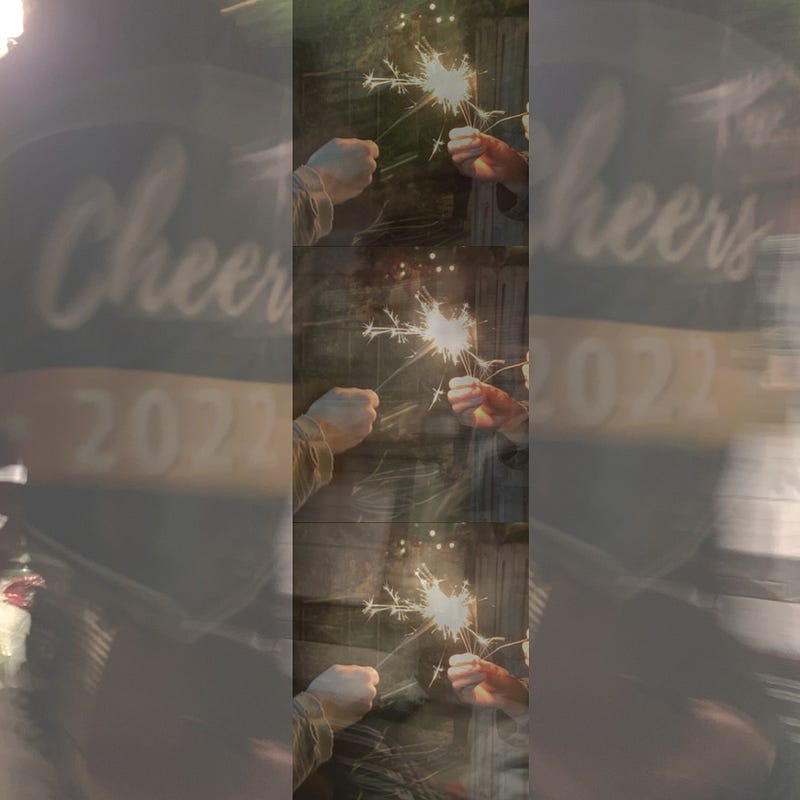
Last night, after rescheduling three times due to COVID and my daughter’s migraines, we finally had our 2022 New Year’s Do-Over Shindig. We almost had to cancel again — my poor bug fought off another migraine in the afternoon — but then she begged us to have it.
Together with our friends, we clobbered two piñatas and lit about a hundred sparklers and shot off just as many firecrackers and poppers and ate lots of pizza and cheesecake and Twizzlers and Swedish Fish and sat around the fire for more than four hours talking and laughing about nothing and everything.
I woke up this morning feeling — different.
The molecules continue to stir.
I went straight outside to my grapevine and fig tree, who are planted right near each other.
It’s only been two days, but more leaves have already emerged on both.
E. Katherine Kottaras holds an M.A. in English and an M.S. in Kinesiology with a focus on Integrative Wellness, and she is a contemplative writer and holistic teacher, having worked at the middle, high school, and community college levels for over two decades. She is a yoga teacher, personal trainer, and health coach while also living with invisible illnesses and neurodivergence, and as such, she is passionate about mindfulness, bodily self-determination, and health equity. As the queer daughter of an immigrant, Katherine believes that holistic and inclusive approaches to expression, healing, and growth should be accessible to all.
Connect with Katherine on all the social medias: IG, YouTube, FB, LinkedIn, Twitter, or at katherinekottaras.com
Read every story from Katherine (& thousands of other writers) by signing up for Medium. Your $5/month membership directly supports writers (ad free!).


