
I Thought He’d Disappeared from the International Music Scene Forever
Why I’m suddenly obsessing about and singing Moon Shadow
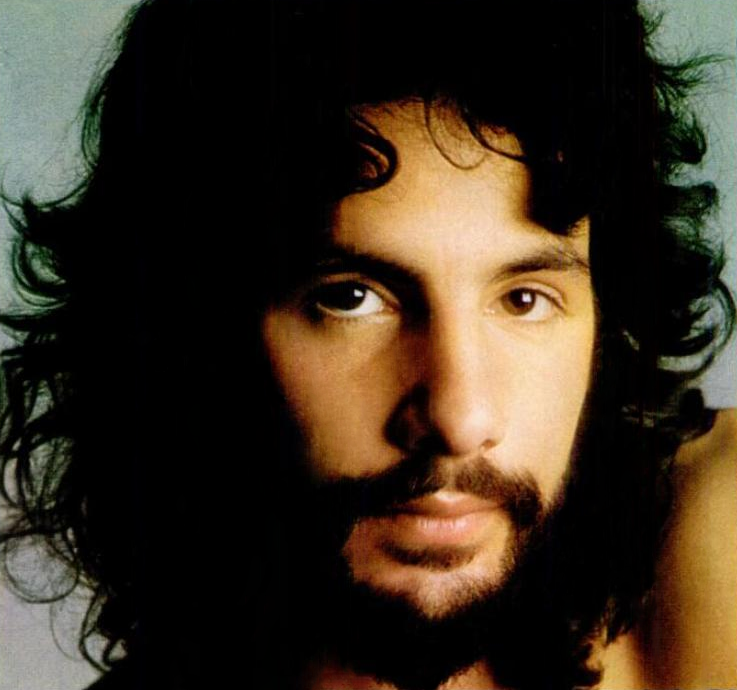
Cat Stevens was the ultimate folk singer when I was growing up. He had these beautiful, simple melodies and lyrics, easy to play on guitar, which was the primary measure of musical perfection when I was growing up.
I didn’t know much about the musician’s cultural background or musical influences. I’ve since learned he admired Bob Dylan, Nina Simone, Lead Belly, Muddy Waters, Leo Kottke, and Paul Simon.
I clearly remember Stevens’ song, Oh Very Young. It was played and sung at the memorial of a fellow high school student. He was a great basketball player and a promising student. He died of testicular cancer at age 17. Oh Very Young was the perfect song for his memorial. It brought the entire room to tears.
I loved hearing Steven’s sweet voice — always close to the breaking point — perform the songs he had composed. I wasn’t aware Stevens had written the song, The First Cut is the Deepest, made famous by Rod Stewart, Sheryl Crow, and others.
I did remember that he disappeared from the music scene around the time I graduated from high school in 1977.
I learned from rumors and information fragments that he had converted to Islam and refused to participate in the music industry machine going forward. I did know he had also dropped the name Cat Stevens, which wasn’t his given name anyway.
His birth name was Stephen Demetre Georgiou. His father was Greek and opposed to the Muslim faith, which Stevens started following once he denounced the music industry. His mother was Swedish.
I had looked up the name Stevens chose himself — Yusef Islam. In retrospect, it makes sense that Stevens selected a spiritual path, given that his songs always seemed in search of a musical and spiritual home.
It also makes sense why Stevens disengaged from the music industry, but I remember the years around his transition as confusing. As a teenager, I associated Islamic culture with religious radicals and the oppression of women due to stories and images in the daily news.
I was further confused by the controversy surrounding the British author, Salman Rushdie’s dilemma. A fatwa — in this case, a death sentence — had been placed on the author by the then-Iranian leader, Ayatollah Ruhollah Khomeini. The fatwa, prompted by Rushdie’s 1988 novel, Satanic Verses, centered on the prophet Mohammed.
Yusuf/Cat Stevens got into some hot water for supposedly supporting the fatwa, although he claimed later that journalists took his words out of context.
Yusuf/CatStevens apologized in any case, for the misunderstanding that became an albatross around his neck for decades.
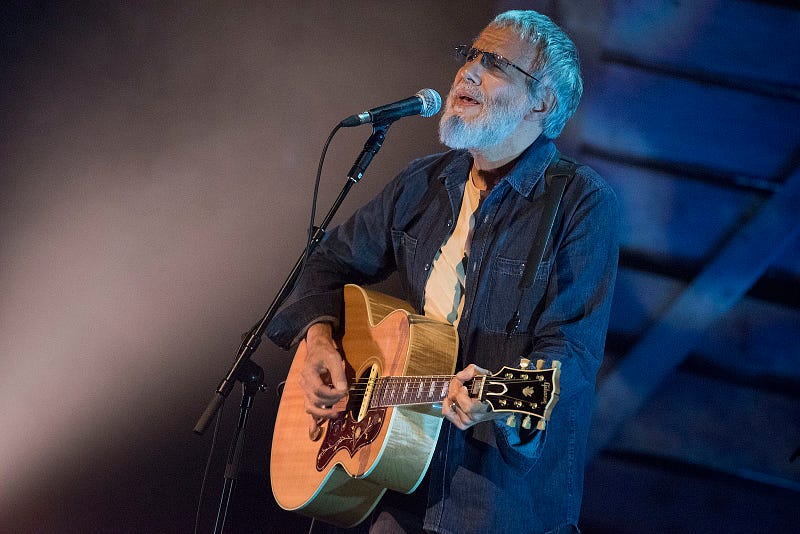
I had not realized Yusuf/Cat Sevens had returned to the music scene in 2006 after a 25-year hiatus. Nor was I aware he had recorded new albums since his return, including a new release of the Harold & Maude soundtrack, which I’ve cherished since I first saw that film over forty years ago and tens of times since.
I was surprised to find Yusuf/Cat Stevens had several other studio albums recorded since 2006, including An Other Cup and King of a Land.
I also learned how much money the musician had donated to various international relief causes when he had stopped connecting with his former audiences. He also launched and funded an Islamic school.
His charity contributions for peace continue and expand with his re-emergence.
One thing that seems different about the new iteration of Yusuf/CatStevens is that he has seemed more serious, orthodox, cynical, and critical. It seemed like he had lost the whimsical, creative, and sometimes naïve version of himself.
The world has also changed radically since the 1960s and 70s. It could benefit from an infusion of the levity and simplicity of Yusuf/Cat Steven’s music.
So what has drawn me back toward Yusuf/Cat Stevens again recently? For one thing, I started playing guitar again. I’ve also been watching YouTube clips of Yusuf/Cat Stevens performing on stage with various artists like Eddie Vedder and Chris Cornell.
The rediscovery of Yusuf/Cat Stevens occurs slowly. His voice has matured, as have his life experiences. His songs now seem to resonate with redemption, reconciliation, and a return to a more innocent time.
I can understand that being comforting for people who already cherish his music. But can it bring inspiration to new generations of young people?
That would be phenomenal.