
I Think I Just Fell In Love With Street Photography
It’s Rejection Therapy With A Camera
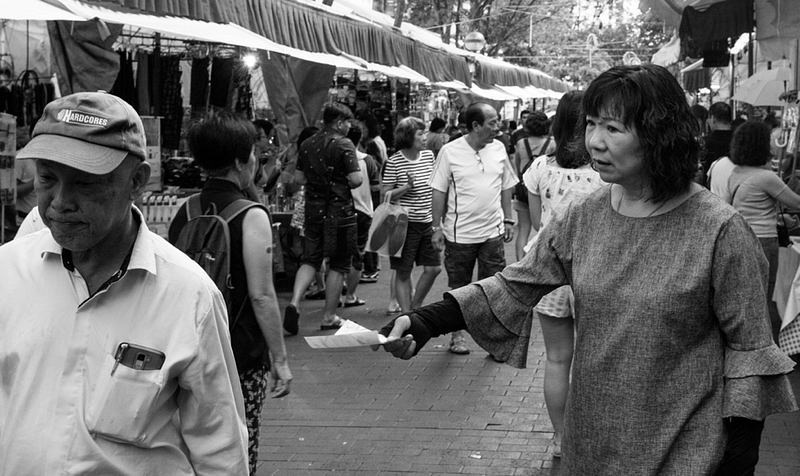
I’ve always been drawn to pictures of people.
You can imagine the stories of their lives. Just what are they thinking about? Like creating characters in a role-playing game, I try to imagine their origin stories.
Where did they come from? How did they grow up? What special powers and talents do they have?
Everyone has an origin story.
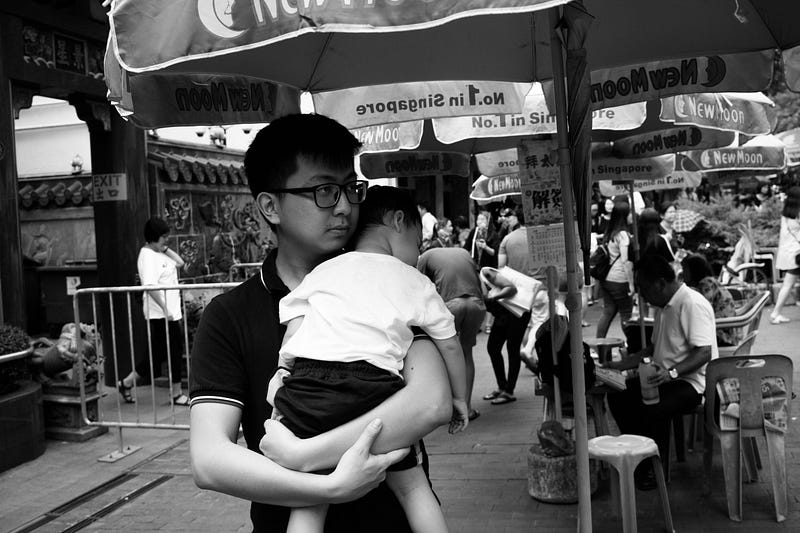
I can study people through street photography.
In street photography, you document people doing mundane things without the luxury of a planned studio setup or the careful composition of portrait shots.
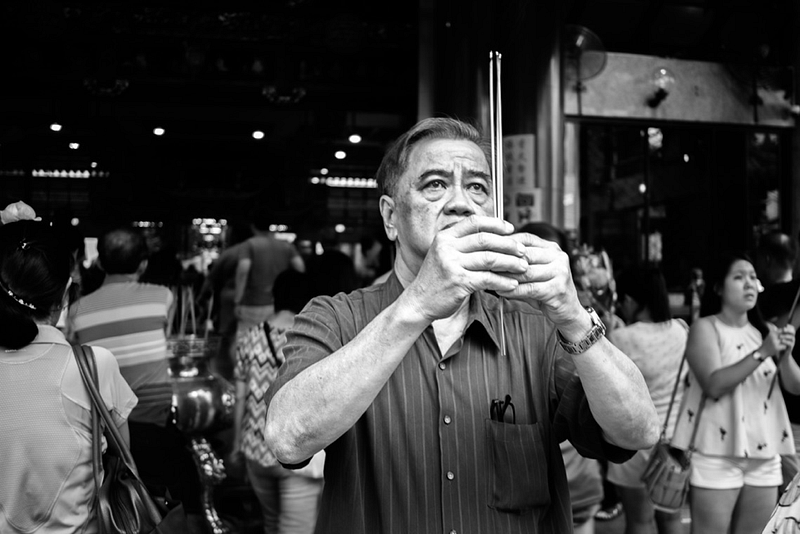
It’s just you, the streets and your camera.
You are there as an observer of the ebb and flow of life, documenting people’s unfiltered expressions and emotions.
You need to shoot with what you have.
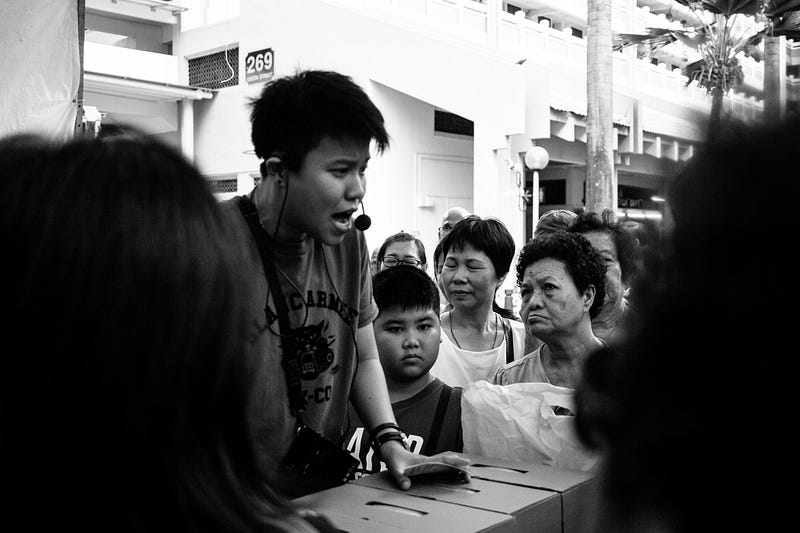
Catch the moment or it’s gone.
In street, you only have one shot to catch the moment.
Compare this with architecture photography.
Buildings will always be there. Light shifts and colours change, but cityscapes and architectures do not change from moment to moment. You can always come back again to take another photo if you missed the moment.
But in street, the moment lasts for an instant. You need to grab it, or it’s gone.
You need to make split-second decisions on what to include or what not to include in the frame. You need to think about lighting and people’s emotions while shooting without the luxury of time of planning your photos in street photography.
Humans are also more complex than buildings.
They can reject you.
Swear at you.
Scold you.
People may or may not like their picture taken. In an era concerned with personal data privacy, photo leaks and how you’re going to use their personal photos, they have all the right to be concerned about how you’re going to use your photos.
You can even be sued (not in Singapore thankfully) if you take a picture of someone.
What if I’m a serial killer secretly looking for my next mark? (I’m not)
What if I want to steal your puppies? (MAYBE).
In a world where your photos can be instantly exposed to millions of people, I get it.
You will feel the fear, and feel it again and again.
As part of our workshop on street photography I attended, we needed to cold approach people and ask them:
“Excuse me, can I take a photo of you?”
Dread. Fear. Blind Terror.
You’re asking me to stop people in the middle of the street, interrupting them (being pesky) and ask them to take their photo. (What if my camera or brain decides to take a break?)
With my voice quavering and insides turning to jelly, I sheepishly raised my hand to get their attention.
“…er, ex…excuse me…”
I approached about 4 people.
I had 4 no’s.
People hurried off when I pointed the camera at them, waved me off or told me off.
Not great.
I did, however, have a greater success rate with people with dogs.
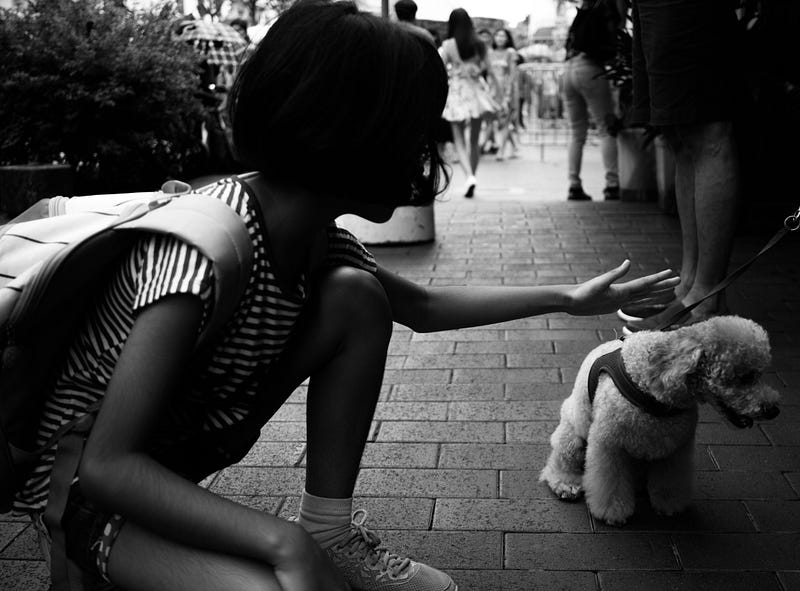
Maybe people with dogs are warmer or more used to people with cameras? I don’t know.
Dogs make for great alibis.
Maybe I’ll ask people if they want to take a photo with their dogs.
For a craft that’s so focused on people, street photography is a solitary activity.
For best results, you need to go at it alone.
Photographers draw attention. And not always the good kind. In street, you want to be the unseen documenter of human life on the street.
You need to get up close and personal with people and yet maintain your invisibility. Sometimes I felt like a ninja blending in with the crowd.
We acknowledged other photographers with furtive nods, eye twitches or by a slight curve of our lips.
Like speaking a unique form of Morse code only street photographers know.
Street photography is rejection therapy.
For someone who loves studying people and learning about them, I can get terrible self-doubt and anxiety before I go out or start taking photos in the street.
It’s a constant battle between my insecurities, fears and struggles and the love for the craft.
I am in a constant battle with fear.
Often, I lose.
But in those times I succeed, I look back on these images and don’t regret these opportunities I took. Because I remember the fear I had to fight to get them. I remember the adrenaline and self-doubt I had to conquer.
Maybe as a creative, this is what it means to be proud of your work.
Maybe street photography is secretly rejection therapy masquerading as a camera.
I don’t know why I’m drawn to this walking contradiction of a craft.
Taking photos of people but not with people. Analysing people, looking for deep conversations and emotional expression, but detesting small talk. I guess I am a walking contradiction, myself. Who knows?
Loved this post? Feel free to 👏! Follow me on Instagram, LinkedIn, Twitter to keep up with me! I also write actively on Quora.


