
I Stopped Getting up at Five in the Morning

After reading a few articles on the benefits of getting up at five in the morning, I was all set to try this new daily routine out. I planned on going to sleep and nine, every night, and waking up at five, every morning. I followed this strict routine without missing a single day, even while on school break.
At first, I loved the new routine. Getting up at five allowed me to cook a breakfast that was more than a few granola bars and get a head start on work for that day. I was productive, focused, and ready to tackle the day ahead. During school breaks, it allowed me to get things done in the morning that I’ve been procrastinating on doing, without taking any time out of the daylight.
It seemed like the solution to all my problems. In theory, it was. The problem was my body didn’t seem as interested in this theory as my mind was. Eventually, I realized that continuing to this strict schedule may be doing more harm than good. I was getting increasingly tired every day I followed this schedule, and the idea of having a productive morning fell through as well.
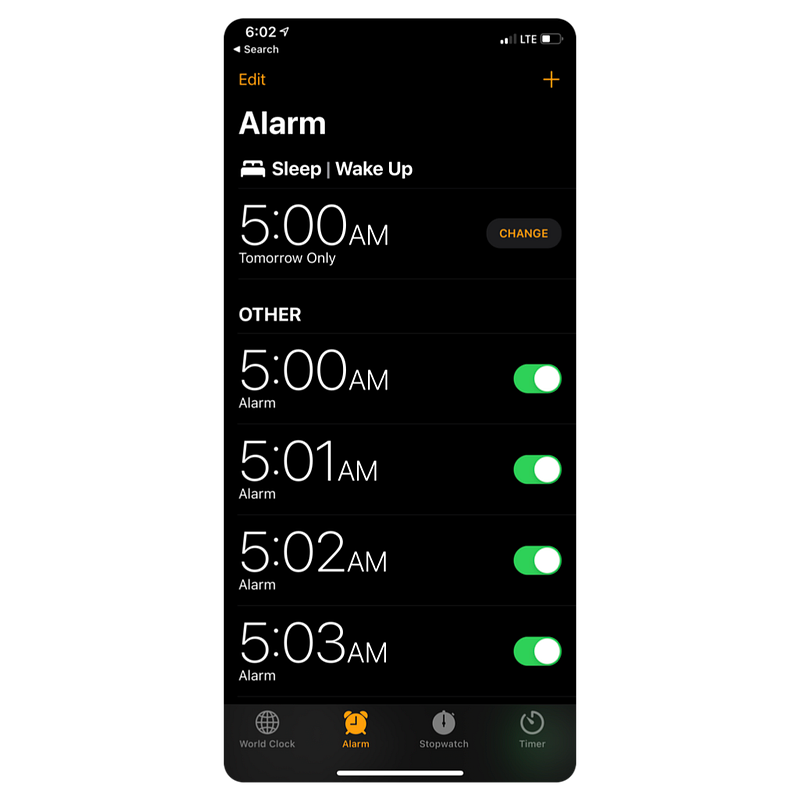
Instead of using the morning time productively, I started to sleep through my alarm almost every morning. I’ve ended up setting more than ten alarms on my phone, all set to the most irritating sounds I could find, even setting alarms on my computer with the volume turned up, and I still slept past them.
When I finally got out of my bed, I did so slowly. Unlike when I started the new routine where I made sure to use my time productively, it felt like I was walking around my house, still half asleep. Sometimes, something as simple as brushing my teeth took ten minutes, or I’d take an hour-long shower to make time pass. All I could think about in the morning was going back to my cozy bed and falling asleep.
Since it took me so long to do simple tasks, I had no time to cook breakfast and went back to eating granola bars. Similarly, getting work done in the morning was no longer an option, and I started doing homework in the car, ending up in the same situation that I was trying to avoid. I began to feel just as tired, even more so than before.
Furthermore, many of the benefits that going to sleep at the same time every day brings never came. For example, supposedly, if you wake up and go to sleep at the same time every day, you shouldn’t need to use an alarm to get up. Instead, your body will know this is when you get up, and naturally, wake you up. For me, this never occurred, likely due to eight hours of sleep not being enough for me.
The nighttime routine turned out to be just as much as a hassle. I passed on movies and other activities that would interfere with the schedule, merely using the excuse “I have to get up early tomorrow.” I never liked passing on these opportunities, but I was frightened that if I messed up my schedule, it could make me more tired.
Some days, going to sleep at nine turned out to be pretty tricky. An Elton John concert went late into the night, so did studying for mid-terms. Every day that I stayed up past nine, I’ve made the mistake to still get up at five as to ensure that my routine wouldn’t change, and I would remain on track for the next day.
During the beginning of the pandemic, I realized that going to sleep at nine wouldn’t be an option for many nights. Since my class no longer met face to face, it seemed more important than ever to stay in touch. My class FaceTimed for multiple hours during the night. I was so exhausted by the end of it that I decided to break the routine and wake up later in the morning.
I felt like I would have regretted staying up that late come morning, but instead, I experienced quite the opposite. Since I slept in, I woke up feeling refreshed, more refreshed than I felt in a while. The warm glow of the sun illuminated my room, an upgrade from waking up in the darkness.
Even though I no longer had as much time in the morning to get ready, I managed to do everything I needed, including cooking some pancakes and running with my dog. I found that this morning was way more productive than when I woke up at five, as I handled tasks much more efficiently.
It turns out; you need a little bit of pressure to get started in the mornings.
Although it was tempting to revert to not having a routine at all, I knew that it wouldn’t get me anywhere. Instead, I thought of finding the perfect time to get up was like a balancing act. Getting up too early would result in me being unproductive and tired, and getting up too late would not allow me enough time to prepare for the day.
The following days I experimented with different times to sleep, eventually finding that going to sleep at 10:00PM, and waking up at 6:30AM was the best bet for my typical day. It gave me more time in the evenings to relax or work on school projects, much needed thirty more minutes to sleep, and still have enough time to get ready in the morning.
I also concluded it’s completely okay to go to sleep at different times on occasion, such as on weekends or during a break. My life changes, so shouldn’t my routine too? I shouldn’t treat myself like a robot by waking up the same time day after day, and I definitely shouldn’t be passing on social opportunities to go to sleep early. Instead, I should learn to adapt my sleep schedule based on what the current situation is.
While many articles claim that everyone should wake up at five, It’s different for every person. There isn’t a magical time to wake up that will make all of your problems go away. Many people are more productive at night, and wake up later in the morning. Others may prefer to go to sleep earlier, as they find they use there time better in the morning. For some, waking up at five may be perfect for them. There isn’t a certain routine everyone should follow, so you should experiment with what feels the best for you.
Experiment with your sleep cycle. Find the perfect balance, and make your schedule work around it. Getting the correct amount of sleep is vital for your health and happiness, so ensure that you make it one of your top priorities. Don’t force yourself to do sleep routines if they make you feel more tired than before. Instead, adapt and change the routine until it has a positive impact on your life.
Making a routine too strict will make it fail, so don’t be shy to give yourself more time to sleep during breaks or on weekends. Lastly, just because you’ve read somewhere that getting up at a particular time helps you, doesn’t mean you should. Try it out for a few weeks, and if it makes you more tired than before, ditch it. If it doesn’t make your life better, than why do it?