
I Started Rock Climbing and it Changed My Life
How bouldering helped me climb out of my depression.
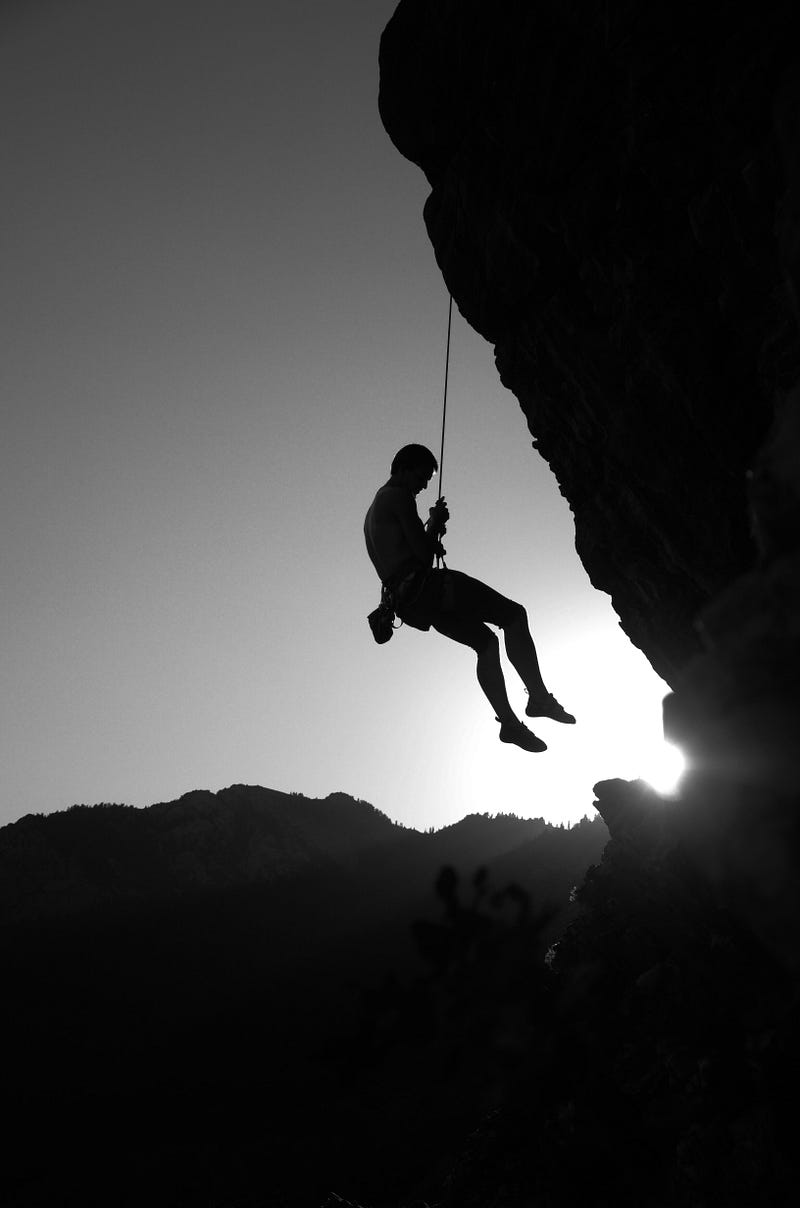
I hated exercising, especially in college. In high school, I did what I had to do in PE, and I was always in pretty good shape. I mean, sure I was a lanky, awkward dude, but I was able to eat pretty much anything I wanted and never saw any dramatic change in my appearance.
But in college I didn’t have to work out. Ever. There was an on-campus gym facility with a decent amount of equipment, but I never used it. I tried a couple of times, but I found lifting weights to be incredibly boring and I strongly disliked running, so… it kind of just fizzled off.
I did start drinking a lot in college, and for the first time in my life I noticed an actual change in my appearance. My face got much rounder, but it happened over such a gradual period of time that I didn’t really notice it happening. When I cut out drinking for a month, I noticed my jawline coming back out and assumed alcohol consumption was the only change I’d needed to make.
For five years — from the time I graduated high school in 2014, to April of 2019 — I did not exercise. Nothing beyond walking every once in a while, anyway.
I feel like I don’t need to say it, but that is not healthy.
I was tired constantly, my strength was completely gone, and I was gaining weight in areas I never had before (hello, beer gut). If you asked anyone around me, I was still a “skinny” guy, but I was noticing all of these subtle changes about myself that I hated.
After a tumultuous breakup, a good friend of mine finally convinced me — after trying for months — to go to a bouldering gym with him. I had nothing better to do, I figured, so I went.
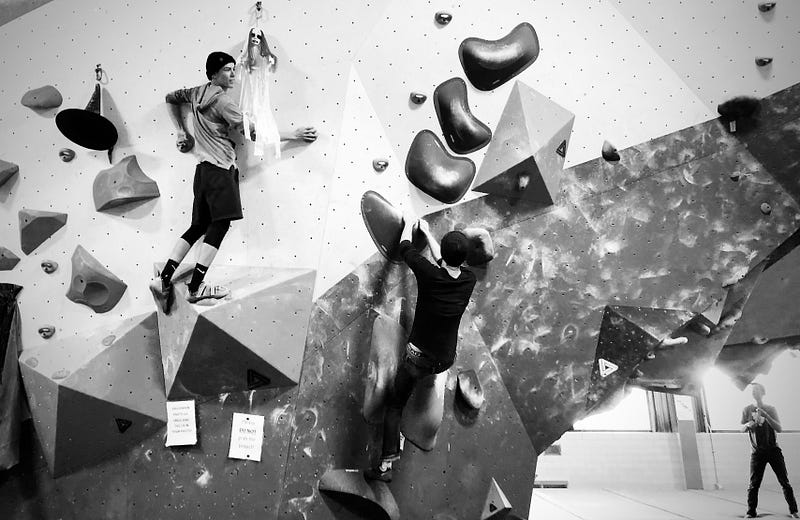
It was insanely fun, first and foremost. I had tried belay climbing once in high school but was more concerned about the way the harness fit than I was about actually climbing, but bouldering free from the constraints of a harness and puzzling out different moves challenged me both physically and mentally.
I had the same rush of adrenaline from conquering a climb as I did from beating a boss in a video game. Okay, it was arguably better. Okay, it was inarguably better.
What I hadn’t expected, though, was how much pain I would be in the next day.
Like I said, I hadn’t exercised in five years. My muscles were basically non-existent, my stamina was shot, my endurance was kaput. I was weak, basically.
Bouldering exercises muscles I didn’t even know I had. All of the little ones that control your fingers, for example. Who works out their fingers? My forearms, my triceps, my ankles — everything was in sharp pain. I’d climbed non-stop for nearly an hour.
I woke up in the middle of the night because I had to pee, and when I tried to turn the door handle, the pain that shot up my arm was so sudden and intense that I cried out. My roommate at the time was a boxer, and he’d just had a pretty big surgery, which — luckily for me — meant he had some tiger balm sitting out. I rubbed it all over my arms and legs and hands, bathing in the relief it allotted me from the pain.
And then I went to the bathroom. Without washing the tiger balm off of my hands.
I’ll never make that mistake again.
I ended up buying a membership to that gym, and a year and a half later I’m still going (minus the four month shutdown mid-pandemic). My life has improved in a number of ways since then, but I think they can be summed up into three main points:
1. I’m more conscious of my health
Even when I first started climbing, I would do so hungover fairly often. I worked in a restaurant, and an after-work beer was basically a ritual. Some nights (read: most), that turned into after-work beers and shots and more beer and then fried food because I don’t really feel like vomiting at 4am.
I was in a pretty bad place, mentally.
But at first, it didn’t seem to impact how well or poorly I did at the gym. I was still climbing the beginner stuff, after all, which meant it was basically a fancy ladder. I could do it hungover. I sort of thought it was my super power.
When I started getting into the more intermediate level climbs, though, I started to notice the effect my dangerous lifestyle was having on my fitness and overall health. If I felt sluggish or in a daze, nauseous or bloated, my performance suffered. If I ate like garbage for a week before I went to the gym, I didn’t have the energy to do anything. Or the motivation.
This started to creep into other areas of my life — namely, writing. I just straight up didn’t write for a long time because I was too tired and unmotivated.
The nice thing about rock climbing is that it establishes the benefits of short-term goals. You’re not spending hours at a time on a single route in the gym. At most, it’s a couple minutes. Usually, it’s like 45-seconds from the start hold to the finish. This makes the process of repeating a climb almost addictive.
“I’m one move away,” you might think. “If I can just do X, Y, and Z differently, I’ll get it.”
To re-use an analogy, rock climbing triggers the same receptors in your brain that a complicated section of a video game might. It’s all about problem solving.
That addictive drive to complete a climb led me to look at other aspects of my life. I was sick of having “off days” where I was lacking the physical willpower to finish a climb. Then, before I knew it, the gym would undergo revision and the climb I’d been working on was gone without me ever having finished it.

To combat this, I started paying more attention to my diet. Was I getting the right level of nutrients, carbs, fats, and protein each day? Was I staying hydrated enough? I started making a protein-heavy breakfast each morning, stopped drinking caffeine after lunch, and cut way back on alcohol.
I also readjusted my sleep schedule and made sure I was getting enough each night. In order to ensure I would be resting enough, I stopped using my phone in bed and began reading for an hour each night before I fell asleep.
I started doing yoga because it gave me relief in my muscles without having to rely on Ibuprofen like I did when I was constantly hungover.
2. I’ve made more friends
As I said, rock climbing is problem solving. It’s a physical puzzle that you have to maneuver across in order to reach your goal.
And sometimes, you just can’t figure it out.
In my experience, most people who take up rock climbing as a hobby tend to be kind and mindful individuals. There have been countless times where I’ve had someone offer me advice on a move I could make differently, or times where I’ve pointed out to a friend that he’s ignoring a crucial hold. Talking about a difficult climb is a great conversation starter.
I’ve made bonds and connections with people I’d otherwise have never met because we were working on the same route at the gym. Because of those friendships, I’ve entered climbing competitions and travelled to state parks for outdoor climbing — something I wouldn’t have even considered a year and a half ago. I’m not a naturally competitive person, but forming a team with two good friends and trying to rack up as many points as possible is simply a fun experience.
It helps, too, that one of those friends happened to be proficient as an outdoor climber and had a bunch of gear already. This made my first foray into outdoor climbing an inexpensive and low-risk venture.
I’m of the opinion that life is all about genuine connections and experiences. Because I started bouldering, I’ve gotten both.
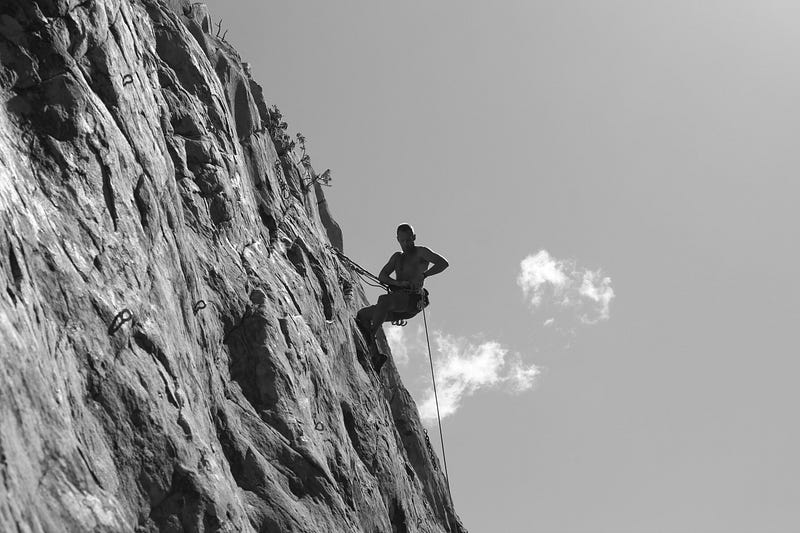
3. I’m happier
It’s no secret that there is a link between our physiology and our psychology. Simply put, exercise can make you happier. I’ve known this for a while, but when I tried other forms of exercise in the past — namely, running — all I could think was:
“How does this rigorous activity make anyone anything but miserable?”
But climbing can be almost meditative. There is a very clear end goal — the top of the wall — and the only thing standing between you and it is your ability to climb. For more difficult routes, this requires absolute focus and knowledge of every part of your body. Being hyper-focused on a goal like that can lead to a flow state and, ultimately, a sense of pride and accomplishment when that goal has been reached.
I’m a depressed person. It’s often very easy for me to fall into mental pitfalls where I feel that I’m worthless, my life is worthless, and that in my time on Earth I’ve accomplished nothing. As small as it might be, finishing a difficult route I’d been struggling with regularly gives me a sense that I’ve done something worthwhile.
In the same vein, rock climbing can be beneficial to dealing with fear.
I brought a friend of mine to the bouldering gym unaware that he was terribly afraid of heights. I watched as he climbed routes that other beginners would struggle with easily, only to become frozen halfway up when he’d looked down at the ground.
Persistently, he kept trying and managed to overcome his fear and make it to the top of the route. Then he climbed back down, which can be exhausting if you’ve already worn yourself out going up. I congratulated him on his finishing the route and the down-climb, and he said:
“Thanks. I was so afraid of falling that it was easier just to keep climbing to the top.”
I’m a better person because I decided to try bouldering one time after a breakup. While I can’t give the sport all of the credit, it was the first step I needed to take in order to obtain a deeper understanding of myself and the things that are important to me.
I’m significantly healthier than I ever had been before, I’ve made some great long-lasting friendships, and overall I’m more content with who I am as a person.
It’s something that I would encourage everyone to do, but I also understand that we all have different tastes and desires, and so instead I will leave you with this:
Find something you love and do it over and over again. Who knows? You might learn to love yourself a little too.
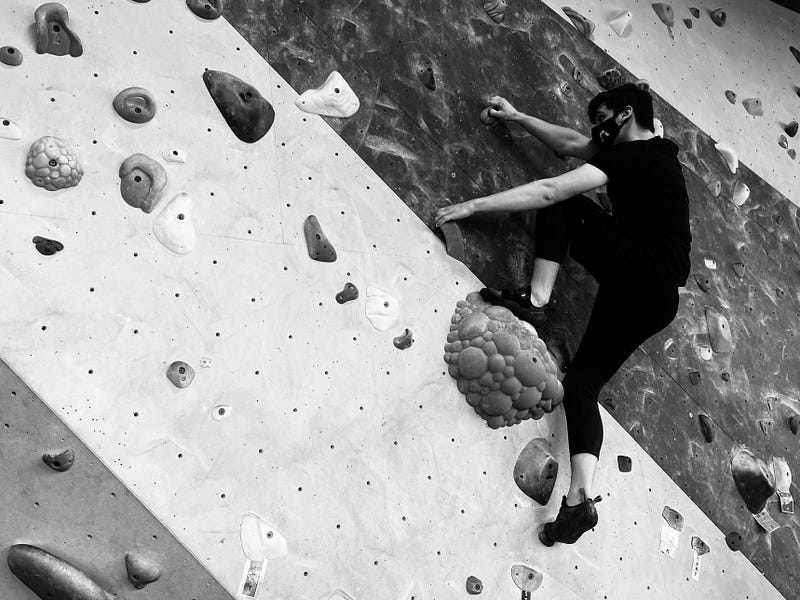

You just read another post from In Fitness And In Health: a health and fitness community dedicated to sharing knowledge, lessons, and suggestions to living happier, healthier lives.
If you’d like to join our newsletter and receive more stories like this one, tap here.