
THE NARRATIVE ARC
I Started as a Bean Counter at Peet’s and Left as a Chief Financial Officer
My lessons working at the venerable coffee company
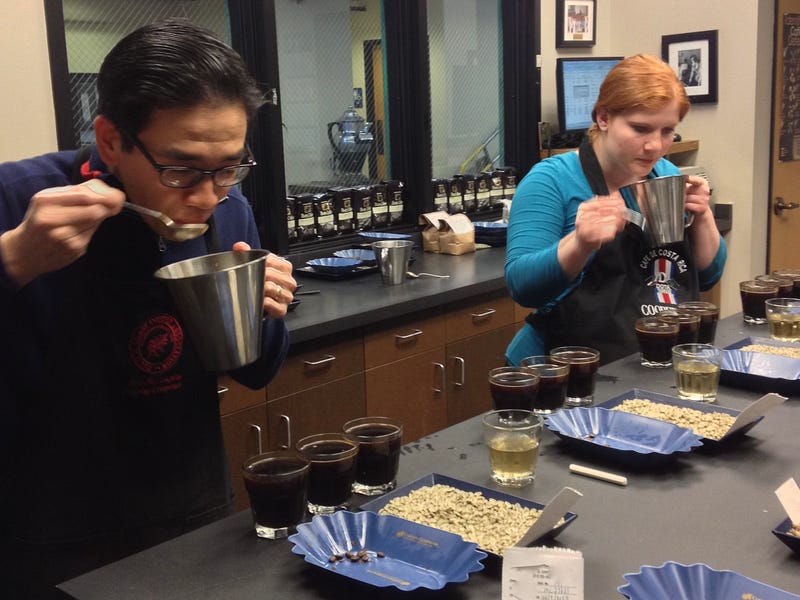
Each morning, as far back as I can remember, I’ve had a coffee mug in hand. During 5 a.m. commutes, while jet-lagged overseas, and in my life’s most stressful moments, coffee has been a steadying force, infusing me with energy and perspective to soldier on.
As I’ve grayed, ironically my coffee has gone black. Today I refrain from the sugar and half-and-half I once poured freely into my cup. Taking the time to appreciate coffee’s true flavors has aptly paralleled my own journey of self-acceptance. As someone who prefers to blend in, I’ve learned to embrace and show off the distinct notes of my personality — to be bold.
What drove this transformation, in both how I take my coffee and how I take on this world? For answers, I need only look back at my time at Peet’s Coffee.
I joined the finance team at Peet’s in 2007, the same year its founder, Alfred Peet, died. A Dutch immigrant, Mr. Peet was aghast at the mud water Americans drank in the 1960s. So he began selling beans he roasted by hand, touting the virtues of quality and freshness. His artisanal approach would spark the Starbucks revolution and subsequent coffee waves.
Though I never met Mr. Peet, I doubt I would have left much of an impression. I was a finance wonk, far removed from the creative process — a true bean counter. I liked to think of myself as a craftsman with my formulas and spreadsheets but in reality I cared more then about the how than the what. In my models, the widgets were interchangeable.
In my ensuing six years at Peet’s, however, I gained a lifetime of lessons. Most notably, I learned how to lead with empathy and how to brew a damn good cup of coffee.
Make quality product, not widgets
Upon arriving at Peet’s, I soon realized I wasn’t dealing with widgets. Coffee literally stood at the center: the offices wrapped around the roastery. I couldn’t ignore the rich aromas or the constant whirrs of the coffee grinder emanating from the nearby tasting room. While I had solved many multivariable equations, this multisensory experience felt enticingly new.
As I immersed myself in the company’s operations, I began to grasp Mr. Peet’s exacting commitment to quality. Working shifts at his original shop in Berkeley, I ground beans to customers’ precise specifications and brewed fresh coffee every half hour. I stocked grocery shelves and racks, meticulously rotating inventory to ensure no stale bags slipped through. At the office, I sampled a lot of coffee, training my palate to differentiate coffee from the world’s primary growing regions.
But it was a far-flung trip to La Minita, a coffee farm in the Costa Rican highlands, that proved the most impactful. Having arrived with a Peet’s contingent in the dark of night, I got my first glimpse of the farm at dawn when I swung open the door of my bungalow. I stood on a spectacularly lush mountainside, surrounded by endless rows of coffee trees. Awestruck, I thought: Here’s where it all begins.
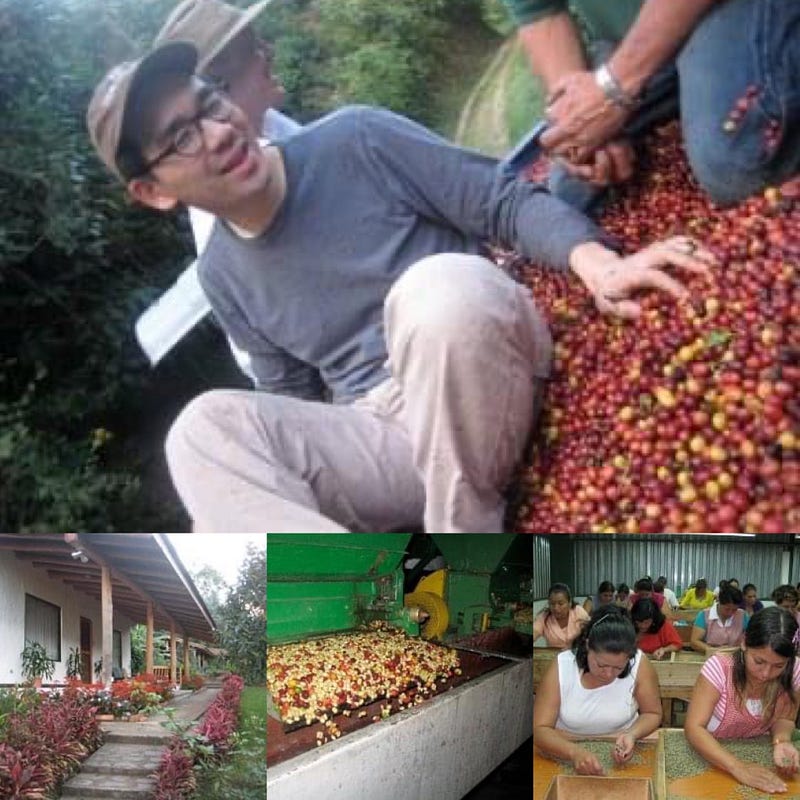
I was surprised by the sheer number of steps required to produce coffee. I tried my hand at picking coffee cherries, a painstaking task given that fruit on a tree ripens at different rates, so not all can be harvested at the same time. At the processing plant, massive equipment extracted and washed the seeds, which, after extensive fermenting and drying, took the form of raw coffee beans. Workers then manually sorted the beans, with only 15 percent deemed high quality enough to earn the Peet’s label.
After the trip, I concluded that a coffee bean’s journey was truly a miracle, from its origins along the equator to Peet’s roasting facility in California to a store and finally into a cup like the one I clutched each morning. Along the way, dozens, if not hundreds, of people had played a role in its transformation. More than just a product, coffee was a testament to human connection.
Inspired to connect myself, I began my gradual transition from spreadsheet jockey to thought partner. I helped our coffee team navigate skyrocketing commodity prices without sacrificing their quality requirements. I worked with store leaders to fund coffee training so staff could educate our customers.
From that point onward, I treated product and customer experience as the avenues to value creation. Sharing my analyses and bird’s-eye perspectives, I found joy in assisting others harness their creative energy. Though still data driven, I acted with empathy and reason, recognizing that a financial model could never fully capture intangibles. With time, I became skillful at navigating nuance, much like my budding appreciation for the complexities of my favorite brew.
Create the culture you seek
Peet’s maniacal focus on product did have a downside: the company culture was quite serious at times. It was as if the spirit of Mr. Peet, who had a reputation for being no-nonsense and imposing, loomed over us as we went about our day.
One morning in the kitchen I bumped into a colleague from customer service and invited her to lunch, noting we didn’t otherwise cross paths much. Reflecting on our relationship, we observed that many coworkers across departments didn’t know each other well. So we founded a culture club, which later became known as the “Brew Crew.” Our earliest activities were simple but effective in injecting fun and camaraderie into the office: surprise ice cream deliveries, a Secret Santa gift exchange, volunteer events, etc. Over time, our efforts became more ambitious, such as constructing a tiki bar on a former loading dock.
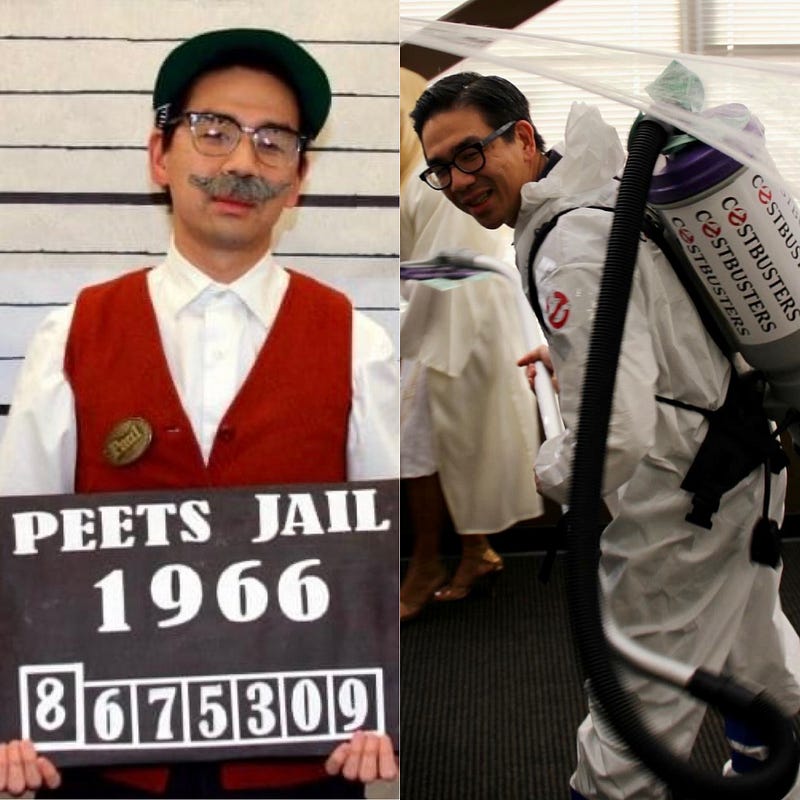
As the culture loosened up, so did I. Back in business school, I was a book editor and a fish out of water. Aching to fit in, I developed a more hard-nosed persona, which I carried over to my career in corporate finance. In the process, I suppressed core elements of my identity, including my knack for words and my quirky sense of humor. Brew Crew gave me an opportunity to reveal those dimensions again. At Halloween, for example, I went all in, with my favorite costumes being the Monopoly banker who went directly to jail and a Costbuster (who you’re gonna call when you have negative budget variances).
Before I had ever heard about the concept of authentic leadership, Peet’s taught me the value of showing my full self. As I shed false layers of confidence, my feelings of relief gave way to genuine self-assurance. My connections with others strengthened, as did my influence. Being a culture builder not only emboldened me to step out into the open as a leader, but it also helped me create a space where I truly belonged.
You ARE the company
During my tenure at Peet’s, I rose through the ranks, eventually becoming a VP. I was lucky to have executive sponsors who saw my potential and pushed me to take on stretch assignments. As I presented to investors and the board and oversaw a systems implementation, I started to shift from having a functional mindset to having an enterprise one.
As I learned with Brew Crew, working to effect change across the organization was both rewarding and challenging. As a peacemaker who was often pulled in different directions by stakeholders, I despised politics and often just wanted to be liked. But the responsibility for broad-based outcomes suddenly rested on my shoulders. One day my CEO pulled me aside after I had publicly complained about an issue without offering a solution. I vividly remember the calm yet stern reminder that he gave behind closed doors, “Paul, never forget, you are the company.”
As I assumed more responsibilities, I needed to build a strong team beneath me. I no longer could rely on doing; managing and leading were now my paths to success. As a natural worker bee, I had to force myself to squash my micromanaging tendencies and communicate a clear vision and set of goals. I learned, with difficulty, to give feedback directly, timely, and with care. Rather than lead via command and control, I dispersed my power, aligning team members with their functional partners, even going so far as moving their desks so they sat amongst the people they supported.
I had never viewed myself as a future chief financial officer until my CFO one day raised that possibility. Looking back, I’m grateful that he saw something in me that I hadn’t yet recognized myself. Today, I strive to return the favor by widening the aperture of possibility for people I mentor.
Six years after I first stepped foot in Peet’s headquarters—and just a year after my boss started talking to me about the C-suite—I left to become the CFO of Method. The company had sought a finance leader to help grow its line of design-forward, eco-friendly cleaning products and contribute to its already strong culture (one of its values was “keep it weird”). Thanks to my wide-ranging experience at Peet’s, I got the job and was able to hit the ground running.
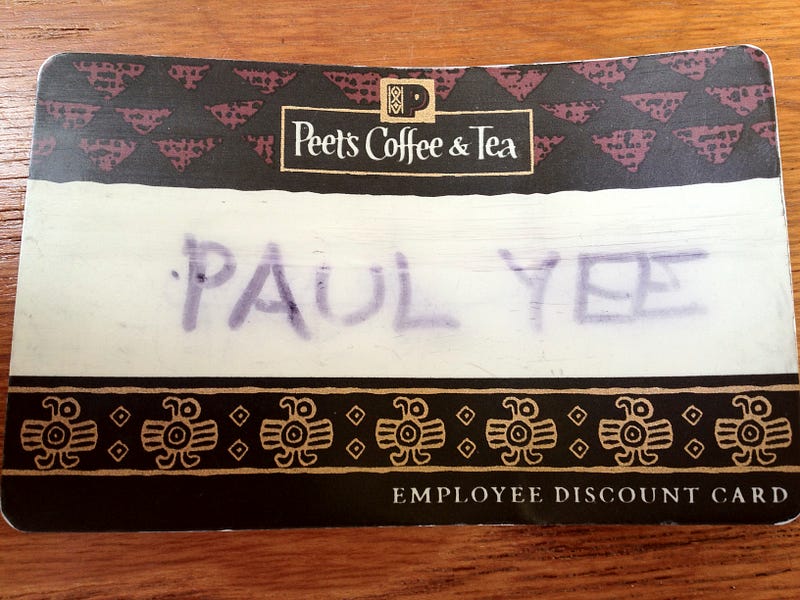
Today, as my wife and I lead a simpler life, we walk down the street each morning to our local Peet’s to collect our coffee. The company has changed quite a bit since I left a decade ago, but, per its advertising, it remains hyper-focused on providing “coffee for coffee people.”
I’ve been one of those coffee people my entire adult life and don’t ever see that changing. But like my drink preferences, I continue to evolve. As I leave the store with my cold brew in hand, I like to think of myself as a coffee bean, mid-journey and still being shaped by caring and passionate people along the way. With each sip of my coffee, I’m soothed by the notion that the best is yet to come.


