
I Spent Ten Years In Apple’s Walled Garden
And it’s time I wrote about it…

My history with Apple is an interesting one and a lot less straight-forward than one might think. I have been known over the years as being anything between a vicious Apple hater and a brainwashed Apple fanboy. While both sound extreme, believe you me, I definitely fit the description of both at one time or another. But time passes, and as everyone else around me, I grew older and — I’d like to think — wiser, and now after many years, I think capable of looking at not only my 10 years of being surrounded by Apple products, but the other 10 where I wasn’t, and do so objectively. It’s not as black and white a story as many would like to think, and looking back, that becomes increasingly obvious, so without further ado, enter 2001.
Inception
Born and raised in Romania, Apple products were few and far between. At the age of 16 my only exposure to Apple as a brand was the all too familiar ”you can’t afford that”. Indeed, just 11 years after the communist regime fell, Apple products for the general population were prohibitively expensive. The Pentium II and IIIs or their AMD equivalents were all the rage. I couldn’t tell the difference, nor did I care, what fascinated me was the simple fact that I had control over a machine, control like never before. Battling through the limitations of a 550MHz AMD CPU, followed by an 800MHz one with an ATI Rage 32 MB 128Bit GPU (A remarkable little graphics card!), luck just so happened to knock on my door in the form of a part-time job of transcribing handwritten text into a Macintosh LC 475 for about 3 years.
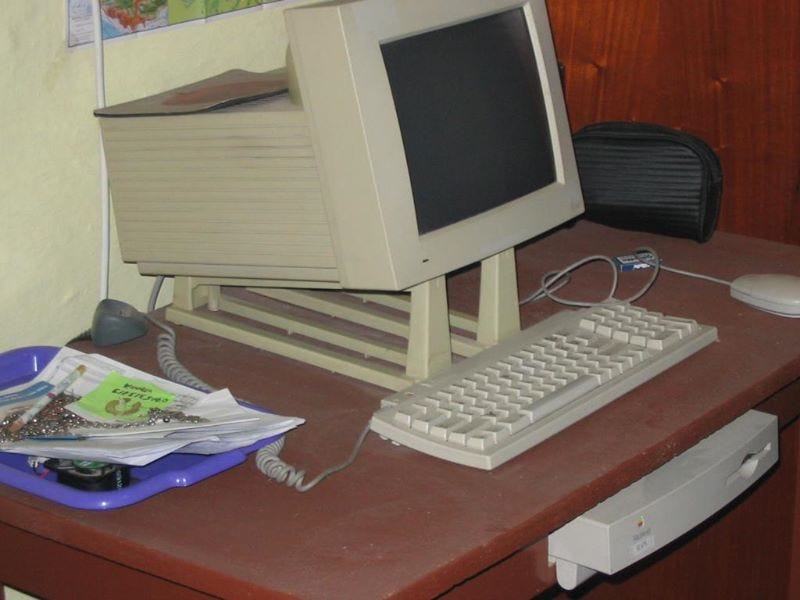
Having both a PC and a Mac — as I was doing the work from home (early adopter!) — in the same room, what became clear very early on, was the incredible stability of the Mac’s operating system. While my PC always found reasons to crash itself into oblivion, so much so that the side of the case was always open, the Mac just kept going. In its three years of service under my roof, I’ve seen it crash once. While in the meanwhile I moved to an Intel Celeron 2.4GHz with integrated GPU and exponentially more memory than my previous PC iterations, the Mac still kept putting my PC to shame when it came to stability. Sure, it did very little, but it was also ancient compared to my brand-spanking-new Intel, which while could do plenty, it also ended up with the side of its case removed however this time it was only half the time needing service, other times just easy access for upgrades and tinkering.
Contrasting the two computers, I wanted the power of my Intel and the stability and aesthetics of the Mac.
The solution was singular — buying a new, modern Mac. But it was still a prohibitively expensive solution, and because of no other reason than high price, I decided to hate Apple and everything it built and stood for.
The years of professional tinkering
Fresh out of high-school, I started working for a computer sales and repairs shop. I didn’t look for the job, just happened to stumble upon it while buying blank DVDs for backing up some of my photos. Being the only sales and service guy in the shop — the only computer shop in town — I quickly became the go-to guy for most of the town’s PC owners who didn’t want to or knew how to tinker with it themselves. I’ve seen and done it all. From upgrades to replacing burnt-to-a-char components, plugging monitors into the right VGA or DVI port, to setting up DSL connections, reinstalling and recovering entire operating systems, building machines from scratch and even wiping prints from the printer’s memory in the middle of the night — why would anyone print their entire conversation with their mistress at 1AM, still eludes me.
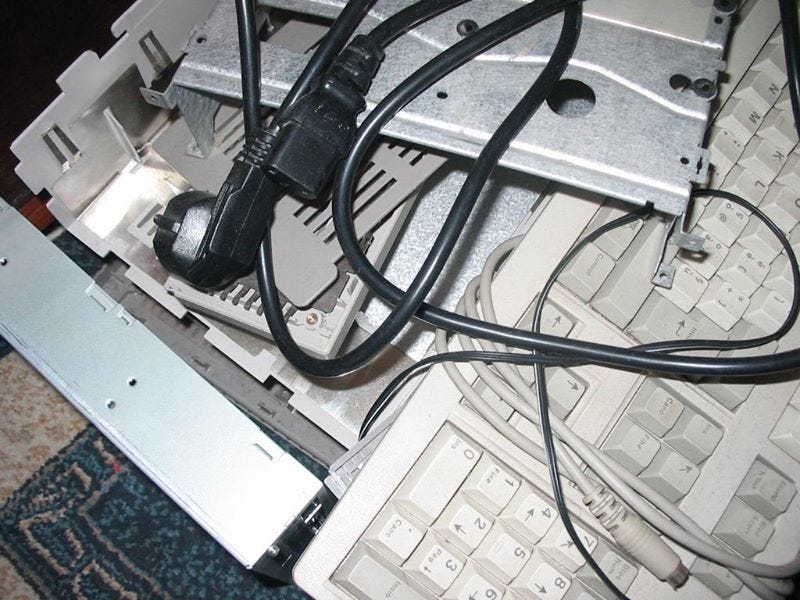
What I learned early on is that for most folks the computer, be that a desktop or laptop, was a device they simply wanted to use. They expected the OS to be installed, all the standards apps ready to go and them never to have to do any maintenance for the foreseeable 5–10 years. The way customers looked at it, was simple. They spent a small fortune, and they considered that cost to be final. Other than printer cartridges, they never really understood how certain components could fail, become irrelevant over time or how a software might need upgrading or even paying for! I had to turn away customers as they would refuse to pay for Windows and when they heard about Ubuntu Linux as a free alternative, all they wanted to know whether the application they wanted to use would run on it. More than 90% of the time it did not because it was either some game, or accountancy, or vehicle-diagnostics software or whatever else entirely unsupported by Linux and going through Wine wasn’t a user-friendly option either.
Evolution
Eventually life gave me the opportunity to move away from an otherwise relatively lucrative town-computer-nerd position, to other countries and start taking life a bit more seriously. Sold my PC tower and all of its 2.4GHz to a neighbour, and from my first UK salary I got myself a Dell Inspiron 1501 laptop with a 2 core AMD Turion processor running Windows Vista, and proceeded studying web development. I built my first website in pure HTML in nothing but Notepad! It was stupid when Notepad+ was already out there, but hey the best way to learn is by failing — said someone at some point, and I’m still not sure if I truly agree.
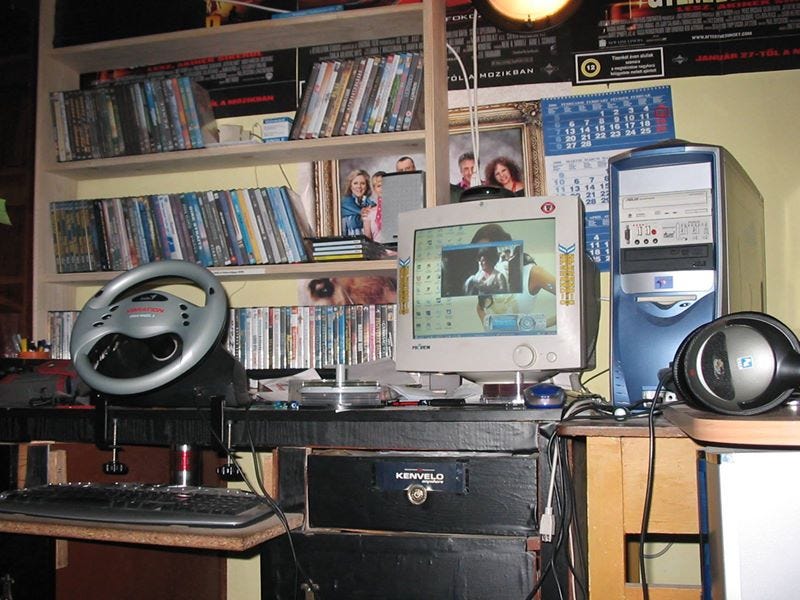
What became obvious to me once I moved to the Dell, was that I no more had the urge to open it up and tinker. It felt like a solid device, and did everything I needed. I could watch Friends, the X-Files and Sex and the City on it, listen to my music on Winamp, browse the internet, chat, even video-chat and create little websites and do photo-manipulation in Photoshop or play around in 3DS Max. Suddenly, my joy came from using the machine and creating stuff, learning, expanding my horizon rather than tinkering with it and doing questionable — and costly — upgrades. My tinkering swan-song was a PC tower equipped with a hexa-core AMD CPU and some other bits and bobs I can’t really remember because at that point I just built the thing to be used rather than to be tinkered with. Two years later I sold that, just months after I also sold my old Dell, which kept chugging along for 7 years under my tender loving care. At that point, I was already comfy in my second web developer job and nearly completely moved over to a Mac.
Reformation and the ecosystem
But it wasn’t an abrupt change. Today my best friend Andrew Gribben, back then my boss, wasn’t too keen on having a software engineer on the team who didn’t use a Mac. At first, I thought he was being a snob. At that point technically I could already afford to buy a Mac, but over 2 decades of mental preconditioning of what expensive is, I still kept being a loyal PC and Android fan.
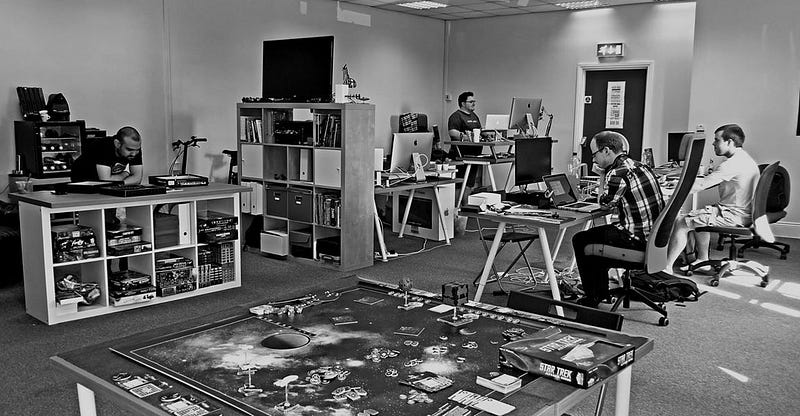
That, until I used the company provided Mac 13” Pro for a day. To my surprise all the development setups that used to take me countless workarounds and swearing, on the Mac just happened to work. I wasn’t entirely shocked, all the coding tutorials I watched in the past often tended to show the environment setup on Macs first, and they always seemed effortless compared to the Windows setup, but experiencing it first-hand… well, that was an entirely different story.
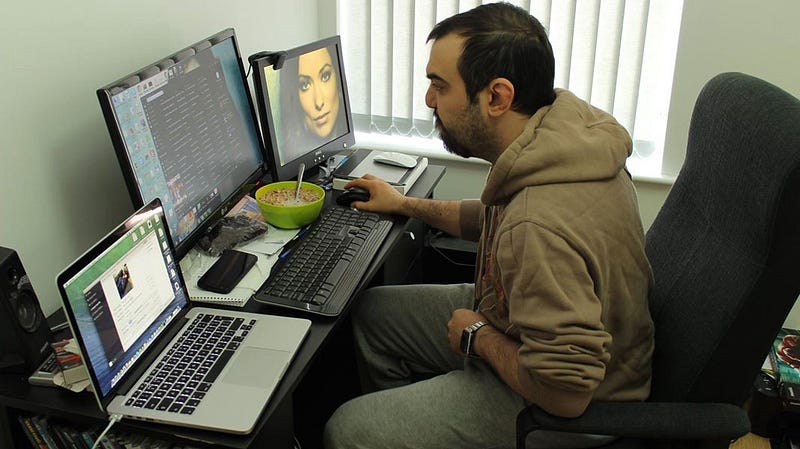
Within a few months, I got upgraded to a three-year-old 15” Pro Retina (2012 model), and also received an iPhone 4S for development testing purposes. By then, it was already a four-year-old phone. While every other iPhone user was testing how bendy their iPhone 6 was, the 4S four years later still performed like a new phone! To me, that was shocking. I have been using Android since version 2 on devices like HTC and Huawei, and while neither of them were particularly bad, over time I always noticed a degraded UX. In fact, the iPhone 4S, at four years of age, performed better than my then just two-year-old Huawei or my brand-spanking-new Moto G!
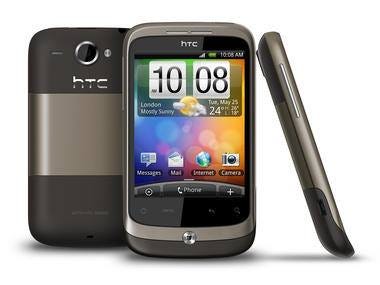
Something started to dawn on me. In PC and Android terms I was using “old” Apple devices, yet I felt like they were on steroids, and made me objectively more productive than I ever was before. That in turn also made me feel more inspired. And look, I know, all the Apple ads are meant to do exactly that, but I never saw an Apple ad before. I did not know a computer or a phone can inspire a person. To me, that concept was entirely alien. I found that out organically, through using them while coming from a sharply different historical perspective — that Apple and anything Apple did was just overpriced crap, underpowered tech bling.
For the first time ever, I truly understood that specs meant nothing without good software integration.
Having a ton of RAM coupled with a cobbled-together Windows that needs to be universal enough to support virtually any hardware still yielded worse results than a fully integrated Mac or iPhone with half the hardware specs. This was unexpected and for a while difficult to accept. I have spent so much time in tech throwing more hardware at any software problem, that going the other way around, looking at software optimisation as the key to performance, never really crossed my mind.
At this point, I was very intrigued and got myself an iPad Mini, then some time later I bit the bullet eventually and purchased my first brand-new Mac. It felt odd, somewhat painful, against everything I believed in before. The cost still felt hard to justify, but on the other hand, I couldn’t find a single reason why going for a cheaper PC would be a more or even equally justifiable option. Furthermore, one could argue that “expensive” is a relative term to one’s budget to begin with.
From the iPad Mini, followed the iPad, then the iPad Air. From the 15” MacBook Pro resulted a 13” Pro M1, and the latest addition to the family, the 16” M1 Pro, both of which I wrote extensively about. What happened to the iPhone 4S, you wonder? That went back to my buddy, Andrew, but not before I got my hands on a 6S, then a XS and finally a 13 Pro. To tie it all together, I finally bit the bullet in 2021 and got the Apple Watch 7. A complete ecosystem with an AirPort Extreme and Apple TV to connect them all, and of course iCloud.
It was always meant to be a tool
For me, it turned out, the PC and to some extent Android devices were fewer tools and more tech enthusiast devices that besides the occasional entertainment, web browsing and communication served as an outlet for my technical curiosity. Once that was satisfied, however, I started seeing them as a tool and I wanted to have the tool that best fit my needs and goals. Some of those were tangible, like being able to quickly and painlessly set up a development environment, or to test on any operating system without having to own multiple computers or devices. Some were less quantifiable and more philosophical, like how working on a Mac or within the Apple ecosystem felt, or the little smile I get every time my watch unlocks my Mac or my iPhone.
As a software engineer, I find the Apple ecosystem to be an inspiring set of tools, which while sold at premium, I also ultimately feel are worth the cost. It’s, undoubtedly, a closed one. It’s called a walled garden for a reason. But I find that for me, that’s actually a benefit I appreciate. It makes the ecosystem more predictable yet also more prone to innovation, and so far, Apple has proved that right almost every year. No, it’s not perfect.
I won’t ever have the arrogance to state that Apple is better in every way than any competition out there, but it is in the ways it matters to me.
On the surface I might look like a sheeple, but dig a bit deeper, and you’ll understand that myself and many of us (not all) who decide to stick to Apple, have made a well-informed decision and keep making it every year because what we want, what I want, is not Apple products, but the best tools we can have to do our jobs, or anything else we might use these devices for.
For every single Apple device I have, I used to have a competitor’s alternative, either before or even in parallel. Apple’s offering always won. Simple as that. While the famous tagline “it just works” is only 90% true, that’s a heck of a lot more than the alternative’s 20 or 30%.
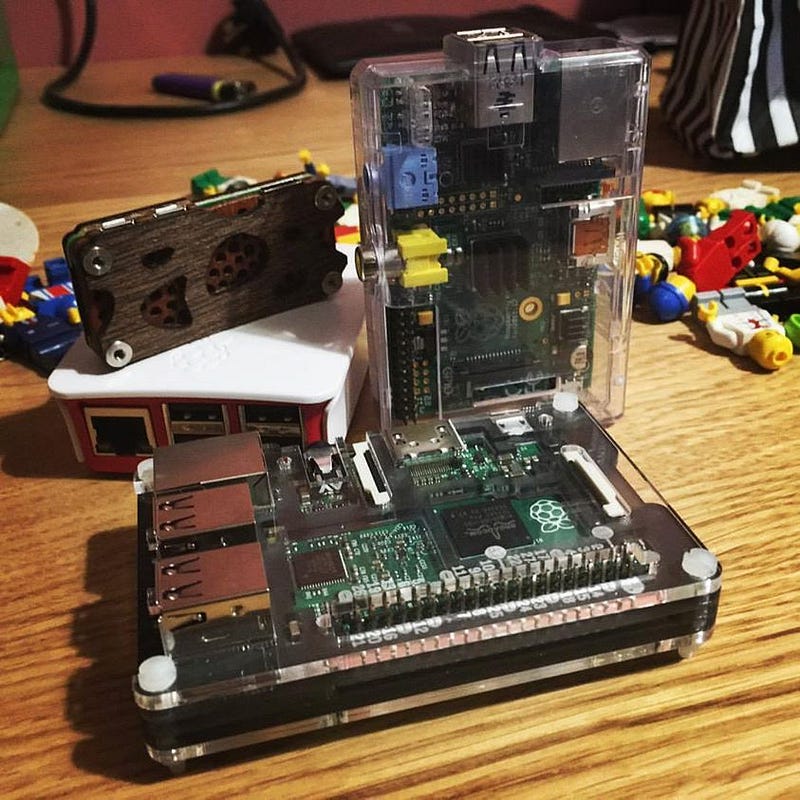
Does that mean though that everyone should storm the Apple stores now and join the walled garden? No. If you’re a tinkerer, get a bunch of Raspberry Pis, I still get those, they’re perfect for that purpose. If your budget is small, PC might still be the way to go, same if your software just doesn’t run on iOS or macOS. All you do is browse the web? Get a ChromeBook! Do you binge-watch Netflix? Just get a smart TV! The bottom line is Apple, Android, Windows, Linux whatever it is, the devices that run these are there to solve problems, they’re tools, extensions of you and me. Getting overly religious about any of it is silly and unnecessary.
The common-sense advice “use the right tool for the right job” still stands true regardless of whether you’re inside our outside the walled garden of Apple.
Attila Vago — Sr. Software Engineer building amazing ed-tech software. Cool nerd since forever, writer of codes and blogs. Web accessibility advocate, Lego fan, vinyl record collector. Loves craft beer!


