
I Spent $250 on TikTok Ads so You Don’t Have To
900K impressions, 8K clicks, and $$$ orders…

Around a month ago I decided to try my hand at dropshipping. I had always wanted to, and now that I own my business I can charge it as a business expense, it feels less like money thrown out the window if it doesn’t work. Plus, I had something to sell that I made on my own: t-shirts. I had always wanted to launch my t-shirt store and already had a lot of designs lying around on a hard drive. Another reason was that I kept reading about how Tiktok ads had a great conversion rate and cheap cost because they were still fairly new. According to many people, the cost/efficiency ratio of those ads was going to drop at some point, and become as underperforming as Google or Facebook Ads. If there was a time to try Tiktok marketing and dropshipping products, it seemed like it was now. Finally, I work in marketing for a Saas company (Software as a service) and I’ve seen the poor results most ads yield. I wanted to see if I could do better on my own.
With that in mind, I set myself a budget of $250 and decided to run ads for a week. But before that, I had to create my own products, my own store, and my own ads. In this article, I’m going to take you through this process and present the results of my experiment.
Setting up the store
To start things off, here is a little refresher on what dropshipping is: it’s a form of retail business where the product is directly shipped from the manufacturer to the customer through an online platform run by a seller. The seller accepts customer orders but does not keep any of the goods he sells in stock. All orders are directly forwarded to the manufacturer and handled there. This no-stock model allows for bigger margins and more flexibility.
In my case, I decided to pull up some old t-shirt designs I had made years ago and create my own product. I still didn’t want to handle anything around the logistics of order fulfillment, so I looked for an option that would enable me to print my designs on demand, ship, and handle order tracking/returns without me having to do anything. That’s how I came across Printful.
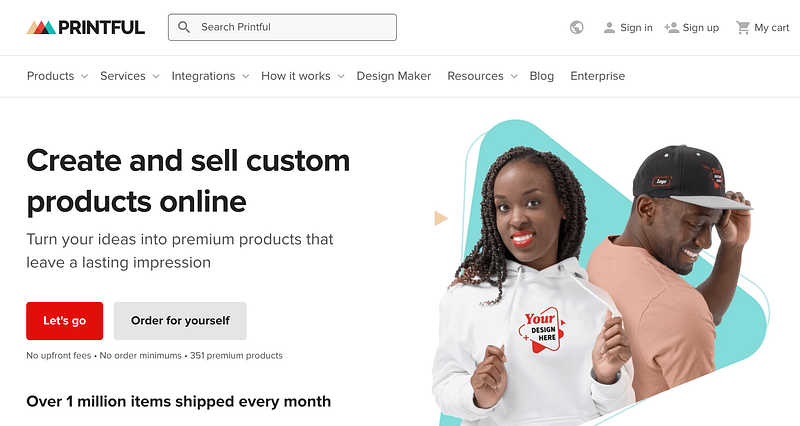
Now that I had found my backend and supplier, I needed to hook it up to a storefront, a platform my visitors could purchase from. 99% of people who do dropshipping choose Shopify, but I didn’t want to spend time learning how to use the tool, which is pretty broad and complex. I wanted something fast that I could roll out within a day. I had worked with Big Cartel in the past, so I decided to go with them.
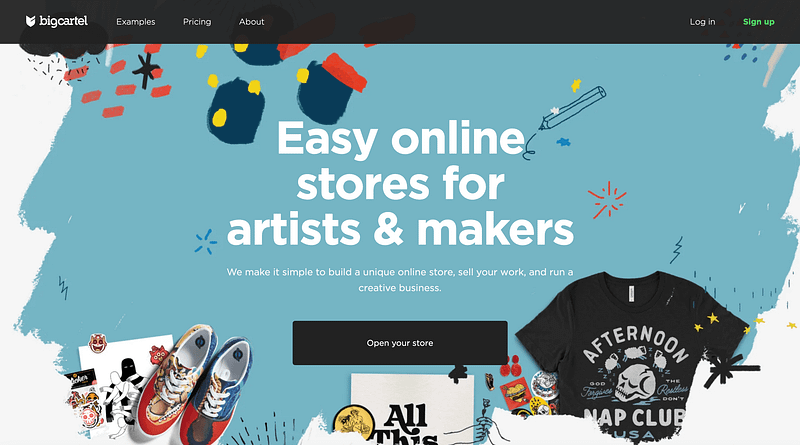
I also like that Big Cartel doesn’t take any commissions on the sales you make, they only charge a monthly flat fee ($9.99 to $19.99 depending on the plan you choose).
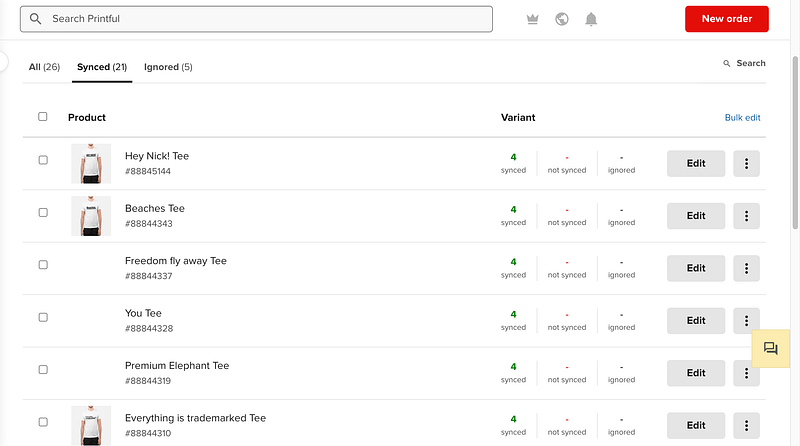
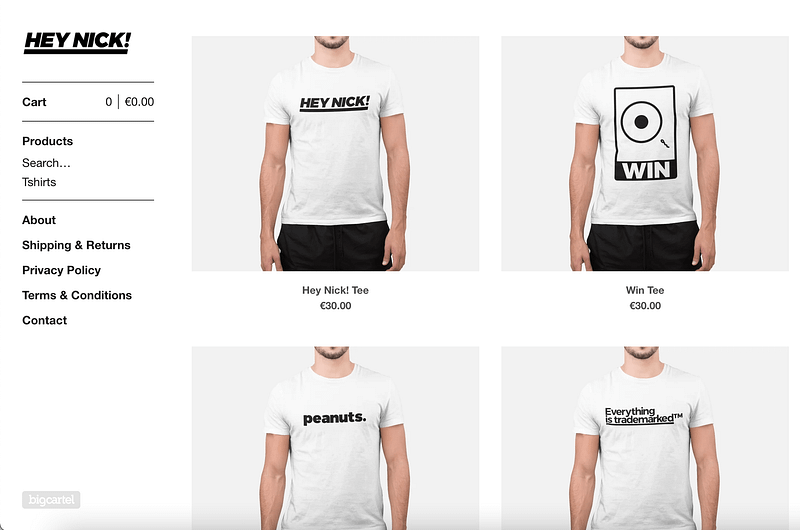
After opening an account with Big Cartel, I uploaded 21 designs and product shots, synced each product with the Printful warehouse, and I was ready to drive traffic to my store!
Creating the ads
I decided to mock up my designs on a bunch of cool people pictures from placeit.net, which is an amazing tool to create compelling product visuals when you don’t have access to a studio, camera gear, or models to wear your t-shirts.
I created an account on the website and within 2 hours I had a whole collection of visuals to advertise:
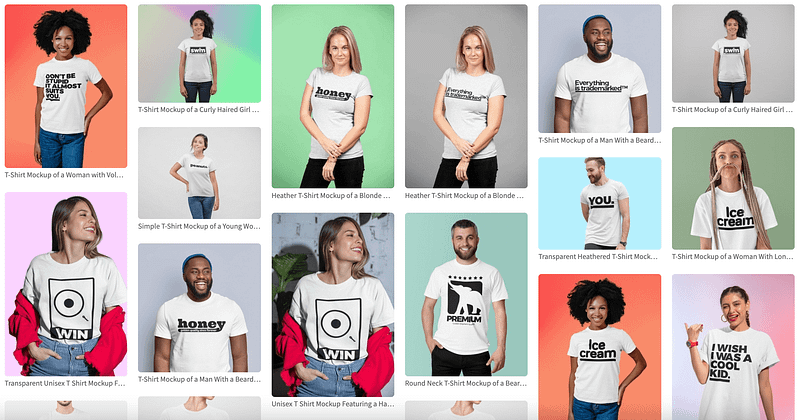
Because my designs are pretty simple (black design on a white t-shirt), I decided to not clutter the visual and only go for happy, trendy people on plain-colored backgrounds. Once that was ready, I had to create an animated slideshow of all the visuals.
Now, I know there are a bunch of easy online tools out there to create animated Tiktok ads, but because I’m a graphic designer I decided to go with what I knew: Adobe Premiere.
Premiere is a very fancy video editing tool that is used for so much more than making video ads. Most people use Premiere to edit movies, not to make 20-second social media ads. But again I wanted this experiment to be fast, so I went ahead and downloaded 3 different social media ad templates from motionarray.com, and simply drag-and-dropped my visuals in there. All the transitions and animations were pre-made in the files, so it only took me a few hours to compile everything together. This is what I ended up with:



I also downloaded 3 soundtracks to add to the videos, and I made sure to go with different music genres to see what would convert the most.
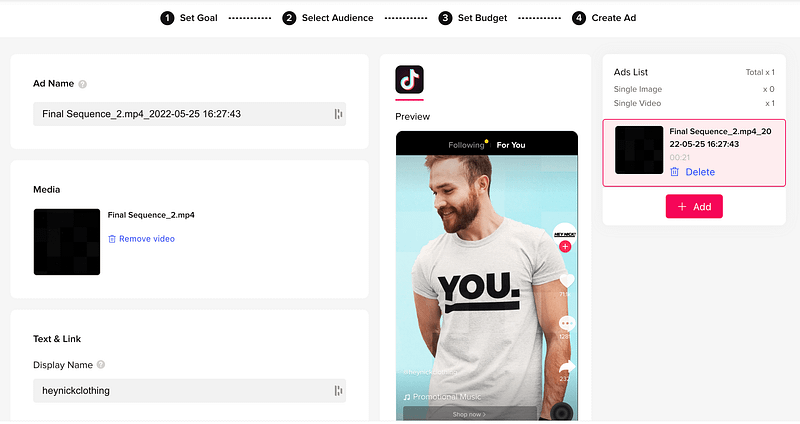
Once that was ready, I created a Tiktok business account, uploaded my videos, entered the ad info, and submitted my ads for review. Within less than an hour, they were live.
The (poor) results
Right off the bat, I noticed that as a business based in Europe, I was not able to deliver ads in the US. That was a big bummer because all the copy for my ads (title, description, and call to action) was in English, and I kept getting my ads disapproved in Europe for countries that didn’t speak English. There are a lot of them:
- Spain
- France
- Italy
- Portugal
- Poland
- …
I definitely lost a lot of quality traffic because of that, but I figured that as long as the visuals were compelling, people would check out the store and potentially buy my t-shirts. As it turned out, I couldn’t have been more wrong.
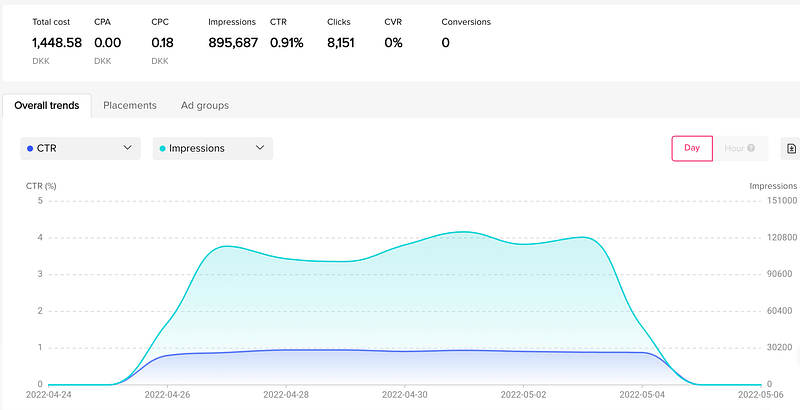
- Day 1: 51,071 impressions — 411 clicks — 0 orders
- Day 2: 114,053 impressions — 1,004 clicks — 0 orders
- Day 3: 103,685 impressions — 987 clicks — 0 orders
- Day 4: 101,437 impressions — 963 clicks — 0 orders
- Day 5: 115,053 impressions — 1,050 clicks — 0 orders
- Day 6: 125,799 impressions — 1,184 clicks — 0 orders
- Day 7: 115,547 impressions — 1,050 clicks — 0 orders
- Day 8: 121,456 impressions — 1,083 clicks — 0 orders
- Day 9: 47,586 impressions — 419 clicks — 0 orders
The overall conversion rate of my campaign was 0.91%, which is pretty bad for video ads. TikTok has multiple types of paid ad formats, which all result in high engagement rates (ads average 3% to 12% CTR to site), so even a 1 to 2% CTR should have been more than achievable.
I was pretty baffled to see that after my one-week experiment, I didn’t get a single sale out of 8,151 clicks on my ads. Even if only 0.1% of those clicks had converted to customers, I should have been able to make 8 sales. Even companies that are terrible at online marketing would get at least one download, one trial sign-up, on sale out of 8,151 clicks. I knew that I had no impressions in the biggest EU markets (France Spain Italy, Germany…) because my ads were in English, that I was not able to deliver ads in the US, and that this reduced my conversion potential by a lot. But I still couldn’t believe my numbers were that low.
I decided to dig a little deeper into the data, and realized that the numbers I was getting from Tiktok were not consistent with my store traffic data.
Digging deeper into the numbers
My ads were approved on April 26th, but April 27th was the first full day of running them. My store dashboard on that day showed 440 visitors, yet the Tiktok dashboard showed 1,004 clicks. This kind of data mismatch happens all the time in tracking campaign performance because similar user events (click, view…) are not handled the same way by different platforms. When working in online marketing, there will always be residual data that doesn’t 100% align across all the tools you’re using.
But in my case, the gap in data was just too big. Even if half of the 1,004 people who clicked somehow closed their browser right after clicking, or disconnected before even loading the store homepage because they found it too slow, I would still have gotten 502 visitors. The fact that there was such a big discrepancy between the number of clicks on Tiktok and the store visits on Big Cartel made me feel like something was way off. For the whole week, it kept happening:
- Day 1: 1,004 ad clicks — 440 store visits
- Day 2: 987 ad clicks — 482 store visits
- Day 3: 963 ad clicks — 452 store visits
- Day 4: 1,050 ad clicks — 443 store visits
- Day 5: 1,184 ad clicks — 459 store visits
- Day 6: 1,050 ad clicks — 430 store visits
- Day 7: 1,031 ad clicks — 409 store visits
- Day 8: 418 ad clicks — 166 store visits
The difference was way too big to be due to residual data, or even a difference in processing the data. Although the gap seemed to stay consistent (the number of visits was always around 50% of the clicks), I still couldn’t explain it.
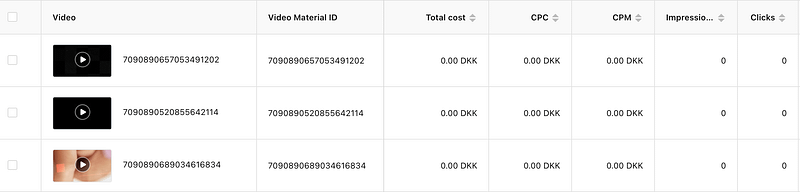
Once the campaign ended, I also noticed that all my creative assets (the videos) had a CTR of 0% and a spend of $0 when looking at them in another dashboard, outside the main campaign. Whether this is due to a dashboard reporting issue or a bug in budget allocation, this is not something reassuring for online marketers to see:
If I’m 100% honest, I think that like any other platform that offers to promote content to its huge user base in exchange for money (aka running ads), Tiktok can show whatever numbers they want on their end of the dashboard. There is no way for me to check that 895,687 people did in fact see my ad and that 8,151 people clicked on it. All I know for sure is that I spent $200 for what appears to be nearly 900K impressions, and if that’s true it is a really good return on investment. It just seems odd to me that out of 900K people, not a single person bought a t-shirt, even an ugly one.
Would I do it again?
Nope. Whether I didn’t get sales because Tiktok inflates the dashboard numbers, or because I’m terrible at making ads and products that sell, I’ll stick to writing content and making videos, because that’s what I do best. After all, if all you had to do to make money online was to set up a store and a bunch of ads in a few days, everybody would be doing it.
I’m not saying that video ads or dropshipping are dead. People click on ads and buy products online, and that will stay true for as long as the internet is around. But making ads that convert and products that sell takes a lot of work, and I want to focus my energy on other things.
I had always wanted to try dropshipping and I’m happy I did, I just won’t stick to it because that’s not something I’m interested in getting better at.
And if I ever want to sell my own t-shirts again, I’ll make sure to not use Tiktok ads and find another way to sell them.
What are your thoughts on Tiktok ads? Have you tried them? Have you seen good returns on investment with them? Let me know in the comments!
Thanks a lot for reading! I interviewed 50 productivity/business experts and made a 150+ page guide out of the project. This is road-tested advice from real people who get things done. Get it for free here.


