
I Speak Four Languages — But That’s Nothing To Brag About
Why it’s a good idea to learn more than one language

“Our culture, our traditions, our language are the foundations upon which we build our identity” — Anonymous.
I speak four languages. But where I come from, that’s nothing to brag about.
I was born and raised in India — a country with 121 major languages, 270 mother tongues, and numerous dialects.
India is made up of 28 states. The majority of these have their own language and script.
Four Languages…
My mother tongue is Konkani — a child language of Sanskrit.
My medium of instruction through school and college was English, which is one of the official languages in India.
I grew up in the state of Maharashtra where Marathi is compulsory in schools across the state.
The national language, Hindi, is mandatory at the school level in about half the states (including mine.) It is the language in which all union government (federal) documents are written.
Hindi (and English in the cities)is common currency across most Indian states.
Hindi is also the language spoken in Bollywood movies — which has popularized the language more effectively than any textbook could.
When I was in school, I thought it insane that the curriculum decreed four languages.
(I still think we should have studied two languages instead of four.)
Today, I appreciate that speaking or even understanding more than one language is an asset…
La Belle Paree…
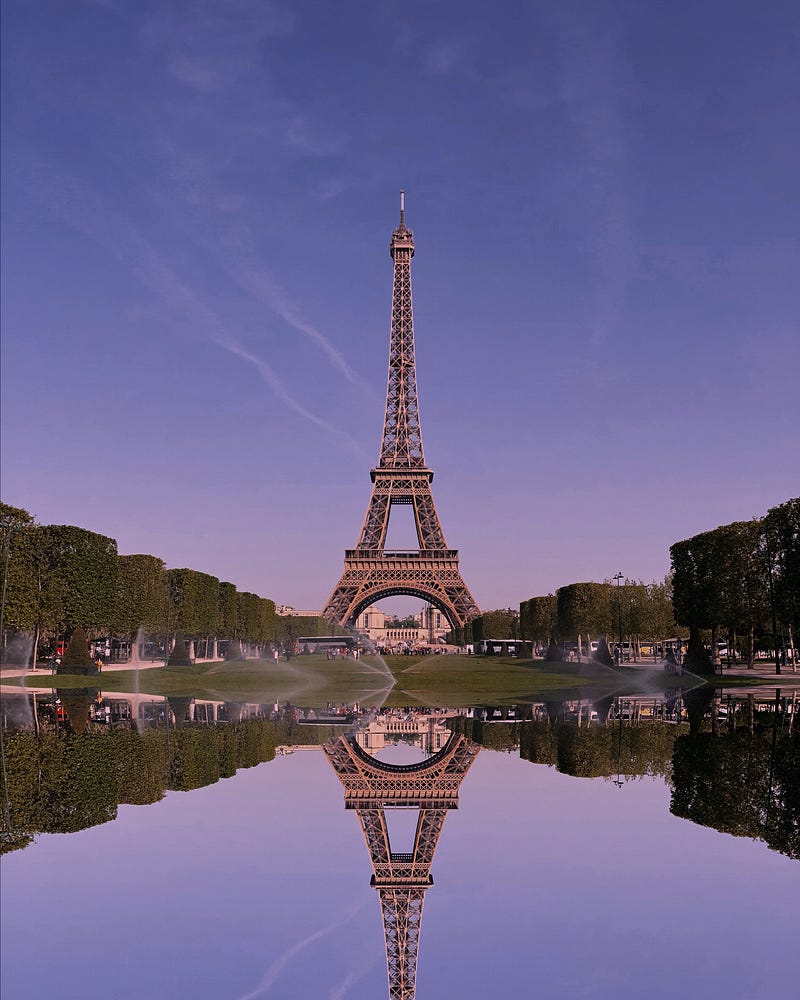
In eighth standard (grade), I had to pick an additional language — either Sanskrit or French. I chose French.
Years later, I visited Paris and tried my schoolgirl French on the locals.
“Ou est le metro?” I asked, proud that I still remembered some French.
The young Parisienne eyed me for a moment, then gave me directions to the metro in broken but comprehensible English.
I had heard much about the snooty French. About how they pretended not to understand when a tourist asked for help in a language other than “Le Francais.”
But I found that when I tried to speak French, they responded by trying to speak English.
People react more favorably when you speak to them in their language.
And in Texas…

Some years back, K and I were looking for a home in Texas. A friend — who spoke the same set of languages as K and I — accompanied us.
The three of us started off speaking in English. But from time to time, we dipped into one of the three Indian languages searching for the exact idiom, slang, or allusion.
Our realtor, a native Texan, listened, her eyes ping-ponging from one speaker to the next.
“That’s it, guys,” she said, finally. “You have to tell me how you keep switching from English to this other language — ”
“Three languages,” said the friend.
“We’ve had lots of practice,” I said.
It isn’t hard.
Anyone who speaks more than one language will vouch for the facility to transition seamlessly between languages.
Road map of a culture…
“Language is the road map of a culture. It tells you where its people come from and where they are going.” — Rita Mae Brown.
Consider the following proverb: If you sow a thorny acacia can you reap mangoes?
The meaning is clear. But you also learn that the proverb originated in a part of the world where mango and acacia trees grow. In a tropical or sub-tropical region.
Now consider the saying: In Lanka, even the bricks were made of gold.

“Lanka” and “gold bricks” allude to the Hindu epic, the Ramayana. The anti-hero, King Ravana of Sri Lanka (portrayed above), was supposed to have lived in a palace whose bricks were made of gold.
Speaking another language offers clues about the geography of a region and the history and culture of its people.
Historically speaking…
In the 14th century, multilingual scholars translated ancient Greek and Latin texts into modern European languages.
The study and dissemination of these texts led to a paradigm shift in the European worldview. From a feudalistic and religious mindset to one governed by logic and reason.
Multilingualism was one of the catalysts that sparked the Renaissance that stretched from the 14th to the 17th century.
By the early half of the 19th century, multilingual European scholars — particularly the French polyglot Jean-Francois Champollion — had succeeded in deciphering Egyptian hieroglyphs.
Multilingualism is not a modern phenomenon.
Globally Speaking…
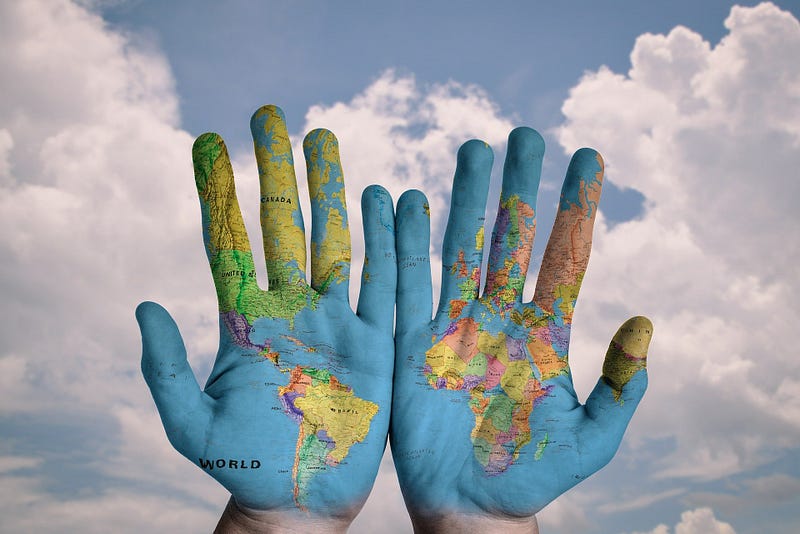
Several countries have more than one official language. Switzerland has four, Finland has two, and South Africa has eleven.
People from developing countries often choose to educate their children in developed-world languages such as English or French. They believe that fluency in a dominant language will allow their children to participate on the global stage.
(It was the primary reason my mother insisted my brother and I attend an “English-medium” school.)
The majority of the world’s people speak more than one language.
Professionally speaking…
Being multilingual gives you a competitive edge. This is especially true if you work in a customer service or government job.
In our increasingly global workplaces, speaking another language enables you to connect with a broader range of individuals.
For people willing to relocate, multilingualism opens up job opportunities in one’s own country and other parts of the world.
Multilingualism can advance your career.
Which language do you think in…?
In her poem “ The Shape of Thoughts” — the poem that inspired this story — Lucy Dan 蛋小姐 (she/her/她) writes that she thinks in visuals. She then translates these visuals into the language spoken or understood by the person at the other end of the conversation.
With four languages to choose from, I usually think in English or Konkani (my mother tongue).
Other times, like Lucy, I think in visuals or concepts, which I then translate into the appropriate language depending on my audience.
So now at the end of this piece, I would say —
“Maza lekh sampla.”
“Mera lekh khatam hua.”
Or
“My article is done”
— depending on whether you speak Marathi, Hindi, or English.
Thank you for reading! 🌿
Thank you Dr Mehmet Yildiz and @ILLUMINATION for publishing my story.


