
I Sought Healing 17 Years After Accidentally Killing My Friend
I needed spiritual healing as much as I needed therapy.
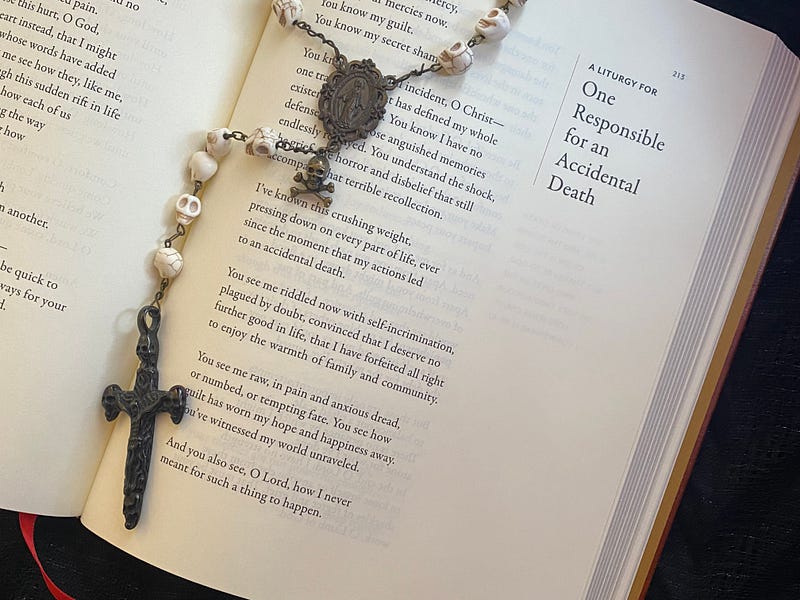
It was nineteen years ago that I killed my friend Amelia.
I was on the cusp of adulthood, homeless, and trying to come of age in a world of waste and cruelty, just like she was.
I hadn’t meant to kill her, or even hurt her. We had just left the nightclub where we worked as “exotic dancers.”
Shit-faced, we climbed on top of a dumpster still wearing our stilletos, which covered far more of our bodies than our clothes did. We laughed and played for a minute or two, maybe more, and then got into an argument.
Amelia became a bit obnoxious, and in an effort to get her out of my face, I shoved her out of the way. She fell, and hit her head on the concrete in a blow that was fatal.
It was seen as an accidental death, two wasted, homeless prostitutes, one who fell while climbing a dumpster in high heels with drugs and alcohol in her system. I learned quite quickly that society does not care much about prostitutes, particularly homeless ones, and while there was an investigation, there wasn’t a lot of care.
I cannot take back anything from that horrible night, and I live with the knowledge of what I did each and every day. I cannot remember all the details, especially the direct aftermath, because as someone with Dissociative Identity Disorder (DID), I dissociated and shoved the whole incident deep down inside, and simply refused to open it up and process it for seventeen long years.
The day eventually came where I couldn’t keep shoving it down inside and the alter involved was ready to revist the incident. DID is a trauma response that develops in very early childhood and causes the break off of at least two or more distinct personalities. These personalities are often called alters, and this incident has a specific alter attached to it.
Within the safety of good pastoral care and professional therapy (both of these were an absolute necessity for me as a Christian woman), I began the painful process of dealing with all the dreams, flashbacks, and trauma related to Amelia’s death.
One of the things that stopped me from seeking God’s forgiveness was the fact that I knew several people who took the hardcore approach that anyone who had killed someone was not worthy of forgiveness.
At the time, these were people I was trying to impress. I wanted to be their friends and I knew from other things I’d seen and heard them discuss that their stance was a life for a life, that even accidental killers should either be executed or spend the rest of their lives in prison.
There is a large difference between murder and an accidental killing, but being part of the reason someone died is just a huge burden to bear and made me feel so alone, and unworthy of the love and forgiveness of God.
When Amelia died, it still affected my relationship with her, myself, and God. I didn’t really know God at the time but I was searching for him in rather destructive ways, and so I still needed healing and forgiveness. Intent matters greatly, and the fact that it was unintentional harm does not change the outcome.
What it changes is culpability. In the eyes of the law it was an accident that I was responsible for, but not charged with a crime. That didn’t change how I felt about myself. I felt like the worst piece of shit to ever walk the face of the earth.
In his book “Post-Traumatic God: How the Church Cares for People Who Have Been to Hell and Back,” David W. Peters says:
The effect of killing on the killer is profound… The cost to the one killed is obvious, but the cost to the person doing the killing, the killer, is more difficult to unravel.
Although writing mostly to and about veterans and the moral injuries arising from war, what Peters says in his book also applies to me. What I did caused me moral injury, something I did that went against my very soul, causing a loss of some of my own humanity.
Peters writes:
Due to the chaos of war, it is impossible to avoid collateral damage, but that knowledge does not mean participants, perpetrators of violence, accidental or on purpose, will not feel something. That something is moral injury. The Church has been dealing with moral injury since its beginning. Peter’s betrayal and restoration is one such example. The sacrament of reconciliation is the most concentrated form of healing from moral injury in the Episcopal Church. We bring the things we have done and the things we have left undone to the priest and hear God’s forgiveness declared over us.
The sacrament of reconciliation is ultimately where I found peace and experienced the forgiveness of God. Many other people have found spiritual healing through confession also.
It’s not that going to confession was needed for God to forgive me, but confession is a gift given to us to assure us of the love and forgiveness of God, to gain spiritual counsel, to promise amendment of life, and to hear it declared formally that God has forgiven me.
Killing someone is isolating, moral injuries bring us a loneliness that we come to believe we deserve, and in fact I often still think I deserve. The parts of humanity that were lost don’t come back, and so this isolation further destroys the killer or perpetrator of violence.
It’s crucial to take care of my mental health and to process the trauma via therapy, but it’s also essential to experience spiritual healing. Nothing will change what happened to Amelia, and I will always remember the night I killed her, but despite what I have done I found some peace in the confessional from a God who forgives all sins.
MaryClare StFrancis is a nonfiction writer specializing in memoir and essays. She is currently working on an essay collection about her past violent life and commitment to nonviolence called In Thy Dark Streets Shineth.
If you would like to support her work with a one-time donation, you can do so at Ko-Fi, or check out her Amazon wishlist. To support her on a monthly basis, you can upgrade to a paid subscription.


