
I should have planted them last year… — Part 1
Hard work or fun? Everything is a matter of perception.
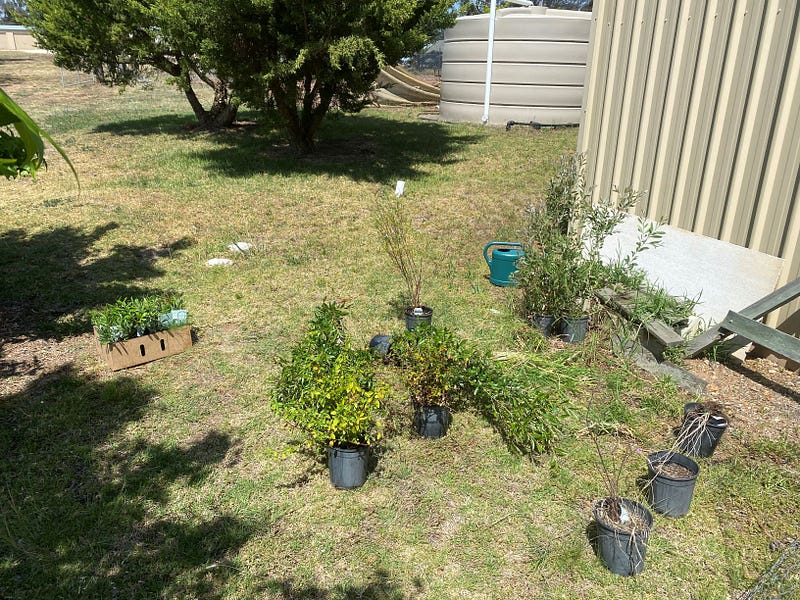
This particular story happened about two years ago, and originally I posted it on my personal blog. However, this is one of my deja vu stories which happens almost every year and therefore is always up to date. It perfectly describes my life on the farm, my extreme optimism and best intention, as well as constant failing that never discourages me or puts me off of my ideas, so I decided to share it here too. I split it into two parts. This is Part 1.
Every year (or every second year), our little local school organizes “Plat Drive”, giving the locals an opportunity to purchase seedlings of native plants and support the school. I am always very keen on supporting the school (and any local business), so I purchase about 25 plants. And so I did that year.
The task for the weekend was to repot the tiny plants into bigger pots.
“Just plant them all straight into the ground. You will get plenty of rain over the next couple of weeks, so perfect start for the plants,” — said John.
Yes, of course, he is right, and I would surely do this, but… The weekend has only 48 hours! My land is beautiful but a little rocky, so it takes me about 2–3 hours to prepare a hole and plant one little shrub. Taking into account I bought 25 plants, the math is simple 2.5 hours times 25 plants is about 62.5 hours. So even if I didn’t sleep over the weekend, I still wouldn’t manage to put all my plants into the ground. Therefore my answer to John was… “Yeah, Nah” In the end, I wanted the plants to survive, and God only knows when I get the time to plant them into the ground.
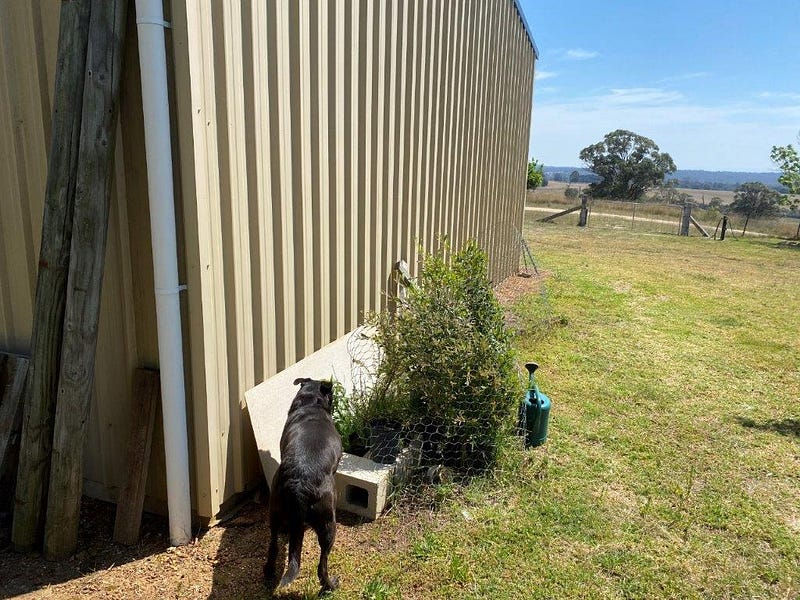
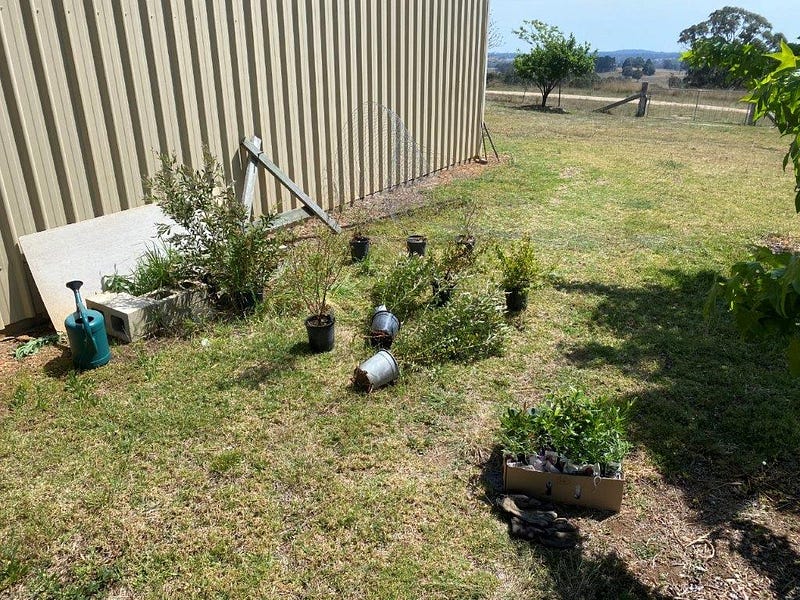
However, before I could start replanting my new addition of shrubs and bushes, I had to do something with the plants I bought two years ago…
Yeah, as usual, I always have the best intentions and want to do everything, but… somehow, time never is on my side… Nonetheless, whenever I find a bit of spare time, I will put one shrub into the ground. So far, I planted about dozen, seven were left in pots and a few… well, say they didn’t pass the endurance test and died in the pots.
You see, we have really, really tough conditions here; the soil is rocky and hard, and we are struck by extreme weather conditions on a regular basis — drought, fires, torrential rain, gales and so on. The plants have to be really tough to survive. So, before I waste my time on preparing huge holes for plants, which won’t survive anyway, I put them through the endurance test. If they survive two years in pots, they definitely are tough enough and worth being planted into the ground. (Hmm… this is probably just my excuse for procrastination — but you have to admit, it’s a perfectly logical excuse, isn’t it? And anyway, everything in life is just a matter of perception)
But then… maybe the test was a bit too long because… a couple of the plants let their roots go through the pot into the ground, and now I will need to dig them out before I can replant them. By the way, as of October 2022, the plants are still growing in the pots next to the shed, and now they are much taller than I’m. I’m still planning to one day replant them — I didn’t give up on that idea!
My supervisor Daisy and I collected the necessary tools — heavy duty crowbar, garden trowel, mini mattock and a few more, and made our way to the first spot where we would plant one of the bushes. I used to have a beautiful grevillea there, but unfortunately, the hole wasn’t big enough, the root system didn’t develop strong and deep enough, and one day a gale just blew it out of the ground.
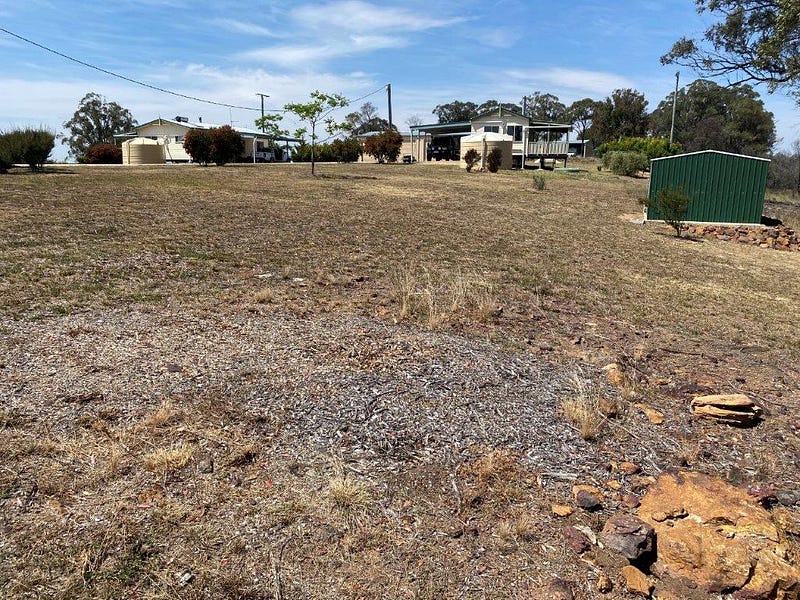
When the hole is right, then the plant has a much better chance to establish proper roots and survive any weather conditions, as visible in the photo below.
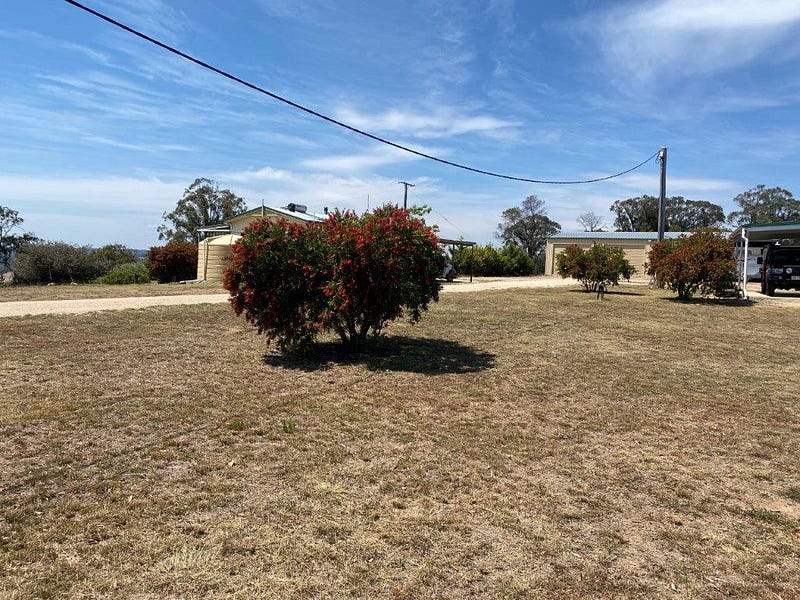
And so I started digging while Daisy checked the hole’s quality and ensured we were doing a good job.
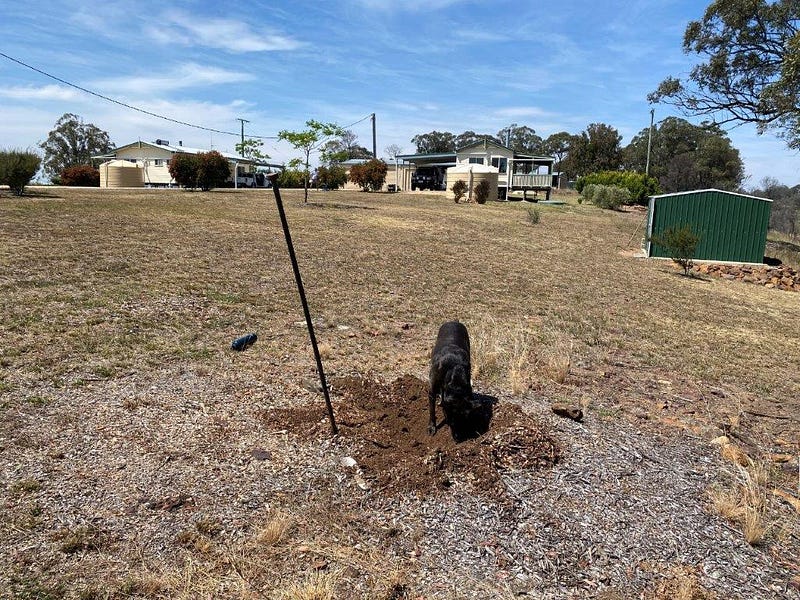
After completing her smell checks, she had lie-down in the hole; there were a few small digs here and there to improve some imperfections, and in general, we made great progress.
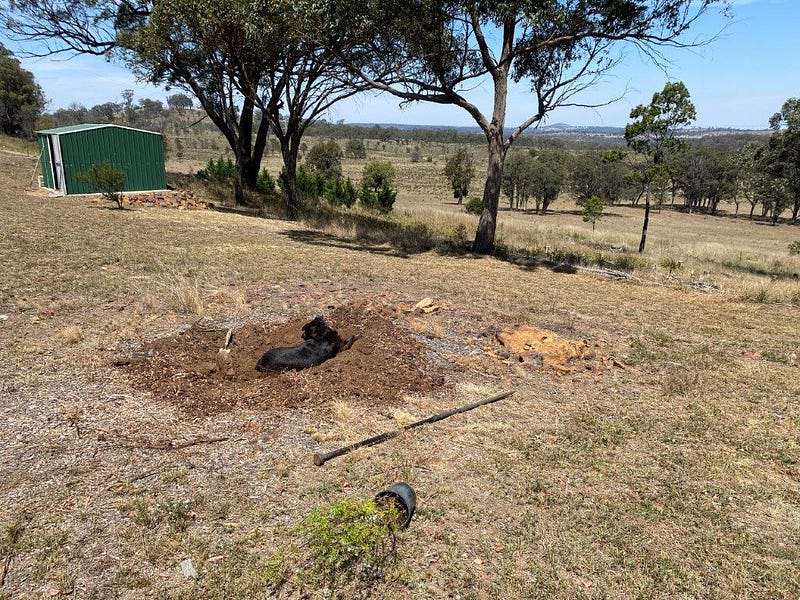
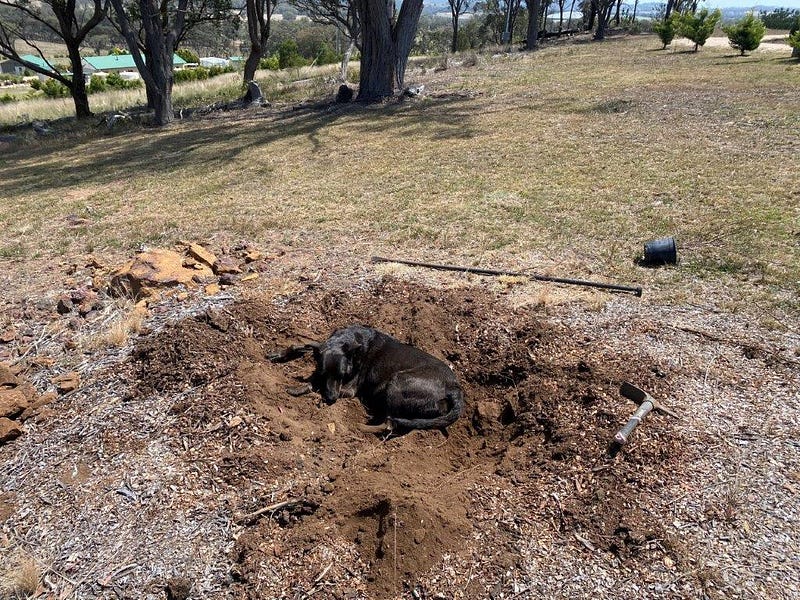
Occasionally I would work around her, not to interfere with her work. In the end, QA work is crucial, and its significance shouldn’t be diminished. Additionally, it’s also very important to be flexible in our work and, if necessary, find ways around instead of insisting on our methods and wasting precious time.
The hole was full of rocks, and getting some of the rocks out was challenging. Nonetheless, perseverance and creativity always pay off!
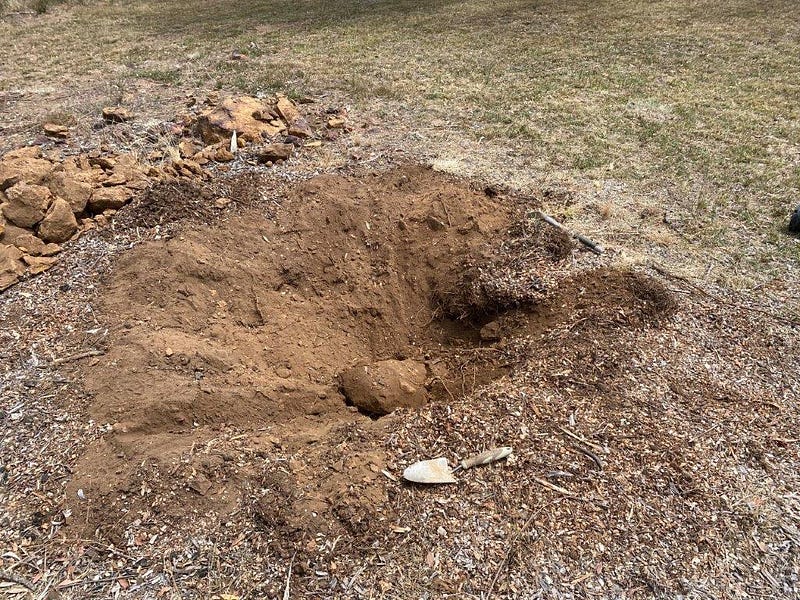
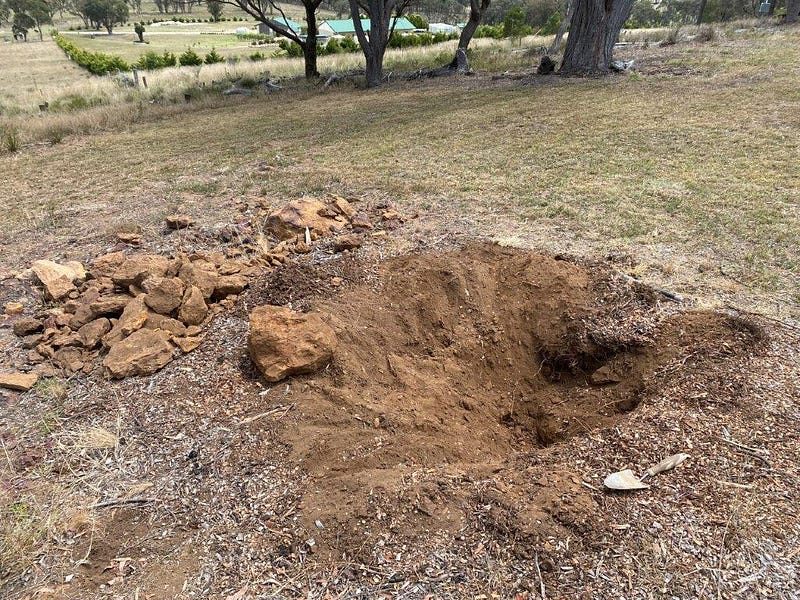
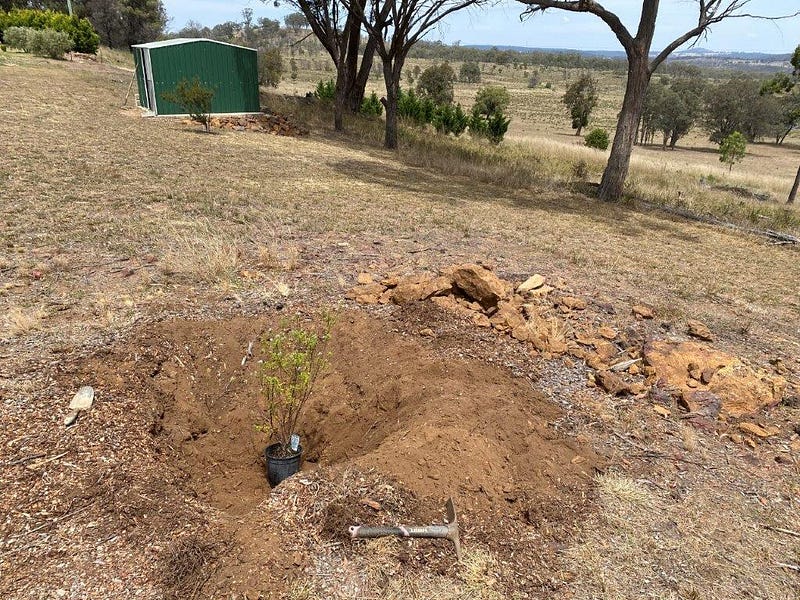
Finally, the hole was of appropriate size (when I put the little plant into the hole, it almost disappeared), so we could move to the next step.
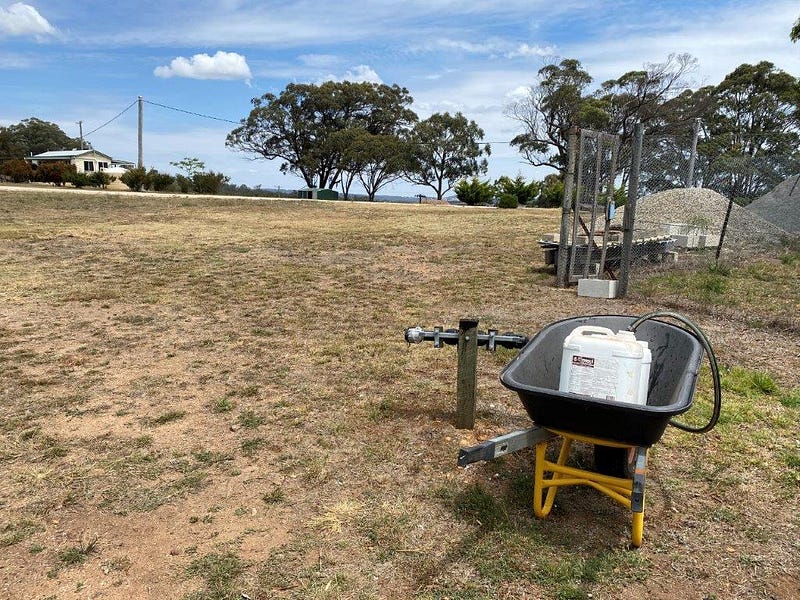
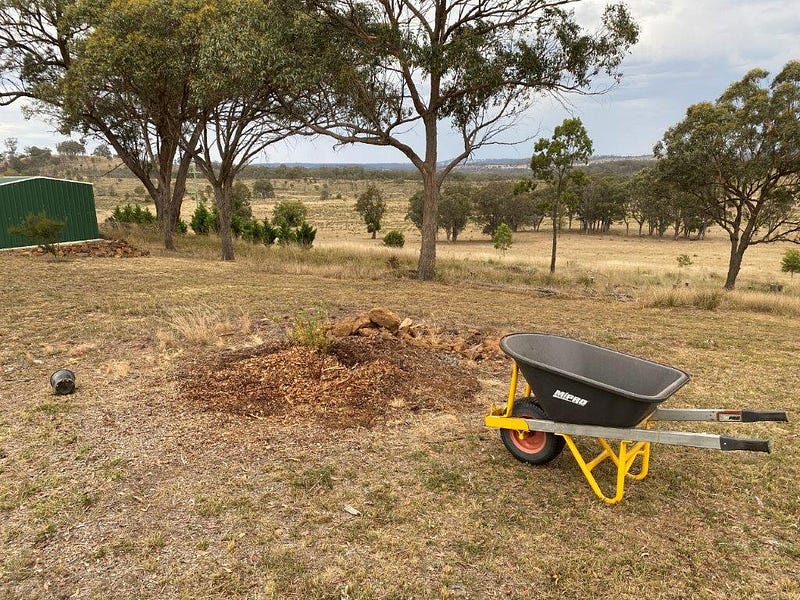
As the ground was very dry, we had to soak the crater with plenty of water. In some cases, I can just reach the hole with a garden hose; other times, I have to transport the water in containers using a wheelbarrow.
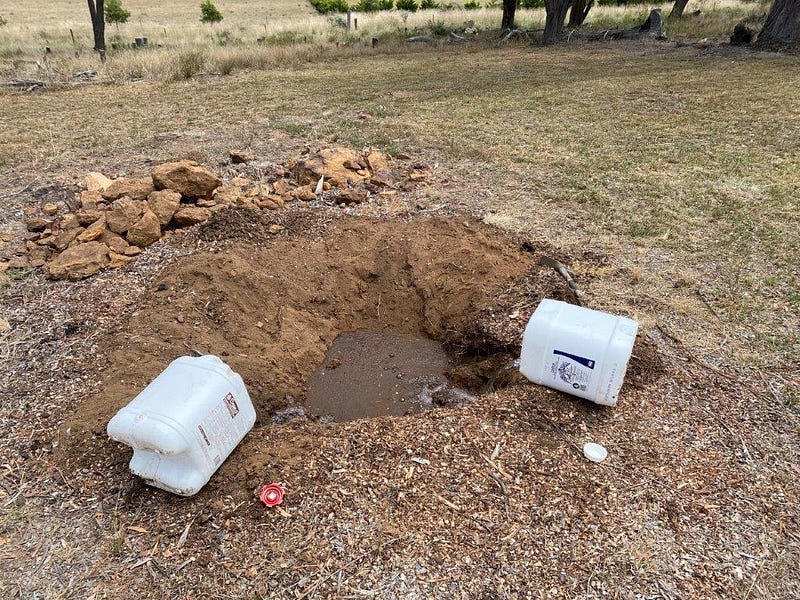
Hmm… Actually, this job also taught me it is beneficial to use my brain and think, even when doing the most straightforward job because… it can save us plenty of time and effort.
While I was emptying the water containers into the ground, George was passing and… ”Doesn’t the hose reach the hole?” — he asked me.
“Which hose?” I replied with a question.
“This one” — he pointed to a hose not far away from me.
“Mist… I must be blind,” — I thought to myself.
I realized that every time I walked all the way to the shed to get water, I passed another water tap that had a hose connected to it.
Do you know what is the worst about this? George and I set up the irrigation system on my property… Yes, I was planning it and putting the tabs into the ground together with George. How could I not know where the taps are??!! It is definitely much easier (and faster) to use the hose than to transport the water in water containers.
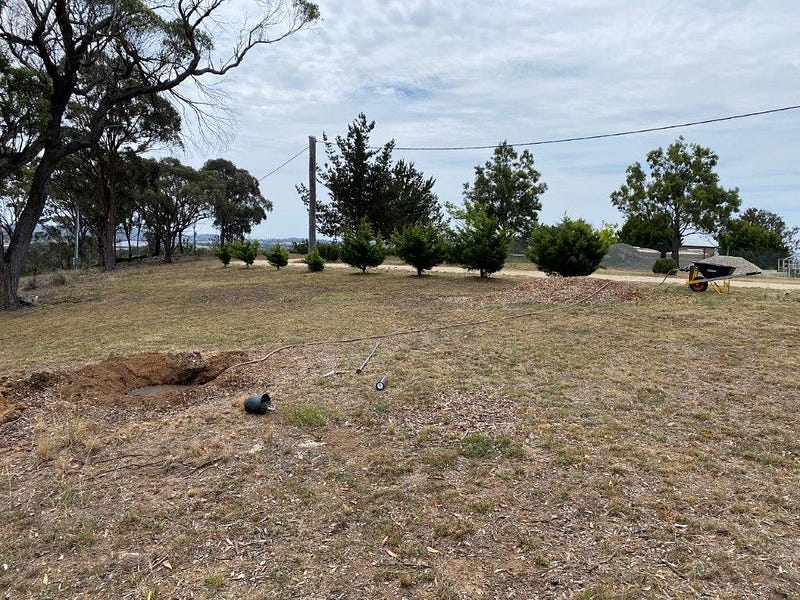
While the water was soaking into the hole and making the ground more plant-friendly, I had to prepare the soil to fill the crater and give the plant a good start. The mixture was prepared from topsoil (collected when Shed 1 was built), a bucket of wood chips and some blood-and-bones fertilizer. Two wheelbarrows were necessary to fill the hole.
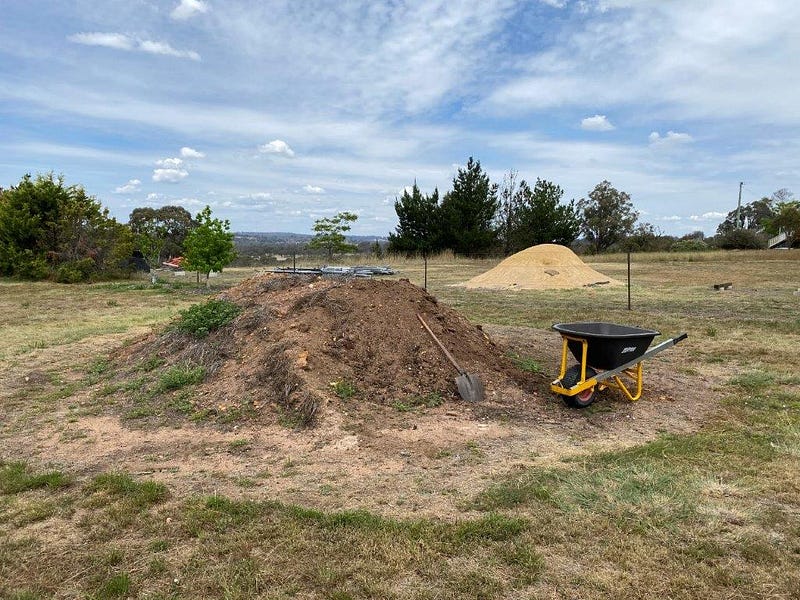
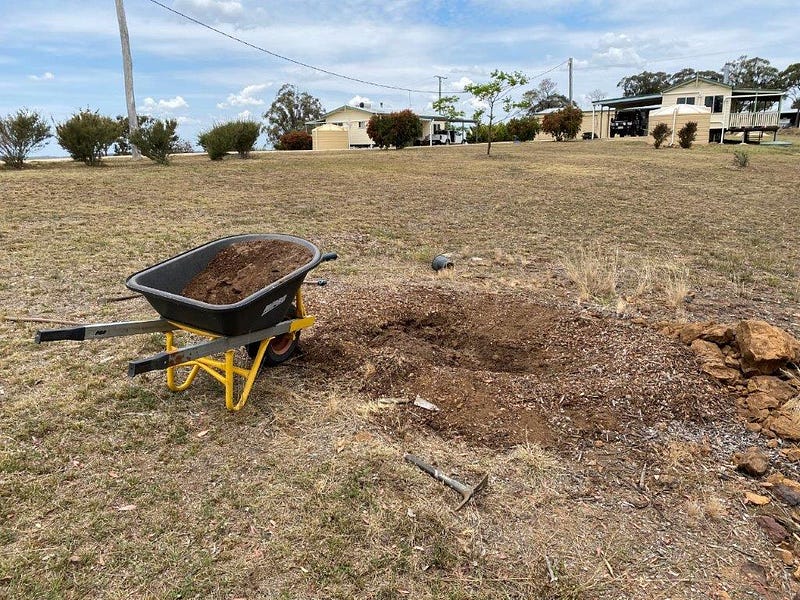
Finally, almost 3 hours later, my little bush was in the ground. I spread a few buckets of wood chips around the plant to help keep the soil cool and moist during the hot summer days.
Usually, I would need to build a little ‘cage’ around the tree (or any type of young plant protection, otherwise, there is a high risk of kangaroos (or other creatures) eating it for breakfast or dinner, but this time I took my chances. We had plenty (for my area) of rain that year, so hopefully, the animals will stay away from my gardens.
This wasn’t the end of our adventures that day. If you are interested in what happened after and about all the lessons we learned, check out Part 2!
As of October 2022, the bush grew beautifully, but unfortunately, strong winds a couple of months ago destroyed it, and now I’m starting from the beginning. Not quite, as the hole is definitely well prepared, and I just need to choose a stronger plant that better withstands the high winds here.
Enjoyed reading my story? Would you like to read more but can’t because you’ve hit the paywall? Sign up now for $5 a month and get unlimited access to more of my stories and lots of other inspiring stories! I will receive a portion of your payment with zero extra cost for you.
You can also subscribe to my newsletter to receive an email every time I post, check out my blog featuring much more of my photos or you can find me on Quora, Instagram, Twitter or YouTube.


