
I Scream, We Scream: Consumer Demand for Vegan Ice Cream is On the Rise
Trends in the non-dairy sector
In 2017, The New York Times proclaimed that we had entered “The Golden Age” of vegan ice cream. They were right. Consumer demand for non-dairy frozen desserts is ever-increasing and companies are heeding the call. I’m one of vegan ice cream’s most loyal customers.
Don’t get me wrong. I love dairy. Sadly, my gut does not. And, many other people are in the same boat. Lactose intolerance is up and “better diets” are on the rise.
75% of the world’s population […] are lactose intolerant… [There’s a] rising numbers of individuals who are concerned about the treatment of cows on factory farms and their impact on the climate crisis. — Forbes
These numbers don’t bode well for the world’s dairy and meat industries, but they are giving a substantial chance for fake meat and dairy-free products to secure moderate growth potential in global markets, as demonstrated specifically by the stronghold vegan ice cream currently has on the frozen dessert niche.
As vegan ice cream’s popularity continues to rise, the market is projected to be a multi-billion dollar one by 2025:
According to a 2019 report, the global dairy-free ice cream market size was valued at a whopping $455.9 million in 2018 and is anticipated to reach $1.2 billion by 2025. — Forbes
Robust Market Growth Predictions
An August 2020 report from MSN Lifestyle backs the claim that the vegan ice cream niche market is on the uptick, stating that big brands like Ben & Jerry’s, Häagen-Dazs, and Breyers have joined the market over the last five years and notes:
New research from Mintel’s Global New Product Database says that plant-based ice cream products make up 7 percent of all launches in the last 12 months, more than double the 3 percent five years ago. — MSN Lifestyle
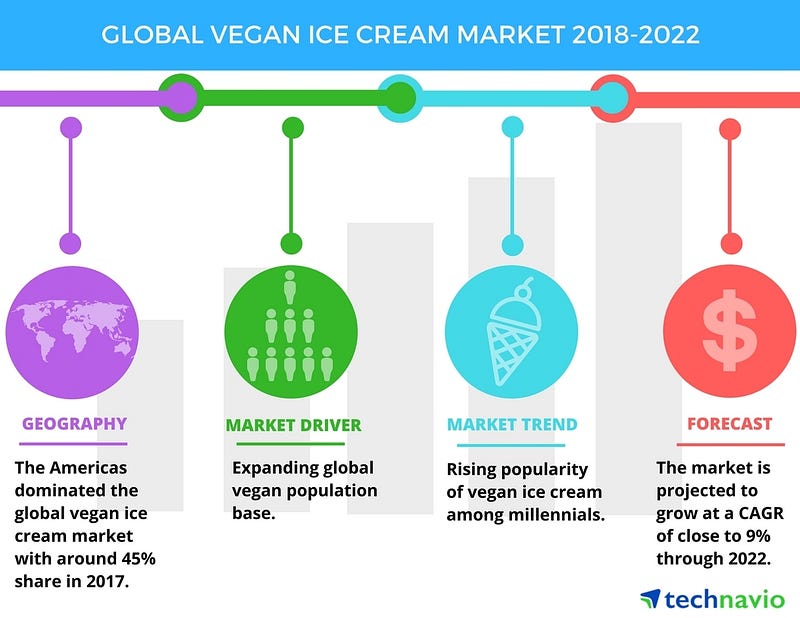
The Vegonconomist has a report from July 18, 2017 which was right on the money. Robust market growth, indeed.
A report of the most important trends between 2018–2022 by Technavio observed that over the last decade, the number of people preferring vegan diets has increased by 300%, and identified the global vegan ice cream market as a key market trend which is expected to continue to its growth within this period. The vegan ice-cream market will reach $2.45 billion by 2027 according to a further report by OpenPR, which predicted that “Towards the end of 2027, the global consumption of plant-based ice-creams will reach 500 thousand tonnes” — Special Report: Phenomenal Growth in Vegan Ice-Cream
Competitive International Market
Take note, countries of the world, including my home country, the United States: Japan and Germany have the vegan ice cream market cornered for now.
One in ten ice cream product launches currently take place in Japan, which has lapped the United States to become the ice cream innovation champion of the world. In Europe, Germany leads the pack with a 6% share of new ice cream innovations.
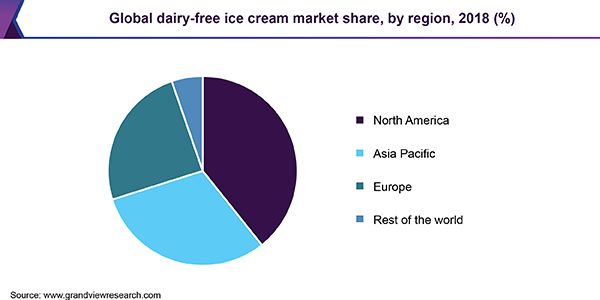
The below report shows the anticipated international market shares and CAGRs based on a report from 2018. Europe leads with 20% CAGR, followed by Asia Pacific at 15.4% CAGR, and trailed by North America at an anticipated expansion CAGR of 10.7%.
North America accounted for a major market share in 2018 and is anticipated to expand at a CAGR of 10.7% over the forecast period. Asia Pacific is a prominent regional market as China and India together account for 36.3% of the global population and China is one of the leading consumers of ice cream. Asia Pacific is likely to register a CAGR of 15.4% in the forecast period. Europe is the fastest growing regional market, expanding at a CAGR of 20.0% in the forecast period.
One North American Company May Be Poised to Eclipse Global Vegan Ice Cream Sales
Eclipse Foods is testing a new marketing strategy during the COVID-19 pandemic in which e-commerce has gained more popularity. The company started as a niche vegan ice cream maker that sold in its products in shops and restaurants in Berkely, California. Aylon Steinhart is the co-founder and CEO of Eclipse Foods who has a background in food science and as a chef. He has created other animal-alternative products successfully. As the demand for ice cream delivery rose he saw the potential for selling his “cowlessly creamy” ice cream in the direct-to-consumer (DTC) model.
Aylon Steinhart, co-founder and CEO of Eclipse, calls his company “the Beyond Meat of dairy products.” While there are other vegan ice creams on the market, Steinhart told Food Dive that its plant-based ice cream is the first that is “indistinguishable” from its cow alternative. — Food Dive
With that product description, it appears vegan ice cream manufacturers in Europe and the Asia Pacific may be facing steeper market competition from North America.
Could Vegan Ice Cream Become a Mainstream Market?
We’re creating products that require no sacrifice on the consumers’ end so we can bring in that mainstream consumer and really change the food system. Aylon Steinhart
Eclipse Foods is confident they can successfully market their vegan ice cream to the mainstream. They claim on their DTC website:
We’ve made the first plant-based dairy products that require no sacrifice, ever. Creamier than ice cream, cheesier than cheese, milkier than milk–products so good even cows are jealous. It’s not a dairy alternative, it’s a dairy sequel.”
Eclipse Foods boasts product endorsements on their DTC front page from CNN, The San Francisco Chronicle, and Forbes. They have notable investors: Reddit co-founder Alexis Ohanion, Gmail creator Paul Bucheit, and Daiya Foods’ former chairman Eric PatelEight flavors are currently available, including Chocolate, Vanilla, and Strawberry. “Chef Moonlynn Tsai x Eclipse: Oolong Milk Tea” is currently sold out. Other flavors include Blackberry Tarragon and “Flour Bakery x Eclipse: Sticky Sticky Bun”. Steinhart is confident that the company’s milk base will translate to multiple Eclipse Food products in the future.
In their “Our Why” section they make an appeal to every consumer, vegan or not, by calling for buyer “responsibility” to shop for a more “sustainable and “humane food system”. They imply that by purchasing Eclipse ice cream the consumer is doing their part in reinvigorating our broken food system and climate. It’s a clever attempt to bring a niche market product into the mainstream.
Even Lizzo’s Eating Vegan Ice Cream
There are many vegan celebrities, including Moby, Paul McCartney, Ariana Grande, and Natalie Portman.
Joining the ranks is superstar singer Lizzo who started eating a vegan diet in June of this year and is recording her daily eats on her TikTok account. A US News Article from August 17 features some of Lizzo’s favorite vegan foods. Non-dairy ice cream makes the list.
Lizzo rates Van Leeuwen Cookie Dough Ice Cream 10/10 and enjoys Craig’s Krusten’s PB Krunch ice cream. Both are using the direct-to-consumer model. Van Leeuwen Cookie Dough Ice Cream is currently sold out; Lizzo must be getting the word out as this is not previously a well-known brand.
Takeaway
Vegan ice cream is robust market growth potential over the next decade or so according to multiple market predictions. Market launches of vegan ice cream have grown from 3% five years ago to 7% in 2020.
New research from Mintel’s Global New Product Database says that plant-based ice cream products make up 7% of all launches in the last 12 months, more than double the 3% five years ago.
As humans the world over continue to have issues with lactose intolerance, turn to healthier diets, look for ways to create a more sustainable world, and are open to purchasing alternative to dairy as long as flavor and texture innovations are present, vegan ice cream has a good shot at transitioning from a niche market to a mainstream one.
Eclipse Foods DTC pints currently range in price from USD 11.99 to USD 17.99. Van Leeuwen charges USD 12.00 per pint and Craig’s smallest offering is a 4 pack for USD 58.99 or USD 50.14 if choosing the subscription service. That’s pricey in my part of the world (Oklahoma, United States).
However, if brands like Eclipse, Van Leeuwen, and Craigs find their way onto supermarket shelves a price drop would be likely, taking non-dairy dessert products into the mainstream market. Steinhart of Eclipse Foods believes “once plant products reach a point where they require no sacrifice in taste and price, consumers will naturally gravitate toward them because they’re more sustainable and often considered better for you.”
Keep a close watch on vegan ice cream’s market growth potential and while you’re at it, treat yourself to a pint.