
I Saw Them Defying Gravity
Blue Sheep: Nature’s ultimate rock-climbers
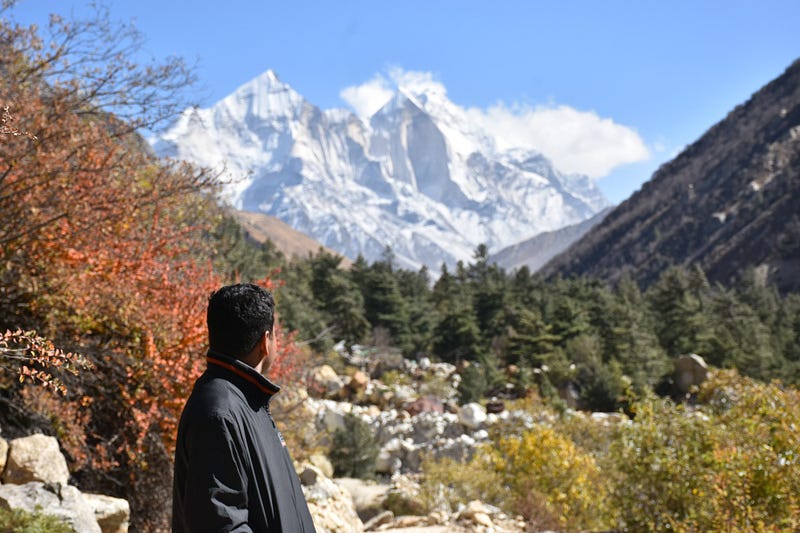
It was a lovely October day in 2017. Accompanied by six tour-mates, I went to the Gangotri National Park, India, with a mission to trek the Gomukh, Tapovan.
The park, located in the Uttarkashi district of the Garhwal Himalayan range, is the third-largest national park in India, covering a massive area of 2,390 sq. km.
I was excited, of course, as it was my very first adventure in the mountain. It was the first time I saw the ice-coated mountains Thalay Sagar, Shivling, and Meru from such a close distance.
And yes, it was the first time I saw nature’s amazing rock-climbers who defy gravity like a bullet.
Who just crossed our path?
When we reached Gangotri the other night, our two Nepali porters cum cook made a tasty meal for us. After a long zigzag journey from Uttarkashi to Gangotri, we were tired and hungry. So we devoured the last morsel of the warm meal in that cold weather.
The temperature was close to three degrees celsius. But for the people of a sunny-country like ours, it was enough to shiver.
Everything was quiet that night. We hardly saw any tourists and all the hotels were closed. After much searching, we managed to find a hotel. Later, our hotel manager told us that the trekking route would soon be closed as the winter was knocking at the door. And they generally move to other places during this time.
Anyway, we stayed the night there, and the next morning, we commenced our walk towards Tapovan that was 25 km away to experience.
The entire park is engulfed in a thick covering, including tall pines, deodar, fir, spruce, oak, and rhododendrons. You will experience the lush -green-tranquility all around. The only sound you will find is made by winds or water flowing from the distant mountains.
There was a narrow trekking-route on this above seven thousand feet ground. And for the first-time trekker like me, it was tough. But, no worry, the breathtaking environment did compensate well.
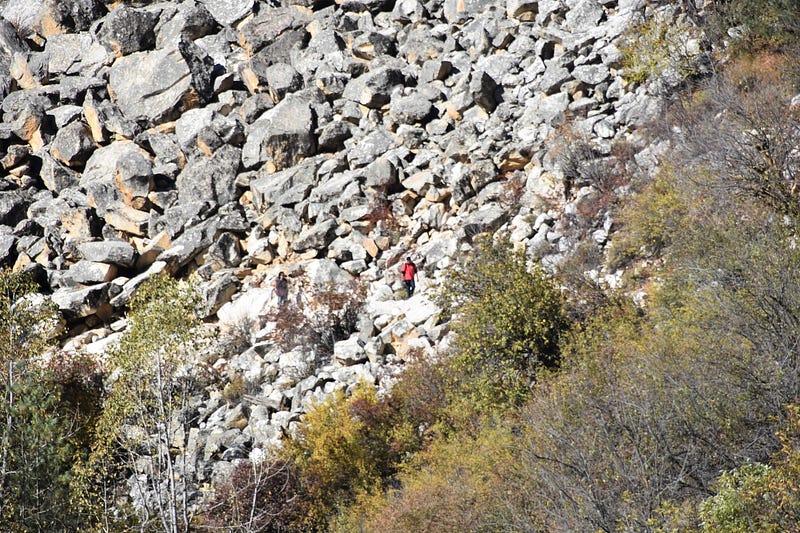
If you free your eyes on your left, you will see rocky mountains blocking the blue sky above. It seems that they are waiting to fall on you. It’s scary — really scary. And when you turn your head on the right, you will see the mighty Padma river flowing like a serpent.
There are green and yellow on your way, playing with the gentle breeze. If the height gives you a tough time, the beautiful scenery will make up for it.
We were walking gently and enjoying everything human eyes can contain. But wait! What’s that sound? It seemed something just walk away from our path.
We saw no trace of anything, but we were sure that something crossed our path. We all stopped approaching and tried to search from where the sound was coming.
We were looking around curiously but no sign of anything. Suddenly, one of us found something at a distance up above the rock. We followed his direction. And eureka!
What we had seen there was unbelievable.
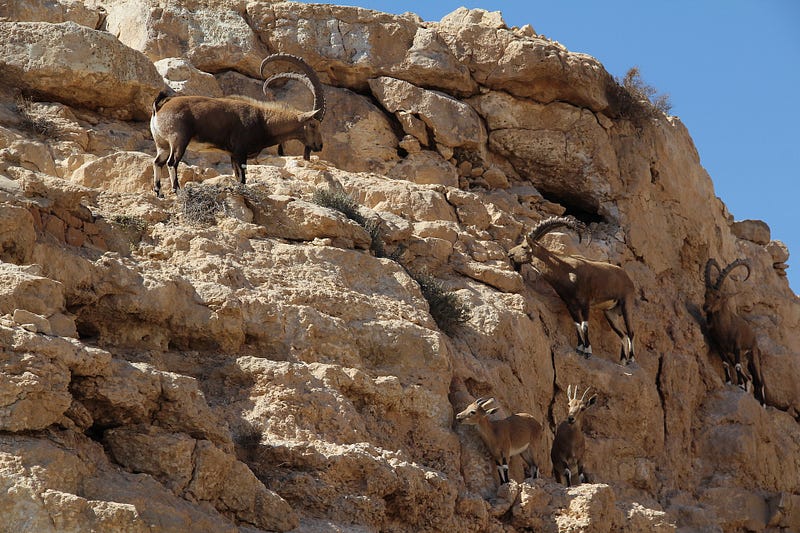
A few mountain goats (Blue Sheep/Bharal) were climbing the steep rocky mountain effortlessly. They were running upwards like bullets. If you don’t see it with your own eyes, you will never understand how easy it is for them to climb rocks in seconds.
The mountain and the goats were in the same attire, and it was hard to separate them. The grey-ish color of the blue sheep made a perfect camouflage that hid their existence.
We made a long pause to observe their activities. Some of them were just wondering, while others were busy eating something. Maybe grass or minerals as there were too many water flowing springs rich in minerals.
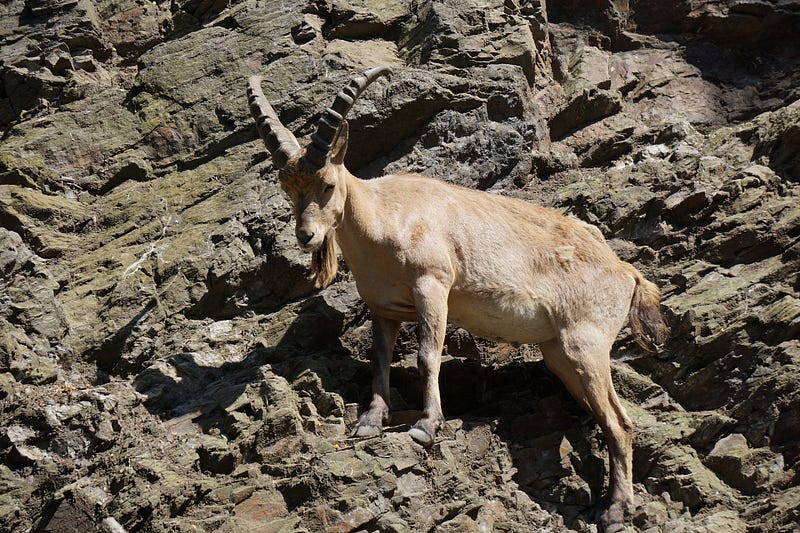
Blue Sheep/Bharal — Who defy gravity with ease
These sure-footed climbers love to explore the grassy mountain slopes for food and rest. But if you approach them, they will freeze, and their body color will make a perfect camouflage that you may fool yourself thinking them as rocks. They’re the masters of disguise!
If you manage to go near them, they will climb the steep mountain in seconds, leaving you there with a breath-taking experience to remember.
You will find Blue Sheep(Pseudois Nayar) in the high Himalayas, including India, Bhutan, Gansu, Inner Mongolia, Myanmar, Nepal, Ningxia, Pakistan, Sichuan, and Tibet.
The males are generally larger than the females with much bigger horns. They have small ears, and the bridge of their nose is dark.
Wikipedia mentions that the blue sheep/bharal was the focus of George Schaller and Peter Matthiessen’s Nepal expedition in 1973. And Matthiessen later documented their experiences in his book, The Snow Leopard, mentioning that bharal is a major prey of the snow leopard.
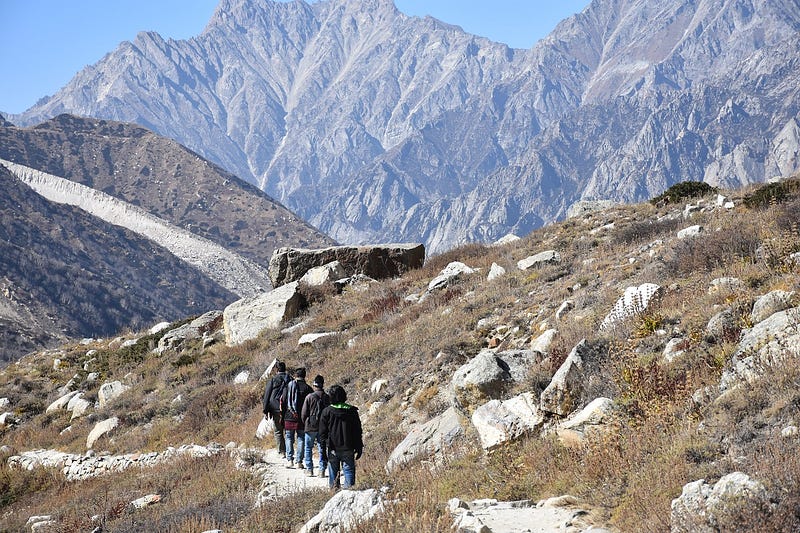
We stayed two days in the wilderness of Gangotri National Park. And four of our tour-mates managed to trek till Gomukh. The rest of us failed because we were experiencing breathing problems due to the height and freezing wind. So, we stayed at the valley called Chirbasa and explored the surroundings.
When we headed back to Gangotri the next day, we saw those swift mountain-climbers one last time. Playing, eating, wondering, and enjoying the rocks. They have their own world where they are happy and content until we, human beings, interrupt their livelihood and intimidate them.
Thank you for reading.
If you are a lover of the environment, nature, and wildlife, you may enjoy the following articles published in The Environment.
** The School of Nature ** Color Your Life With Some Birds ** Where Have All the Birds Gone?
Be a writer for The Environment and Inspire others to experience the beauty of this lovely planet.