
I Ruined My Teenage Years with an Eating Disorder
Anorexia, orthorexia, phobia-driven disorder, I’ve tasted them all. Here’s what it felt like.
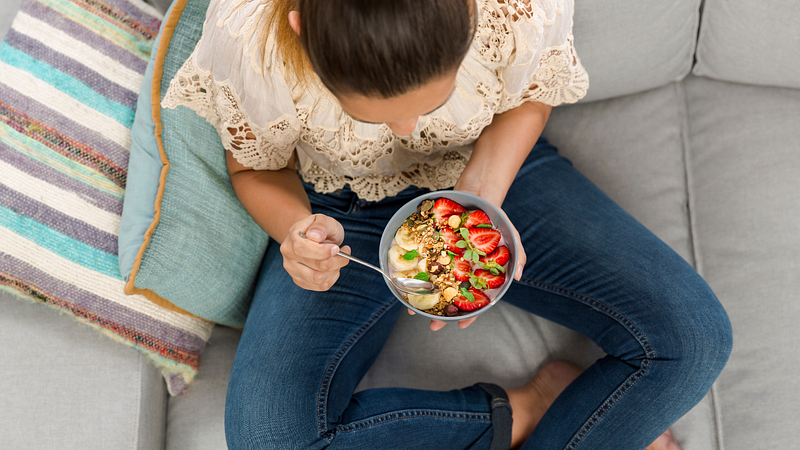
It’s difficult to put the feeling of years of undulating secret mental illness into words, but here’s an attempt.
A teenage girl suffering a life-altering eating disorder is hardly unique. We’ve been portrayed (usually terribly) in film, TV, music, and books for decades. In that time we’ve been glamourised, idolised, and torn apart in equal measure.
Eating disorders as a whole are still taboo, even in our current age of mental health awareness. We openly discuss matters of depression and anxiety, or encourage people to “speak up.” But how many of us open our minds to deeper issues? Eating disorders, schizophrenia, borderline personality disorders, and so many more conditions continue to live in shadow.
I wrote previously about how it felt to grow up with a childhood eating disorder, but let’s get into what it felt like as an almost-grown-up.
How It Started
While my childhood issues were embedded in emetophobia, my teenage issues arose from body image and control. Heavy emphasis on that control part.
Trouble with eating doesn’t solely stem from a vain desire to be thin, or at least thinner than others. It can certainly be a factor. Stronger drivers usually consist of: wanting to conform to social standards; longing to be wanted sexually or romantically; or the competitive thirst for outwardly-presented “success.” Combine this with the navigation of teenage angst, academic stress, new online social pressures, a busy job, and you have a recipe for a messed-up mind.
I didn’t restrict myself just to be a pretty girl. I did it because it was something else to achieve. I did it try and accept what I saw in the mirror. I did it to be in control.
Whether this restriction meant going hungry, hiding weight changes under my clothes, or lying about what I’d eaten, I’d do it. In one sense my childhood eating disorder had taught me to be an expert in hiding things. In another sense it also taught me never to take things to an extreme. Just to be be in control.
How It Felt
Painful, mostly. Painful both mentally and physically.
While I was still at school, roughly around the age of 16, I began to learn to enjoy the physical feeling of hunger. The emptiness, and the pangs of need. I took them as some kind of secret badge of honour. A sick sign of discipline that meant I was doing well. I wondered if this feeling was what it meant to be a successful woman of sorts.
However, I also became deeply loathing of the feeling of fullness. While millions around the world and in my own country were longing for that feeling of satiety and satisfaction, I hated it. A stomach full of food wasn’t the comfort it should have been to me. It felt like a gluttonous failure, a bloated vision of losing control. It was intrinsically tied to my own image of my body, even if there were no mirrors around. I could feel my failings.
The desire for achievement didn’t end only at the feeling of hunger. My discovery of calorie counting, and the (unfortunate) convenience of calorie counting apps, was a disaster.
Realising I could not only feel this inhuman discipline I was desperate for, but see it as well, felt like all my Christmases had come at once. I began obsessively entering every item of data into this app (yes, it was MyFitnessPal). My fingers incessantly recording every scrap of food I’d consumed that day, from slices of vegetable-topped pizza to individual TicTacs. All the release of journalling or diary entries, with absolutely none of the joy or fulfilment.
Suddenly every mouthful and movement became nothing but numbers. Food and exercise were no longer matters of survival and wellbeing, but machine-like administration. All to faintly fluctuate up and down in body weight over the course of the following 4 years.
Did I learn anything about cooking? Nope. Did I develop a love of sport and fitness? Nope. Did I take with me nothing but an artificial-intelligence-like knowledge level of calorie content in every food in human creation? Yup.
How I Recovered (sort of)
I write this at age 26, living in Italy with a husband whom I met through a shared love of food. I consider myself fully recovered now, meaning I know my brain will always be susceptible to control-obsession, but being able to happily live with it and block it out in favour of calm.
Books, social media, and a lengthy process of self-reflection were the tools I found to help. Books written by cooks, eating disorder survivors, and nutrition experts. Social media accounts of human beings who celebrated being alive and healthy over the bleakness of dieting and weight obsession. Self-reflection that: sometimes involved writing; sometimes involved staring silently into the mirror while crying; and sometimes simply involved trying a new recipe.
I learned the term “intuitive eating” during these years of recovery. It’s a difficult one to address fully, and I’m aware it isn’t applicable to everyone’s life, but it changed mine completely. Learning that food doesn’t have to be eaten at specific times of day, in certain amounts, or in set patterns.
If you want to eat chocolate for breakfast, then you can, you’re not breaking any rules.
If you want to eat dinner sooner or later than your family or partner, then you can, your hunger levels aren’t dictated by a clock.
If you want to stop eating before you finish all the food on your plate, you can, eat it later or give some to another person who is still hungry.
Often your body will tell you what it needs. It will let you know when it needs to be fuelled, and what it wants to be fuelled with. There is always the initial fear that you’ll just eat everything in sight and never be satisfied, or that you’ll only crave “junk food.” It’s rarely the case. Likely your body will ask for soups, salads, or fruit just as often as it will ask for cheese, biscuits, or ice cream. Learning to adapt your lifestyle to your body, rather than the other way around, can be challenging but it is absolutely possible.
Otherwise, learning to make your own food can be so valuable in recovery. Understanding the science behind certain ingredients and their use in a dish makes them less “scary”. Enjoying the process of preparing a meal or a simple snack can be incredibly therapeutic, and help you appreciate the finished product even more. I turned my love of sweet things into a baking blog, and my love of chocolate into a YouTube channel, to further my adoration without fear. Both have helped me endlessly in loving eating instead of trying to control everything about it.
While I can’t speak for everyone’s circumstances in disorder and recovery, this is what happened to me, and what worked for me. If you’re just curious, thank you for reading, and if you’re on your own journey, I wish you all the success in the world.