
FREEDOM | WOMEN | SELF
I Refused to Be Just One More Sad Wingless Daughter
My journey for freedom
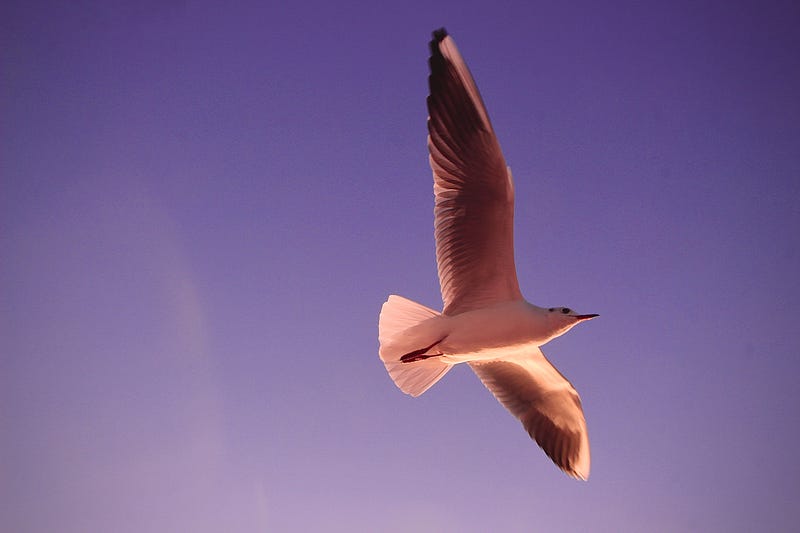
Freedom: the power or right to act, speak, or think as one wants without hindrance or restraint and the state of not being imprisoned or enslaved. — Google’s English dictionary, Oxford Languages.
There are three types of freedom.
The first kind of freedom is “freedom from,” a freedom from the constraints of society.
Second, is “freedom to,” a freedom to do what we want to do.
Thirdly, there is “freedom to be,” a freedom, not just to do what we want, but a freedom to be who we were meant to be. — Warriorsway.com
My life has been about gaining all three of those types of freedom!
My mother believed in control, not freedom.
I saw my future of what she expected of me in how she treated others in our household.
Dorothy was a prime example. She wasn’t like the other boarders in our house — she didn’t pay money. She’d arrived in her early teens when I was too young to remember. I grew up with Dorothy always there, a part of our family.
“You’re lucky,” my mother often told Dorothy. “Lucky, we took you in. Put a roof over your head and saved you from a life of misery.” As a young child, I didn’t know what a life of misery was, but it sounded like my parents had done something good. Dorothy scrubbed floors, washed dishes, made beds, and did whatever else my mother wanted done around the house.
If Dorothy mentioned wanting to go out, my mother would tell her, “There’s no need of you going anywhere. You’ve everything you need here!”
At age twenty. Despite expressing her wish to have a boyfriend, my mother wouldn’t allow Dorothy out on her own. As I became older, I saw my future in my mother’s treatment of Dorothy. I knew I needed to prevent that future from happening.
My mother often told Dorothy that she needed to think long and hard about wanting a man, and that men were only after one thing. “Believe you me, marriage isn’t all it’s cracked up to be,” my mother said. “I wish I was in your shoes. You’ve no responsibilities. No man pawing over you at night.”
The threat always hung over Dorothy’s head, to obey or be kicked out on the street into the big bad world my mother always warned about.
As the only biological child in a house of many children, I had no fear of being kicked out. But I also understood I’d need to fight for my freedom. And knowing there were no repercussions or punishments for acting out, gave me license to rebel.
As children, we could not leave our yard and play with other kids in the neighbourhood. Kids had to come to us. This changed when our mother allowed my sister and I to go over to the beach house where two girls from the city were spending the summer with their older brother. My parents were on good terms with him and finally gave in to allow us to play here.
This led to the girls teaching my sister and me to swim. Though we lived by the ocean, my mother never permitted us to go near the water because we might drown. In my mother’s eyes, home was the only safe place. Everything outside of home was dangerous.
It was our father who allowed us to swim. I saw he could be an important ally.
Growing up, I witness the lack of freedom women had.
One of these women was Blanche, who was stuck in a miserable marriage with three kids. All of them lived in a shack. My mother usually took the kids in to board with us when Blanche went to the hospital to have another baby.
Later, Blanche left her husband and came with her kids to stay with us. But she had no money to pay for their keep. Her husband called night and day and showed up in the middle of the night with a gun. My father told them she and the kids had to go.
My mother used Blanche as an example to keep Dorothy in line. “This is the reason you should stop going on about getting married and having kids,” my mother said. “This is how you could end up. You think a life like that is any better? Where can Blanche go? What can she do? Where can she go except back to Raymond? She has no money, no family to take her in, no job, and three kids. You’re lucky you don’t have Blanche’s worries. You’re free as a bird.”
But if Dorothy was like a bird, she was like our budgie in a cage, dependent on the kindness of others to care for her. She was just as trapped as Blanche.
Blanche gained her freedom when she ran off with another man and left her kids and husband behind.
In my teens, I had to fight for the freedom to be allowed downtown.
Our school had no cafeteria, and I didn’t want to take packed lunches. I wanted to be like my friends and able to eat French fries at the diner on Main Street.
In grade 7, I also had to fight to be allowed to go to school dances. Again, it was my father who overruled my mother.
A couple years later, he gave me the freedom to smoke cigarettes. But he would not allow me out with boys. I had to see them by sneaking around behind my parents’ backs.
I wrote the poem Bird Freedom in 1976 when I was 17. When I pushed for my ultimate freedom by dropping out of high school and getting a job as a short-order cook in a diner. Again, it was my father who gave me his blessing.
The image of the bird in this article brings to mind a song: High Flyin’ Bird by Jefferson Airplane. Music I listened to in the late 1970s while I painted and wrote poetry.
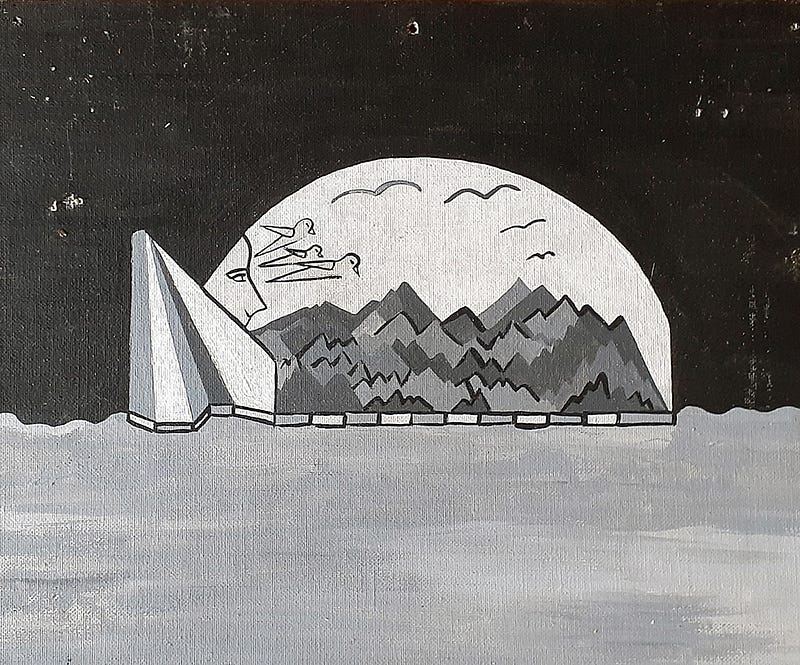
Bird Freedom
Sunshine sparkles upon fantasy wings
A sweet song of freedom drifts through the air
You want to hold all the magic there
But girl you can only have other things
O child you’re held back
Bird freedom you lack
Your needs have been dammed like the water
You’re just one more sad wingless daughter
Like the jagged mountains before your eyes
To this earth you are so strongly bound
The golden wings you search for cannot be found
In your world bird freedom quickly dies
O child you’re held back
Bird freedom you lack
Your needs have been dammed like the water
You’re just one more sad wingless daughter
Green life forces away from cold brown
Birds have freedom, you have a frown
Someday girl as you turn the page
You’ll find time is only a cage
Well I watched your eyes as my words began
And yes child you understand
Bird freedom is not the way of man.
It would take many years to find the freedom to truly be me.
To find my voice and be unafraid to speak my mind, to share my feelings. To create art and write. To appreciate where I live in the world and that, compared to some, my fight for freedom might seem insignificant.
I had to choose freedom if I was ever to become the woman I needed to be. To pursue my hopes and dreams and not let my mother control me or keep me living in fear and silence.
As for Dorothy, she joined me in my teens with the common goal of seeking our freedom. At age 30, she’d sneak out with me and my sister to meet up with boys. My sister, me, and Dorothy all planned to leave home together once my sister turned 16, but things didn’t go as planned.
But Dorothy did end up leaving and gaining her freedom. She found a job working in a nursing home, and a divorced man with two children to marry.
Barbara Carter Artist and writer with a focus on healing from childhood trauma, alcohol addiction, and living her best authentic life.
Likes to take walks, read, watch TV dramas, and practice Qi-gong, and work on her memoir series BARBARA By The BAY.


