
Society
Why We Find It So Hard to Resist Buying the Newest iPhone
Resisting the allure of unfettered consumerism.
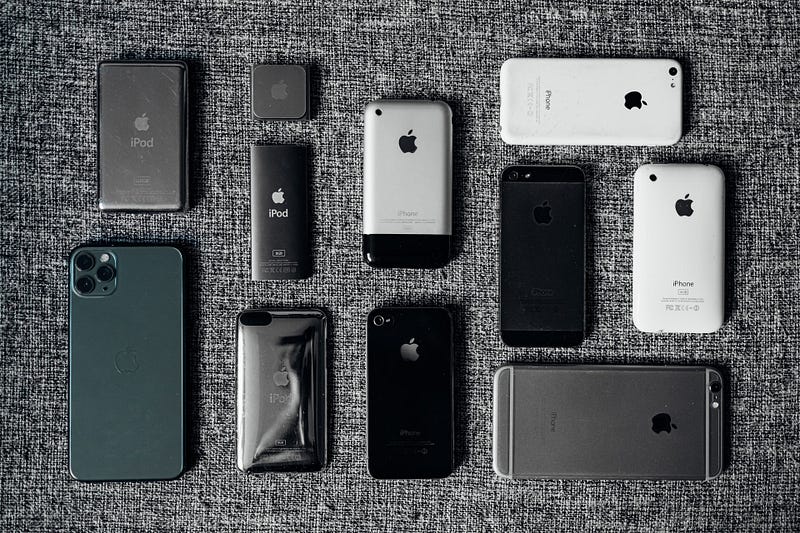
“WOW.”
I can still remember the amazement when I finally switched from an Android phone to an iPhone in 2015. A gold iPhone 6. The UI was intuitive. Apps didn’t randomly crash on me. And the display was gorgeous. “I’m never going back to Android,” I declared to myself.
Since then, I have only bought one more iPhone (the iPhone 6S), simply because I moved to Japan and I needed a new mobile phone to keep my home country’s mobile number alive. In the intervening years, Apple has launched almost one new iPhone a year and we’re already at iPhone 13… (By the time you read this, I wouldn’t be surprised if we’re already at iPhone 27).
Every time I pass by the mobile phone store, I check out the latest iPhone models. The beautiful metallic surface. The premium glass. The beautiful picture quality…
“It looks lovely, but I don’t need a new iPhone…”
And yet, I consciously to refuse to buy a new iPhone simply because there is a new one on the market. I refuse to give in to planned obsolescence. I refuse to give up my money so easily, perhaps until Apple stops supporting the latest iOS and until apps start becoming incompatible.
But it is a very difficult thing to resist… as the siren song of the iPhone calls out to me…
The allure of newness
Apple is a very smart company. They know how to make people desire their products.
Just ask yourself, how many iPhones have you bought already?
According to this data, Apple has already sold more than 1.1 billion iPhones. That’s an incredibly mind-boggling number. And, if you haven’t noticed, the price has been steadily creeping up with every new iPhone launch. Yet, with every iPhone launch, consumers can’t wait to get their hands on the new iPhone.
Companies like Apple need to keep consumers buying to keep their business going. And, with every launch, they make minor tweaks and upgrades to make you part with your money.
In general, people are curious. People are drawn to the new and the innovative. That’s why our ancestors kept inventing and kept discovering. But the very same propensity for the new also makes people give up their money all too easily at the sight of something novel. I know this first hand as a marketer. We spend all our time trying to find a new angle. A way to frame something as new. But, honestly, is there really a big quality of life change you get every year from minor and incremental upgrades like better camera quality and slightly better battery quality?
The allure of social influence
Humans are social beings. We seek to influence other people. We seek out social validation. Being part of the crowd feels good. Despite all the rhetoric about individualism, people actually just want to fit in. What better way to fit in than to chase the newest shiny gadget that everyone recognizes.
Ever notice that everyone is an influencer nowadays?
Youtubers are promoting products.
Instagrammers are promoting products.
Even Gen Z Tik Tok-ers are promoting products.
Advertising is everywhere. And when your favorite influencers are the ones reviewing the latest gadgets and telling you why the newest iPhone is amazing, it can be quite hard to resist. Even if you think that you have not been influenced, subconsciously, you have become more aware of the product. Awareness is the first stage of the consumer journey.
The endless need to accumulate
Have you ever felt this instinct to accumulate? To hoard? To possess more stuff? I used to think that people were tools for wanting to buy new stuff all the time; now, I’m not sure it’s something that you can completely resist.
After all, civilization started when people started to accumulate surpluses. Hoarding stuff. From an evolutionary standpoint, it makes sense. That those that hoarded the best would survive. It’s also embedded into our cultural DNA. The modern capitalist world is built on the endless accumulation and expansion of capital. Profits lead to more capital investment into more profits. Without any purpose other than the self-referential drive for even more capital.
Humans are unique in the animal kingdom. We give meaning to objects. We weave intricate stories around objects. And, in attributing meaning to objects, we imbue objects with a part of our identity. Objects become an extension of ourselves.
Humans, like any other biological lifeform, grow. But, if we start to see objects as being part of our self, we can mistake the accumulation of more shiny gadgets and objects as the growth of the self. But, I cannot help but wonder, “when we invest so much of ourselves in objects, how much of the self is left in us?”

Making considered purchases
It’s difficult to resist the allure of the new. Or to fully resist social influence. Or even to see the upgrading of the self through the upgrading of your possessions. After all, the odds are stacked against you, in favor of evolutionary and historical DNA. Not to mention, this entire modern cultural world that’s been built through advertising and marketing.
When will I buy the latest iPhone? If apps stop being supported on my current phone, I might decide to purchase a new smartphone, but it might not be the latest iPhone. It might not even be an iPhone. Because, when I finally decide to purchase a new smartphone, it will be a considered purchase.
Do I really need to buy a new iPhone?
Do I need to buy it now?
Is there an alternative?
And what happens if I don’t buy it?
Does my life really change that much with or without it?
I’m not an ascetic. Neither do I identify as a hardcore minimalist. I’m not suggesting that we should stop buying premium products. But I do think that more of us should put more thought into what we buy. Having a little more consideration in our purchases could be the trick to gain a little bit of control from unfettered consumerism.


