
I Refuse to Menstruate
Does that make me a bad feminist?
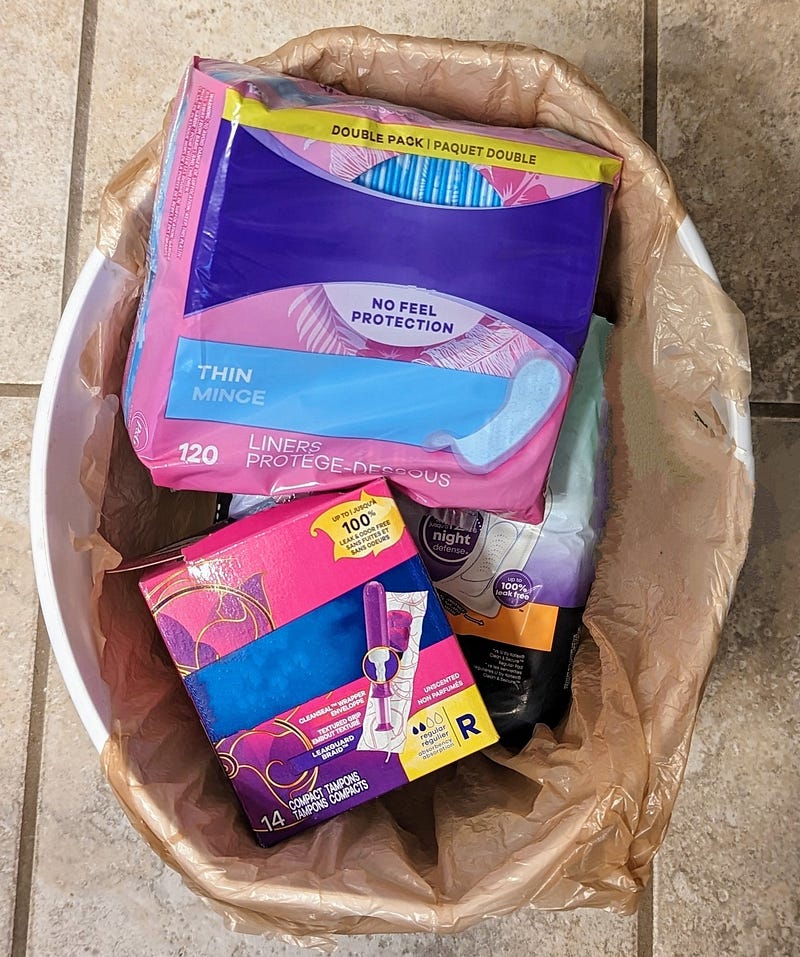
Thanks to many years of childhood abuse, I remember almost nothing about my youth until I hit around fifteen or sixteen years old.
There are flashes of memory, usually bad, and usually with some significant emotion like terror or rage or sadness attached, but everything else is a complete blank — except my menstrual cycle. That, I recall, just fine.
Getting my period falls smack dab into the category of terrible things I remember about my childhood.
My parents are both medical professionals, so they never kept menstruation a secret from their daughters, like many parents in conservative religious circles do, only shoving a pad in their child’s general direction after the first flow comes.
Not mine. I suppose I was lucky in that regard since my mother had “the talk” with me a couple of years before I got my first period. She told me something to the effect of I’d bleed for a few days a month, and it might be inconvenient, but it otherwise wouldn’t be that much of a detriment to my life.
How I wish she’d been right.
More than an inconvenience
What actually happened when I got my first period was my quality of life took a nosedive and never recovered.
I don’t remember the first one specifically. What I do remember is spending month after month feeling like life wasn’t worth living and wishing my mother had aborted me the second she found out I would be born a girl.
My cycle ruined three out of four weeks of every month. The week I was ovulating, I was so manic that I was out of control. I couldn’t sleep. I couldn’t stop eating. I would scream-talk and laugh hysterically or fly into a fury at the slightest things, and I often found myself unable to calm down or focus my thoughts enough to channel all the raw energy coursing through me. I just ran in circles for a few days until I crashed.
I spent the week before my period planning my suicide. Many days of that week, I found myself too depressed to get out of bed and thinking about how easy it would be to go down to my parents’ bedroom and shoot myself with one of my dad’s many guns.
Of course, the week of my period, I couldn’t get more than five feet from a bathroom because I was bleeding through a tampon an hour for days on end. Pads were never comfortable. Tampons were never comfortable. Anything I inserted into my vagina, I could feel wiggling around. And anything I wore outside it felt like sitting in a wet diaper.
Even worse, my cycle was hard on me emotionally, both as a nonbinary and autistic person — even though I didn’t know either of those things about myself back then.
I had no idea why, but all I did know was that every drop of menstrual blood made me feel that I belonged to my reproductive organs instead of the other way around. Every clot and cramp reminded me my body was constantly scheming to do something that would profoundly traumatize me if it ever succeeded. Every tiny fluctuation in hormones was like a huge change in drug regimens, shocking my unidentified autistic nervous system to its core.
I didn’t just have a period. I was constantly reminded that I was born in a body that wasn’t quite wrong but wasn’t quite right for me, either. I had a never-ending chemical roller coaster that left me having prolonged meltdowns and deep burnouts, to the point I could hardly function.
Thus, the only time I got to enjoy my life was the week my period ended. Once that week was over, I got back on the merry-go-round of misery again. I felt like little more than a prisoner in my own body, a slave to an unwanted reproductive system that, even at my young age, I already knew I was never going to use.
By the time I was in my late teens, I’d had enough.
Artificial menopause
Nobody told me having a period was optional until I was almost an adult. By that point, I’d already asked for and been denied a hysterectomy.
My gyno at the time gave me the tired old spiel about how I was sure to change my mind when I met some male dreamboat who swept me off my feet and “convinced” me that I’d never really wanted anything more than a bunch of bouncing babies all along.
Though that never happened, she was right about one thing: it’s a bad idea to just rip out your uterus if you don’t have to, as the uterus is part of a network of organs and ligaments that help hold everything around it in place.
When my doc told me she would not be removing a healthy sixteen-year-old uterus, I asked her if there was anything else to be done to stop my periods. So began my journey into the world of birth control.
I was not sexually active yet, nor would I be for another year or two, but I was willing to put up with just about anything to not have a period anymore.
Stopping my period was actually surprisingly simple, if you discount the fact that I had to have a battle royale with my family’s Catholic health insurance provider every six months to get the treatments covered, but that’s a story for another time.
My parents were as tired of dealing with my menstrual cycle as I was, so they were actually shockingly on board with my decision to go on birth control (they wouldn’t find out I became sexually active shortly thereafter until years later). Soon enough, my mother and I walked out of the pharmacy with a three-month supply of oral contraceptives.
Suppressing your period is easy with the pill. All you have to do is skip the placebo pills every month, and you experience no withdrawal bleeding, which is not even a real period anyhow. Within three months of starting contraceptives, I was free.
Sweet freedom
Though I went through several different oral contraceptives, which gave me terrible migraines, and the Depo shot, which made me gain a ton of weight, before finally landing on the hormonal IUD to stop my periods, I have not bled since I was a teenager.
No matter the side effects of whatever birth control I was on, they were worth the trouble if they meant I escaped indentured servitude to my own reproductive organs.
The more even monthly distribution of hormones in my blood helped my mood stabilize, and I no longer swung between uncontrolled ovulation euphoria one week and PMS suicidal ideation the next.
Better still, I never had another vacation or event or moment of my life ruined by blood running down to my ankles. I never missed another day of school because of period-related symptoms.
I took my life back the day I stopped my period, and I don’t care what I have to do, I will never, ever bleed again.
I finally got sterilized after years of trying, but I’ve kept my IUD in place regardless. The salpingectomy was to eliminate the possibility of an unwanted pregnancy resulting from birth control failure, but my IUD has another job. It lets me preserve my quality of life.
I’ve never been shy about the fact that I suppress my period. In fact, I’ve encouraged quite a few of my friends to talk to their doctors about stopping theirs for the very same reasons I stopped mine.
Like me, they too had never been told that having a period is optional. Many of them also subscribed to the myth that having a period is somehow healthy because it “cleans” out the body (it doesn’t) or it’s “necessary” for daily life (it’s not). The only thing it’s necessary for is reproduction, and if you’re not trying to get pregnant, you don’t have to menstruate.
I think of suppressing my period like I would think of treating any chronic illness. If chronic migraine or arthritis or asthma is messing up someone’s life, they stick to an often-lifelong treatment regimen so that they can actually live instead of just existing.
As an agender person, I view my female reproductive system as just an unfortunate hereditary disease I was born with and have to treat with medicine. I’ve surgically disabled its primary function and continue to use low-dose hormones to keep its processes in check.
One day, when I’m old enough not to have to worry about my endometrium growing back, I’ll get a uterine ablation. Then, I’ll no longer need an IUD to have no period.
To me, there’s nothing inherently feminist or antifeminist about this treatment plan. It’s just a fact of life. However, there are a lot of people who would disagree with me, and it seems the period positivity brigade is among them.
Period positivity
Don’t get me wrong. I’m a huge fan of destigmatizing periods. I talk about bleeding and tampons and uterine lining in front of men, and heaven help them if they try to censor me.
Their uncalled-for and inappropriate discomfort does not get to shut women up any longer. They are not the sole arbiters of acceptable conversation topics.
If women want to free-bleed or take menstrual leave or paint fucking murals on the sides of buildings with the shed contents of their uteruses, they can go right ahead for all I care.
That being said, there seems to be this subset of the period positivity movement that thinks women like me are somehow taking period stigma to the ultimate extreme.
Over the years, I’ve had a couple of different conversations with other feminists who’ve expressed something akin to horror when they found out I suppress my “natural feminine power.” Certain online groups and individuals also purport to promote feminism by demonizing hormonal birth control.
Some people might view menstruation as a source of natural female power, but plenty of us don’t. In fact, so many of us don’t that we are suppressing our periods in sufficiently high numbers to put a dent in the sale of period hygiene products.
However, instead of focusing on the fact that we now have the ability to use modern medicine to take control of our lives, some in the period positivity movement argue we’re just exacerbating period shame.
According to their logic, since society wants women to pretend we don’t have periods out of shame that we do, we should flaunt our periods with glee. We should carry our pads and tampons openly to the bathroom. We should demand paid menstrual leave. We should proudly free-bleed at every opportunity. Anything less is a perpetuating period shame.
Again, I unequivocally agree with divorcing menstruation from stigma and shame. However, I didn’t suppress my period because I was ashamed of it. I suppressed it because it was literally ruining my life. Many in the period positivity movement seem to forget that for some of us, being embarrassed about the sound of opening a tampon or pad in the bathroom stall is the least of our worries.
We would be thrilled if our periods were mildly inconvenient. We would happily free-bleed if it wouldn’t give us anemia. We would gladly wear our menstrual cups around our necks if the thing that required us to need said menstrual cups weren’t controlling our entire lives — but it is, so we don’t have the luxury of period positivity. We have to choose between having periods or having lives.
I’d argue that unapologetically treating my period symptoms is a lot more feminist than suffering in silence, as the patriarchy would have me do. I don’t have any positive feelings towards my period, but I definitely get the warm fuzzies when I remember I don’t have to have one.
In that way, I am period positive, I suppose. I’m positive I’m never going to have a period again if it means I have to suck my uterus out of my own body with a handheld Dyson. If that makes me a bad feminist because I’m perpetuating period shame, then I guess I’m a bad feminist. I don’t care. I want a life.
|
Disclaimer: I am not a medical professional, and nothing in this article is intended as medical advice. If you wish to treat painful or burdensome periods, talk to your doctor or another qualified medical provider.


