
I Reclaimed My Time and Energy — by Quitting Instagram
“I’m not addicted to Instagram.”
Instagram took a lot of my time and energy. If you have this app, chances are, it takes a lot of yours as well.
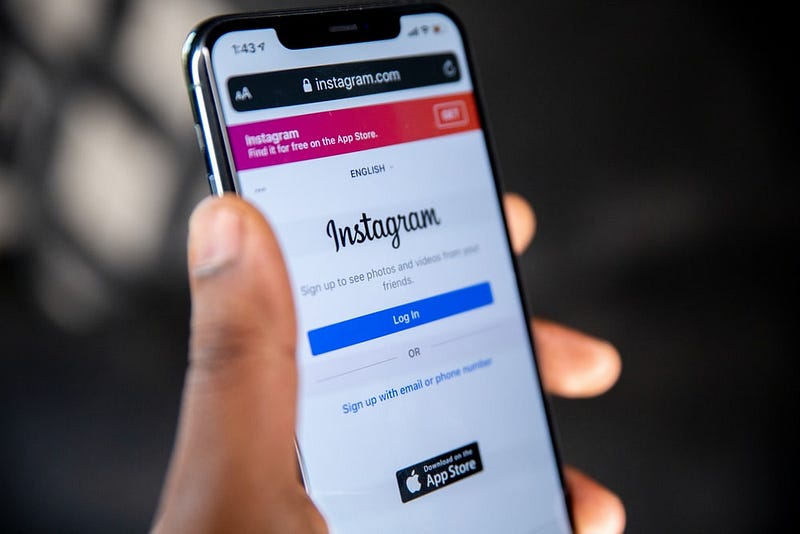
My toxic relationship with Instagram
When I was on Instagram, I found that I wasn’t comparing myself to others. But, I posted things that would make others envious of me.
I would spend 45 minutes to 1 hour to pick the “best” photo. Only to get the instant dopamine (the same hormone you get from eating delicious food) boosts from all the “likes”. Over time, this makes you want to do it over and over again. If you didn’t know, that’s also how addiction works.
I remember deleting a photo in the first minute of posting, and I didn’t get the number of likes I was expecting. I thought, “Oh, it’s probably not the best time to post this right now — let me repost it when people are more active.” Of course, at the time, I didn’t think much of it. I only care about getting “likes”.
When I was not posting photos, I was mindlessly scrolling and judging others. I kept thinking, “I’m better than this or that person.” Somehow that motivated me to reach my goals — travelling to many countries, spending money on activities, and going to fancy restaurants.
The denial that I wasn’t addicted
My partner pointed out that I was addicted to Instagram. I ignored him even though it affected us in some ways.
When we went on trips, I would have about 50 photos for each post that I would’ve posted. Not only that took so much time, but the process of taking the photo was also problematic. I’d be so upset at my partner for not getting the perfect angle I had in my mind. It caused us to fight a lot. For what? For the number of likes? To show people, “Look what I have and what I’m doing.” My intentions were not pure. Again, at the time, I didn’t realize that.
When it was time to choose the photo, I’d spend an hour or two picking the best one. Sometimes, I’ll delay it. By the time the trip finished, we would’ve taken 1000 photos. I would only post 7 of it. I remember saying, “What’s the point of posting it now? The time passed.”
This was a cycle. I tried to limit the time I would take the photo, choose the photo, and post it. It didn’t work.
Besides taking the choosing the “perfect” photo and captions, other unhealthy behaviours I had were:
- checking the app right after I wake up
- checking the app right before I sleep
- checking the app pretty much every time I got bored
- buying the unnecessary amount of shoes and clothes to look good on it
I knew that this wasn’t a way to live life.
The attempt to “fix” our relationship
As you can see, I spent a lot of time and energy on Instagram. Two of the most important resources I could never get back. Now, these are the two things I protect the most. I knew something had to change, so I tried to do fix that.
I tried to reduce my consumption on Instagram by:
- signing on during much later in the day
- signing off earlier in the day
- deleting the app for a few weeks, then reinstalling it, especially if I had a trip that was coming
- not using my phone first thing in the morning
- not having the app shortcut on my home screen
But, these were all temporary fixes. My brain figured a different way different habits that I would end up using just as much.
The Breaking Point
In August 2020, I bought an online course to become an online coach on Instagram.
I was learning marketing in a way I disagreed with. For example, the coach taught her students to use “pain points” to target my audience. I understood this from a marketing perspective. Yet, I know that deep down, it meant “use their weaknesses against them”.
My goal was to help others. I truly believe there’s a better way to reach my target audience and help them without using their pains.
The coach kept telling us to use Call To Actions (CTAs) so that the user would take action from that specific post. She said that every single post, story, or activity I was doing on Instagram needed to have the user do something. Otherwise, “I’d be wasting my time.”
It made me feel like I needed to control my followers. It didn’t feel right.
We were taught to use graphics and bright colours to grab people’s attention. I found out that there’s a psychology behind colours.
I do not doubt that these strategies work. After all, I had bought the course. She used all these strategies and got me and other thousands of students to purchase the course.
I have a minor in Psychology. Throughout the course, I couldn’t help but feel that psychology was being used to influence others. I thought that was the only way to succeed on Instagram. I just knew that I couldn’t do that, so I stopped learning from that course.
The withdrawal symptoms
Around October 2020, my negative feelings for Instagram were starting to grow. My goal for building a personal brand on Instagram made it worse. I felt that I didn’t have a healthy relationship with it. I decided to pull the trigger and delete the app.
Three days later, I decided to reinstall the app because my friend tagged me on a story, and I wanted to repost it. On October 27, 2020, I deleted the app again. I told myself that I’d be more serious about it this time.
In the first few days, whenever I used my phone, my thumb automatically makes the motion to find the app. Except the app wasn’t there anymore. This was such a significant realization about how unconsciously addicted I was.
This also happened to me when I decided to delete the Facebook app off my phone. I had an automatic habit of opening up a browser (either on my phone and laptop) typing fb.com. The scary part is that I had no intention of going there in the first place.
I had no intention to quit Instagram. That day that I deleted the app, I did it out of spite. I only wanted to take a break from it.
I’ve been off Instagram for about three months now, and I’ve never felt freer without it.
After a few days, my brain and hand stopped making a habit of going on to the app that was no longer there. Because I only used my phone for Instagram for 90% of the time, my phone usage also reduced significantly.
I remember the moment I realized that I no longer had to check my phone out of habit. It felt like I had the whole world to explore. I was excited to learn and discover who I was without the app and what else I could learn in the real world.
Without Instagram, I feel calmer, freer, and happier
I have more time for things I want to do.
I didn’t have Instagram anymore. Every day, I kept asking myself, what do I want to do today?
I made a list of things that I liked doing or would love to learn to do. You know how you have those things in your head that “I’m going to do this one day. When I have more time”. Guess what, now I have so much free time.
I found myself here on Medium because one of the things I’ve always wanted to learn was how to blog. Now, I also have a personal blog.
“I don’t have time,” is no longer in my vocabulary. I have all the time in the world. It was just a matter of when I would do that specific task.
A quick tip: Make a list of things you’ve always wanted to do. Or have always wanted to learn about. You’ll be surprised by how much you could learn if you get off social media.
I developed healthy habits.
I considered myself being someone who had healthy habits. I quickly realized that I was wrong.
I wasn’t a fan of doing early routines or those habits that “successful” people do — waking up at 5 am, reading a book, working out every day, etc. I couldn’t bring myself to.
But I found myself slowly making small habits that would work for me and develop my routine:
- Drinking water first thing in the morning
- Doing morning yoga practice
- Writing my thoughts (aka journalling) throughout the day
- Reading throughout the day
- Dance to latin music to boost my energy
- Winding my brain down (aka meditating) before going to sleep
After a while, these little things made me calmer and more present in my life. I didn’t plan on “having a routine”. But, because I had more free time, I came up with habits that I wanted to have.
I will say that I have more inner peace because of these habits. Sure, I still don’t know what I’m going to do with my life, but I also know that I’ll be okay no matter what.
A quick tip: If you want to build a habit, start with one small habit. For example, have a glass of water by your nightstand. Upon waking up, instead of reaching for your phone, drink the water. Soon enough, you can develop other healthy habits.
I can filter the information I receive online & offline.
Did you know that we consume about 10 million bits of information per second? Can you imagine how much data you are consuming through Instagram? I imagine it’s more than that.
Not only was I consuming so much information, but it was also about things I don’t need to know nor care about.
From watching the Netflix documentary called Social Dilemma, we know that Instagram’s main purpose is to keep you on the app. Just like any app. The longer you are on the app, the more chances you will buy the products and services in it. In the end, it’s all because of money.
“If you are not paying for the product, you are the product.”
— The Social Dilemma
I also find that I am more aware of what I consume online and offline. If I am reading any book, news, article, having conversations, or watching videos, I am quickly able to ask myself:
- Do I need this information? Or am I being fed information that I don’t need or want?
- How will this benefit me in any way?
If I’m not satisfied with the answers, it’s a big red flag that I need to move on.
Again, because I can’t get my time and energy back, I want to be intentional about using them.
I’m not saying that I don’t have fun nor I don’t want to be entertained. On the contrary, I can watch Netflix or YouTube videos without feeling guilty. I do them because I want to. Not because I don’t have self-control or self-discipline.
A quick tip: Pay attention to your thoughts and feelings when scrolling through social media. If you feel sad, disappointed, or jealous while using the app, it might be a good idea to reflect on your relationship with it.
Will I go back on Instagram?
I admire people who use social media platforms to sells products and services to help others legitimately. After all, we need platforms to reach the people who need our help. I aspire to be one of those people.
In the course I took, I came across this girl who was learning how to become a digital wellness coach. She quit Instagram for a year. Now, she helps others have a healthier relationship with social media. I wasn’t doing something like that, which is one of the reasons I had to quit. If I were to go back, I want to use it for a positive change.
Medium is also a social media platform. I have an app, and I find that I am slowly developing negative habits I did with Instagram. But this time, I am more aware of it, and I can stop it before it becomes a replacement for Instagram.
Social media is a potent tool. I don’t have a problem with the tool. A knife is a tool, and I use it for cooking. What my problem is that when the tool is deliberately used against the users, especially without their awareness.
Instagram took a lot of my time and energy. But I know I’m more powerful than the app. And so are you.


