
I Quit Social Media for 5 Days
It is the best thing I could have done to handle my stress.
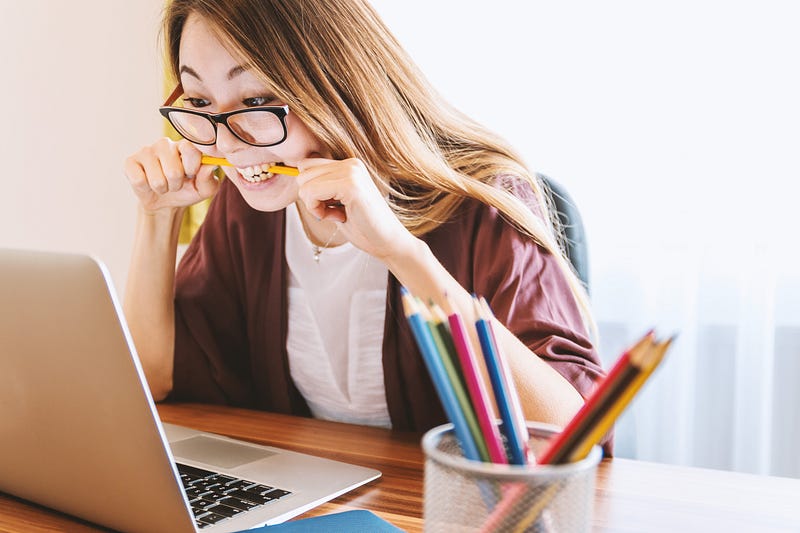
I have left social media. For 5 days. It was a spontaneous decision, and I persevered.
Yesterday my time out ended. When I reopened social media apps like Instagram, VSCO & Snapchat, I realized that I really didn’t miss anything.
It did me good. Very good, and not only did I have more time — I also felt more liberated, more self-centered, and more satisfied. But how can that be? What has social media done to me? Here are a few insights that I have gathered.
Social Media is stress
Stress is defined as this: An increased physical / mental tension or strain.
Social media is exactly that. Whether we like it or not, we are not only consumers — we always take part in what is presented to us digitally.
We cannot control the increased stress — we cannot switch off our thoughts. When I clicked through Instagram, I went to new profiles, read comments, watched stories, I fed myself with content.
Content that my head has to process somehow — content that seems like reality but isn’t. Nevertheless, we can’t prevent new thoughts from constantly popping up when we go through social media.
We are people, not machines; participants, not consumers.
Since we cannot suppress these thoughts, they are a burden — stress. That’s exactly how I felt.
But all these contents are so unimportant for our own lives. I was constantly confronted with the question of who is associated with whom, who makes how their money, what these people do, and above all, whether they are happy at all.
Humans are surprisingly irrational. We always compare almost everything — our prosperity with other people's prosperity, our relationship, and how happy we are.
Our perception always arises from contrast. That is the trap — if you occupy yourself less with other people, find more to yourself, you will also find a higher satisfaction in who and what you are. This is how it happened to me.
I don’t want to compare myself with other people. I shouldn’t be interested in other people’s lives as presented on social media.
The freedom to see what all other people do is also the freedom to choose from many possibilities. But that is not necessarily positive — it is not without reason that especially trends on platforms like Instagram or TikTok are so fast-moving.
Ideas are adapted, exploited, and sorted out in a flash.
Insight into the lives of other people often leaves us with nothing more than questioning our own lives.
Social Media and mental health
Especially if you are psychological, let’s say, ailing, social media is probably not a good way for you to deal with it.
I have noticed this with myself. I can be very unstable emotionally. What you inevitably see on social media is content that disturbs you.
No matter if it is sexual or violent content — sometimes it is just the emotions conveyed. Social media even shows what we find repulsive in a positive light — nobody shows the shadow sides of his life, but all show what can be exploited for building a good looking Instagram feed.
Even if the reality behind it is different.
This parallel world, charged by the emotions that are conveyed to us, is also disturbing. Something reveals itself to us that we cannot comprehend — a burden and critical questioning of our own existence.
For me, browsing through social media, especially clicking through other people's different profiles, was like a search. A search for happiness, meaning, and other ideals, which are mainly conveyed on the internet.
I often clicked my way from profile to profile and wanted to answer the questions I had — questions that came up when I saw how they presented themselves. Are they really that happy? How do they do it? How do these people behave in real life?
Big stress in social media is to find answers and explanations to what you see. Anything we can’t explain is a stress test for our values and may leave us in complete dissatisfaction.
I have learned that I am happiest when I am really pursuing what blossoms into a meaningful goal. It does not help me compare myself with other people if they have a completely different mission anyway — but we compare ourselves by force.
Especially for people with low self-esteem, social media can be dangerous. Like everyone else, they compare themselves with others but find problems in themselves that they normally wouldn’t even see.
It gives the impression that happiness depends on one’s own achievement. No matter whether it is an achievement in relationships, sports, or work.
Someone with low self-esteem can get into a situation where he makes his self-esteem dependent on his achievement — because he sees these achievements as a way to happiness and makes himself dependent on them based on the impressions he has.
There is also a scientific suspicion that social media make us susceptible to mental illness. In several studies, a correlation between increased social media use and illness of depression has been found.¹
Social media is not the reality
Everyone should be aware that social media does not present reality. Nevertheless, we use it. We say we have all understood that it is not reality.
But still many of us cannot differentiate. Humans are insanely prone to distorted perception and fallacies. And thinking about the truth content of contributions on the Internet is extremely time-consuming.
It is impossible to get a glimpse of what the person’s life actually looks like behind every beautiful and happy vacation picture on social media. Nevertheless, there are images, supposed to be reality, which actually have no relation to it. Everything we see, we have to evaluate somehow — and often what we see appeals to us, but instead of directly establishing a healthy distance to fiction, we have just found new dreams and ideals.
This is what happened to me — I had the feeling more and more that on Instagram, I only see the good sides of people’s lives, some of whom I don’t even know anymore.
The self-dramatization of some people has become a profession for them. Sadly, you could accuse them of not showing enough reality , but the truth is that we are the consumers who love to look up to them, compare ourselves, and let them dictate our dreams.
In Social Media, there are not only friends.
Social media praises itself by making it easier for people around the world to stay in touch. And that is true.
But I think another analogy is more accurate. Social media is much more like a door that closes behind us when we walk through it.
In the past, no one would have called all their friends once a day to ask how they were doing. That would be far too time-consuming and inefficient; after all, there’s no guarantee that everyone has something to say.
Instead, everyone can tell stories today if they feel like it — as much as they want. And everyone who likes to listen can listen.
But listening, which would have been far too time-consuming in those days, has become easy thanks to accessibility to the extent that it is possible today. And that is exactly why we feel obliged.
Social media has defined a standard that actually has no meaningful reference to reality.
The mere fact that we consider what we see to be reality is a problem and that we behave as if it were reality, which we cannot refuse to participate in.
I have learned that what happens on social media, one way or another, does not have to have any influence on my life — the point where it overlaps is where we let what we see come into our life.
To prevent this, it can be useful to limit your own social media consumption. Surprised, I realized that my life is still the same as before — my friends are the same. In fact, I don’t miss anything important.
How to escape social media
I hope I could show you why I avoided social media. After this experience, I will continue to use it only to a limited extent — only to express myself, but my interest in getting caught up in the maelstrom is very low.
Here are a few tips on how to escape the bad sides of social media:
- Leave social media — you don’t have to leave all of them, but you can leave some apps like Instagram or Facebook.
- You can also leave social media only temporarily. For example, for one week. You might then realize that you haven’t missed anything, and like me, you might even feel a bit listless afterward. Maybe your spell is broken now — but more important is to realize what a withdrawal has brought you and that you have endured it.
- Unfollow people in social media. There are so many people we are connected to on the internet, even though we don’t even know them personally anymore.
- Use social media with restrictions. This can mean that you set yourself a time limit or that only certain app functions are used. At Instagram, I strongly recommend not to use the explore page — it is like an undertow and will pull you deeper and deeper into the internet world.
- Remember that everything you see doesn’t have to affect your life. Social media has put me under pressure. I have compared myself with other people, I have been envious to some extent — but all this does not influence my life. I should still have the same dreams, goals, interests, and ideas.
Hopefully, I could successfully explain the reasons for my withdrawal. Thank you for reading — I wish you a more conscious approach to the media.
Join my mailing list to stay in touch
Sources
[1]: Does Social Media Cause Depression? https://childmind.org/article/is-social-media-use-causing-depression/


