
I Meditated for 7017 Minutes in 604 Guided In-App Meditation Sessions. Here’s What I’ve Learned.
Is meditating life-changing?
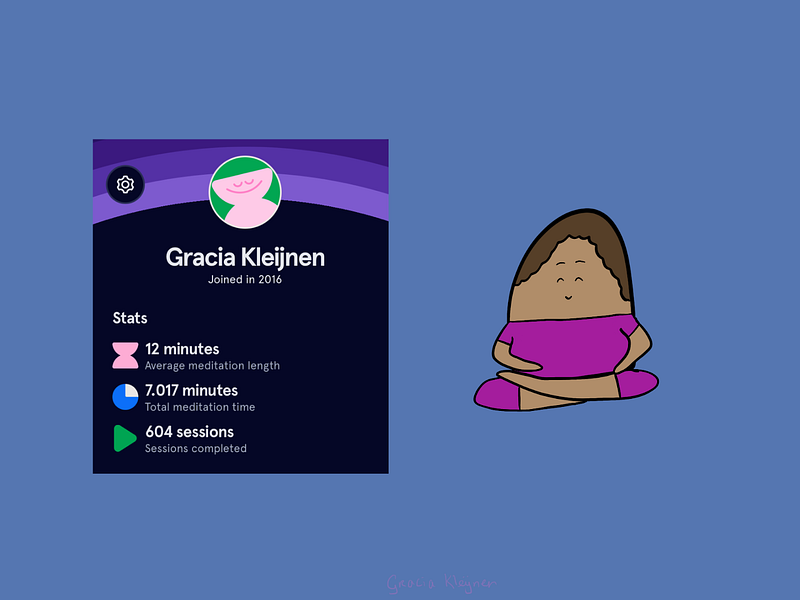
“Meditation? Pfft. Keep that away from me. That’s woo-woo crap for hippies.”
This was my sentiment. For years.
My past self would mock me, had she known I meditate regularly now.
Why I started meditation
I used to experience extreme meltdowns whenever I hit a mental roadblock, then freak out and lose all capabilities to think clearly. This lasted for hours, sometimes for days. It happened when, for example, hunting for a job, interacting with other humans in groups, or learning a new skill.
I’m also time-blind, so over-scheduling and -planning happens — often. The to-do list keeps growing, as does my anxiety.
But you can only ignore the same issues for so long.
The fact is, my emotional regulation skills showed deficits. I had enough of feeling stuck in spirals. Meditation provided relief before, so I gave it another try.
Which app I chose, and why
I had used Headspace in the past, already had an account, and was familiar with the interface, so I went with them.
Content-wise, there are sleepcasts, focus music, and daily videos about mindfulness-related topics.
The 10 free introductory sessions proved sufficient. I endlessly repeated these, until I felt a need to upgrade, and further explore content in the app.
Expect these challenges when you first start meditation
Meditation requires you to sit still with your thoughts for a prolonged time.
It’s uncomfortable and frustrating to sit still when you’re not used to this. Your heart rate may increase. You’ll likely feel impatient and want to throw the phone against the wall because the sessions take “too long.”
Random thoughts will arise. You‘ll want to act on or react to them. Instead, you let them pass by — from a distance. This can be hard at first.
During my first 30-ish sessions, I’d close my eyes and start a full body scan from head to toe. I didn’t even scan past my head yet, or I already wanted to scream and call it a day. I also broke off sessions more than once due to my inner restlessness reaching a tipping point.
The positive effects meditation can have
I sit cross-legged on my couch opposite the empty wall. I take deep breaths, close my eyes, and allow myself to just be.
It can feel like wasting time at first. But you’re not.
You’re giving your senses a break from the constant overstimulation of your phone notifications, flashy ads, and the outside world. This feels like a relief. No stimuli tempt the brain back into the squirrelling status quo.
With time and practice, you don’t flutter away on each intrusive thought anymore.
You stay calm, acknowledge whatever is there, and bring your attention back to the breath and the body, without the need to take action on any random thought.
No rushing towards the next thing, or worrying about what’s next. Just 10–20 minutes of stillness.
How does meditating feel after 7017 minutes?
The friction of sitting still with my thoughts has decreased.
Sometimes I feel like I don’t “have time” to meditate, that I’m “just too busy,” or should be productive every second and am not entitled to a 20-minute break.
Everyone has 10 or 20 minutes of spare time in their day. When not, I’m bullshitting myself because I scrolled one too many cat videos. And not once have I regretted my decision to meditate.
Afterward, I felt better, every single time.
The moment I sit down, my mind stops running in overdrive.
It knows it’s going to get some headspace.
Final thoughts: Is mediation really life-changing?
Yes and no. Life-changing in terms of it improving my life, definitely. But not in the way gurus or cult-like supporters sell it to be.
It’s not a be-all and end-all MUST-have that helps you reach nirvana. It’s just A tool you can use to:
- Ground yourself
- Soothe the mind
- Reduce stress
- Become more present in the current moment
- Feel more in tune with your body.
When I feel overwhelmed, I know I can always resort to a guided meditation session to calm me down. And when I don’t feel like meditating, I’ll resort to a different tool, such as writing, or channeling and releasing emotions through movement.
Over time, meditation has improved my ability to emotionally regulate, and improve my quality of life. Through my practice, I’ve learned that all thoughts will pass, and I don’t need to do something with or worry about every single one anymore.
At the end of the day, meditation is one of the many tools in my Self-Soothing Toolkit. Meditation can be part of yours too, if you find that it suits you.

Get unlimited access to my writing and that of thousands of other writers for $5. If you sign up via the link, I’ll receive a portion of your subscription fee, which would help me pay the bills!