
Photography
I May be Tiny, but I am Mighty
The ferocious Allen’s Hummingbird
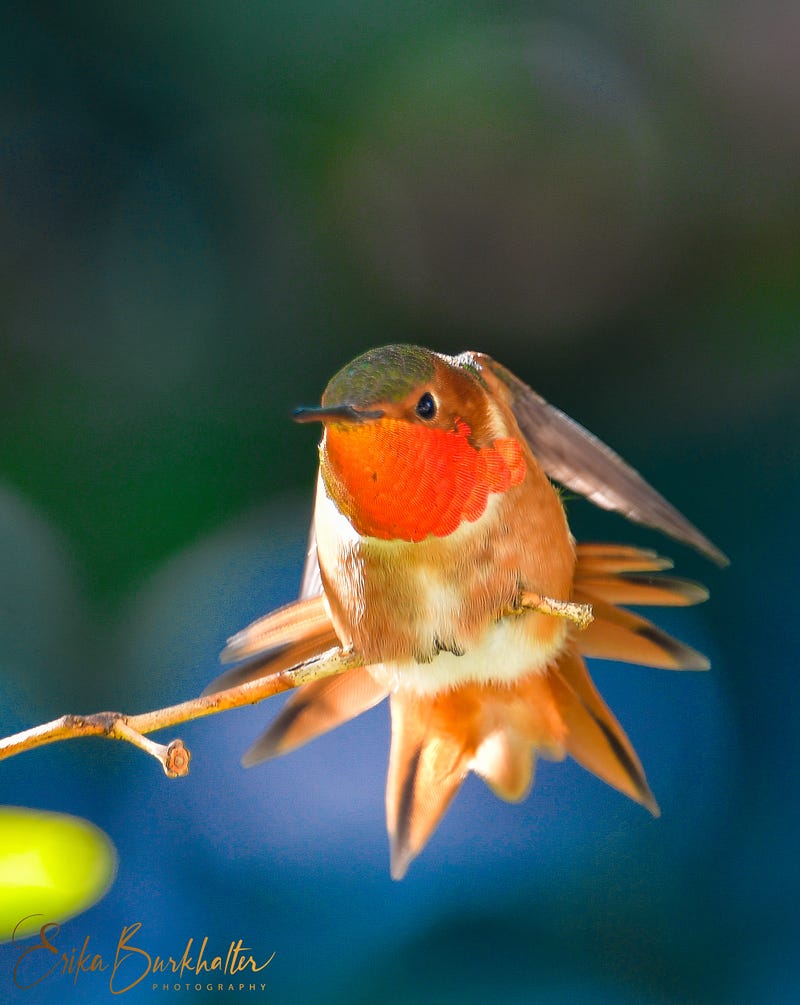
I’ve named this little Allen’s Hummingbird “Big Red,” despite the fact that he only weighs in at 2–4 grams. He is ferocious while guarding my Southern California backyard against rival males. He spends most of his day perched atop a lone twig on the orange tree, his little head swiveling back and forth, eyes tuned for any sudden movement.
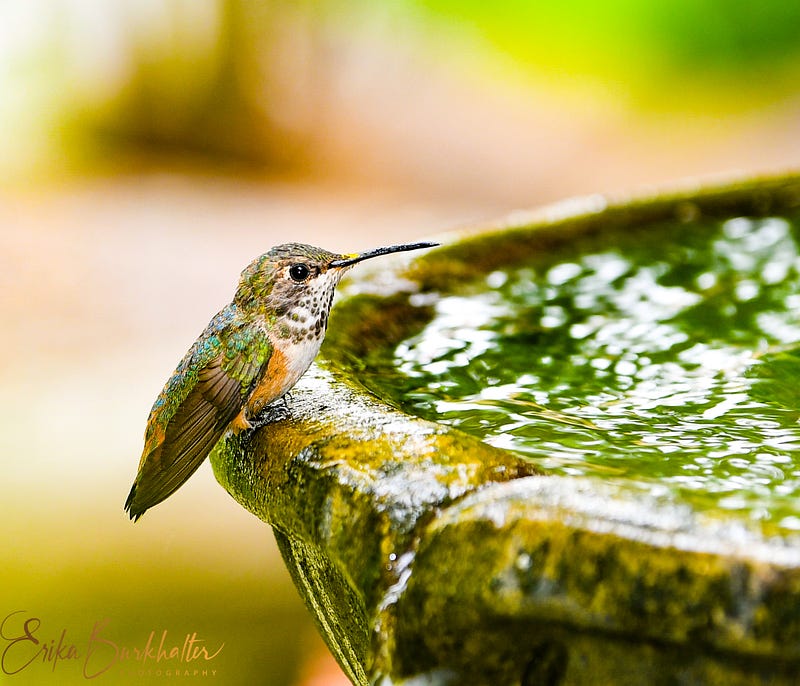
His perch of choice is strategic. Hummingbirds love to bathe and he is in close proximity to the fountain. Of course, he does allow the females access to the sacred waters. The females do not have the full red gorget on their necks, however they do have a little bit of coppery coloring around their eyes and can have a small splotch of red at their throats.
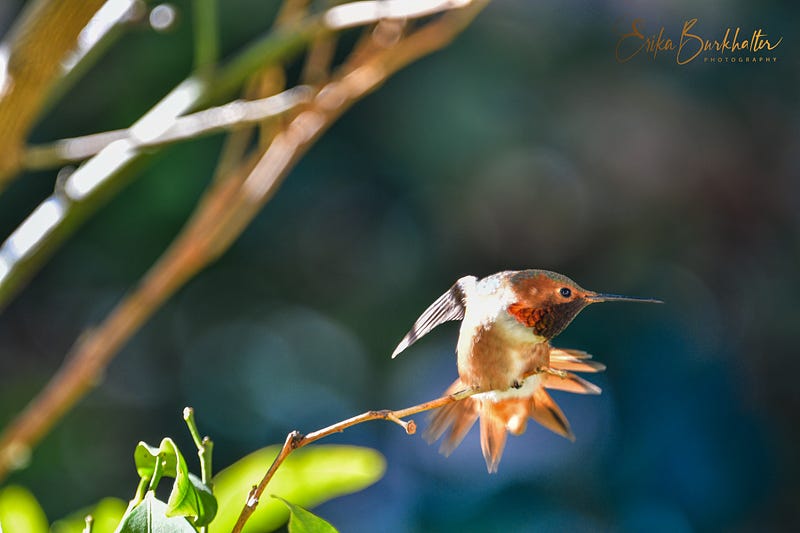
But can you imagine if you were this male Rufous Hummingbird (in the background) facing a full-on assault by the approaching Big Red, wouldn’t you have a little terror in your heart?
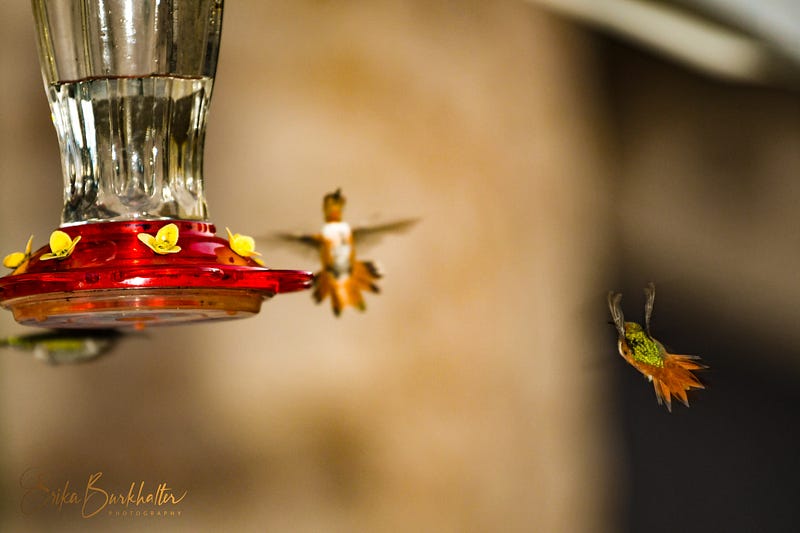
Of course, there is some strategy involved in the ambushes. Once Big Red takes to the skies in chase of a rival, the fountain and the feeder are left unguarded for a little while, during which time a myriad of other hummers dart in for their turn. It happens over and over again, all day long.
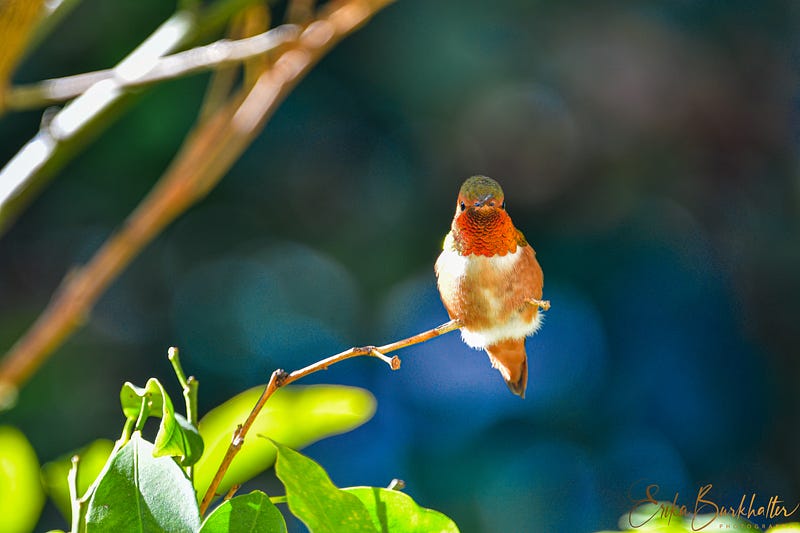
Although hummingbirds are known for their brilliant coloring, they owe their shimmer not to pigmentation, but to tiny air pockets in their feathers. Look at the difference in the following two photos. In the first one, Big Red is facing into the light and glowing like a beacon of brightness. In the next one though, his throat looks much darker.
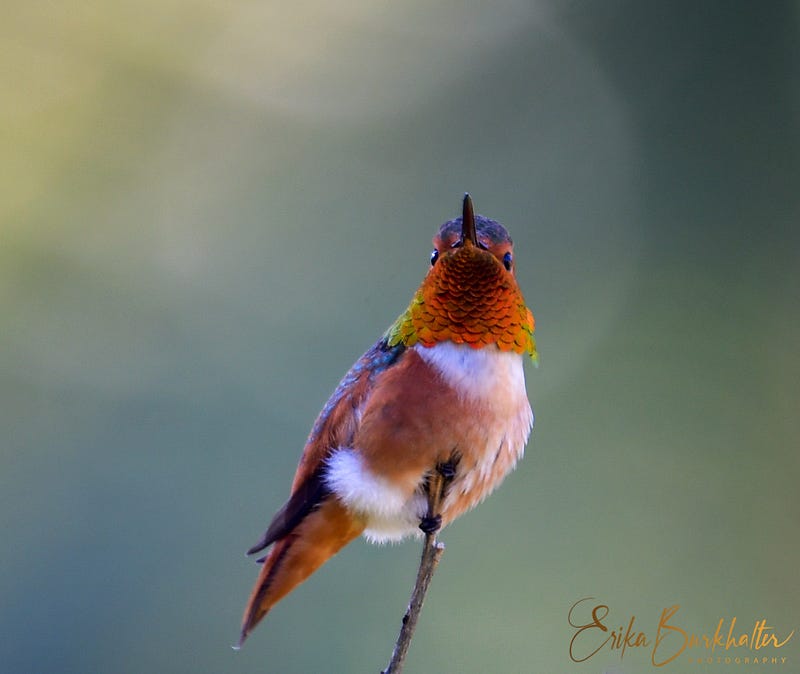
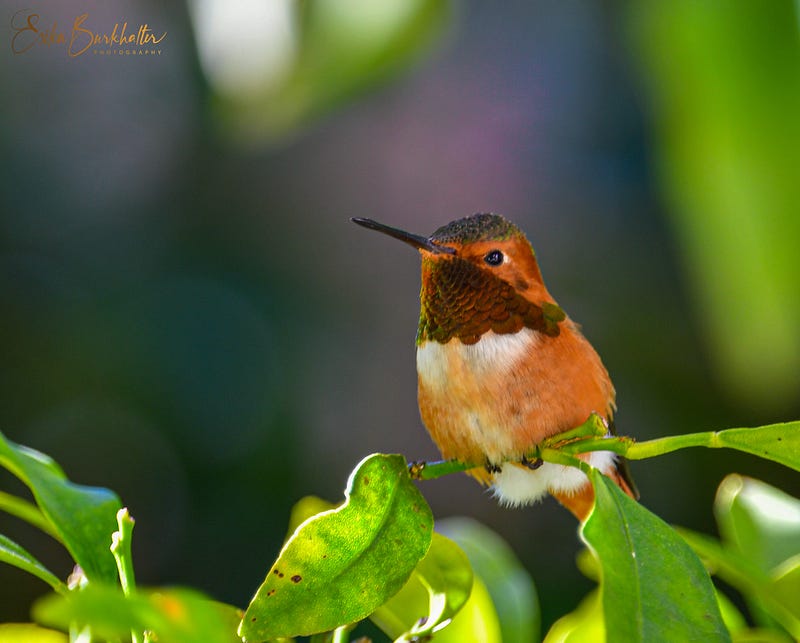
This iridescence is similar to what gives soap bubbles, oil slicks, and some seashells their rainbow glow and it is due to the presence of structures called melanosomes, which are so tiny that 100 million of them can fit on a single hummingbird feather.
A flock of hummingbirds is known as a glittering, a shimmer, a bouquet, a hover, or a tune — all very fitting names for a group of these glimmery, chatty, little birds.
Interestingly, hummingbirds have no sense of smell. But they are attracted to red and orange, so planting things like salvia or honeysuckle near their feeders helps to attract them.
To drink their sugar water or flower nectar, they move their tiny tongues in and out as fast as thirteen times a second. They can eat up to twice their body weight in a day.
Please never use red dye in their food. It can cause throat cancer. Also, never use organic sugar, which is processed with molasses (which they cannot tolerate), when making their nectar. A simple solution of sugar to water in a 1:4 proportion is best.
If you watch a hummingbird at twilight, the sun setting in the distance, you might be able to see the insects, which they dart after, illuminated in the “golden hour.” One of my husband’s and my favorite evening activities is to pour a glass of wine, perch up in our little wicker chairs on the balcony, and watch the frenzy at the feeders. The sun always slips behind a certain pine, sending a finger of light through the pinkening air. And, in that glow, we can see the cloud of bugs that the hummers are after. The birds will flit from the feeder to the swarm of bugs and back again so fast you can hardly keep track of where they are.
The flash of their iridescence, the hum of their tiny wings moving so fast that they look like the glow of an angel, and their squeals of delight as they dive through the air, as well as their acrobatic flying skills, always brings a little tickle of delight to my heart.
Erika Burkhalter is a yogi, neurophilosopher, cat-mom, photographer, and lover of travel and nature, spreading her love and amazement for Mother Earth’s glories, one photo, poem or story at a time. (MS Neuropsychology, MA Yoga Studies).
You might also enjoy:
Photos and story ©Erika Burkhalter. All rights reserved.


