
I Make 3-Figure Sales Monthly From My New Site— Here Is How I Do It
My site’s growth strategy, mindset, and tips to create content that hits Google’s front page.

A colossal 4.2 billion pages exist on the Internet today, yet we only see and browse less than 10% of them.
Why?
Around 90.63% of all web pages get zero organic visits from Google.
Content creators spend hours working on high-quality and helpful content for people, yet most of their web pages flop.
For someone new to SEO (search engine optimization), it’s challenging to understand why their content does not appear on Google.
However, there are certain things many content creators grasp and do wrong.
They create content for topics they believe people will like. They disregard competition and search intent.
I’ve been doing SEO for four years as a marketer and content writer.
I helped companies build their blogs from scratch, set up writers’ teams, conduct keyword research, and optimize content for rankings.
Years of experience helped me successfully launch my own niche website, where I share my SEO writing and blogging experience with people.
I am not here to advertise myself, though.
I am writing this post to share my website growth strategy and show you how you can slowly grow your website if that’s your goal.
My website growth strategy and why it works
It took me one year to focus on what worked.
I knew my site niche from the very beginning, but it was not enough to create well-performing content.
I wanted to create several website sections with dozens of articles that would help me achieve this:
Attract the target audience from search -> Share my “fluff-free” content -> Make people subscribe-> Sell my products and services.
I created five categories based on keyword and competitor research, but only one took off.
It’s about SEO writing.
I don’t write 90% of everything you’ll find online about SEO writing because it’s blah blah content.
Bloggers say what you should do but never back up their advice with data. Perhaps, that’s why many aspiring SEOs fail.
I share how I grew my blog with SEO and what I achieved.
Since my content is “to the point” and fluff-free, my readers trust me and buy my ebook on “How to write blog posts that hit Google’s first page.”
I’ve already made $450+ from selling my ebook. I keep making 3-figure ebook sales every month, working zero hours on it.
Despite having a full-time job, my website, with 34+ pages, is close to achieving 2,000 monthly visitors.
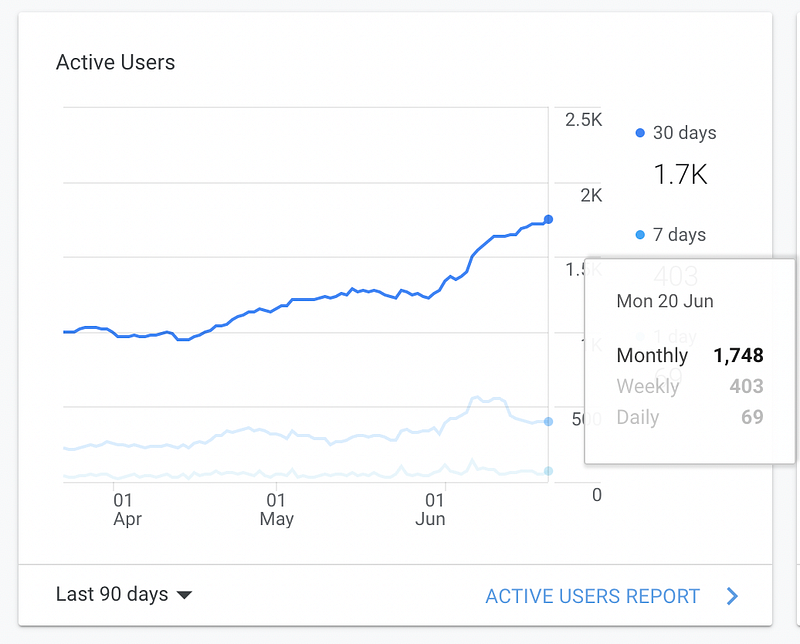
I realized that SEO writing is something that people
- struggle to understand how it works,
- want to know more about,
- are ready to pay.
That’s a perfect niche to explore.
Despite having so much free content about SEO, people cannot find value in it and are ready to pay to get it.
Regardless of how big and saturated your niche is, there must be sub-niches you can easily explore. Listen carefully to what people say and what problems they still encounter.
Alright, what other categories are low-hanging fruits?
As Tim Soulo once well-said:
“The primary goal […] is acquiring new customers. Treat your blog as a customer acquisition channel, not a traffic acquisition channel.”
So, I finally stopped caring about traffic and likes and focused on creating content that sells.
Therefore, I developed two more site categories:
1. Writing side hustles (primarily about Medium)
I create “fluff-free” optimized content that will help me sell my newest digital product, which is still in the validation phase.
This one is the newest. It covers two aspects:
- Users’ pain points (hard to find reliable and affordable tools)
- Search potential (lots of juicy keywords with low competition and decent volumes.)
I’ve created review articles that rank on the first Google search result page.
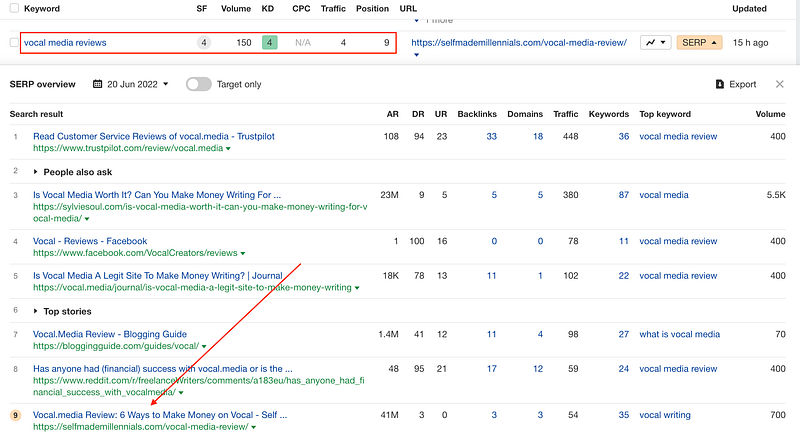
And this one.
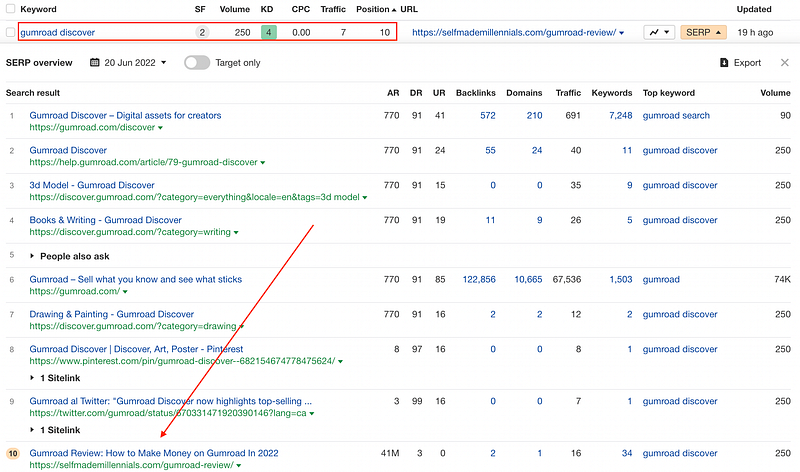
My SEO writing strategy works because most of my content hits the Google front page despite weak website authority.
If you want to create high-ranking content, my beginner guide might be helpful for you.
I’ve already collected dozens of low-hanging fruit keywords for review articles. Feel free to steal some ideas:
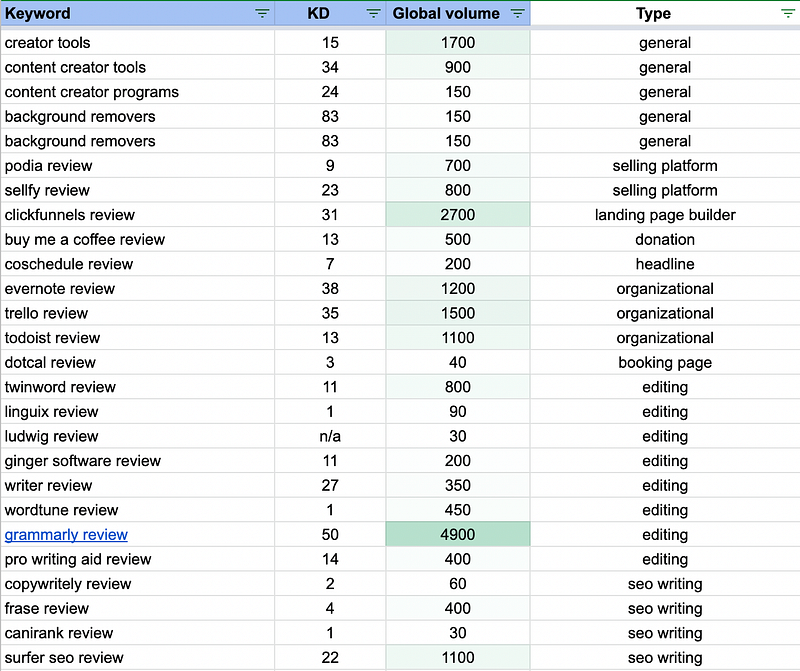
The ultimate goal is to assess fancy tools with pros and cons and inform creators about new tools that are not popular yet. They are as good (if not better), but less expensive.
What will I get out of it as a website owner?
Highly targeted traffic.
Warm “thank you” words from creators.
Affiliate sales.
I will develop an idea for another digital product or service to exploit this niche further.
What conclusions can we draw?
It’s hard to create content that reaches Google’s front page.
Many content creators fail. It happens because they don’t follow proven strategies that work.
A fancy website is nothing if it does not make any money.
You can focus on growing your site’s authority, building backlinks, and creating content, but it does not matter if no return on investment follows.
Therefore, I developed a website growth strategy that focuses on sales.
In my case, every site category:
- Has fluff-free content.
- Teaches readers proven strategies that took me years to validate, and I know they work.
- Is optimized to rank on Google.
- Sells my products and services.
There is no rocket science in anything I do. All strategies are straightforward and can be implemented by anyone.
Grab my 5-day email course on how to write articles that rank on the 1st page of Google.
You can get full access to every story on Medium for just $5/month by signing up through this link.