
I Lowered My Protein Intake for the Past 3 Months, yet I Still Made Progress. Here’s What I Found
This might be a more efficient way of “dieting”
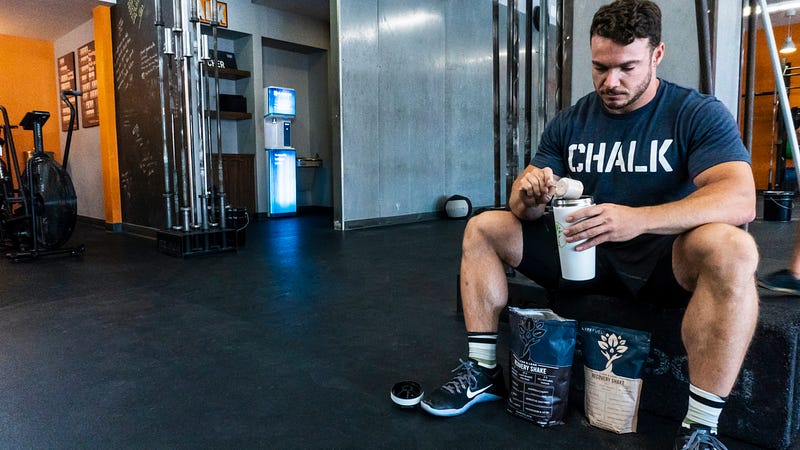
If you’ve been working out for a while now, you’ll probably come across the need to have a high-protein diet.
Not only does protein aid recovery, but it also helps build and maintain muscles even when you’re not doing resistance training and keeps you satiated for a longer time.
All of these factors help you to build a better physique holistically.
Needless to say, if you’re not taking in enough protein, you’re most likely wasting your time in the gym.
Think about it this way, whenever you’re in the gym and you’re doing your best to tear those muscle fibers down, and if you don’t feed your body with the necessary ingredients, it fails to rebuild itself in the best way possible, so it falls back to the default mode and doesn’t result in muscular growth.
Likewise, if you take in enough protein, it supports those broken muscle fibers and helps to mend them into bigger and stronger muscles.
Countless studies have shown that more protein leads to an increase in muscle gain but if you’ve ever tried to hit the recommended protein intake per day, it probably feels like you are always full and it doesn’t feel sustainable in the long term since you’re basically forcing food down your stomach.
I’ve written about this a little more deeply in my previous article where I tried to hit my protein intake for 3 months. But in the past 3 months, I’ve experimented on myself to lower my protein intake while engaging in similar workout intensities and charting my progress along the way.
Here’s what I found.
The Typical Advice
According to fitness gurus, the typical advice we get is to consume 0.8–1g of protein/lb of body weight.
In my case, my weight is about 78kg which means I need to consume roughly 172g of protein which is unsustainable for me. It essentially breaks down into 4 relatively big and high-protein meals.
This has the results of the meals being:
- Too satiated the whole day
- Too expensive for the long-term
- Pressured to consume high-protein meals
- Constantly thinking about protein intake such that it restricts meals with friends and family
But I’m no bodybuilder in any regard and I want this to be enjoyable and sustainable for the long term.
My fitness goal is to be a minimalist athlete and work towards longevity so that I can continue working out even when I’m 70.
This means that I’m constantly finding ways to put in relatively lower effort for better results, even when it comes down to my diet.
The longer I exercise, the more I realize it’s not always the more the better.
Furthermore, I’ve found that other aspects of working out while thinking about slow progress have shown similar results:
- Zone 2 cardio — It’s when you’re running at a much slower pace than how you’re used to such that your heart rate doesn’t shoot too high to build your aerobic base and help you run faster in the long term.
- 2 high-intensity sets — During your resistance training, simply do 6–8 high-quality reps to help you progress faster since doing 4 sets might mean that your later reps are relatively lower quality which doesn’t support your growth.
And guess what?
I found the same for protein intake.
Experimentation With Lower Protein Intake
According to studies, taking around 0.7g/lb of body weight would already maximize the amount of gains you can make each day.
Any higher than that, it’s simply not required since it doesn’t result in any form of growth.
The thing with protein intake is the more you take in, the higher muscular growth you’ll see if you remain consistent. However, the increase in protein intake leads to a slow increase in muscular growth.
This means that it might not be efficient to consume that amount of protein every single day if you’re not striving to achieve your best physique or build the most amount of muscles.
If your goal is to build just enough or maintain muscles, then we are in the same camp.
Here are my results.
1. Enjoyable and Sustainable Meals
Since my protein intake is much lower now at around 120g of protein a day, it’s a much more reachable goal for me without needing to constantly think about hitting a seemingly unreachable amount each day.
In turn, I’m saving more money in the long term and can consume more food with family and friends.
2. Progress in My Physique
Surprisingly, I continued making progress in my physique since I continued pushing at the same intensity as I used to.
I seem to be getting more muscular definitions and my body seems to be finding its way into some form of body composition. Even though I’ve noticed that the progress might seem a little slower there are a couple of factors that might be the cause of it and I’ll talk about it in a bit.
But my muscles have become firmer and my size remains relatively the same.
3. How My Lifts Changed
To be honest, I can’t say the same for the weight of my lifts and this might lead to the associated slowdown in progress in my physique.
Having worked out for a long time but only starting again around 7 months ago, the progress I’ve seen in the first 3 months when I was intentionally consuming high protein meals seems to have led to more consistent growth, compared to in the last 3 months when I was consuming a relatively lower amount of protein.
This means that the growth could be due to “beginner’s growth” since I was just getting back into the groove of working out in the gym again.
Having said that, the weight of some of my lifts such as weighted pull-ups and weighted dips are still increasing with each session which was quite surprising.
Another reason that could explain the slowdown could be intentionally aiming for caloric maintenance rather than a caloric surplus.
This meant that I’m not increasing the weight I’m at currently so I essentially don’t have a further increase in energy to continue lifting more weight with my current body weight.
Lessons I’m Learning About Myself
Experimentation with my body is a constant need, it’s how I learn about what my body needs so that I can address those needs to make constant progress.
The notion of making progress is also subjective since it comes down to the goals that you’ve set for yourself. And that comes with knowing what you’re looking for, especially in the long term.
With this experiment that I’ve conducted over the past 3 months, it’s pretty safe to say that a relatively lower body weight at 0.7g/lb of bodyweight is okay.
If I want to continue making progress in my lifts, a high protein diet together with a caloric surplus is optimal for constant progress in the gym for my body and this realization aligns with scientific literature that a few fitness influencers talk about.
Protein Isn’t Always King
170g of protein is probably excessive for my body and my lifestyle even though it supported my growth for some time.
My advice may not be directly applicable to you but it goes to show how having a good understanding of your body’s needs and wants is essential to making constant progress toward your goals.
It doesn’t take up a whole lot of time but at the very least, it points you in the right direction that you need to take in the long term.
Run the experiment for the next 3 months and remember how it feels.
Join my newsletter to read my articles for free (no Medium paywall) and get actionable insights on my journey to becoming a senior engineer and a fitness fanatic.
Consider buying me a coffee here!