
I Live In A 400-Square-Foot House And Yet I Never Felt More Free
You Need To Have A Strong Why To Survive Off-Grid Lifestyle. It is not anti-consumerism but a post-consumerism choice. Here is my why…
I’m sure that you’ve read a lot of articles regarding how living off the grid is becoming more popular and more individuals, especially families, are choosing to live this way. For some it may seem, it’s more of a trend or lifestyle choice but for others, living off the grid is simply a matter of survival.
What is off-grid and why
Off-grid is a concept of sustainable living that is kind to the environment. People are constructing homes with solar panels, composting toilets, and their own wells, allowing them to disconnect from conventional utility networks and live self-sustaining.
This new type of lifestyle offers greater freedom, independence, and certainty of independence.
There are many reasons why people choose to live off the grid but one of the most common reasons is to be less dependent on government and consumerist society.
For us, it was no trust in the government, not wanting to be a part of a capitalist society because is corrupt, and simply because we wanted to be self-sufficient.
The article on treehugger.com about sustainability states about life off-grid:
“We’re all consuming too much. One of the big motivations for off-grid living is the weariness of consumer society. It’s not necessarily anti-consumer, but post-consumer.”
However, many perceive choosing to live off-grid as nothing more than another fad or a trendy activity because when you read or view it on YouTube, you may believe that it’s simple.
It is not.
You need to have a strong why are you doing this.
Humans have been nomads in the past, living near to nature. After agriculture took off, however, we grew alienated from it.
Our contemporary life and urban existence are resisting and outright annulling anything natural.
I have a hard time understanding how such a high amount of asphalt, concrete, and glass may exist in cities yet most people still believe we are supposed to live like this.
Also, as a result of this new way of living, our lifestyle evolved, and people spent more time in the car or on the computer than walking.
The average person in the United States spends about 26 minutes commuting to work each day, which adds up to about 10 hours a month, or 120 hours a year. Sitting at the computer, we consume an extra 1,536 hours per year.
The high consumption of energy that our way of living demands is not sustainable in the long term, since it’s based on non-renewable fossil fuels.
By 2050, the world’s population is projected to reach 9.1 billion, and by 2100 it could reach 10 .9 billion, according to the UN.
Obesity is on the rise all over the world, and it’s easy to see why. We are raised with the impulse to acquire pleasure through plastic food (the food in supermarkets, which I don’t consider to be nutritious food), as well as numerous manufacturing activities like social media, working out at the gym, and going shopping for fun.
The other significant factor that has contributed to this disconnection is the amount of time we spend working.
We are working more hours than ever before, and as a result, we have less time to connect with nature.
We are far removed from the wilderness in our daily lives. I’m not surprised that pandemics are on the rise.
This is one of the main reasons why I decided to live off the grid; I wanted to reconnect with nature.
In our fast-paced, materialistic society, it’s easy to forget what’s important in life. By living off the grid, I’m able to slow down and appreciate the simple things in life.
Living off the grid is, therefore, cheaper, you have absolute control over your lifestyle and you are not dependent on anyone.
In the event of an outage in the city, you are taken care of, because you have your own resources.
The world’s resources are finite, and as the population grows, the demand for energy will increase.
You need to find a way to live sustainably, and off-grid living is one way to do that.
First months off-grid
You are learning to live in harmony with nature. We now reside in a 400-square-foot cabin on the 2.3 acres of property in Spain’s Sierra Nevada region, which is home to us. And I’ve never felt so liberated as I do right now. I’ve never had such a feeling of freedom before. Not even one apartment or a life in the city for the previous 20 years could provide me with such unbridled freedom.
The first weeks were challenging, especially since we and our pets were accustomed to living in an apartment. On the first night, one of our cats got into a scuffle with feral cats who live in the woods.
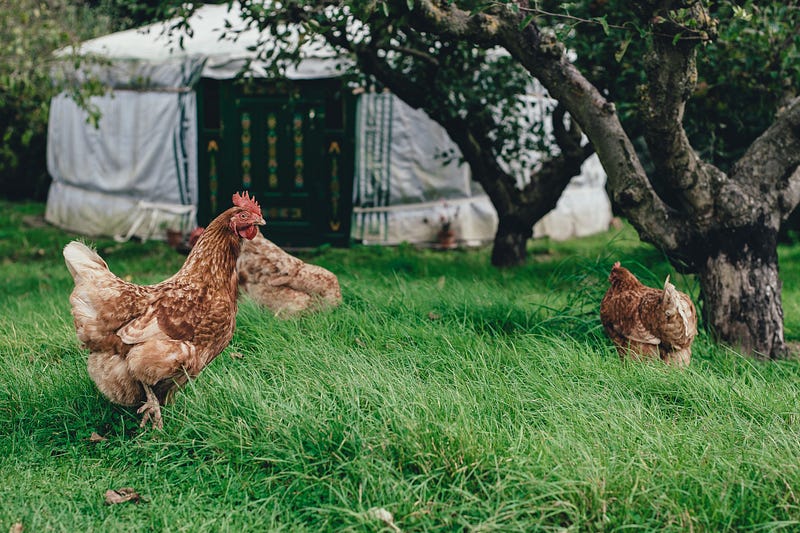
The wound got infected, and he had to visit the veterinarian for antibiotic treatment. We need to watch for foxes so that they do not kill our chickens. We’re all learning how to live in peace and improve our abilities to endure here.
Off-Grid Romania said it eloquently:
Animals live in harmony with nature and keep a balance in the ecosystems.
We should learn more from the animals especially about love and how to not throw rubbish everywhere.
We deal with water and feces on a daily basis. Chicken, mice, cats, dogs, and human excrement are all examples of poop we have to take care of daily. Also, we have a composting toilet as well.
To survive off-grid, you’ll need all of the following: survival and natural abilities. Computers and technical skills are irrelevant here.
I’m writing this to show you that living off the grid isn’t always sunshine and rainbows.
You really need strong why.
You need to be prepared for the challenges that come with living off the grid. These include, but are not limited to:
-Insects and other pests
-Wild animals
- Extreme weather conditions
For me, it was simply because being in the wild is exciting and a far superior alternative to living in a rabbit cage called an apartment and working in a cubicle like a criminal who never sees the sun.
I learned to love and respect nature more. This is the only way I can improve the world I live in.
Living off the grid has taught me so much about myself, and I’ve never felt more connected to nature. I highly recommend it to anyone who wants to simplify their lives and reconnect with what’s important and values true freedom.