
Lipreading can work with a mask if you simplify, gesture, and do some joint problem-solving.
Leave that mask on; I’m a lipreader, and here’s how we can make this suck less.
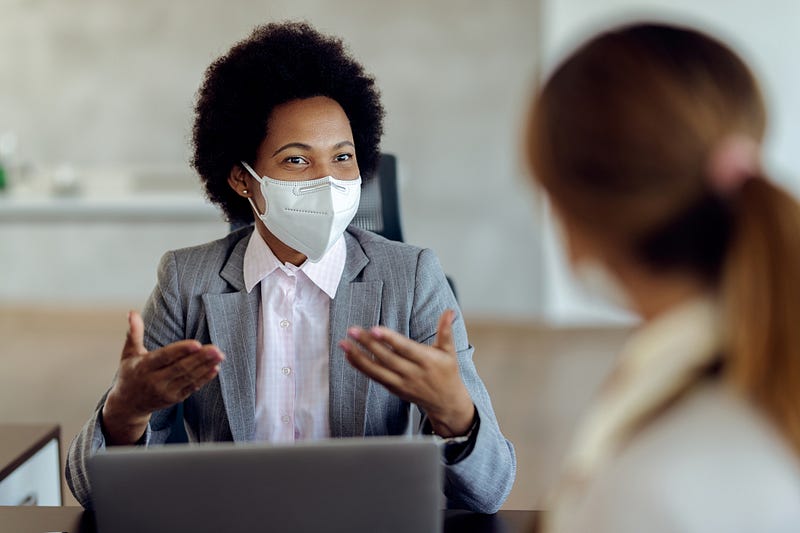
So as coronavirus won’t take the hint and leave already, it looks like face masks are going to be a thing for a while. This is good — not catching or spreading coronavirus is a definite win — but for people who lipread, mask use in public spaces makes communicating a hell of a lot harder.
And that’s probably more people than you’d think. Research suggests about 15% of the population has significant hearing loss but — as anyone who works in retail can tell you — many more people use some assistive lipreading to smooth things along.
Children and older adults commonly rely on visual communication, often unconsciously. It’s only now the masks are on that some people have realized they lipread at all. And as communication is a two-way street, it’s not just harder for lip-readers but also for anyone trying to interact with us.
So lots of people (including me) need to lipread. And pretty much everyone needs to wear a mask. What can we do?
Listen Up
If someone tells you they need to lipread, believe them. If someone seems to be struggling to understand, consider it as a reason why.
Showing you understand that we’re finding it hard and not being rude when we ask for a repeat or clarification — or worse, completely ignoring your question as we don’t hear it — goes a long way.
“But I didn’t know they were deaf/read lips!” Yeah, we know, because we lip-readers rock at this and have a lot of practice. But right now, we could really, really do with your help. Listen up, and we’ll tell you what we need.

Ask Us How
Before you whip that mask off — like tight shoes or a bad bra after a 10-hour shift — ask us what will help. We know our hearing, and how to work around its issues, best.
Some people who lipread will just need you to repeat yourself or speak more loudly and/or slowly. If so, try to speak as normally as you can, as exaggerating words won’t help. Take turns when speaking, and try and keep background noise to a minimum.
Some people may prefer simpler phrasing with more gesturing (this is my own pick).
Some people may just want you to step well back and remove your mask so they can lipread. It’s up to you if that’s something you’re comfortable doing.
For important information, putting it in writing or using a sign language interpreter may be necessary.
But for many interactions, being willing to repeat yourself as many times as needed, without eye-rolling and frustration, is the kindest and most helpful thing you can do.
(Pro-tip: Many lip-readers are adept readers of body language and facial expressions — it’s basically a core survival skill for us. So when someone is getting annoyed at repeating themselves but think they’re hiding it from us? They’re not. At all. Also, don’t play us at poker.)
Sometimes we just won’t get it, and that’s actually OK. I’m used to missing some information and moving the conversation on anyway.
I don’t worry about getting all the details anymore — although that time I almost had someone else’s operation in hospital I should’ve probably tried harder — but I do worry that people think I’m being deliberately rude.
I’m not. If I was being deliberately rude, I’d probably add hand gestures. And on that note …
Get Handsy With Me
You don’t need to learn a new sign language — you already know loads of nonverbal words and communication methods. If you’ve played charades, you’ve even had some practice!
Common gestures really help
Waves, thumbs-ups, finger numbers, nodding and shaking your head — and maybe hand waves, jazz hands, and facepalms — all these and more can reinforce and clarify what you’re saying,and improve the odds that you and whoever you’re talking to are on the same page. Just flick someone the middle finger in traffic sometime, and see how well you’re understood! (Don’t do this. This is terrible advice. I should be ashamed of myself.)
It’s not just hands: Head tilts, explicit gestures, eyebrows, and shoulders are all very important for nonverbal communication. And don’t be afraid to smile, even if it’s hidden from view — people can see it in your eyes and also hear it in the tone of voice.
When you gesture more clearly, it’s not just the deaf and lip-readers that benefit. Studies have found that when we converse in masks, we’re more likely to have misunderstandings. The good news? Looking people in the eyes and paying attention to their reaction can reduce those errors in communication dramatically.
And, hey, I’m not saying don’t learn sign language. Absolutely do if you want to. It’s awesome and expressive and useful for loads of reasons —you can chat underwater or silently or in noisy environments … and through glass! And so on. Learn away if you have the mental bandwidth at the moment.
But if you don’t, don’t panic. You have a pretty good nonverbal vocabulary already if you use it. Just maybe keep that middle finger under control.

Do We Really Need to Talk?
A lot of the time, we don’t even really need to chat. For lip-readers, a smile and wave is often the best interaction. Don’t feel bad about skipping chit chat — it takes us a large amount of mental energy to understand speech, even more so when we’re missing out on the information from lipreading. A silent but friendly retail experience is like a spa day out for me.
Many lip-readers plan our retail interactions like military engagements, with all the details, straight up, in order. If I have to go somewhere for lunch they don’t know me, for example, I usually study the menu and ordering system used on the people in front. This means I can set up the wording of my order so there’s no questions or conversation needed.
“A regular-size flat white with no sugar, to go, please. Thank you.”
The issues start when the questions do.
“Oooooogh aaghoooaagh?” *said over the noise of the coffee machine*
“I’m sorry, I’m hearing-impaired, can you say that again?”
“Oo OOOGH AAN OO aagh?”
“Um, I’m sorry?”
“Oo OOOGH AAN OO aagh?”
“Um. Sure? Yeah. OK.”
The question was “do you want sugar?”I didn’t; I said so, and now I have it anyway.
In this case, we exchanged information at the beginning and more conversation has just led to more errors. (In fairness, the barista may also be dealing with their own hearing loss, so I’m not complaining — I’ll just bring a Post-it and pen for the next time.)
If It’s Important, Put It in Writing
Remember the stakes of the communication and plan accordingly. Sugar in my coffee? I’ll cope. Being given a medication I was allergic to because I misheard the doctor and they didn’t read my file? That was no fun whatsoever for anyone concerned.
Outside of a medical/financial setting, I don’t worry too much about getting a few words wrong. But in a high-risk setting, clarity is paramount. FDA-approved, clear surgical masks do exist but getting a hold of them is difficult and often expensive. Having a paper and pen handy, writing on your smartphone, or texting/emailing, is a cheap and easy fix anyone can do.
Miscommunication is one leading cause of medical errors, and masks are often found to be a contributing factor in that. As a woman who once jumped on a gurney meant for another patient and nearly ended up in their operation, I’m totally down with the fact that repeatedly checking the patient’s details in writing is part of the presurgery process.
(I still wonder what I was down for. Could I have had brain surgery? Breast enhancement? A prostate removal or a limb added? I could have been bionic. I guess I’ll never know.)
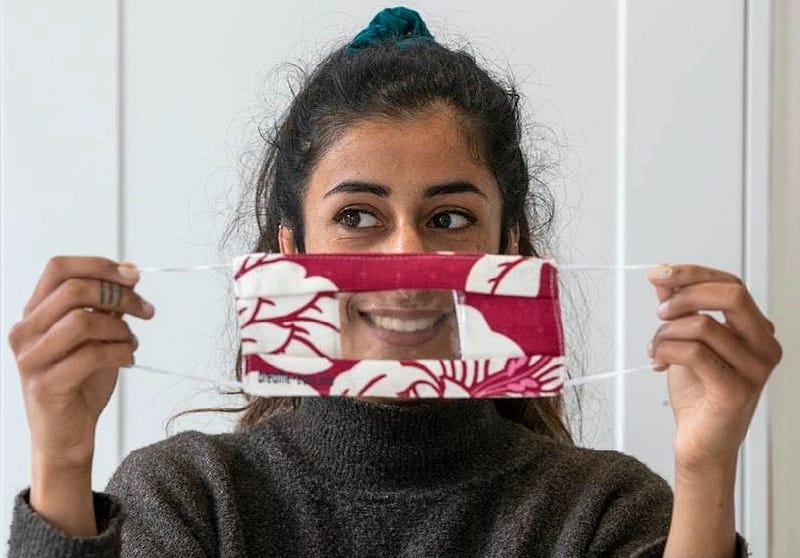
What About Masks With a Clear Bit?
Give them a go by all means, if you can get your hands on them. I don’t know if they work as, despite being sent about a zillion news links from well-meaning friends for them, I haven’t seen anyone wearing them.
Someone suggested I should buy one. I’m not sure how that was meant to work. I don’t need to read my own lips — I generally know what I’m saying unless I’m a few drinks in and annoyed (in which case, all bets are off). I can’t buy one anyway, as all the places that sell them are sold out.
So how is this meant to work, if they’re not in use and widely available? Do lip-readers buy a stash through the dark web and then deal them out to people they want to talk to?
Actually, that sounds fun.
“Sorry, would love to chat but don’t have a hearing mask for you. Gotta go!”
“Is that a pack of 10, right there, poking out of your inner coat pocket?”
“Oh no. They’re for other people. That I want to talk to. Bye!”
Don’t Stress Too Much About Talking to Lip-Readers
This isn’t our first “lipreading is hard” rodeo. That trend for big beards that obscured the lips? A bushy bother for us. People who cover their mouths and mumble in meetings? Low-key evil. Ventriloquists? BASICALLY SATAN.
All these things haven’t defeated us and neither will COVID.
Look, 2020 is extra, and coronavirus is awful. In the grander scheme of things, wearing a mask is a minor blip. Yes, it sucks that I can’t lipread you. Yes, it makes things a little harder for us to talk.
But dying lonely on a ventilator would suck way more — I mean, it’s basically the ventilators job, right? — so let’s just get on with it. We can help each other out and help everyone to stay safe as well and make 2020 a bit less sucky for everyone.