
I Left the U.S. 10 Years Ago. I’ve Never Regretted It.
I’ll always be American, but …
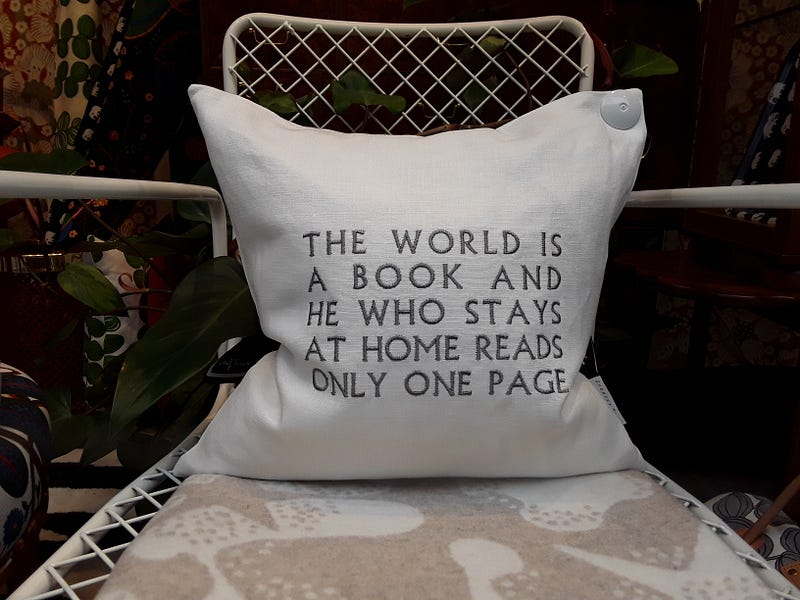
I was born and raised in the United States. I am an American. I will never not be an American. I left the United States ten years ago today, not out of any negative feelings, but to forge a new future for myself. As time passes, I find myself less and less connected to the land of my birth. Distance is part of that, definitely, but it is complex. So is life. I’ll explain.
Accidental Belonging
I grew up in Minnesota, and as soon as I was old enough to have any understanding of it, I loved baseball. I was one of the many kids who snuck the transistor radio under the covers at night to listen to the game broadcasts. It was a nervous challenge to have the volume up loud enough for me to hear but quiet enough for my mom to not hear. That she had extraordinarily good hearing didn’t help.
Of course, in Minnesota, the radio broadcasts were of Minnesota Twins games (anyone else remember Herb Carneal?). There were no other options. So, naturally, I became a Twins fan. I still am. I have lived and died with the Twins, which means I have been mostly dead for decades. (Losing seven of eight against Cleveland lately threw me into a mild depression.)
My being a Twins fan was mostly an accident of birth. If I had been born in a different part of the country, I would have listened to the local team’s games and grown up a fan of the local team. Only as an adult, has my allegiance to the Twins been a matter of personal choice. I haven’t lived in Minnesota since 1997, but am still a Twins fan — I admire the organization. I could be a fan of any other team. Well, not of the Yankees; that would be wrong. Non-Yankee fans understand what I mean.
I was born and raised in the United States. But that was just an accident of birth. The radio of life was tuned to America. Before the Internet, there really weren’t other options. Naturally, my schooling was U.S.-centric: America great; pilgrims; manifest destiny; we saved the world in two great wars; defender of the free world, all that stuff. I was never a jingoist, but of course I was proud to be an American.
By the law of the land, I was automatically an American citizen. If I had been born in a different country, I would have been a citizen of that country. I would have grown up hearing that country’s radio, learning about that country’s history and why it is great. I no doubt would have been proud to be a citizen of that country.
Biology Is Not Necessarily Destiny
It is a legal oddity that there is only one country in the world that I have an absolute legal right to live in— the country where I happened to be born. This is true for every one of us. That’s how legal recognition of persons works. You can only legally live in the country of your birth unless you receive the permission of another country. We can have a legitimate debate about whether that is how persons should be legally defined, but that is the legal reality.
I had for years taught philosophy on my Master’s degree, but always wanted to go back for my PhD. In 2011, I was invited to join PhD programs at several universities, one of them in England. That uni in England was the best department for my research interests, but I was even more intrigued by the possibility to move to the U.K. I thought about how many people I admired who had benefited from their experiences of living in multiple countries. I knew I had to do it too.
I jumped at the chance to have a student visa to live in the U.K. And yes, you need a legitimate reason to legally emigrate to another country: a position of employment or scholarship. Well, unless you are über rich, then you are allowed to literally purchase a visa and residence permit. Whatever country you were born in is the country of your citizenship.
That does not mean you can never leave. I did leave the U.S., not for any political or cultural reason, but for a brighter personal future, which I found in so many ways, living and working in the U.K. from 2012 to 2018.
I robustly recommend living abroad if you get the opportunity. Traveling abroad broadens your perspectives, but not anywhere near as much as living abroad. Immersing yourself in a different culture changes how you view everything. Granted, the U.K. is not so different a culture than the U.S., but you’d be surprised how many little differences in customs there are between the two countries. It allowed me to experience a new society, listen to a different “radio” of a culture, and above all, see the world from a different perspective.
Viewing the House from Outside
When you are inside a house, you see only the interior. That is also true of living inside a country. I lived in the U.S. so I knew what it was like to be an American, what American culture was like — limited of course to my white, male, lower-middle class, Midwestern experience. The American house has many rooms, some nicer than others.
When you are outside a house, you see only the exterior. I naturally learned how to see the rest of the world from the American perspective. To me, the U.K. was a foreign country that I only viewed from across the ocean. That is, until I got there. I was now in the middle of places, people, and events I had only seen on TV or read about. Being inside the house, immersed in the culture, allowed me to understand the culture and its people in ways I could never have before.
Seeing the U.S. from the outside was also eye-opening. Being outside the house, I was able to learn from other people on the outside what they perceive of the U.S. Many Americans think America is “all that.” Europeans tend to have a less rosy opinion of America. While living and extensively traveling through Europe, I encountered a few people who hated the U.S., but mostly what I encountered was encapsulated by someone who told me, “we like American music and movies, but we don’t like America’s condescension toward the rest of the world; they act like they can order everyone else around.”
One particular day gave me a big insight on how non-Americans view America. It was the first day of classes in early September 2015. I was teaching two sections of “Introduction to U.S. Politics” at my U.K. university. After I gave the students the introduction to how the course would work, I asked if they had any questions. In both sections, immediately, they asked with palpable anxiety, “do you think Trump could win?” It was still four months away from the U.S. presidential primaries, but that was their primary concern. I said to them, “yes, of course he could,” to disappointed sighs and downcast head shakes. “Why? How?” they asked. “Because many Americans think like he does,” I replied, “and if the Democrats nominate Hillary, Trump will win.” Sadly, I was correct. What happens politically in the U.S. affects the rest of the world, and these young people knew it. And they cared.
Living in a Much Different House
In 2018, my spouse and I moved to the Czech Republic. We had visited Prague a number of times when I gave academic presentations and we loved the city. She is a freelance editor who can work anywhere in the world. I decided to also go freelance, to also not be bound to a particular place. I still teach philosophy at the U.S. university where I taught before, but now online. The Czechs are more open-minded about immigration than other countries. They are the only country that I am aware of that issues legal residency permits for those who can demonstrate they are legitimate freelancers. We each have Czech and American clients and have a wonderful life here.
So, for four years I have lived in a Czech house, both literally and figuratively. Regular interaction with both Americans and Czechs gives me interesting perspectives on the world. Like the Brits, the Czechs are fond of American pop culture and suspicious of American political and corporate intentions. We have never not felt welcome here, and people are so eager to speak English with us that we have difficulties learning Czech. But they do not want to be Americans. They are justifiably proud to be Czech.
The Czechs see the world in their own way, as well they should. Unlike the Brits and Americans, the Czechs have never thought of the rest of the world as something to rule over and exploit. As one of my clients, a director of a large Czech company, put it, the Czechs have always been a little country surrounded by and run over by bigger countries. It gives you a different perspective, he said. The Czechs know tyranny — from the Soviets, the Nazis, the Austro-Hungarians. Therefore, the Czechs appreciate freedom in ways that, with all due respect, Americans and Brits cannot.
I will write more about living in Prague in the future. For now, I can say that seeing the world from this house, this society, is a continual learning experience. When Putin invaded Ukraine, I experienced it so differently than I would have if I had stayed in the U.S. In ten years of living away from the land of my birth, I have been profoundly changed as a person and as a philosopher. I am still learning how much it has changed me.
Back “Home”
This summer I went back to the U.S. — a post-Trump, post-pandemic America. It was strange — familiar but eerily alien. The country of big box stores, strip malls, and suburban sprawl creating dependency on automobiles was home, yet not. As much as I loved seeing my Mom again, and going to a Twins game with her, I have changed too much to see America in the same way I did growing up.
In 2017 I gave a presentation to an academic conference on the meaning of home. “Home is a sphere of ownness” I said, quoting Anthony Steinbock. My sense of ownness is European now. The American landscape of fenced-in lawns, gun fetishists, and interminable xenophobia was the house I grew up in, but it is no longer home. A cosmopolitan Europe where I walk down the street and hear four or five languages, can board a train and be in another country within an hour or two, and be immersed in centuries-old cultures feels like home now.
I left the U.S. ten years ago today. Other than baseball (stupid Twins), I don’t watch much that is American anymore. For my news, I read a British newspaper, the Guardian, a French TV station, France24, and a Czech Web site, iRozhlas. When I do occasionally check in on any American news source, I am struck by how narrow a viewpoint there is from such a large country. I am not anti-American, but I am honest about the fact that I have a higher standard of living (yes, really), universal healthcare (only $220 a month, seriously), and just plain feel more at home here.
The moral of the story? If there is one, it is that if you have only lived in one country your whole life, you just might be missing out on a lot.


